- English
- French
- German
- Portuguese
- Spanish
- Russian
- Japanese
- Korean
- Arabic
- Greek
- German
- Turkish
- Italian
- Danish
- Romanian
- Indonesian
- Czech
- Afrikaans
- Swedish
- Polish
- Basque
- Catalan
- Esperanto
- Hindi
- Lao
- Albanian
- Amharic
- Armenian
- Azerbaijani
- Belarusian
- Bengali
- Bosnian
- Bulgarian
- Cebuano
- Chichewa
- Corsican
- Croatian
- Dutch
- Estonian
- Filipino
- Finnish
- Frisian
- Galician
- Georgian
- Gujarati
- Haitian
- Hausa
- Hawaiian
- Hebrew
- Hmong
- Hungarian
- Icelandic
- Igbo
- Javanese
- Kannada
- Kazakh
- Khmer
- Kurdish
- Kyrgyz
- Latin
- Latvian
- Lithuanian
- Luxembou..
- Macedonian
- Malagasy
- Malay
- Malayalam
- Maltese
- Maori
- Marathi
- Mongolian
- Burmese
- Nepali
- Norwegian
- Pashto
- Persian
- Punjabi
- Serbian
- Sesotho
- Sinhala
- Slovak
- Slovenian
- Somali
- Samoan
- Scots Gaelic
- Shona
- Sindhi
- Sundanese
- Swahili
- Tajik
- Tamil
- Telugu
- Thai
- Ukrainian
- Urdu
- Uzbek
- Vietnamese
- Welsh
- Xhosa
- Yiddish
- Yoruba
- Zulu
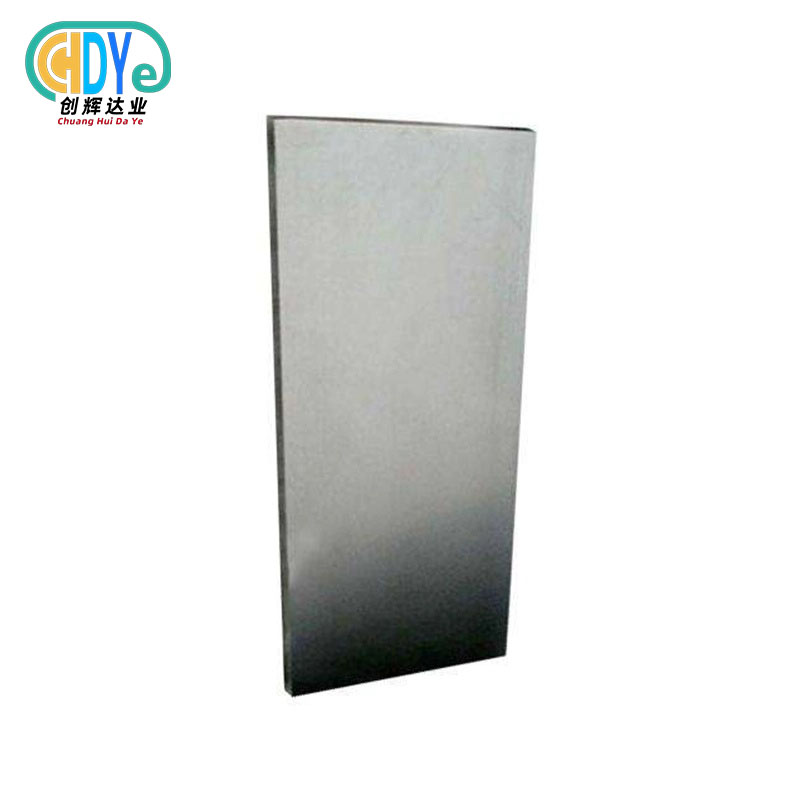
Niobium Bar and Rod
Niobium Bar and Rod for Industrial, Research and Superconducting Use: Custom Grades and Sizes
Buyers of niobium for industrial work, research or superconducting use start with grade and size. Tolerance matters as well. CHDY supplies Niobium Bar and Rod built to those requirements. The company behind the name is Shaanxi Chuanghui Daye Metal Material Co., Ltd. (CHDY), based in Baoji High-tech Development Zone. That area is known as China's "Titanium Capital". Every order follows your written specification or drawing. Grade, dimensions, tolerance and chemical composition are all covered there. Niobium has a density of 8.57 g/cm³ and a melting point of 2,468 °C. Superconductivity starts at 9.25 K. No other pure element has a critical temperature that high.
Specifications
This page does not list fixed catalog values. Each item below follows your written specification or drawing.
|
Product Name |
Niobium Bar and Rod |
|
Material |
Pure niobium and niobium alloy |
|
Dimension |
As per your request |
|
Grade |
RO4200.RO4210,R04251,R04261 |
|
Process |
Cold rolled, Hot rolled, Extruded |
|
Characteristic |
Melting point : 2468℃ Boiling point : 4744℃ |
|
Application |
Widely used in chemical, electronics, aviation and aerospace fields |
|
Product Features |
Excellent Corrosion Resistance Good resistance to effect of heat |
Any value not shown above is not stated on this page and should be confirmed in your quotation.
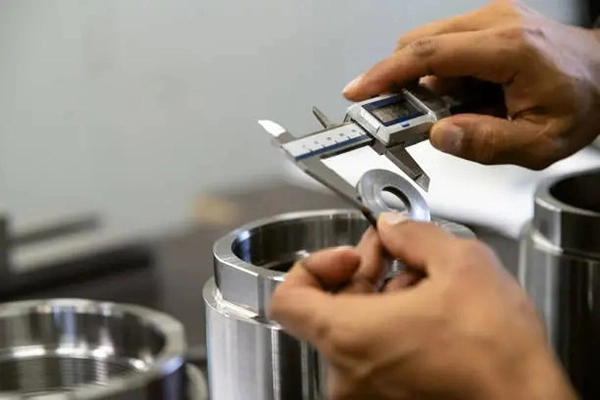
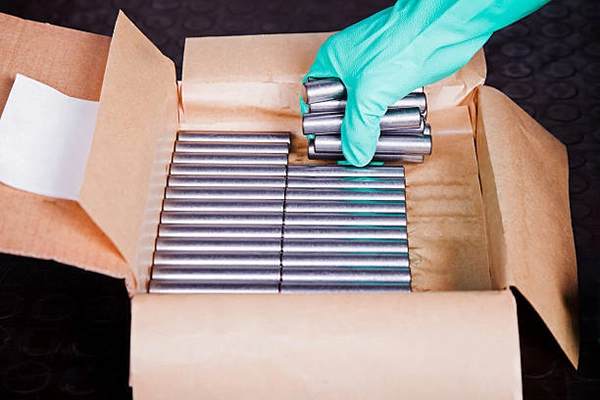
Bar or Rod: What the Terms Mean
People in the metal supply trade sometimes use "bar" and "rod" to mean the same thing. The exact difference can depend on the supplier. Product dimensions play a part too, and so does the material standard that applies.
When you buy, a few details decide the order. Material grade is one. The shape of the cross-section matters too. So do dimensions and tolerance. Chemical composition counts as well. CHDY supplies this product to customer specifications.
Be used in a wide range of industries.
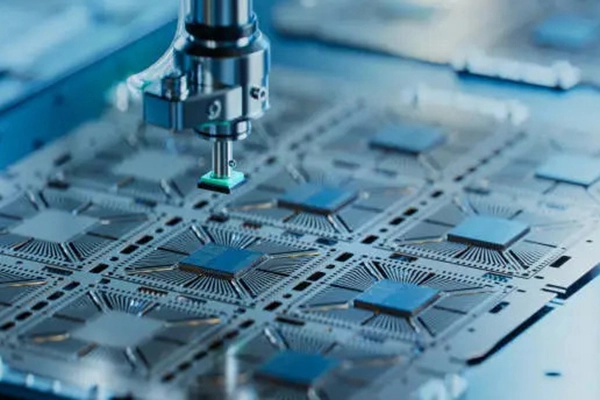
Electronic devices
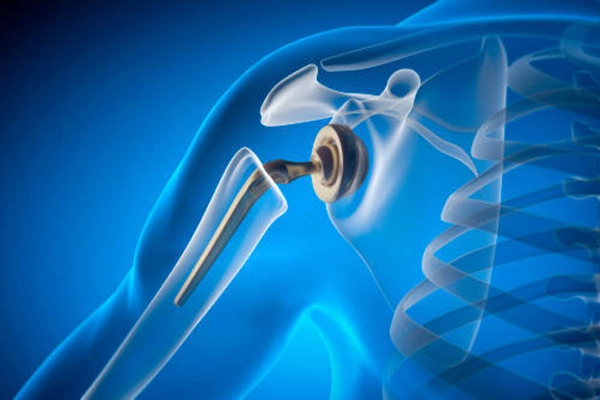
Medical implants

Steel industry

Chemical Processing

Aerospace and Defense

Energy and Environmental Engineering
Niobium Material Properties
The values in the table below are general reference figures for niobium. Data of this kind is covered by standards such as ASTM B392. None of it is a certificate for a single lot.
 |
 |
 |
 |
 |
 |
 |
 |
Niobium grows a thick passive oxide film (Nb2O5). That film clings to the surface and does not move. Through it, most organic and inorganic acids will not pass. One acid is different: hydrofluoric acid (HF). HF attacks niobium quickly. Never let the two meet.
Reactor Grade, Commercial Grade and Delivery States
Reactor Grade holds tantalum and interstitial impurities to tighter limits. That keeps neutron absorption low. For nuclear and superconducting work, this grade fits. Commercial Grade covers general industrial use. An ultra-low tantalum count matters less there.
On your purchase order, check the grade name. The UNS number needs a look too, either R04200 or R04210. Chemical composition counts as well. A nominal purity percentage on its own is not enough to go by.
Nearly all rods leave our shop in the Annealed (recrystallized) condition. Ductility is highest in that state. Need something stronger? Then choose Hard (cold worked). One surface finish option is centerless grinding. We also offer pickled and chemically polished finishes. The end use decides which one fits.
How to Select the Right Niobium Bar or Rod
Before ordering Niobium Bar and Rod, note these points:
- Material grade: Begin here with a single question. Will commercially pure niobium do the job, or is a specific niobium alloy needed?
- Chemical composition: Purity needs are strict? Then go through the composition report.
- Dimensions: Tell us the diameter or the cross-sectional size. We also need the length. Tolerance counts too.
- Surface condition: Is machining the next step? Another process might follow too. If that is the case, say which surface condition you need.
- Documentation: Do you need a material certificate? A chemical composition report might be required. Some other inspection document could come into play. Just let us know.
Your operating conditions and technical requirements drive the material choice.
Applications
This product is used as raw material for:
- Industrial equipment: chemical processing equipment, vacuum furnace components, industrial electrodes, metal fabrication and specialized mechanical components.
- Laboratory research: test pieces, plus parts for experiments.
- Superconducting RF cavities: Niobium is a common choice for particle accelerator parts. A high Residual Resistivity Ratio (RRR) keeps surface resistance down. Particles pick up speed in vacuum, and losses fall.
- Aerospace and rocket propulsion: Thruster nozzles and jet engine turbines use niobium alloys such as C-103. Thermal shock is one load these parts face. The exhaust is reactive as well.
- Medical devices: Niobium is biocompatible. Pacemaker leads and parts for orthopedic implants are machined from it. Rules and material specs change from case to case. Check the ones that apply to yours.
Niobium Bar and Rod Option with Titanium
Two metals go into a niobium titanium rod: niobium (Nb) and titanium (Ti). The grades you run into most often are Nb-47wt%Ti and Nb-50wt%Ti. This alloy belongs to the Type II superconductor group. Superconducting magnets in MRI scanners, NMR spectrometers and particle accelerators rely on it for that reason.
Fine multifilamentary wire can be drawn from this alloy with no breakage. Harsh chemical environments do not corrode it easily. Check the composition and availability with CHDY before you place an order.
Machining, Welding and Heat Treatment
Work out your shop process before the material shows up:
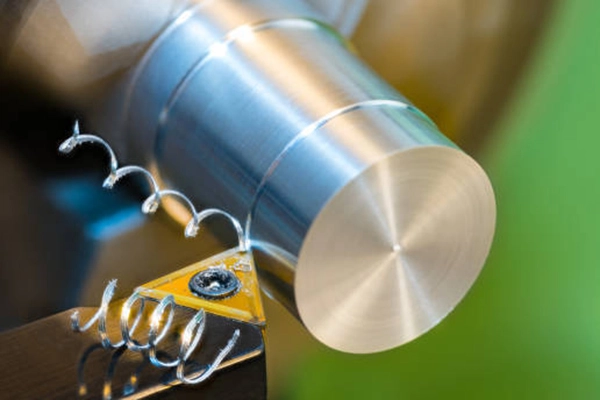
- Machining: Niobium is soft and ductile. The metal feels "gummy". Tools gall on it, just as they do on soft copper. Carbide tooling gets the job done. High-speed steel works too. Use water-soluble coolant. Keep cutting speeds low. Pick rake angles that suit the work.
- Welding: Use an inert atmosphere only. TIG welding inside an argon chamber is one option. Electron beam welding is another. Once air reaches the metal, you get oxidation and brittleness.
- Annealing: Once cold work passes 90% reduction, a vacuum anneal is needed. Soak the part at 1100–1300 °C for 1 hour. Ductility comes back at that point, because full recrystallization happens. Such figures are only typical guidance. Compare them with your own heat-treatment specification.
- High-temperature service: Above 400 °C, niobium oxidizes fast in air. One way to avoid that is a vacuum. A silicide coating or another protective coating is the second option.

Why Buy from CHDY
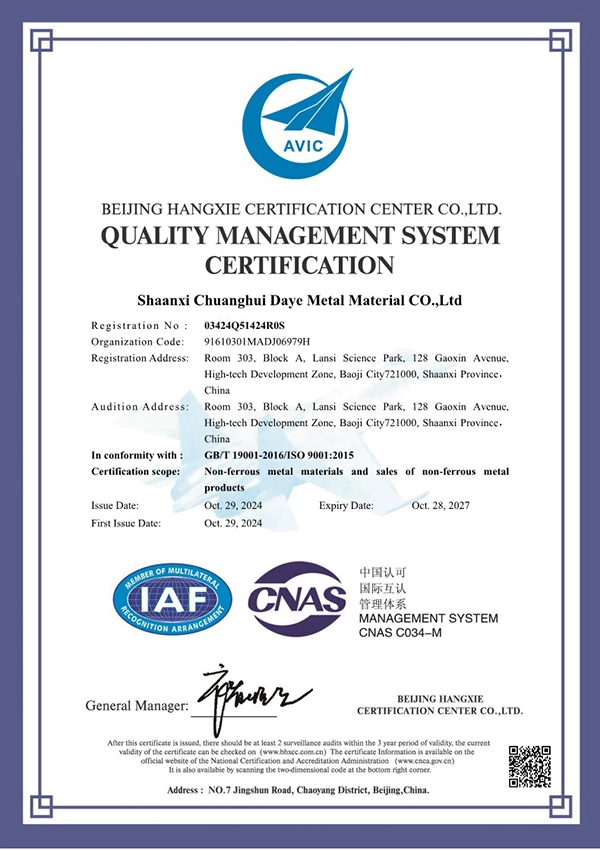
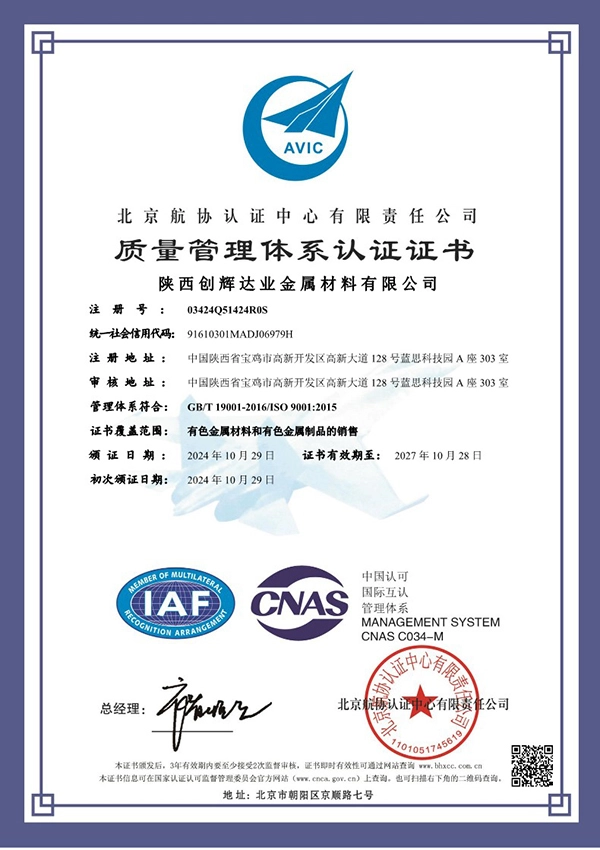
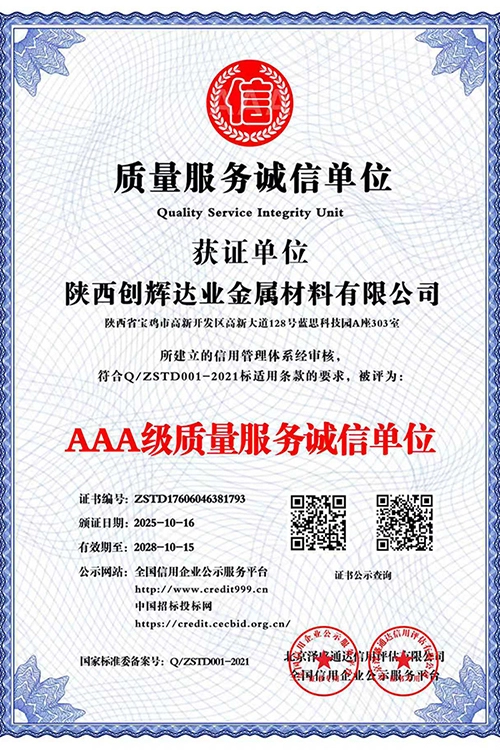
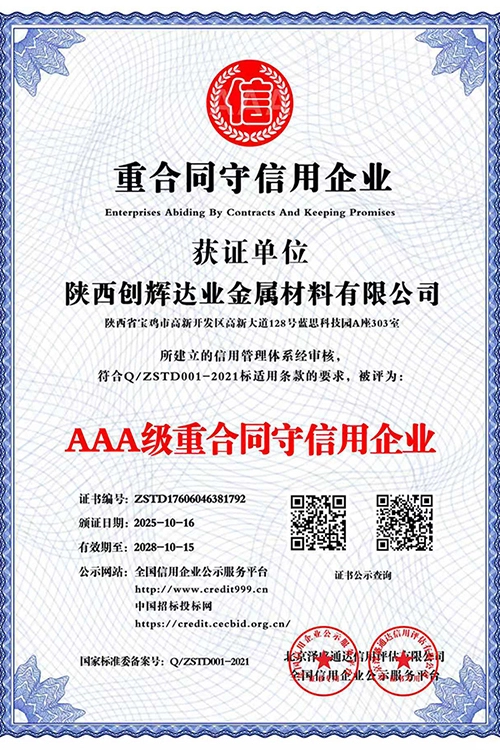
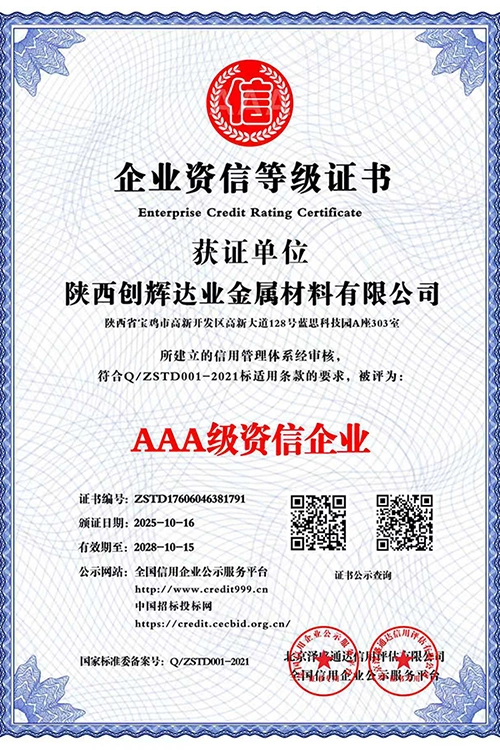
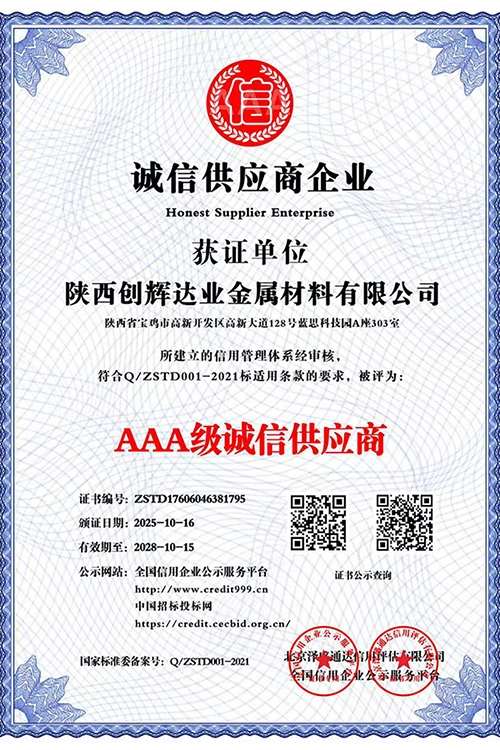
CHDY's core line covers titanium and tantalum. Niobium, tungsten, molybdenum, zirconium and nickel are part of it too. Other non-ferrous and rare metal alloy products round out the range. Metallurgy and electronics buyers use these metals. Medical manufacturers do as well. So do special steel mills. Our founder has more than 30 years of experience in the rare metal industry. Products reach more than 50 countries and regions. The United States is one market. Germany is another. South Korea and Singapore buy from CHDY too. We also supply the Niobium Bar and Rod in custom sizes to suit your drawing.
This product size comes from your specification. That same spec also sets grade and surface condition. Need a material certificate or a chemical composition report? Just ask. Packing requirements belong in the inquiry too.



 |
 |
 |
|
|
|
|
|
 |
 |
 |
 |


 |
 |
 |
 |
 |
 |
FAQ
Q: How do Reactor Grade and Commercial Grade differ?
A: In Reactor Grade, tantalum and interstitial impurities are held to tighter limits. Neutron absorption stays low because of that. Nuclear work needs exactly that. For general industrial jobs, Commercial Grade is the fit.
Q: What makes niobium different from tantalum?
A: Density shows the biggest difference. Niobium comes in at 8.57 g/cm³, while tantalum reaches 16.69 g/cm³. Niobium is about half the weight as a result. Corrosion conditions matter too. Temperature counts as well, and budget decides a lot. Those three points tell you which metal fits the job better.
Q: Can niobium rod be machined easily?
A: This material feels soft, but it gets gummy. Tools also gall on it. Go with high-speed steel or carbide tooling. Water-soluble coolants work well here. Rake angles set at the right size help too.
Q: Does niobium oxidize in air?
A: Room temperature is no problem for it. Push past 400 °C and oxidation starts to speed up. Going hotter? You will need a vacuum. A protective coating like silicide also works.
Q: What delivery states are available?
A: Annealed (recrystallized) material gives you ductility. Want strength instead? The hard, cold worked state supplies it. For finishing, you can choose centerless grinding, pickling, or chemical polishing.
Q: Can niobium rod be welded?
A: Yes. The catch is the inert atmosphere. TIG inside an argon chamber does the job. Electron beam welding works too.
Contact Us
Send your grade, size, tolerance and document requirements for Niobium Bar and Rod to info@chdymetal.com for a quote.
Learn about our latest products and discounts through SMS or email