- English
- French
- German
- Portuguese
- Spanish
- Russian
- Japanese
- Korean
- Arabic
- Greek
- German
- Turkish
- Italian
- Danish
- Romanian
- Indonesian
- Czech
- Afrikaans
- Swedish
- Polish
- Basque
- Catalan
- Esperanto
- Hindi
- Lao
- Albanian
- Amharic
- Armenian
- Azerbaijani
- Belarusian
- Bengali
- Bosnian
- Bulgarian
- Cebuano
- Chichewa
- Corsican
- Croatian
- Dutch
- Estonian
- Filipino
- Finnish
- Frisian
- Galician
- Georgian
- Gujarati
- Haitian
- Hausa
- Hawaiian
- Hebrew
- Hmong
- Hungarian
- Icelandic
- Igbo
- Javanese
- Kannada
- Kazakh
- Khmer
- Kurdish
- Kyrgyz
- Latin
- Latvian
- Lithuanian
- Luxembou..
- Macedonian
- Malagasy
- Malay
- Malayalam
- Maltese
- Maori
- Marathi
- Mongolian
- Burmese
- Nepali
- Norwegian
- Pashto
- Persian
- Punjabi
- Serbian
- Sesotho
- Sinhala
- Slovak
- Slovenian
- Somali
- Samoan
- Scots Gaelic
- Shona
- Sindhi
- Sundanese
- Swahili
- Tajik
- Tamil
- Telugu
- Thai
- Ukrainian
- Urdu
- Uzbek
- Vietnamese
- Welsh
- Xhosa
- Yiddish
- Yoruba
- Zulu
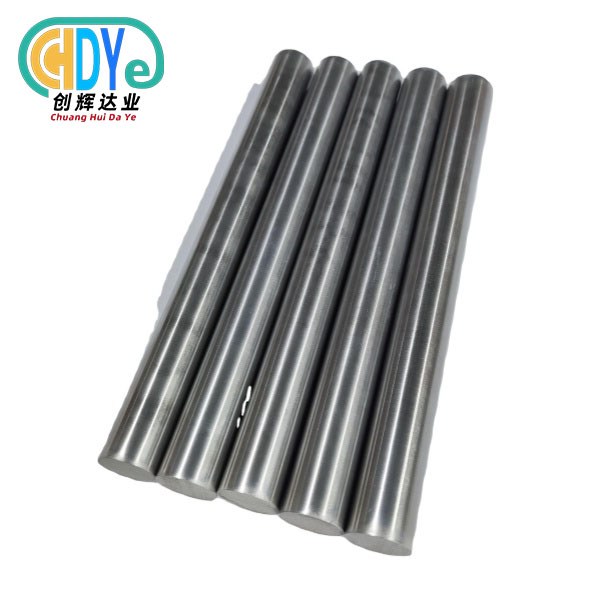
niobium round rods
2. Diameter: 1–50 mm
3. Length: customized
4. Density: 8.57 g/cm³
5. Tensile strength: 200–350 MPa
6. Applications: Aerospace, chemical
7. Surface: Polished
Niobium Round Rods: High-Purity Nb >99.9% Rods for Aerospace and Chemical Processing
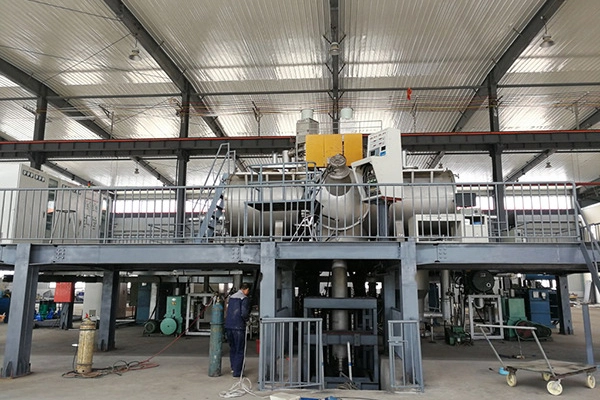
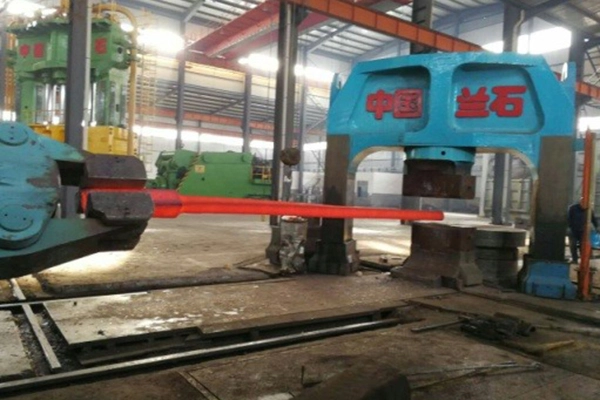
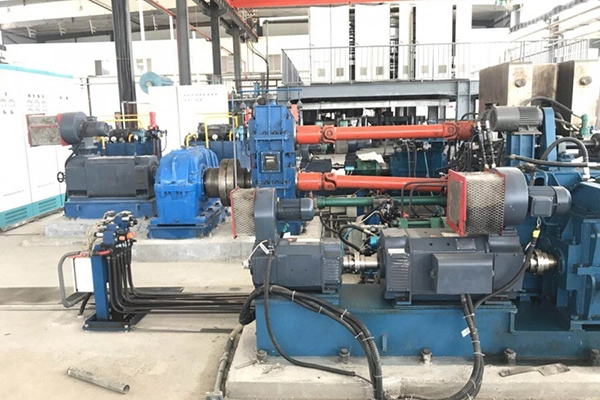
Shaanxi Chuanghui Daye Metal Material Co., Ltd. turns out refractory metal products for industry. Niobium round rods sit in that lineup. Purity goes past Nb >99.9%. Diameters run from 1 mm up to 50 mm. Cut lengths match whatever the order calls for. Every surface leaves the shop polished. Density reads 8.57 g/cm³. Tensile strength lands between 200–350 MPa. Melting point is 2,468 °C. Aerospace and chemical processing work often needs feedstock that holds up to high heat or hot acid. These rods do that job well.
What Are Niobium Rods?
Think of a solid cylinder. That is a niobium rod, plain and simple. The metal behind it is a refractory one. As for the rod itself, it counts as semi-finished. Two routes lead there. Powder metallurgy is one. The other is electron beam melting. Buyers of niobium bar and rod mostly ask for ASTM B392.
Niobium has a body-centered cubic crystal structure. Rods like these supply feedstock for machined parts that face high heat. Parts headed for hot mineral acid or cryogenic service use them as well. Niobium is biocompatible too. Now and then medical components get built from it as a raw material, and that is why it shows up there.
Specifications
| Property | Specification |
|---|---|
| Alloy Composition | Nb >99.9% |
| Diameter Range | 1–50 mm |
| Maximum Length | Customized |
| Density | 8.57 g/cm³ |
| Tensile Strength | 200–350 MPa |
| Surface Finish | Polished |
| Melting Point | 2477°C |
| Crystal Structure | Body-centered cubic |
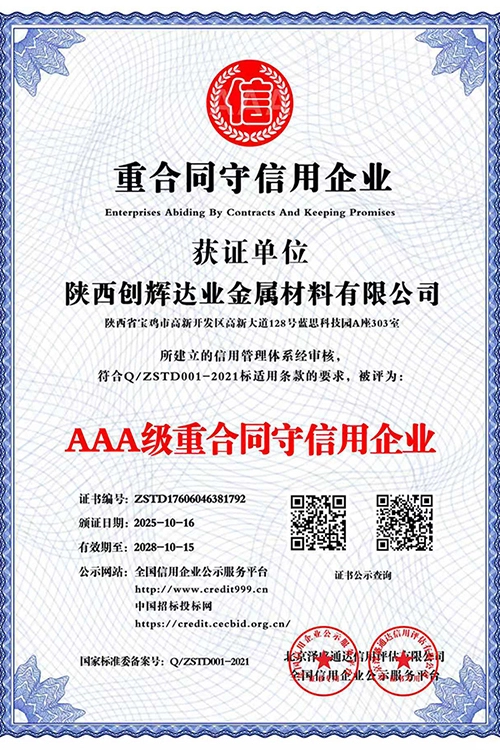
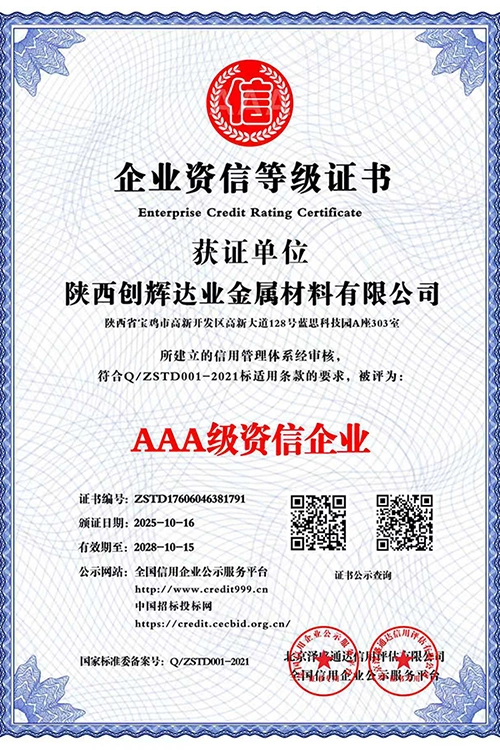
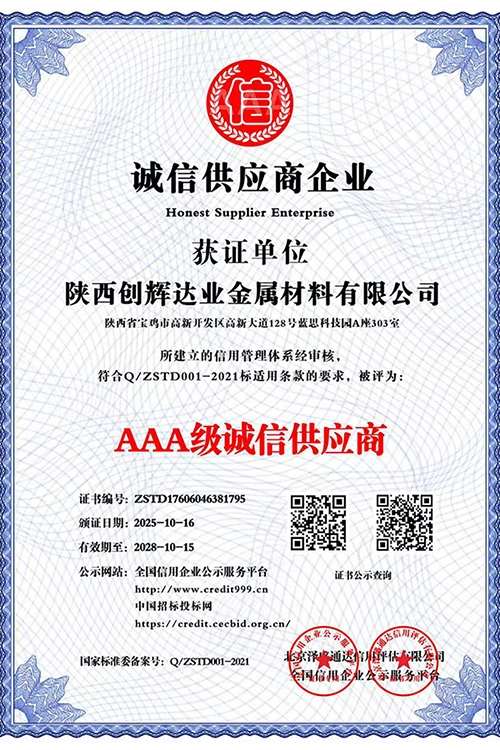
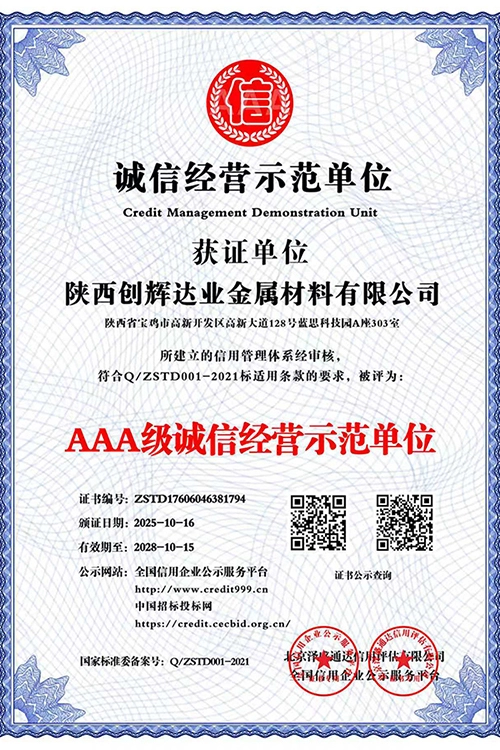
| Certificate | ISO 9001:2015 |
| Standard | ASTM B 392 |
| Purity | 99.95%min |
| Delivery time | Normal time 10-15 days |
| Payment term | 30%TT in advance, 70%Balance before payment |
The table does not cover everything. Impurity limits are missing from this page. So are dimensional tolerance and the scope of testing. Send us your grade, your length and the diameter you need. Then tell us which other data you want.
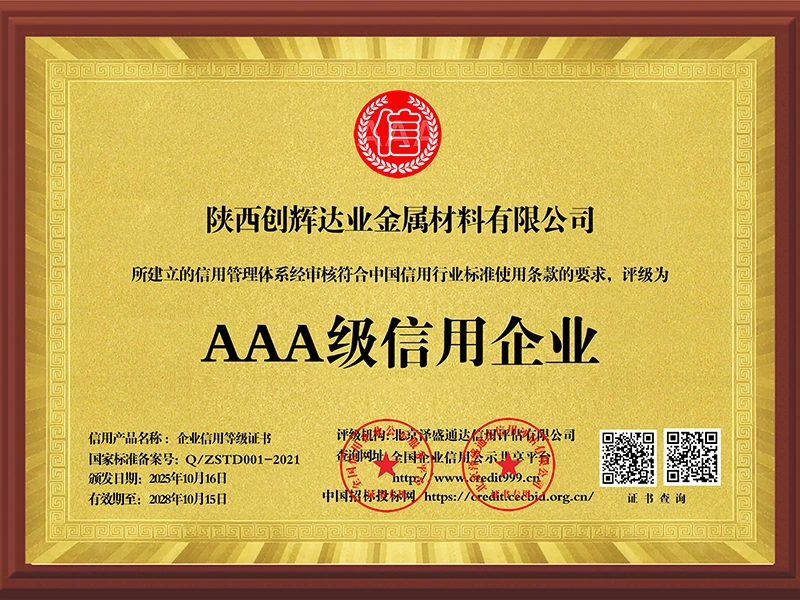

Key Properties
Niobium gives you ductility. Heat stability comes with it too. At room temperature, the metal keeps that ductility. Tungsten and molybdenum do not. You can cold work it. Machining is safe as well. A sudden brittle break does not happen.
The list holds two grades. One is Reactor Grade (ASTM B392 Type 1, R04200). The other is Commercial Grade (Type 2, R04210).
This metal takes in thermal neutrons only weakly. That small cross-section is why people look at it for nuclear work. A stable oxide film forms on the surface too. Scratch the film, and it heals itself. That layer keeps out hot hydrochloric acid and hot sulfuric acid. Stainless steel behaves differently. Same conditions can make it pit. Stress corrosion can crack it.
Quality Control and Inspection Options
Before ordering, ask which inspection items cover your niobium round rods. Set down the acceptance limits. Note the report format as well. Both need written agreement. For niobium, these are the usual checks:
- Chemical analysis (GDMS/IGA): Carbon level is the focus here. Oxygen counts. So do nitrogen and hydrogen. Ductility falls even when tiny amounts of these interstitial elements are present. They raise the chance of embrittlement too.
- Ultrasonic testing (UT): ASTM E114 is the usual basis for this check. Voids inside the part are revealed. Cracks show up too. Inclusions get caught as well. The test runs before machining. It also runs before the part goes into service.
- Microstructure evaluation: Grain size counts in this check. Recrystallization counts too. Both matter for metal forming. Mechanical property stability rests on them too.
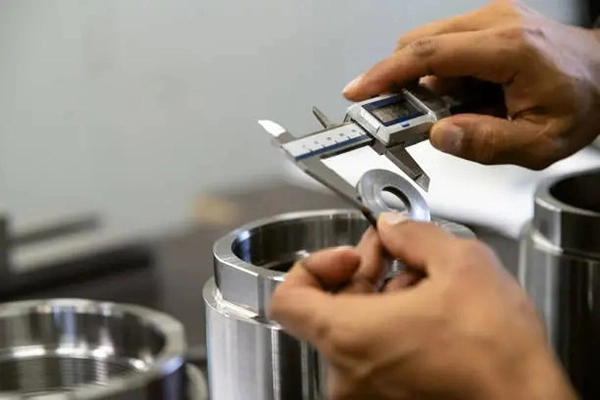
- Dimensions and surface finish: Diameter tolerance counts. Surface condition counts too. Stock left for machining depends on both. Whether the part fits depends on them as well.
Applications
Superconducting radio frequency (SRF) systems: Niobium turns superconducting at about 9.2 K. Machined parts for particle accelerators begin as high-purity stock. Other cryogenic equipment uses that same metal too.
Chemical processing internals: Hot mineral acids can eat away reactor agitator shafts. Valve stems and thermowells take the same hit. Corrosion resistance counts in these spots. Low contamination risk matters as well. Tantalum or glass-lined steel can be replaced by this product there.
Aerospace and high-temperature parts: Nozzles and thrusters often hold niobium inside them. Parts that see heat and thermal cycling use it too. Oxidation starts once bare niobium heats up. Silicide coatings usually cover these parts for that reason. Niobium alloys are another route. Check that the pick suits your design conditions.
Be used in a wide range of industries.
Electronic devices
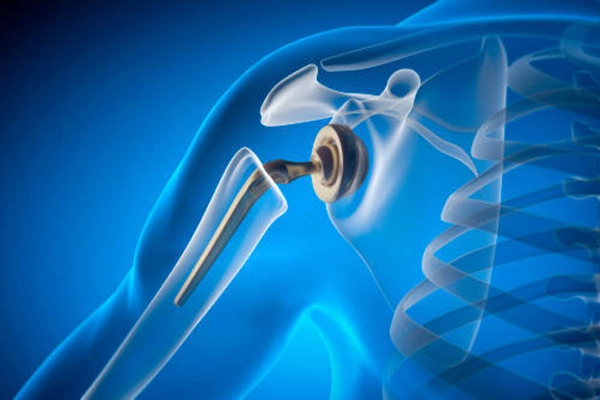
Medical implants
Steel industry

Chemical Processing

Aerospace and Defense

Energy and Environmental Engineering
Machining and Welding Guidance
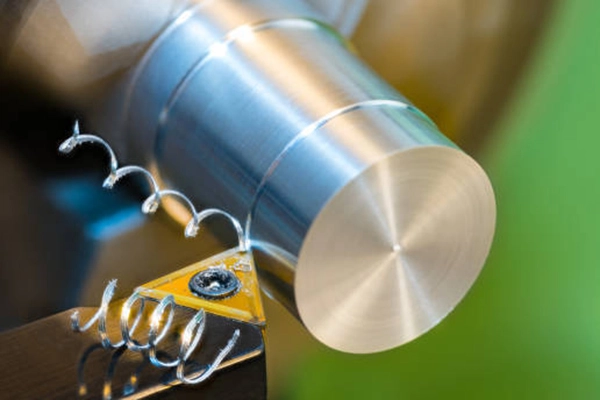
This metal is soft. It bends with little effort. Even so, galling and seizing still bite. Carbide tooling holds up well in this job. High-speed steel gets the job done too. Run water-soluble coolant. Grind the tools to high-rake angles. Think of soft copper. With bad tooling, the metal welds itself to the cutter.
Carbon steel and stainless steel should never be welded straight to niobium. Brittle intermetallics form at that boundary. Later the joint fails. A better route is explosion bonding. Mechanical fastening gets you there as well.
Joining niobium to niobium calls for a high-vacuum electron beam. Another route is welding inside an inert gas chamber filled with argon or helium. Air stays out either way, so the weld will not turn brittle. The protective oxide layer gets eaten by hydrofluoric acid. Keep the rods clear of it. The same damage comes from hot, concentrated alkaline solutions.
Purchasing and Customization of niobium round rods
For nuclear and superconducting work, pick Type 1 (R04200). Chemical service needs Type 2 (R04210). That grade holds controlled tantalum.
After a price on niobium round rods? Tell us the grade first. Diameter and length matter too. Quantity is needed as well. Add any inspection or paperwork you want. Oxygen limits matter for some jobs. Should that apply to you, confirm them. Grain size and diameter tolerance go the same way. Once the order details are fixed, packaging and shipping can be settled.
About Shaanxi Chuanghui Daye
The company is based in the Baoji High-tech Development Zone. That zone sits in Shaanxi Province. People there call the area China's "Titanium Capital." More than 30 years in the rare metal industry is what the founder brings.
Titanium, tantalum, niobium, tungsten, molybdenum, zirconium, nickel and other non-ferrous and rare metal alloys all sit on the main line. Metallurgy buyers order these metals. Electronics and medical companies do the same. Special steel customers buy them as well. Shipments reach more than 50 countries and regions.
|
Material |
Main elements(%) |
Impurities (Maximum %) |
||||||||||
|
Nb |
Fe |
Si |
Ni |
W |
Mo |
Ti |
Ta |
O |
C |
H |
N |
|
|
RO4200 |
Remainder |
0.004 |
0.004 |
0.002 |
0.005 |
0.005 |
0.002 |
0.07 |
0.015 |
0.0040 |
0.0015 |
0.003 |
|
RO4210 |
Remainder |
0.01 |
0.01 |
0.005 |
0.02 |
0.01 |
0.004 |
0.10 |
0.02 |
0.01 |
0.0015 |
0.01
|
|
Grade |
Tensile strength psi(MPa), ≥ |
Yield strength δ0.2, psi (MPa),≥ |
Elongation in 1"/2" gage length, %, ≥ |
|
|
>=0.010 |
<0.010 |
|||
|
RO4200 RO4210 |
18000 (125) |
12000 (85) |
25 |
20 |
 |
 |
 |
 |
 |
 |
 |
 |
|
|
|
|
|
 |
 |
 |
 |


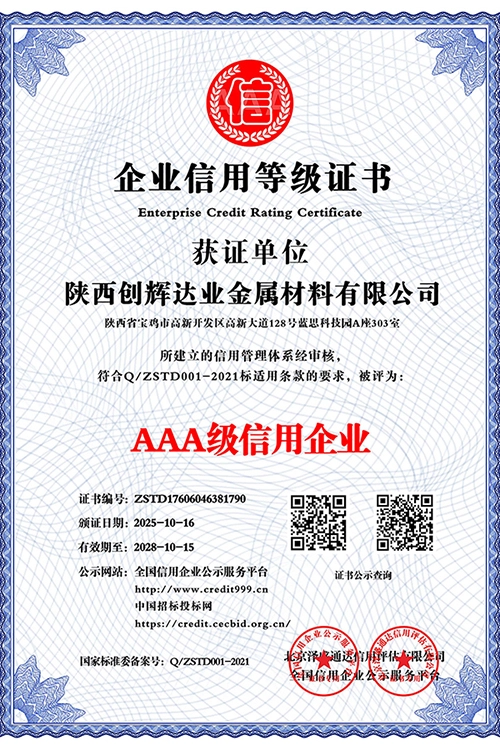 |
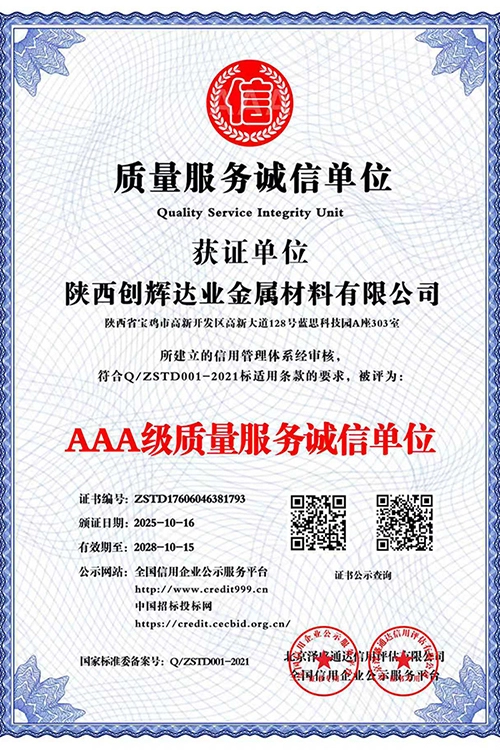 |
 |
 |
 |
 |
FAQ
Q: How do R04200 and R04210 differ?
A: R04200 (Type 1) is Reactor Grade niobium. Impurity limits on this grade are tighter. Nuclear and superconducting work is what it is made for. R04210 (Type 2) has controlled tantalum in it. Corrosion resistance for chemical use stays about the same. Nuclear cross-section requirements, though, may not be met.
Q: Why is machining niobium rods so hard?
A: This metal is soft and ductile. It galls easily, though. Carbide tooling will work, and so will high-speed steel. A water-soluble coolant also does the job. Keep the rake angles high.
Q: Can niobium rods be welded to steel?
A: No. Weld it straight and brittle intermetallics show up. The joint fails after that. Use explosion bonding instead. Mechanical fastening works too.
Q: What does the RRR value indicate?
A: RRR (Residual Resistance Ratio) compares the electrical resistivity at room temperature with the value at very low temperature. A higher number means higher purity. RRR data is not in the specifications above. Need it for your application? Ask by email.
Q: Is hydrofluoric acid (HF) something niobium rods can take?
A: No. Nitric acid does not bother niobium. Hydrochloric acid is fine too. Sulfuric acid gives no trouble either. Hydrofluoric acid is a different story. It will go after the metal. Hot concentrated alkaline solutions do the same.
Q: Which diameters and lengths do your this product come in, and what surface finishes can you offer?
A: Diameter is 1–50 mm, length is customized, and the surface is polished.
Contact Us
Email your drawing, grade, diameter, length, and quantity of niobium round rods to info@chdymetal.com for a quotation or technical questions.
Learn about our latest products and discounts through SMS or email