- English
- French
- German
- Portuguese
- Spanish
- Russian
- Japanese
- Korean
- Arabic
- Greek
- German
- Turkish
- Italian
- Danish
- Romanian
- Indonesian
- Czech
- Afrikaans
- Swedish
- Polish
- Basque
- Catalan
- Esperanto
- Hindi
- Lao
- Albanian
- Amharic
- Armenian
- Azerbaijani
- Belarusian
- Bengali
- Bosnian
- Bulgarian
- Cebuano
- Chichewa
- Corsican
- Croatian
- Dutch
- Estonian
- Filipino
- Finnish
- Frisian
- Galician
- Georgian
- Gujarati
- Haitian
- Hausa
- Hawaiian
- Hebrew
- Hmong
- Hungarian
- Icelandic
- Igbo
- Javanese
- Kannada
- Kazakh
- Khmer
- Kurdish
- Kyrgyz
- Latin
- Latvian
- Lithuanian
- Luxembou..
- Macedonian
- Malagasy
- Malay
- Malayalam
- Maltese
- Maori
- Marathi
- Mongolian
- Burmese
- Nepali
- Norwegian
- Pashto
- Persian
- Punjabi
- Serbian
- Sesotho
- Sinhala
- Slovak
- Slovenian
- Somali
- Samoan
- Scots Gaelic
- Shona
- Sindhi
- Sundanese
- Swahili
- Tajik
- Tamil
- Telugu
- Thai
- Ukrainian
- Urdu
- Uzbek
- Vietnamese
- Welsh
- Xhosa
- Yiddish
- Yoruba
- Zulu
Tantalum Seamless Tube
Tantalum Seamless Tube for Chemical, Semiconductor and Nuclear Use: Weld-Free, Thin-Wall Corrosion Protection
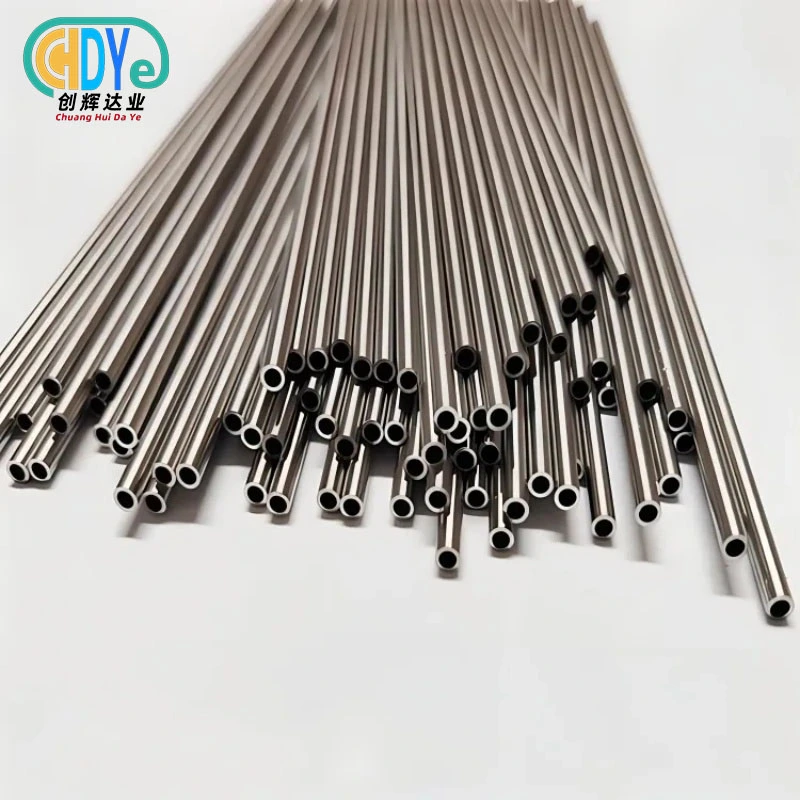
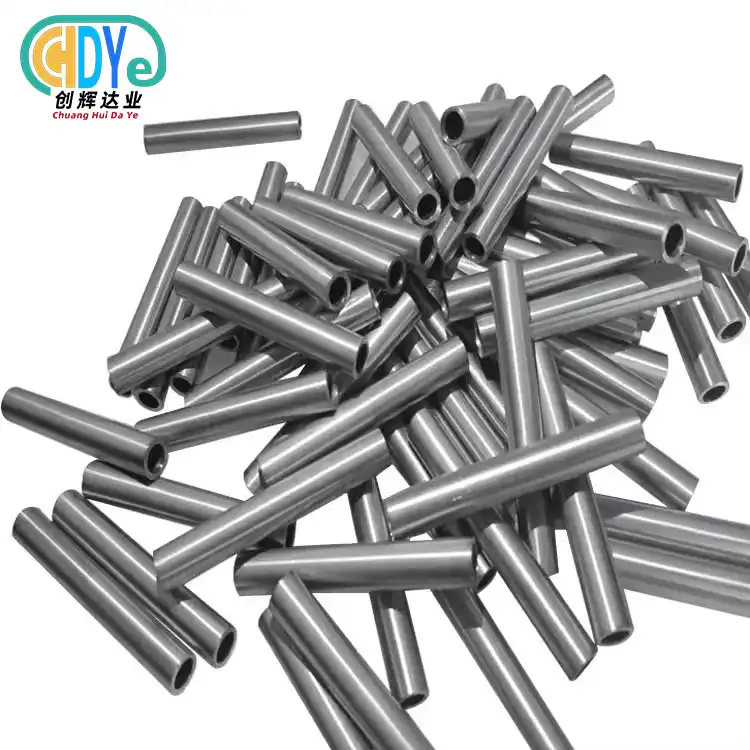
Tubing in chemical process lines has to resist corrosion. No weld seam is the other requirement. Semiconductor lines and nuclear lines ask for the same. Tantalum Seamless Tube is a common pick for this work. Shaanxi Chuanghui Daye Metal Material Co., Ltd. supplies it in unalloyed tantalum or tantalum-tungsten alloy. Purity runs from 3N5 to 4N. Wall thickness can go down to 0.3 mm. Making the tubes starts with VAR or EB melted ingots. Extrusion comes next. Tube rolling is another route, and so is cold pilgering. Rotary forging gets used too. Cold drawing plays a part as well. Send your grade, dimensions and operating conditions. The team will check them before production.
Overview
The tube carries no longitudinal weld seam. Because of that, the microstructure stays the same around the full circumference. Weld heat-affected zone (HAZ) is missing as well. Corrosion failures often begin in that zone.
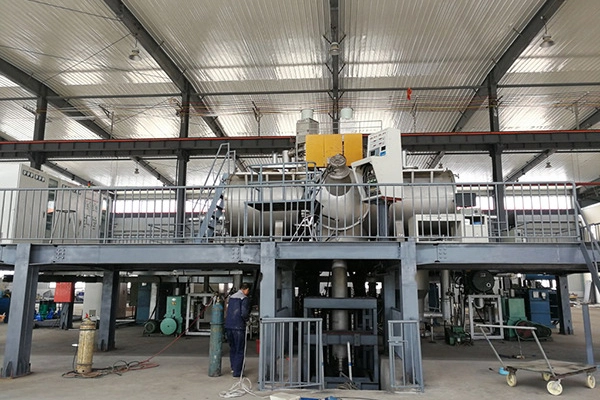
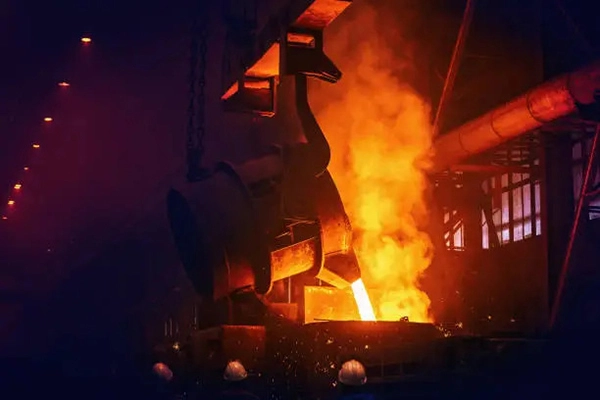
Unalloyed tantalum is one material used for This product. Tantalum-tungsten alloy is the other. Ingots get melted by Vacuum Arc Remelting (VAR) or Electron Beam (EB) melting. What comes out is a clean, dense starting material.
Fluid tanks are a common place to find it. So are glass-lined containers, thermowells, and thermocouple protection sheaths. You will also see it in emitters and sleeves. Plasma spray targets use the tube too, and so do tubular sputtering targets.
Where It Helps
- Corrosion: Hot sulfuric acid (H2SO4) and hydrochloric acid (HCl) service is where tantalum shows up a lot. A seam is usually the weak spot. Take the seam out and the weak spot is gone.
- Heat transfer: Go down to 0.3 mm wall thickness and the heat transfer coefficient in heat exchangers can climb. That helps offset what the material costs.
- Process purity: In high-purity pharmaceutical production, metal ion release stays lower when tantalum is used.
- Pressure and fatigue: Pressures above 50 bar are no issue for a weld-free build. Loads that change cause no trouble either, as in high-pressure reactors.
- Hydrogen pickup: Never let it touch less noble metals through galvanic contact. Free fluoride ions have no place in the process fluid. The same goes for strong alkaline solutions. More on handling is in the notes below.
Specifications
|
Mechanical Property |
Grade |
Tensile strength min |
Yield strength min, |
Elongation min,% |
|
Pure Ta(R05200 R05400) |
30000(207) |
20000(138) |
20 |
|
|
Ta-10W(R05255) |
70000(482) |
60000(414) |
15 |
|
|
Ta-2.5W(R05252) |
40000(276) |
30000(207) |
20 |
|
|
Ta-40Nb(R05240) |
35000(241) |
20000(138) |
25 |
Outer diameter and length are missing from the specification data we were given. Check both against your drawing before you order.
Manufacturing and Quality
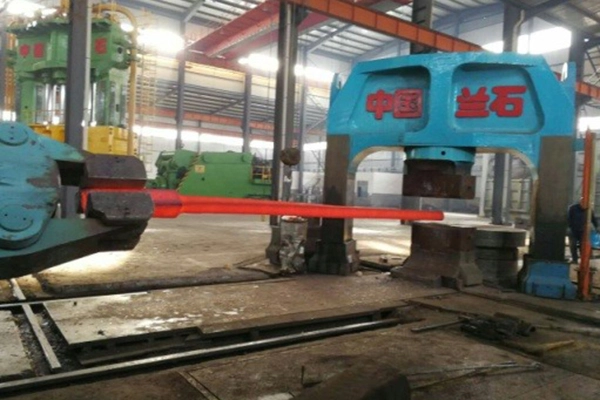
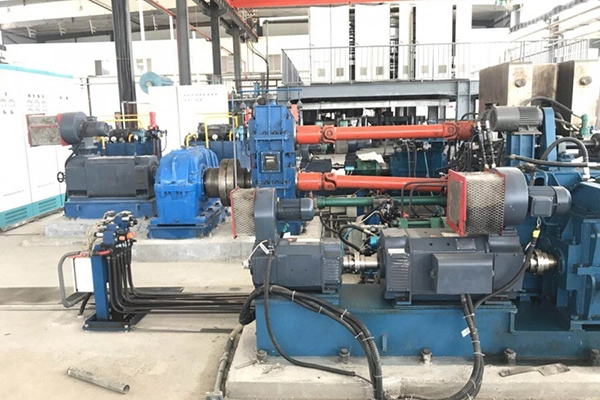
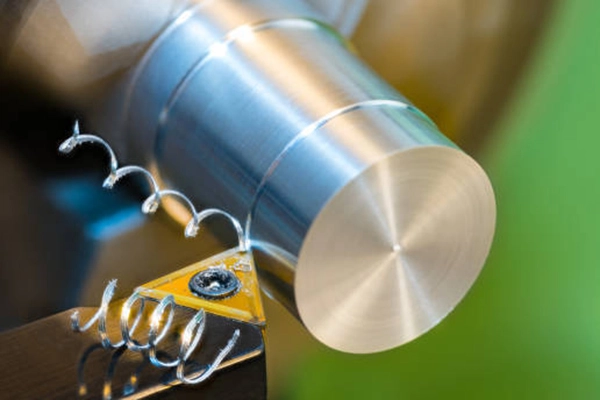
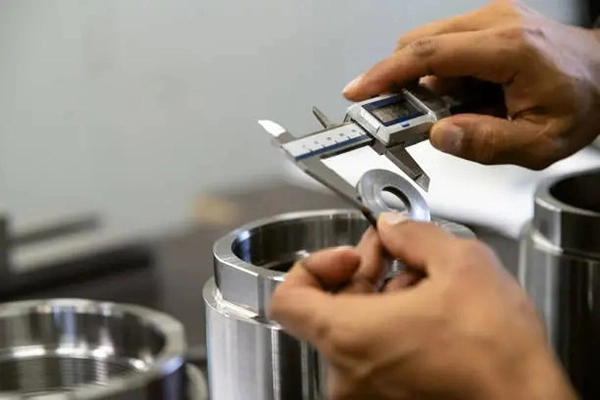
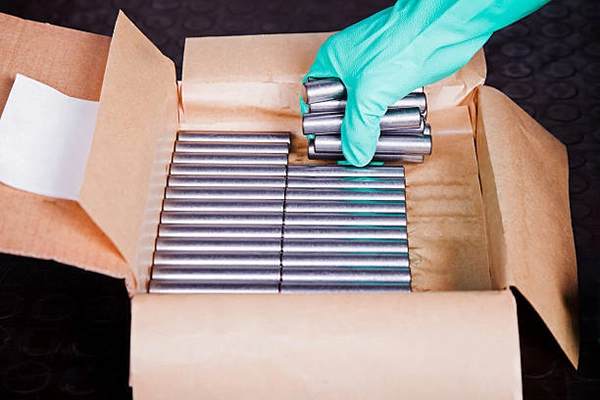
It starts with ingots melted by VAR or EB. Extrusion comes next. After that the wall gets thinner through tube rolling or cold pilgering. Rotary forging and cold drawing then take the tube to its final size. A grain structure that stays uniform across the cross-section is what this route aims for. Purity from 3N5 to 4N also holds contamination down in semiconductor work.
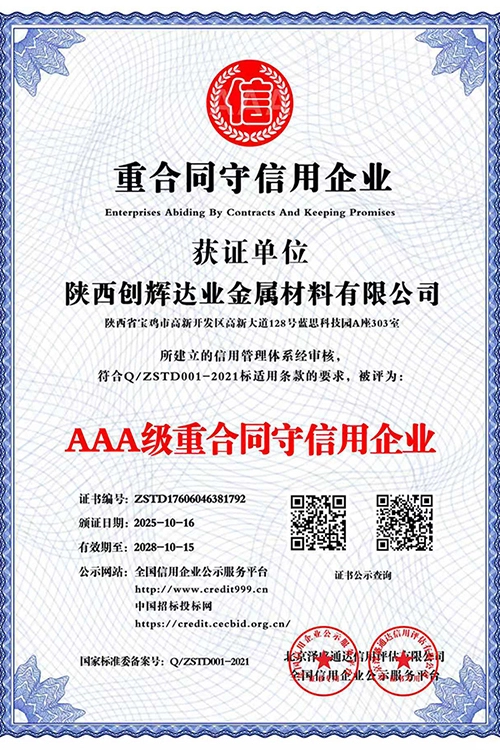
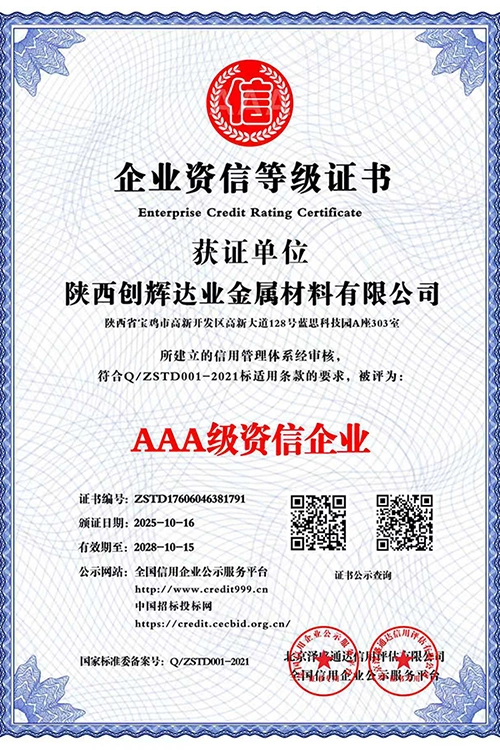
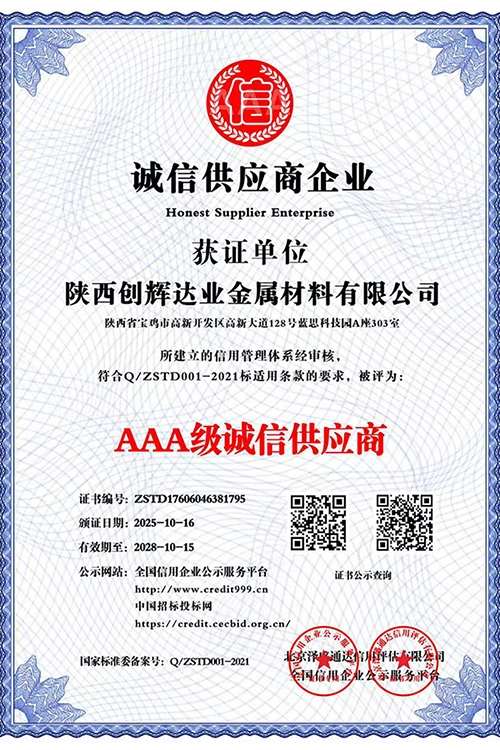
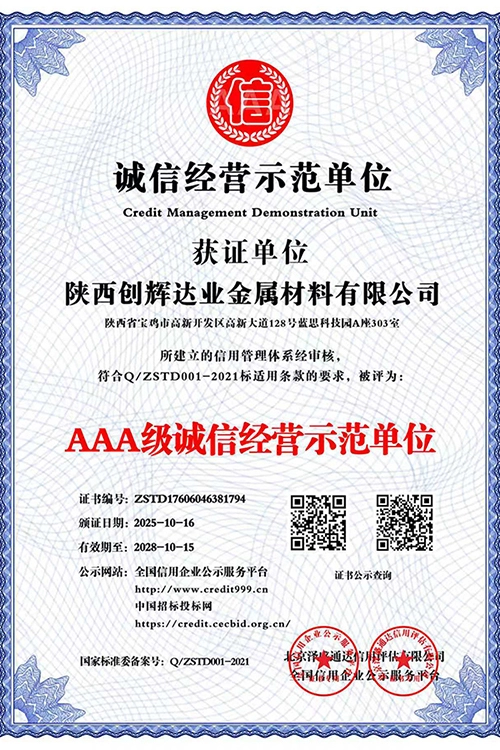
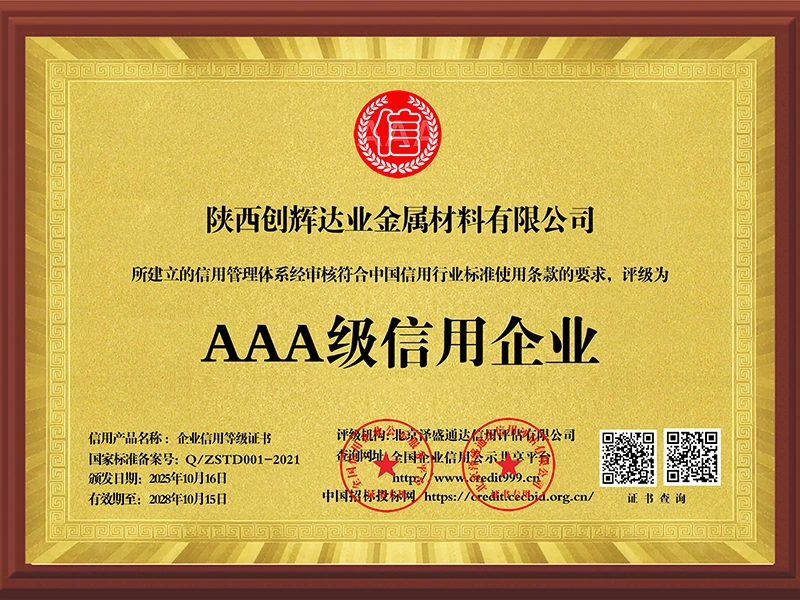
Shaanxi Chuanghui Daye works out of the Baoji High-tech Development Zone. Our founder has spent over 30 years in rare metals. More than 50 countries have taken our shipments. The United States, Germany, South Korea and Singapore are among them. Send us the grade and dimensions you need. We confirm both before production begins. Need inspection documents or test reports? Ask about availability when you send the inquiry.
Applications
Shell and tube heat exchangers: Bromine gets condensed and reboiled inside these tubes. Nitric acid and concentrated sulfuric acid go through the same step. Bend the tubes into U-bundles, and compact reactors pick up more surface for heat transfer.
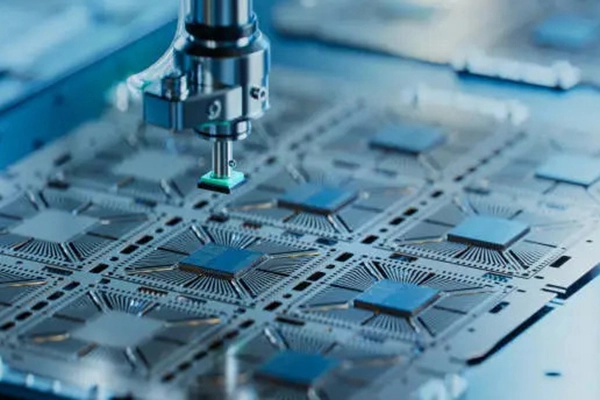
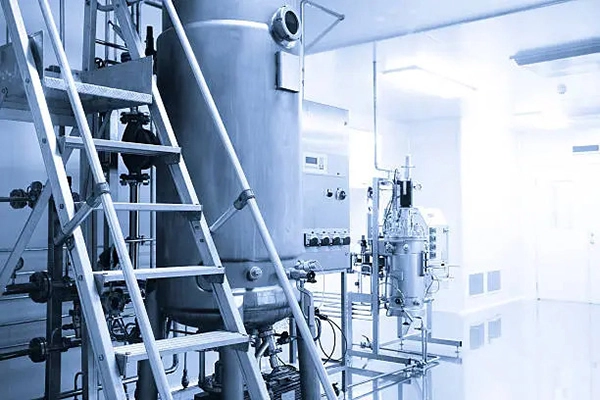
Semiconductor and electronics: Thermocouple sheaths are made from these tubes. Furnace parts for CVD and PVD come from them too. Silicon wafers stay clean because the material is very pure. At those temperatures, ordinary metals would corrode or give off gas.
Liquid metal nuclear systems: Loops that carry liquid lithium or sodium can be built from these tubes. Fusion research loops are one use. What counts there is holding up against liquid metal corrosion and creep under high heat.
Pharmaceutical processing: Not one metal ion can be allowed into the product stream. A Tantalum Seamless Tube blocks them. Electropolishing down to Ra < 0.4 µm gives the surface the smooth finish this duty asks for.
Tantalum Seamless Tube Handling and Operating Notes
- Temperature: Past 250 °C, tantalum begins to oxidize fast in air. It picks up gases as well. At that point you need a vacuum or some kind of inert gas cover. Feed it non-oxidizing fluids instead and the tube will take higher temperatures.
- Hydrogen control: Keep the tantalum shielded from metals that are less noble. Free fluoride ions should not be in the process fluid at all. Strong alkaline solutions have no place there either.
- Joining: Do not fusion weld tantalum to steel or nickel alloys. Ever. Brittle intermetallics form when you try. Explosion bonding is one safe route. Tantalum-lined flanges are another. Mechanical fittings work as well.
Supply and Customization
Unalloyed tantalum works. So does the tantalum-tungsten alloy. Pick bright annealed, pickled, or electropolished for the surface. Size comes from your drawing. Every this product order gets quoted against the grade and drawing you send.
Titanium, niobium, tungsten, molybdenum, zirconium and nickel products sit in our range as well. Metallurgy is one field our materials serve. So are medical work and special steel. That means you can buy several metals, including Tantalum Seamless Tube, from a single supplier.
|
Advantage |
Disadvantage |
illustrate |
|
|
Welded tube |
1: Uniform wall thickness and good inner surface quality 2: High production efficiency. Low cost 3: Easy to produce large diameter pipes 4: Short production cycle 5: Easy to control product quality |
1: Poor flexibility, not suitable for producing products with many specifications and small batches 2: The weld is often the weak link 3: It is difficult to clean the weld 4: The ovality is not easy to control 5: High requirements for the dimensional accuracy of the strip used |
Generally suitable for producing large batches of products. |
|
Seamless tube |
1: Can produce small-sized pipes and capillary pipes 2: Good flexibility, suitable for producing small batches and multiple specifications of products. 3: Uniform performance of each part of the pipe |
1: The uniformity of wall thickness is difficult to control 2: The production cycle is long and the yield rate is low 3: The equipment is complex and the investment is large 4: It is difficult to produce large diameter pipes |
Generally suitable for producing products with small batches and large specifications |
 |
 |
 |
 |
 |
 |
 |
 |
 |
 |
 |
|
|
|
|
|
 |
 |
 |
 |


 |
 |
 |
 |
 |
 |



FAQ
Q: Which one fits my job, weld-free tantalum tube or welded?
A: Past 50 bar, choose weld-free tube. Fatigue loads call for the same choice. Severe corrosion does too. Welded tube handles low-pressure piping in large diameters. It usually costs less.
Q: How hot can it run in air?
A: Once the temperature passes 250 °C, use vacuum or inert gas to protect the tube. Outside protection still counts when the fluid inside is non-oxidizing.
Q: How do I stop hydrogen embrittlement?
A: Keep the tube clear of metals that are less noble. Free fluoride ions must also stay away from the oxide layer, and so should strong alkaline solutions.
Q: What surface finish suits pharmaceutical use?
A: Bright annealed finishes are available. So are pickled ones. Electropolishing gets you to Ra < 0.4 µm.
Q: Can tantalum tube be welded to other materials?
A: No, fusion welding to steels or nickel alloys is not the way to go. Instead use explosion bonding. Lined flanges work too, and so do mechanical fittings.
Q: How thin can the wall be?
A: This product can be supplied with wall thickness down to 0.3 mm, which can improve heat transfer in heat exchangers.
Contact Us
Send your grade, size and quantity to info@chdymetal.com for a quotation. Our team will reply with a quote for your Tantalum Seamless Tube order.

Learn about our latest products and discounts through SMS or email