- English
- French
- German
- Portuguese
- Spanish
- Russian
- Japanese
- Korean
- Arabic
- Greek
- German
- Turkish
- Italian
- Danish
- Romanian
- Indonesian
- Czech
- Afrikaans
- Swedish
- Polish
- Basque
- Catalan
- Esperanto
- Hindi
- Lao
- Albanian
- Amharic
- Armenian
- Azerbaijani
- Belarusian
- Bengali
- Bosnian
- Bulgarian
- Cebuano
- Chichewa
- Corsican
- Croatian
- Dutch
- Estonian
- Filipino
- Finnish
- Frisian
- Galician
- Georgian
- Gujarati
- Haitian
- Hausa
- Hawaiian
- Hebrew
- Hmong
- Hungarian
- Icelandic
- Igbo
- Javanese
- Kannada
- Kazakh
- Khmer
- Kurdish
- Kyrgyz
- Latin
- Latvian
- Lithuanian
- Luxembou..
- Macedonian
- Malagasy
- Malay
- Malayalam
- Maltese
- Maori
- Marathi
- Mongolian
- Burmese
- Nepali
- Norwegian
- Pashto
- Persian
- Punjabi
- Serbian
- Sesotho
- Sinhala
- Slovak
- Slovenian
- Somali
- Samoan
- Scots Gaelic
- Shona
- Sindhi
- Sundanese
- Swahili
- Tajik
- Tamil
- Telugu
- Thai
- Ukrainian
- Urdu
- Uzbek
- Vietnamese
- Welsh
- Xhosa
- Yiddish
- Yoruba
- Zulu
Can GR5 Titanium Wire Improve Weld Joint Strength?
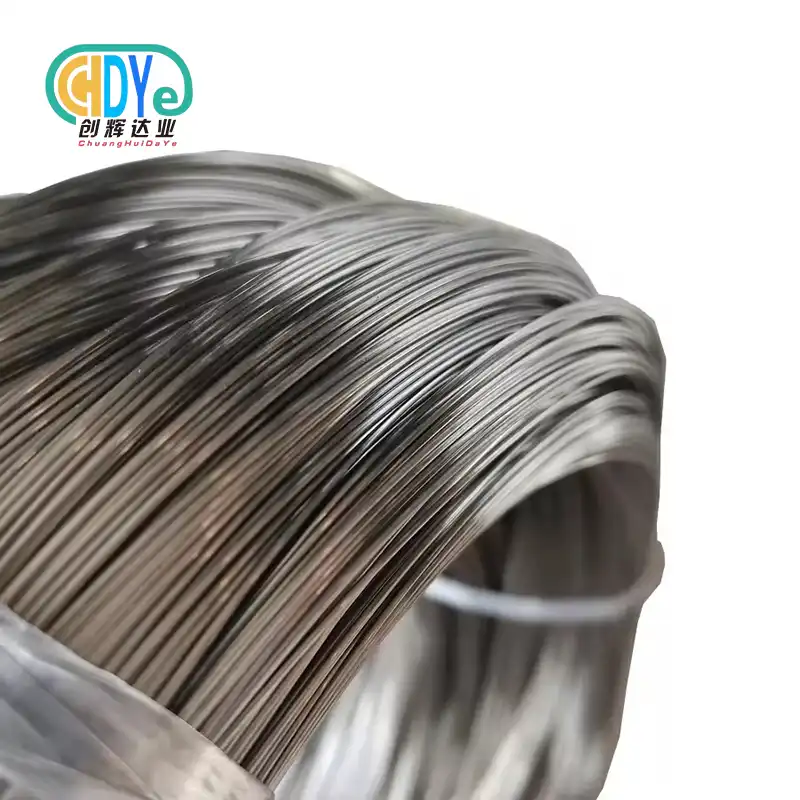
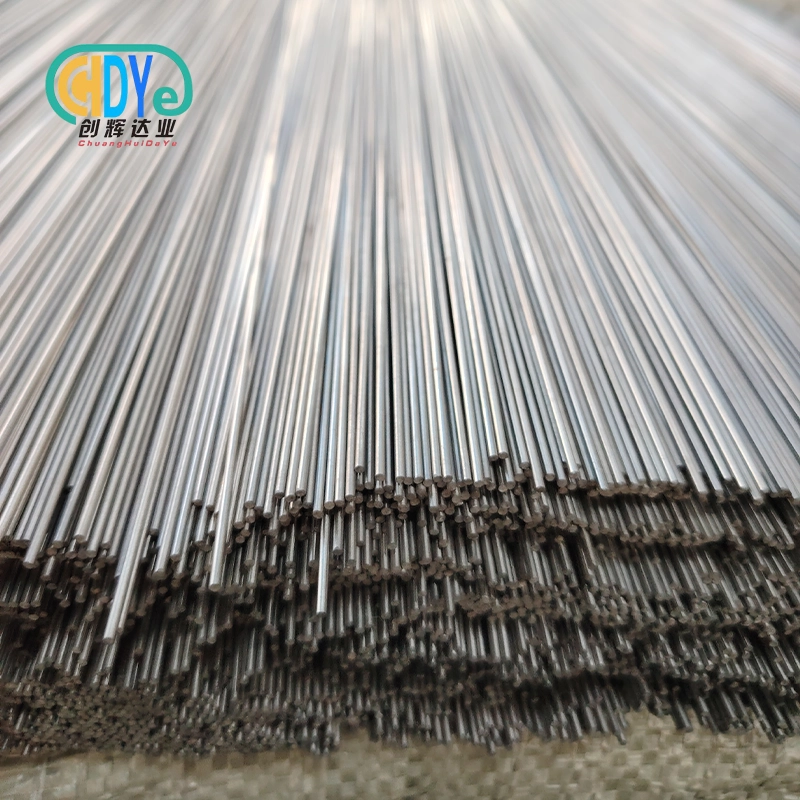
Gr5 titanium wire significantly improves weld joint strength through its superior metallurgical composition and exceptional mechanical properties. The Ti-6Al-4V alloy composition delivers tensile strengths exceeding 925 MPa while maintaining excellent ductility and corrosion resistance. This alpha-beta titanium alloy creates stronger, more durable weld joints compared to widely pure titanium grades, making it the best choice for demanding uses in the aircraft, medical device manufacturing, and chemical processing industries, where joint integrity is very important.
Understanding GR5 Titanium Wire and Its Properties
Gr5 titanium wire is the best titanium metal engineering has ever seen. It is made of pure titanium, 6% aluminum, and 4% vanadium. This makes it a material that can handle the toughest welding problems in modern production. This alpha-beta alloy structure gives it the best mix of strength, workability, and resistance to rust, which is why it is the mainstay of the titanium business.
Chemical Composition and Microstructure
Because Ti-6Al-4V wire is made of very specific chemicals, it has a two-phase lattice that gives it great function. The aluminum content makes the alpha phase stronger and provides solid solution stiffening. The vanadium content keeps the beta phase stable and improves its flexibility and toughness. This carefully balanced mix makes sure that soldered parts keep their mechanical properties even in areas that have been heated. Advanced heating, drawing, and annealing methods are used at factories like Shaanxi Chuanghui Daye Metal Material Co., Ltd. to make the wire's architecture better. The company's electron beam furnace technology keeps the amount of oxygen and iron in the intermediate elements well below 0.20% and 0.40%, respectively, to keep the material from becoming weak.
Mechanical Properties and Performance Standards
Grade 5 titanium wire has amazing mechanical qualities that directly lead to better performance in weld joints. Tensile strengths of the material are usually above 925 MPa (135 ksi), and yield strengths are usually above 870 MPa (127 ksi). The material also stretches about 10%. Stringent adherence to foreign standards, such as ASTM B863 and AWS A5.16 specifications, keeps these qualities. The wire's mass of 4.43 g/cm³ gives it a great strength-to-weight ratio, and its beta transus temperature of about 995°C makes heat treatment methods work well. The fact that it is strong and light at the same time makes it perfect for situations where both are important in joint design.
GR5 Titanium Wire vs Other Materials in Welding Applications
When procurement workers compare welding materials, they can see why Grade 5 titanium wire is being used more and more in serious situations. When comparing strength, resistance to corrosion, and long-term longevity to other materials that are often used in industrial welding, the performance benefits become clear.
Performance Comparison with Alternative Materials
Even though stainless steel welding wires are cheap, they are heavier and don't fight corrosion very well in chemical and marine settings. The rust protection of grade 2 titanium is very good, but it is not strong enough for high-stress uses. This performance gap is filled by gr5 titanium wire, which is both very strong and very resistant to rust. Comparing Grade 5 titanium to Grade 23 (ELI) titanium, Grade 5 is stronger while still being flexible enough for most industrial uses. Niobium and tantalum are options that are very good at resisting corrosion, but they are much more expensive and can't be processed in the same way as other metals, so they aren't good for large-scale production.
Application-Specific Advantages
Ti-6Al-4V welding wire has special properties that help different types of businesses in different ways. Aerospace companies like how stable it is at high temperatures and how well it resists wear. Chemical processing companies depend on how well it resists rust and how well it holds together mechanically. Manufacturers of medical devices like that it be biocompatible and strong enough for load-bearing artificial joints. Because the wire is so easy to cut and solder, it can be joined in a lot of different ways while still having the same mechanical qualities. Because it is so flexible, engineers can make joint configurations that are strong while also using as little weight and material as possible.
How GR5 Titanium Wire Can Improve Weld Joint Strength
The benefits of gr5 titanium wire in the field of metalworking directly lead to changes in the strength and performance of welded joints. Knowing about these processes helps procurement workers choose materials and work with suppliers in smart ways.
Metallurgical Mechanisms of Strength Enhancement
Ti-6Al-4V's alpha-beta microstructure makes a weld zone with better mechanical qualities than pure titanium types that are sold in stores. The controlled cooling rate during welding protects the helpful dual-phase structure. This makes joints that keep the strength of the base material while also having great fusion zone qualities. The additions of aluminum and vanadium make the solid solution stronger in a way that lasts through the welding heat cycle. This keeps the heat-affected zone's mechanical qualities close to those of the base material, so there are no weak spots like there are with some other welding materials.
Fatigue Resistance and Long-Term Performance
Case studies from the business world show that using Grade 5 titanium welding wire makes a big difference in the wear life. Because the material is very good at stopping cracks from spreading and has a high cycle failure strength, it will last longer under active loading conditions. This performance edge is especially useful in aerospace and automotive uses, where parts are stressed over and over again. The wire's high resistance to corrosion makes joints last longer in tough settings, which cuts down on repair needs and downtime. When compared to stainless steel options, Ti-6Al-4V welded parts are said to last longer in chemical processing plants.
Quality Control and Traceability
Suppliers with a good reputation, like Chuanghui Daye, keep their ISO 9001:2015 certification up to date and provide a lot of paperwork that makes it easy to track down materials. This quality assurance lets buying teams check the features of materials and make sure they keep up with industry standards all along the supply chain.
Procurement Considerations for GR5 Titanium Wire
To get high-quality titanium welding wire, you need to carefully look at the skills of the seller, the certifications of the materials, and how well they deliver. When buying, workers understand these factors, and they can get the best results in terms of both cost and performance.
Supplier Evaluation and Certification Requirements
To find suitable suppliers, you have to look at their manufacturing skills, quality control methods, and expert help resources. Leading suppliers keep up-to-date factories with specialized tools like vacuum melting ovens, precise drawing machines, and controlled atmosphere annealing systems. These skills make sure that the qualities of materials stay the same and that the supply chain works well all the time. As part of the certification process, products must meet foreign standards like ASTM B863 for general uses and AWS A5.16 for welding supplies. For aerospace uses, you might need extra approvals, like meeting AMS requirements and AS9100 quality system requirements.
Custom Sizing and Lead Time Considerations
To keep up with changing production plans and requirements, modern factories need supply chains that are flexible. Gr5 titanium wire providers should have a wide range of sizes, from 0.5 mm to 6.0 mm in thickness, in both straight wire and coil forms. With the ability to cut to custom lengths and support for fast prototyping, just-in-time shipping can be made to meet production needs. The ability to order samples lets you test materials and come up with new ways to weld them before making big purchases. This method lowers the risks and makes sure that the joint works best in certain situations.
Cost Optimization Strategies
To handle costs well, you need to find a balance between the prices of materials, the benefits they provide, and the total cost of ownership. Volume purchasing deals can save you money and make sure that you always have the materials you need. When you build long-term ties with suppliers, you can often get better prices and faster delivery times. When reviewing providers, procurement teams should look at the whole value offer, which should include performance of the materials, expert support, and the stability of the supply chain. When efficiency benefits and lower maintenance needs are taken into account, the lowest starting cost might not be the best total value.
Recommendations for B2B Clients: Optimizing Weld Joint Strength Using GR5 Titanium Wire
Getting the most out of gr5 titanium wire requires careful planning that includes choosing the right materials, working with suppliers, and making sure the process runs as smoothly as possible. These suggestions help business-to-business clients get the best results at the lowest cost.
Material Selection and Specification Development
To properly specify a material, the properties of the wire must be matched to the needs of the application. The choice of diameter affects the amount of current that can flow and how deep it can go, while the standards for the surface finish affect how clean the weld pool is and how stable the arc is. Working with sources who have a lot of knowledge can help you with technical issues as you're making the specifications. Depending on what needs to be done after the join, heat treatment may affect the choice of material. Solution-treated and aged conditions can make the metal stronger for important uses, while annealed conditions make the metal as flexible as possible for complicated joint shapes.
Process Integration and Quality Assurance
To make it work, the new system needs to be carefully integrated with the current quality control and welding processes. The right way to store and handle materials protects their quality and stops pollution that could weaken the weld. For stopping alpha case development and keeping joint properties, inert gas shielding standards are very important. Welding process training and welder certification make sure that the quality of the joint is always the same and that all rules and standards are followed. Regular quality checks and testing of materials make sure that performance is still good, and find ways to make the process better.
Technical Support and Partnership Development
When you have good ties with your suppliers, you can get professional help and support for the whole lifecycle of your product. Experienced providers can help with developing welding procedures, fixing problems, and making the best use of a material's properties. This way of working together improves the results of buying and the dependability of manufacturing while cutting down on development costs and time to market.
Conclusion
Because it has better mechanical qualities, is less likely to rust, and has the best microstructural features, gr5 titanium wire makes weld joints much stronger. The Ti-6Al-4V metal has tensile strengths greater than 925 MPa while still being flexible and easy to work with, which is important for difficult welding tasks. Partnering with certified providers who offer full technical support, flexible sizing choices, and reliable supply chain performance is good for procurement pros. This Grade 5 titanium wire is a great choice for demanding industrial uses in the aircraft, medical, and chemical processing industries because it has better joint strength, longer service life, and less upkeep needs.
FAQ
Q: Can GR5 titanium wire be used for all types of weld joints?
A: Grade 5 titanium wire can be used for the most common types of joints, such as corner joints, fillet welds, and butt joints. Because the material is so easy to weld and has good mechanical qualities, it can be used in a wide range of joint shapes. But for some jobs, the welding process may need to be qualified to make sure it works well in tough service conditions.
Q: How does GR5 titanium wire compare to stainless steel in corrosion resistance?
A: Ti-6Al-4V wire is more resistant to corrosion than most types of stainless steel, especially in chloride conditions and naval settings. Titanium surfaces get an inactive oxide layer that protects them very well against pitting and crevice rust. This benefit means that the product will last longer and need less upkeep in difficult working conditions.
Q: What kinds of approvals should I look for when I buy GR5 titanium wire?
A: For general uses, ASTM B863 approval is necessary, and for welding supplies, AWS A5.16 (ERTi-5) certification is needed. For aerospace uses, AMS standards and AS9100 quality system requirements are usually needed. With ISO 9001:2015 approval, you can be sure that quality is managed throughout the whole production process. Each package should come with material test papers and paperwork that shows how the goods can be tracked.
Partner with Chuanghui Daye for Premium GR5 Titanium Wire Solutions
Shaanxi Chuanghui Daye stands as your trusted gr5 titanium wire supplier, combining three decades of rare metal expertise with state-of-the-art manufacturing capabilities in China's Titanium Capital. Our ISO 9001:2015 certified facility produces Ti-6Al-4V wire in diameters from 0.5mm to 6.0mm, available in straight wire or coil configurations with custom length capabilities. Located in Baoji High-tech Development Zone, we leverage advanced electron beam furnaces and precision drawing equipment to deliver consistent quality and reliable supply chain performance. Contact our technical team at info@chdymetal.com to discuss your specific requirements and experience the Chuanghui Daye advantage in material excellence and customer service.
References
1. Boyer, R. R. "An Overview on the Use of Titanium in the Aerospace Industry." Materials Science and Engineering: A, Vol. 213, pp. 103-114, 1996.
2. Donachie, Matthew J. "Titanium: A Technical Guide, 2nd Edition." ASM International, Materials Park, Ohio, 2000.
3. Peters, M. and Leyens, C. "Titanium and Titanium Alloys: Fundamentals and Applications." Wiley-VCH, Weinheim, Germany, 2003.
4. Welsch, G., Boyer, R., and Collings, E.W. "Materials Properties Handbook: Titanium Alloys." ASM International, Materials Park, Ohio, 1994.
5. American Welding Society. "Specification for Titanium and Titanium Alloy Bare Welding Rods and Electrodes." AWS A5.16/A5.16M, Miami, Florida, 2013.
6. ASTM International. "Standard Specification for Titanium and Titanium Alloy Wire." ASTM B863-17, West Conshohocken, Pennsylvania, 2017.
Learn about our latest products and discounts through SMS or email