- English
- French
- German
- Portuguese
- Spanish
- Russian
- Japanese
- Korean
- Arabic
- Greek
- German
- Turkish
- Italian
- Danish
- Romanian
- Indonesian
- Czech
- Afrikaans
- Swedish
- Polish
- Basque
- Catalan
- Esperanto
- Hindi
- Lao
- Albanian
- Amharic
- Armenian
- Azerbaijani
- Belarusian
- Bengali
- Bosnian
- Bulgarian
- Cebuano
- Chichewa
- Corsican
- Croatian
- Dutch
- Estonian
- Filipino
- Finnish
- Frisian
- Galician
- Georgian
- Gujarati
- Haitian
- Hausa
- Hawaiian
- Hebrew
- Hmong
- Hungarian
- Icelandic
- Igbo
- Javanese
- Kannada
- Kazakh
- Khmer
- Kurdish
- Kyrgyz
- Latin
- Latvian
- Lithuanian
- Luxembou..
- Macedonian
- Malagasy
- Malay
- Malayalam
- Maltese
- Maori
- Marathi
- Mongolian
- Burmese
- Nepali
- Norwegian
- Pashto
- Persian
- Punjabi
- Serbian
- Sesotho
- Sinhala
- Slovak
- Slovenian
- Somali
- Samoan
- Scots Gaelic
- Shona
- Sindhi
- Sundanese
- Swahili
- Tajik
- Tamil
- Telugu
- Thai
- Ukrainian
- Urdu
- Uzbek
- Vietnamese
- Welsh
- Xhosa
- Yiddish
- Yoruba
- Zulu
IrO2 Coated Titanium Anode
IrO2 Coated Titanium Anode for Electrolysis and Cathodic Protection
The IrO2 Coated Titanium Anode comes from Shaanxi Chuanghui Daye Metal Material Co., Ltd. Cells use it for electrolysis and for cathodic protection. Pure titanium forms the base. That means Grade 1 or Grade 2 under ASTM B265, with purity above 99.5%. On top sits an iridium oxide mixed metal oxide coating. It runs 8–15 microns thick. Some jobs call for current density up to 3000 A/m², and the anode is listed for that. The titanium core can be stripped with chemicals and coated again. Once the coating wears out, the part goes back into service. Custom orders are welcome. Tell us your process conditions and we can talk over a design that fits them.
What Is an Iridium Oxide Coated Titanium Anode?
People also call This product a Dimensionally Stable Anode (DSA). Mixed Metal Oxide (MMO) anode and insoluble titanium anode are two more names for it. The base is high-purity titanium. A catalytic layer of noble metal oxide sits on it, here iridium oxide.
Graphite and lead alloy electrodes came first. This anode was built to replace them. Overpotential runs higher on those older materials. Their shape also shifts during electrolysis, and they can shed contamination as they erode. A titanium anode keeps its geometry instead. Cell voltage and the electrode gap then stay steady while the cell runs.
Specifications
|
Substrate: pure titanium |
coating:Iridium-Tantalum |
|
Current density:≤2000 A/m² |
Coating content≥5g/ m² |
|
Coating thickness ≥ 10μm |
Oxygen evolution potential1.5 v relative to calomel electrode |
This page does not list dimensions, shape or other parameters. Send us your requirements and we will confirm them before you order.


Material and Coating Structure
Pure titanium forms the base. It resists corrosion and keeps the anode body stable over long operating periods. At the surface, the iridium oxide layer supplies the catalytic activity. That 8–15 micron coating is bonded to the titanium substrate.
Other coated titanium anodes come from Chdymetal too, among them RuO2, IrO2 with Ta2O5, platinized and PbO2 types. Not sure which coating fits your process? Describe your electrolyte and how you run the cell. The team will go through the options with you and help you compare them.
Be used in a wide range of industries.

Seawater electrolysis

Marine aquaculture

Chlor-alkali industry

Cathodic protection

Electroplating industry

Non-ferrous metal electrolytic extraction
Performance Characteristics
Graphite and lead alloy electrodes have to reach a higher evolution potential than this anode before chlorine or oxygen comes off. Less power per unit of product can be the result. How much you actually save comes down to your cell design, and to the way you run it.
Neither acidic nor alkaline electrolytes attack it, even with nascent chlorine or oxygen in the mix. The anode does not dissolve while it runs. Nothing contaminates the electrolysis solution. Shape stays the same too, so the electrode gap stays fixed.
Typical Applications
Electrolytic processes and cathodic protection are two typical uses of the IrO2 Coated Titanium Anode. Where do IrO2 and Ta2O5 coated anodes show up? Electrolytic copper foil, aluminum foil, and organic electrolyte production all rely on them.
RuO2 and IrO2 anodes do the work in chlor-alkali production. Sodium hypochlorite generation uses them as well. You will find them in sewage treatment too, and in seawater desalination. Platinized anodes serve electrolytic deposition and water treatment. Perchlorate production and sewage treatment rely on PbO2 coated titanium electrodes.
Service Life, Reuse and Maintenance
Current density and the electrolyte decide how long an anode lasts. The company quotes 3 to over 20 years. Where it lands in that range depends on the application.
Cell voltage climbing fast is a sign. The coating has passivated or worn out. At that stage, This product still has a usable titanium plate. Chemicals strip the old layer. Next, new MMO layers go on. Over the life of the product, that keeps cost down.
For water treatment, clean the anode now and then. Use dilute HCl or citric acid. Scale from calcium and magnesium comes off this way. Keep fluoride ions below 50 ppm. Above that level, they attack titanium.
Customization and Supply of IrO2 Coated Titanium Anode
Chdymetal runs its operation out of Baoji, China. Custom titanium anode orders are one of the things the company takes on. Give the team your size, the coating you want, and the current density your line runs at. A design built around your case comes back to you.
Tantalum sits in the mix as well. Niobium is on the list too. The same goes for tungsten and molybdenum. Zirconium and nickel products are stocked here as well. Should one project call for several materials at once, all of them can be sourced in this one place.




 |
 |
 |
 |
 |
 |
 |
 |
 |
 |
 |
|
|
|
|
|
 |
 |
 |
 |


 |
 |
 |
 |
 |
 |
Before You Request a Quote
Have these details ready. With them we can match the coating thickness and the MMO formulation to your process:
- What the electrolyte contains and how much fluoride it has
- Working current density
- Target service life
- Anode size and shape
- Any standards or inspection documents your project requires
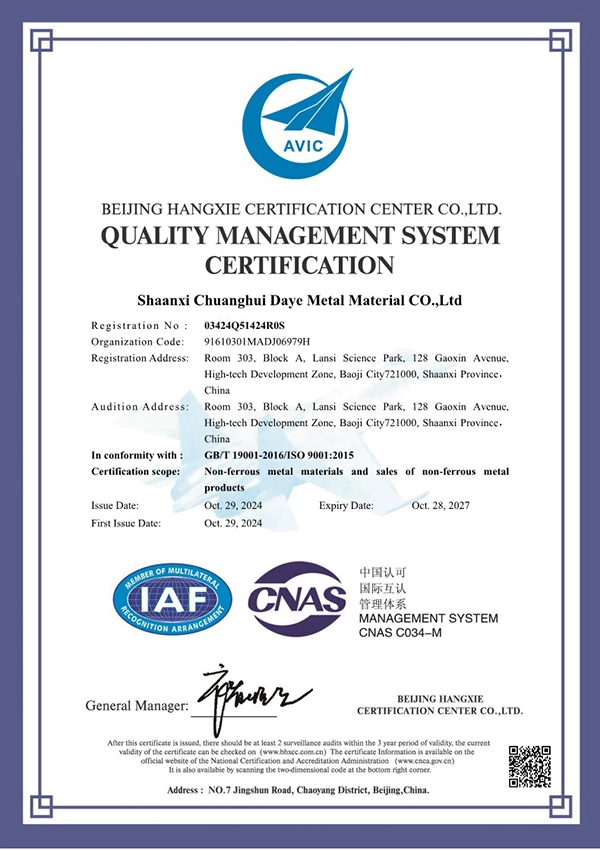
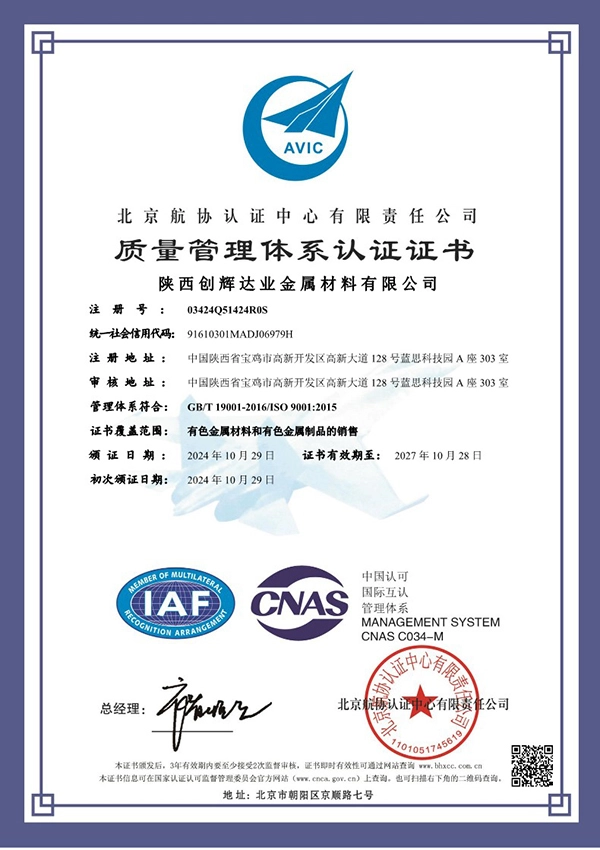
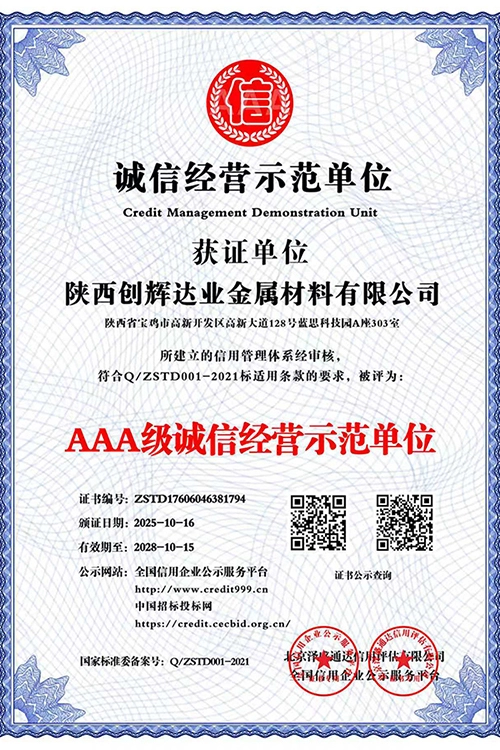
We confirm document availability for the IrO2 Coated Titanium Anode when you send your inquiry.
FAQ
Q: What is the expected service life?
A: The answer depends on your application and the current density. Anywhere from 3 years to more than 20 is normal.
Q: Once the coating wears off, can the substrate be used again?
A: Yes. You can strip the titanium substrate chemically and put new MMO layers on it. That brings the lifecycle cost down.
Q: What tells me the anode is due for replacement?
A: Watch for cell voltage that jumps all at once. That is the biggest sign. Coating has likely worn off by then, or it has passivated.
Q: Does fluoride affect This product?
A: Yes. Titanium gets attacked by fluoride ions. Once that begins, the part may fail in a short time. Keep levels below 50 ppm.
Q: What maintenance is required?
A: For water treatment, clean the anode now and then with dilute HCl or citric acid. Calcium and magnesium scale comes off that way.
Q: How is it different from graphite or lead anodes?
A: The dimensions stay fixed. That keeps the electrode gap and the voltage constant. Nothing ends up in the electrolyte either.
Contact Us
Send your drawings to info@chdymetal.com. The electrolyte details, including the IrO2 Coated Titanium Anode, matter to us too, and so does the current density you run.
Learn about our latest products and discounts through SMS or email