- English
- French
- German
- Portuguese
- Spanish
- Russian
- Japanese
- Korean
- Arabic
- Greek
- German
- Turkish
- Italian
- Danish
- Romanian
- Indonesian
- Czech
- Afrikaans
- Swedish
- Polish
- Basque
- Catalan
- Esperanto
- Hindi
- Lao
- Albanian
- Amharic
- Armenian
- Azerbaijani
- Belarusian
- Bengali
- Bosnian
- Bulgarian
- Cebuano
- Chichewa
- Corsican
- Croatian
- Dutch
- Estonian
- Filipino
- Finnish
- Frisian
- Galician
- Georgian
- Gujarati
- Haitian
- Hausa
- Hawaiian
- Hebrew
- Hmong
- Hungarian
- Icelandic
- Igbo
- Javanese
- Kannada
- Kazakh
- Khmer
- Kurdish
- Kyrgyz
- Latin
- Latvian
- Lithuanian
- Luxembou..
- Macedonian
- Malagasy
- Malay
- Malayalam
- Maltese
- Maori
- Marathi
- Mongolian
- Burmese
- Nepali
- Norwegian
- Pashto
- Persian
- Punjabi
- Serbian
- Sesotho
- Sinhala
- Slovak
- Slovenian
- Somali
- Samoan
- Scots Gaelic
- Shona
- Sindhi
- Sundanese
- Swahili
- Tajik
- Tamil
- Telugu
- Thai
- Ukrainian
- Urdu
- Uzbek
- Vietnamese
- Welsh
- Xhosa
- Yiddish
- Yoruba
- Zulu
Titanium Anode Wire for Water Heater
Titanium Anode Wire for Water Heater and Boiler: Powered MMO-Coated Anode Rod for Long-Term Tank Protection
Corrosion inside a steel tank can cut a heater's life short. Lots of buyers now pick a powered anode, like a Titanium Anode Wire for Water Heater. It guards the tank with impressed current instead of a metal that dissolves. Shaanxi Chuanghui Daye Metal Material Co., Ltd. supplies this product from Baoji, China. The base is ASTM B348 Grade 1 or Grade 2 commercially pure titanium. On top sits a mixed metal oxide coating, usually IrO2/Ta2O5. Input runs at 110–240 V AC. Output is 10–18 V DC. The listed design service life is 10 to 20+ years.
How Impressed Current Protection Works
Rods made of magnesium or aluminum serve as sacrificial parts. They break down so the tank stays protected. A powered anode does not work that way. A controlled DC current at low voltage runs through a titanium substrate. The substrate itself does not dissolve.
That current moves the steel tank into a protected state. Corrosion on the inner steel surface slows down. Titanium does not get used up. So protection does not depend on a rod wearing away when water conditions change.
An AC power supply feeds the unit. The DC output listed below comes from the control module.
Specifications
 |
 |
 |
 |
 |
 |
 |
 |
Rod length, diameter, weight and other dimensions are not listed here. Send your tank details and our team will confirm them before you order.


Material and Coating
Current flows through the titanium core. The core itself plays no part in the reaction. Two grades, Grade 1 and Grade 2, are commercially pure.
The active layer is a mixed metal oxide, usually iridium and tantalum based. It is applied to the titanium by thermal decomposition.
Because the rod is inert, the reactions between magnesium or aluminum and bacteria in the water do not occur at the anode. A Titanium Anode Wire for Water Heater can therefore reduce one common source of odor and sludge.
Quality Checks to Request
How a coated titanium anode is judged usually comes down to a few inspection items. Each one matters for long-term performance.
- Coating thickness and uniformity: X-ray fluorescence (XRF) will show the MMO thickness. It also reveals how the iridium and tantalum are spread out.
- Adhesion: Will the coating hold onto the titanium? A cross-cut tape test (ASTM D3359) or a bend test shows you.
- Accelerated life testing: Long service can be simulated with a high current density. NACE TM0108 is one method that works this way.
- Seal inspection: Keep moisture away from the joint where the rod meets the power wire. Water that gets inside can set off crevice corrosion.
What inspection records come with your order? Our team can answer that.
Be used in a wide range of industries.

Seawater electrolysis

Marine aquaculture

Chlor-alkali industry

Cathodic protection

Electroplating industry

Non-ferrous metal electrolytic extraction

Applications
Residential systems with well water. Sulfate-reducing bacteria are often the source of that hydrogen sulfide smell in well water. Magnesium or aluminum can react in a way that feeds the problem. A powered anode does not.
Commercial boilers with water softeners. Softened water carries current well. It can eat through sacrificial anodes faster. A powered titanium anode will not dissolve, so the anode may need fewer service calls.
Large storage tanks and tight mechanical rooms. Where ceiling height is limited, long sacrificial rods can be hard to pull out. Send us your tank size and port clearance. Our team will then confirm which model fits.
Benefits of Titanium Anode Wire for Water Heater Over Sacrificial Anodes
- You will not get a rotten-egg smell. That odor shows up when bacteria react with magnesium.
- Produces no sediment from a dissolving anode.
- Suited to softened water and water with high total dissolved solids (TDS).
- Has an LED on the control module for status checks.
- Uses little power, listed at less than 1–2 kWh per year.
You also avoid regular anode replacement, which means fewer service calls. This product is a practical choice where maintenance access is limited.
Purchasing and Installation Considerations
Check these points before ordering a Titanium Anode Wire for Water Heater:
- Thread and port: Most rods come with a standard NPT thread, 3/4 inch in the usual case. Some boilers have a different anode port, or a nipple-anode setup built in. For those you may need an adapter, or a model with the nipple made into it.
- Water type: Tell us if your water is softened. Also say whether it runs high in sulfur or TDS.
- Power module: Make sure the supply meets the minimum IP54 rating.
- Documents: Request the water-contact and power-module papers your project needs. Have them confirmed in writing. Two examples are NSF/ANSI 61 and UL/CE.
Tell us your tank size and port details. Our team will then confirm the specifications and how the units get packed.
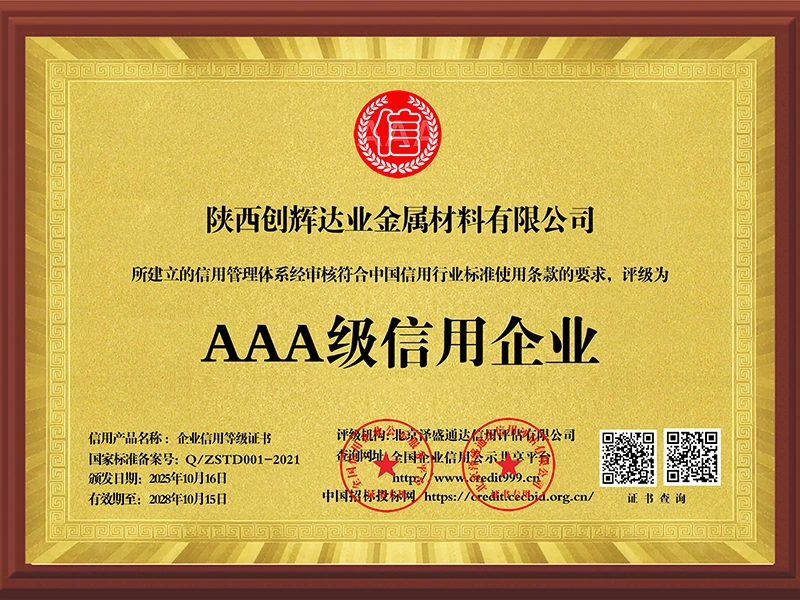
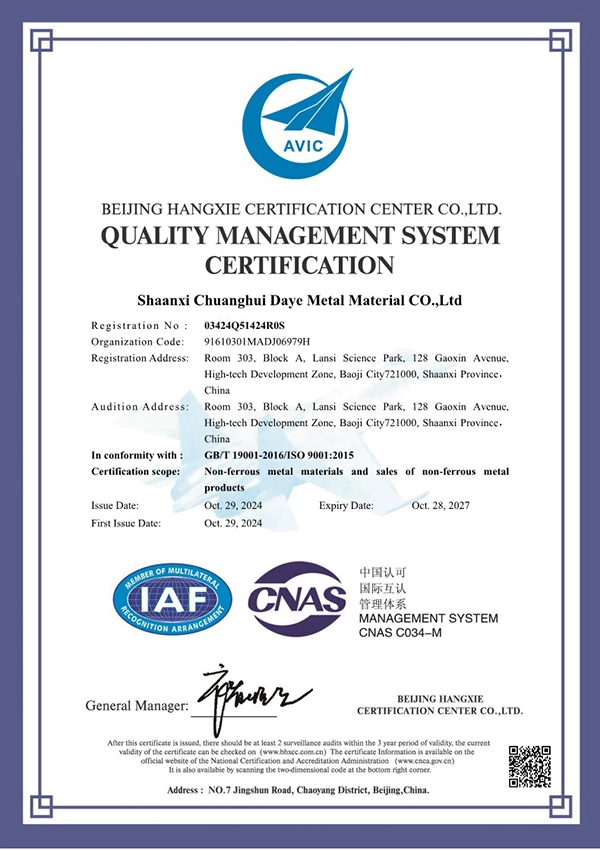
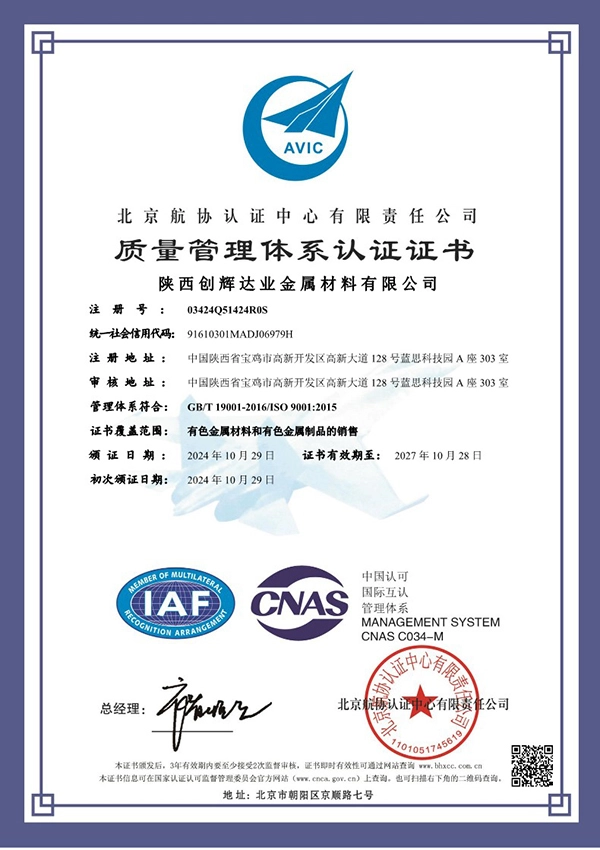
Working With Shaanxi Chuanghui Daye
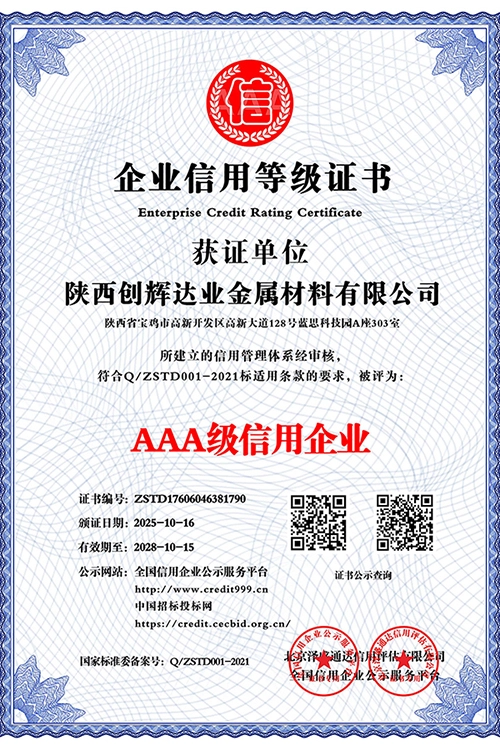
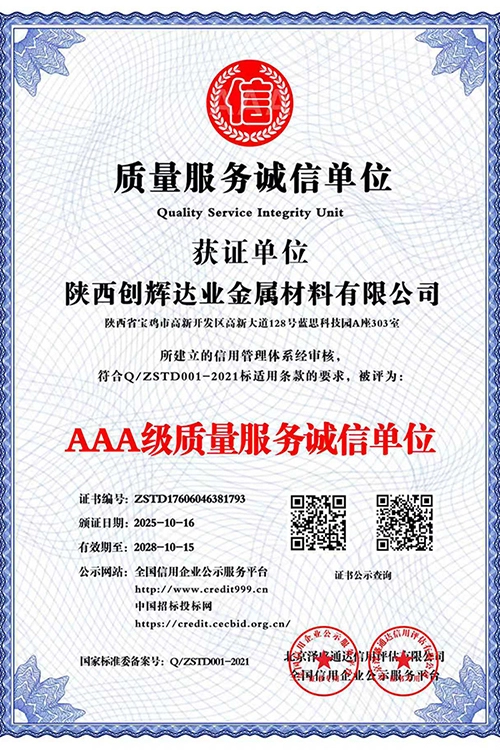
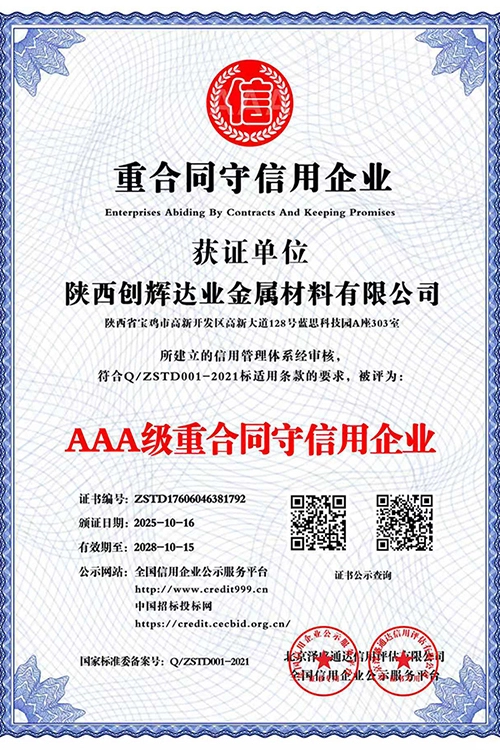
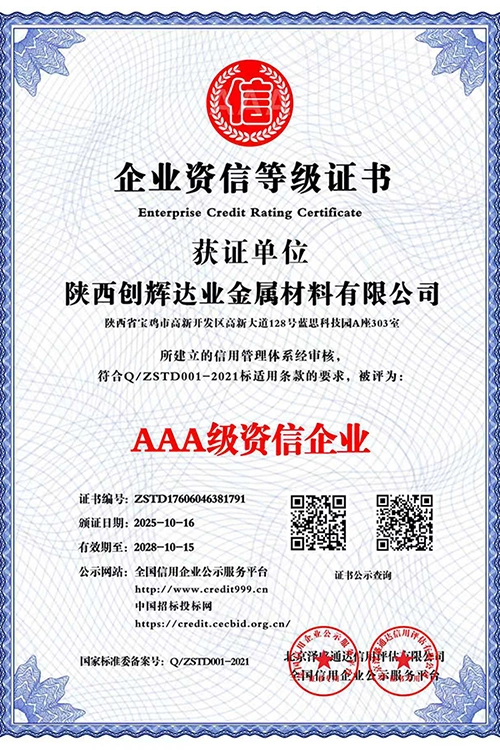
We are based in Baoji High-tech Development Zone, close to China's titanium industry. Our range includes titanium, tantalum, niobium, tungsten, molybdenum, zirconium, nickel and other rare metal alloy products for metallurgy, electronics, medical and special steel fields. Our founder has more than 30 years of experience in the rare metal industry.


 |
 |
 |
|
|
|
|
|
 |
 |
 |
 |


 |
 |
 |
 |
 |
 |
FAQ
Q: Does it work with water softeners?
A: It is designed for this condition. Softened water is highly conductive and can wear out sacrificial anodes quickly, while the titanium substrate does not dissolve.
Q: Will it remove the "rotten egg" smell?
A: Yes, it can help. Often the smell begins with bacteria. Once they react with magnesium or aluminum anodes, hydrogen sulfide forms. That reaction cannot take place with an inert MMO titanium anode.
Q: How do I know the unit is working?
A: The control module has an LED status indicator. Check the product instructions for how to read it.
Q: Is it compatible with all boiler and heater brands?
A: Not always. It uses a standard NPT thread, usually 3/4 inch, but some boilers need an adapter or a nipple-integrated model. Send your port details to confirm.
Q: How long does it last?
A: Design service life runs from 10 to 20+ years. Water conditions and installation decide how long it really lasts.
Contact Us
Email info@chdymetal.com for a quote on Titanium Anode Wire for Water Heater. Please include your tank size, thread type and water conditions.

Learn about our latest products and discounts through SMS or email