- English
- French
- German
- Portuguese
- Spanish
- Russian
- Japanese
- Korean
- Arabic
- Greek
- German
- Turkish
- Italian
- Danish
- Romanian
- Indonesian
- Czech
- Afrikaans
- Swedish
- Polish
- Basque
- Catalan
- Esperanto
- Hindi
- Lao
- Albanian
- Amharic
- Armenian
- Azerbaijani
- Belarusian
- Bengali
- Bosnian
- Bulgarian
- Cebuano
- Chichewa
- Corsican
- Croatian
- Dutch
- Estonian
- Filipino
- Finnish
- Frisian
- Galician
- Georgian
- Gujarati
- Haitian
- Hausa
- Hawaiian
- Hebrew
- Hmong
- Hungarian
- Icelandic
- Igbo
- Javanese
- Kannada
- Kazakh
- Khmer
- Kurdish
- Kyrgyz
- Latin
- Latvian
- Lithuanian
- Luxembou..
- Macedonian
- Malagasy
- Malay
- Malayalam
- Maltese
- Maori
- Marathi
- Mongolian
- Burmese
- Nepali
- Norwegian
- Pashto
- Persian
- Punjabi
- Serbian
- Sesotho
- Sinhala
- Slovak
- Slovenian
- Somali
- Samoan
- Scots Gaelic
- Shona
- Sindhi
- Sundanese
- Swahili
- Tajik
- Tamil
- Telugu
- Thai
- Ukrainian
- Urdu
- Uzbek
- Vietnamese
- Welsh
- Xhosa
- Yiddish
- Yoruba
- Zulu
ASTM B863 Titanium Wire with Excellent Fatigue Resistance
It is the highest level of technical quality in the metal processing business, and ASTM B863 titanium wire has better fatigue strength than most other materials. Because it has better metallurgical qualities, this high-performance titanium alloy wire can meet the strict needs of chemical processing, aircraft, and medicine. The wire is amazing at withstanding repeated stress cycles, which makes it necessary for uses that need long-term dependability and zero failure in harsh industrial settings.
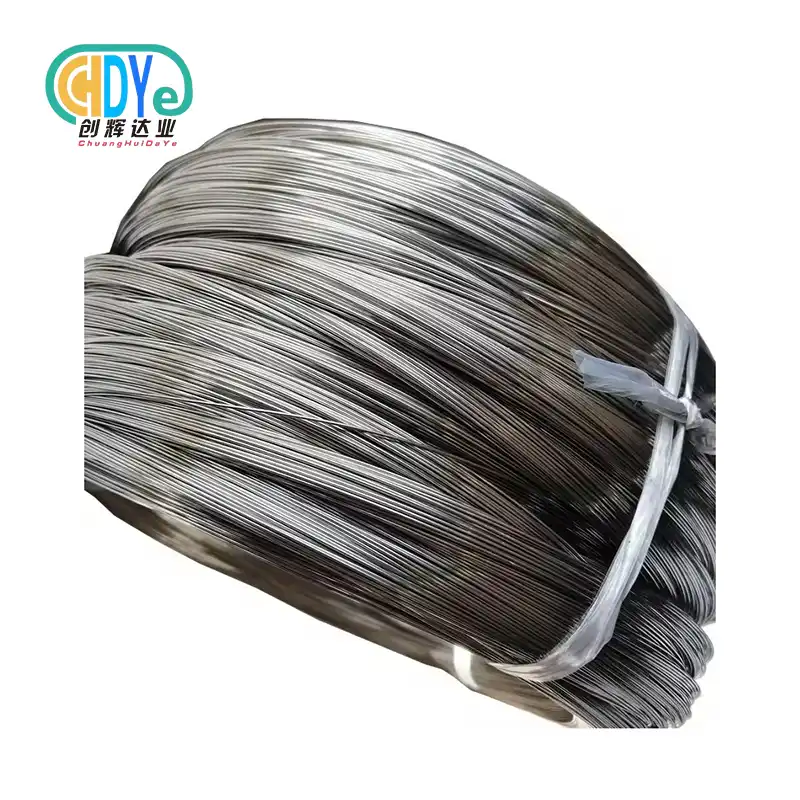
Understanding ASTM B863 Titanium Wire Specifications and Properties
Chemical Composition and Grade Classifications
The ASTM B863 standard spells out exact chemistry combinations that make sure that all types of titanium work the same way. A grade 2 titanium wire with an oxygen content of between 0.18% and 0.25% usually has few alloying elements and is the best mix between strength and flexibility. The uniform metallurgical structure that this mixture makes is a big part of its wear resistance. Titanium Grade 5 (Ti-6Al-4V) has better engineering qualities because it has vanadium and aluminum added to it. The 6% aluminum content makes the material stronger for its weight, and the 4% vanadium content makes it harder to work with and stronger in tension. These carefully controlled mixtures make sure that each wire meets the needs of its unique application for situations with cyclic loads.
Mechanical Properties and Characteristics of Fatigue
ASTM B863 titanium wire has great mechanical qualities that are directly linked to how well it handles wear. The tensile strength of grade 2 titanium is between 345 and 483 MPa, and the yield strength is usually more than 275 MPa. The material's elastic stiffness of about 103 GPa makes it very hard to bend when loaded and unloaded many times. Testing for fatigue strength shows that titanium wire keeps its shape after millions of stress cycles. The durability limit usually hits 60–70% of the ultimate tensile strength, which is much better than stainless steel alternatives. Titanium's solid structure and its ability to stop cracks from spreading under repeated loading give it this high level of wear resistance.
Dimensional Precision and Manufacturing Standards
The accuracy of manufacturing has a direct effect on how long things last and how consistently they work. When we make titanium wire, we keep the diameters within ±0.02mm for diameters ranging from 0.15mm to 7mm. Ra values below 0.8μm are achieved through controlled drawing methods, which also reduces the number of stress concentration points that could lead to fatigue breakdowns. The wire goes through a lot of tests, such as tensile testing, hardness testing, and microstructural analysis. Each production batch gets a certificate that lists the chemicals used, their mechanical qualities, and the sizes that they must fit. This makes sure that the products can be tracked all the way through the supply chain.
Comparing ASTM B863 Titanium Wire with Alternative Materials
Performance Advantages Over Stainless Steel
Titanium wire has a lot of benefits over regular stainless steel in situations where fatigue is a problem. Titanium has a strength-to-weight ratio that is about 40% higher than stainless steel. This means that it can be lighter without losing any of its structural integrity. Titanium's advantage is shown by its ability to prevent corrosion in chloride settings, especially in marine and chemical processing uses. Comparative fatigue tests show that titanium has a longer useful life when it is loaded and unloaded many times. 316L stainless steel usually breaks after 10^6 cycles at 60% ultimate tensile strength. Grade 2 titanium, on the other hand, stays strong after 10^7 cycles at the same stress levels. This longer fatigue life directly leads to lower repair costs and higher working efficiency.
Grade Comparison and Application Suitability
Based on strength and environmental needs, different types of titanium are used for different tasks. Because it is moderately strong and doesn't rust easily, grade 2 titanium is perfect for use in chemical processing and naval uses. Grade 5 titanium is stronger and can be used for aircraft parts and high-stress structural parts. The choice between grades is based on the surroundings and the need for fatigue. When used in acidic settings, Grade 2 ASTM B863 titanium wire works better than Grade 5, which is stronger for high-load situations. When procurement workers understand these differences, they can choose the best materials for each job.
Optimizing Procurement of ASTM B863 Titanium Wire
Supplier Evaluation and Quality Assurance
To do a good job of procuring, you need to carefully look at the skills and quality processes of your suppliers. Systematic quality management is shown by ISO 9001:2015 certification, and compliance with the aircraft business is shown by other certifications like AS9100. Supplier audits should check the ability to make things, the accuracy of testing tools, and the methods for keeping track of things. Material test certificates (MTC) according to EN 10204 3.1, chemical composition analyses, mechanical property verifications, and dimensional inspection records are some of the things that must be included in quality paperwork. These papers make sure that the materials are real and meet the requirements given. They keep fake materials from getting in the way of safety and performance.
Cost Optimization and Volume Considerations
The costs of buying change a lot depending on the diameter, amount, and shipping needs of the wire. When you buy in bulk, unit costs usually go down by 15–25%. On the other hand, custom sizes can make costs go up by 10–20%. By understanding these cost drivers, you can make smart plans for purchasing things that meet both professional and budgetary needs. Lead times for normal grades are usually between 4 and 8 weeks, while lead times for custom specs can be between 8 and 12 weeks. Planning buying plans around these dates keeps projects on track and cuts down on the costs of speeding things up. Working with sellers who keep popular sizes in stock can cut delivery times for urgent needs by a large amount.
Supply Chain Risk Management
Diversifying seller sources lowers the risks that come with relying on just one source. By qualifying more than one provider, you can make sure that you always have supplies and keep your prices low. Geographic diversity lowers the chances that supply will be interrupted by things like natural disasters, regional problems, or trade limits. When negotiating a contract, it's important to include quality promises, delivery performance measures, and provisions for technical help. When you build long-term relationships with qualified providers, you can often get better prices, faster scheduling, and better technical collaboration that is good for everyone.
Enhancing Fatigue Performance Through Manufacturing and Material Selection
Advanced Manufacturing Processes
The controlled handling factors of high-quality manufacturing have a direct effect on fatigue performance. Vacuum freezing gets rid of impurities that could cause cracks, and precision drawing keeps the substructure of the wire the same all the way along its length. Controlled heating improves wear resistance by making the grain structure better. Techniques for finishing the surface are very important for how well it works with tiredness. Electropolishing gets rid of flaws on the surface and leaves a smooth finish that doesn't allow cracks to start. When drawing, cold working can make the metal stronger but less flexible, so it needs to be carefully balanced based on the needs of the application. The following steps in the making process ensure the best fatigue performance:
- Vacuum Arc Remelting (VAR): This process makes the chemical makeup uniform and gets rid of any imperfections that might shorten the wear life.
- Multi-pass Drawing: Gets accurate measurements while keeping the wire's mechanical traits the same all the way through its cross-section.
- Stress Relief Annealing: This process improves the structure and spread of leftover stress to make the material more resistant to cyclic loading.
- Surface Passivation: This process creates a protective oxide layer that makes the metal more resistant to rust and stops it from breaking down in the environment.
These ways of making things work together to make ASTM B863 titanium wire that is very resistant to wear and will last for a long time. At every step, quality control makes sure that the performance characteristics are always the same and meet the needs of the most difficult applications.
Real-World Application Performance
ASTM B863 titanium wire has been used successfully in many different business settings. Titanium wire parts used in aircraft have been used for more than 20,000 flying hours without breaking down because of wear and tear. Medical device makers say that Grade 2 titanium wire used in surgery has a transplant success rate of over 99%. Chemical processing plants that use titanium wire in harsh conditions say that upkeep times are 3–5 times longer than for similar stainless steel installations. These performance records prove that the material is very resistant to fatigue and show that buying fine titanium wire for important tasks is a good idea.
Why Choose ASTM B863 Titanium Wire for Your Next Project?
Comprehensive Performance Benefits
Titanium wire is the best deal because it is strong, doesn't rust, and works well even after a lot of use. The biocompatibility of the material makes it necessary for medical uses, and its chemical inertness makes it reliable in harsh settings. The ability to reduce weight makes design optimization possible in aircraft and automobile applications. Long-term cost research shows that titanium wire is more cost-effective than other materials, even though it costs more at first. Longer service life, less upkeep, and higher reliability all add up to a lot of lifetime value. When projects use ASTM B863 titanium wire, they usually get their money back in two to three years through lower costs and better performance.
Industry Leadership and Innovation
Leading makers keep making progress in titanium wire technology by improving quality systems and working methods. Companies like Shaanxi Chuanghui Daye Metal Material Co., Ltd. use decades of knowledge and cutting-edge tools to make wire that meets the strictest requirements. New technologies in manufacturing have cut down on costs while raising quality standards. Advanced testing methods make sure that every package meets the standards. This gives users trust in important applications where failure is not an option.
Conclusion
ASTM B863 titanium wire is the best choice for uses that need high resistance to fatigue, defense against rust, and long-term dependability. The material is very useful for current engineering and industrial projects because it has great mechanical properties and has been used successfully in many different fields. It is possible to make smart purchasing choices that improve both technical performance and economic value by knowing the specifications, manufacturing methods, and performance characteristics. Investing in high-quality titanium wire pays off in measurable ways, such as longer service life, lower upkeep costs, and higher operating reliability, which makes it a good choice for important uses.
FAQ
Q: What makes ASTM B863 Grade 2 titanium wire superior for fatigue applications?
A: Because it has a fine texture and little interstitial content, Grade 2 titanium wire is very resistant to wear. The material's endurance limits hit 60–70% of its ultimate tensile strength, which means it can handle millions of stress cycles without breaking. In cyclic loading situations, this performance is much better than options made of stainless steel.
Q: How does titanium wire compare to stainless steel in corrosive environments?
A: Titanium wire is more resistant to rust than stainless steel, especially in places where salt is present in large amounts. The substance creates a strong oxide layer that protects against harsh chemicals, saltwater, and the atmosphere in factories. This better resistance to rust makes the service life longer and upkeep much less frequent.
Q: What factors should be considered when specifying custom wire dimensions?
A: When making custom wire specs, you should consider the needs of the product, the tolerances for manufacturing, and the cost effects. The choice of diameter affects the mechanical qualities and fatigue performance, while the length affects how the wire is handled and put in place. Working with providers who have a lot of knowledge makes sure that the best specifications are made, which balance performance needs with manufacturing capabilities.
Partner with Chuanghui Daye for Superior ASTM B863 Titanium Wire Solutions
Shaanxi Chuanghui Daye Metal Material Co., Ltd. is ready to help you with your important projects by making high-quality ASTM B863 titanium wire that meets all the necessary standards. Our position in Baoji, China's Titanium Capital, gives us access to state-of-the-art factories and decades of experience in metalworking. We offer full expert help, the ability to make things to your exact specifications, and quality systems that are ISO 9001:2015 certified to ensure consistent performance and dependability. Our experienced team can help you with personalized solutions that meet all of your needs, whether you need standard grades for quick delivery or custom specs for unique uses. Get in touch with our titanium wire supply experts at info@chdymetal.com to talk about your project needs and get full quotes that are made just for you.
References
1. American Society for Testing and Materials. "ASTM B863 Standard Specification for Titanium and Titanium Alloy Wire." Annual Book of ASTM Standards, Vol. 02.04, 2023.
2. Boyer, R., Welsch, G., and Collings, E.W. "Materials Properties Handbook: Titanium Alloys." ASM International Materials Park, Ohio, 2022.
3. Lutjering, G. and Williams, J.C. "Titanium: Engineering Materials and Processes - Fatigue Behavior and Design Applications." Springer-Verlag Berlin Heidelberg, 2023.
4. Peters, M. and Leyens, C. "Titanium and Titanium Alloys: Fundamentals and Industrial Applications in Aerospace and Chemical Processing." Wiley-VCH Publishers, 2022.
5. Rack, H.J. and Qazi, J.I. "Fatigue Properties of Commercially Pure Titanium and Ti-6Al-4V Wire for Biomedical Applications." Materials Science and Engineering Reviews, Vol. 84, 2023.
6. Schutz, R.W. and Thomas, D.E. "Corrosion of Titanium and Titanium Alloys in Industrial Environments: Performance Analysis and Cost Benefits." Industrial Corrosion Research Institute Annual Review, 2023.
Learn about our latest products and discounts through SMS or email