- English
- French
- German
- Portuguese
- Spanish
- Russian
- Japanese
- Korean
- Arabic
- Greek
- German
- Turkish
- Italian
- Danish
- Romanian
- Indonesian
- Czech
- Afrikaans
- Swedish
- Polish
- Basque
- Catalan
- Esperanto
- Hindi
- Lao
- Albanian
- Amharic
- Armenian
- Azerbaijani
- Belarusian
- Bengali
- Bosnian
- Bulgarian
- Cebuano
- Chichewa
- Corsican
- Croatian
- Dutch
- Estonian
- Filipino
- Finnish
- Frisian
- Galician
- Georgian
- Gujarati
- Haitian
- Hausa
- Hawaiian
- Hebrew
- Hmong
- Hungarian
- Icelandic
- Igbo
- Javanese
- Kannada
- Kazakh
- Khmer
- Kurdish
- Kyrgyz
- Latin
- Latvian
- Lithuanian
- Luxembou..
- Macedonian
- Malagasy
- Malay
- Malayalam
- Maltese
- Maori
- Marathi
- Mongolian
- Burmese
- Nepali
- Norwegian
- Pashto
- Persian
- Punjabi
- Serbian
- Sesotho
- Sinhala
- Slovak
- Slovenian
- Somali
- Samoan
- Scots Gaelic
- Shona
- Sindhi
- Sundanese
- Swahili
- Tajik
- Tamil
- Telugu
- Thai
- Ukrainian
- Urdu
- Uzbek
- Vietnamese
- Welsh
- Xhosa
- Yiddish
- Yoruba
- Zulu
How to Ensure Quality in GR5 Titanium Wire Supply?
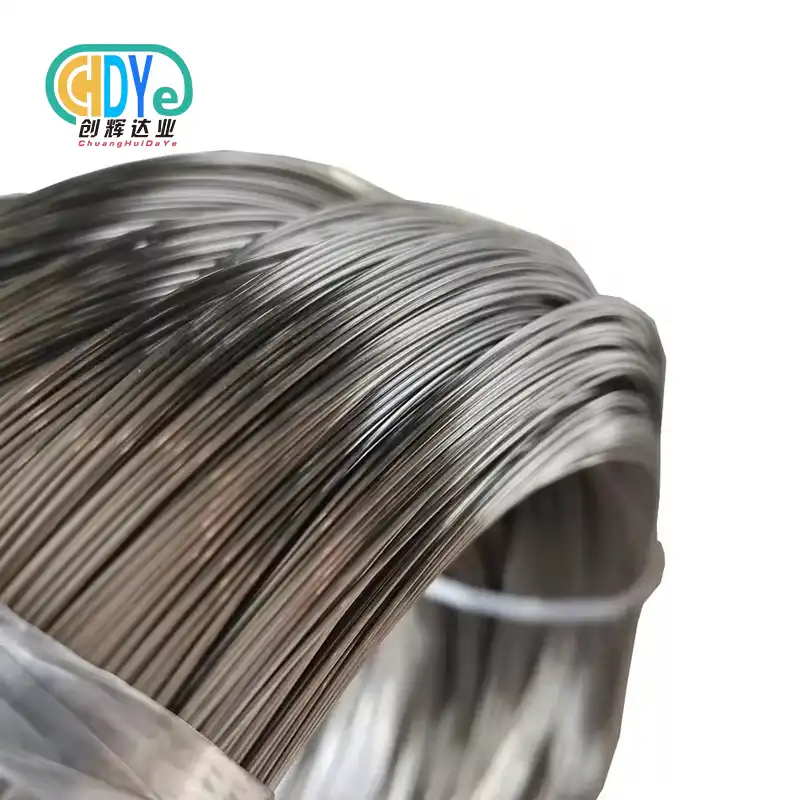
To make sure the quality of the gr5 titanium wire supply, you need a complete plan that includes strict material requirements, tried-and-true production methods, and smart partnerships with suppliers. The Ti-6Al-4V alloy needs to be made in strict accordance with ASTM B863 and AWS A5.16 standards. It needs to have the exact chemical balance of 6% aluminum and 4% vanadium, and the interstitial elements need to be controlled to keep the alloy from becoming weak and to make sure it always works well in aerospace, medical, and industrial settings.
Understanding the Quality Requirements of GR5 Titanium Wire
Meeting strict industry standards for chemical makeup, mechanical traits, corrosion resistance, and exact heat treatment are important for the quality of gr5 titanium wire. Understanding the complicated metallurgical needs that make this alpha-beta titanium alloy different from widely pure options is the first step in quality control.
Chemical Composition Standards and Control
To make sure the best performance, the chemicals that make up Ti-6Al-4V wire must stay within very tight limits. Amounts of aluminum between 5.5 and 6.75% make the solid solution stronger, and amounts of vanadium between 3.5 and 4.5% keep the beta phase structure stable. Important intermediate elements need to be carefully managed: oxygen levels must be below 0.20%, nitrogen levels must be below 0.05%, and carbon levels must be no more than 0.10%. The amount of iron in the wire must stay below 0.40% to avoid problems with embrittlement that could weaken the wire while it is being formed.To make sure they are chemically compliant, factories must use spectral research at several stages of production. Each heat lot needs to be certified with a list of its elements. This makes sure that the product can be tracked all the way through the supply chain. This paperwork is needed for aircraft and medical uses where the history of a material has a direct effect on safety standards.
Mechanical Property Requirements
The performance range for gr5 titanium wire uses is set by the mechanical property requirements. When the wire is heated, its tensile strength must be at least 895 MPa (130 ksi) and its yield strength must be at least 828 MPa (120 ksi). Elongation values usually go above 10%, which makes the material flexible enough for shaping while still keeping its shape under stress. Through microstructural control, the heat treatment process has a big effect on the mechanical properties. The best way to spread out the alpha and beta phases is to use solution treatment temperatures around 955°C and then age the material at 540°C. This thermal processing improves resistance to fatigue and crack propagation, which are important for dynamic loading uses in aircraft bolts and car parts.
Dimensional Precision and Surface Quality
Dimensional accuracy is one of the most important quality factors that affects how well the wire works in precision applications. Tolerances for diameters must meet customer requirements, usually within ±0.025mm for important uses. This level of accuracy is reached by drawing the wire many times through carbide dies, which keep the cross-sectional shape the same along the length of the wire. Both corrosion protection and fatigue efficiency are affected by the quality of the surface finish. Pickled surfaces get rid of rust layers and drawing lubricants, leaving a clean base for further processing. Surface roughness levels below 1.6 μm Ra ensure the best performance in medical device uses where biocompatibility is very important.
Key Factors Leading to Quality Fluctuations in Supply
Titanium wire quality can vary because of where the raw materials come from and how the manufacturing process is controlled. Procurement experts can use effective quality management strategies and supplier evaluation standards if they know where these changes are coming from.
Raw Material Sourcing and Ingot Quality
The road to quality starts with choosing the right titanium sponge and master metal. The base for reliable metal chemistry is high-quality titanium sponge that has low levels of chloride and controlled levels of hardness. Master alloy additions must keep the exact amounts of aluminum and vanadium while preventing unwanted elements from getting into the mix. Vacuum arc remelting (VAR) production gets rid of macro-segregation and lowers the amount of inclusions in the structure of the ingot. Two or three freezing processes make sure that the chemicals are spread out evenly and that the grain structure is smooth. By using ultrasound testing to look inside the ingot, problems that could spread during wire drawing can be found and fixed before they affect the final quality.
Manufacturing Process Variables
For wire drawing to work, the reduction ratios, drawing speeds, and intermediate heating processes need to be carefully controlled. Too much reduction per pass can leave behind leftover stresses and surface flaws, while not enough reduction doesn't give the needed mechanical properties. For titanium to form properly, the shape of the drawing die and the lube systems must be fine-tuned. Keeping an eye on the temperature during intermediate annealing stops grain growth and eases the effects of work hardening. Annealing in a vacuum or a neutral atmosphere gets rid of surface rust that could make the metal less resistant to corrosion. Process tracking systems keep an eye on important factors like temperature profiles, the make-up of the atmosphere, and the rate of cooling to make sure that results are always the same.
Quality Control and Testing Protocols
At different steps of production, thorough testing methods make sure that the quality of the wire. Tensile testing on representative samples proves that the mechanical properties are correct, and chemical research shows that the alloy is made of the right ingredients. Dimensional checking with high-precision measuring tools makes sure that the diameters are all the same and that the straightness standards are met. Eddy current inspection is one type of non-destructive testing that can find flaws on the surface and breaks in the ground. Metallographic study of the microstructure shows that the alpha-beta phase is distributed correctly and that the grain size is under control. These quality checkpoints give you faith in the performance of the material and its fit for the job.
Principles and Best Practices for Selecting a Trusted GR5 Titanium Wire Supplier
To find a trustworthy provider, you need to look at their certifications, quality control procedures, and years of experience in the field. Because titanium metallurgy is so complicated, it needs specialized knowledge and advanced production skills that set qualified providers apart from commodity makers.
Certification and Quality Management Systems
For real titanium wire suppliers, ISO 9001:2015 certification is the bare minimum for quality control. For aerospace uses, AS9100 certification is often needed to show that the product meets quality standards set by the flight industry. Manufacturers of medical devices should look for providers that are certified by ISO 13485 to make sure that biocompatibility and sterility standards are met. Quality management systems need to have detailed records of how materials can be tracked, how processes are controlled, and how tests are done. Each package should come with a certificate of compliance that includes results from a chemical analysis, a mechanical property test, and a dimensional check. This paperwork helps customers make sure the quality is good and follows the rules.
Technical Capabilities and Equipment
A supplier's manufacturing skills show how well they can make high-quality Grade 5 titanium wire on a regular basis. Vacuum melting plants make sure that the ingots they make are clean, with controlled chemistry and little to no inclusion content. Modern wire drawing tools with digital process control make it possible to meet exact standards for size limits and surface finish. Chemical analysis tools, tensile testing machines, and places to prepare metals for testing should all be available in a testing center. In-house testing cuts down on wait times and makes sure that quality is checked before the product is shipped. The precision and dependability of tests are maintained by using calibrated tools with standards that can be tracked.
Supply Chain Reliability and Customer Support
Stability in the supply chain is important for keeping up with work plans and inventory levels. Established sellers usually keep extra raw materials on hand and have built ties with more than one titanium sponge producer. Diversification lowers the risk of supply and makes sure that the product is always available. Premium sellers are different from basic material suppliers because they offer technical help. Engineering knowledge helps find ways to lower costs while also improving wire specs for specific uses. Respondent customer service takes care of urgent needs and quickly fixes quality problems when they happen.
Case Studies: Successful Quality Assurance in GR5 Titanium Wire Procurement
Real-world examples show how important strict quality standards and choosing the right seller are for getting good results. These examples show how good material specifications and working together with suppliers can help projects succeed in a wide range of fields.
Aerospace Fastener Manufacturing Success
A big aircraft company needed Gr5 titanium wire for cold heading processes that make structural fasteners. The application needed high levels of strength to wear and defense against corrosion in marine settings. As part of the initial source approval process, the mechanical properties, grain structure, and surface quality factors were tested in great detail. The chosen provider used special annealing processes to make the metal more malleable when cold, while still meeting the strength standards. Throughout the multi-year supply deal, consistent performance was ensured by regular quality checks and process reviews. During qualification testing and production, there were no material-related fastener problems because of the relationship.
Medical Device Wire Drawing Application
A company that makes medical devices needed safe titanium wire to make surgical instruments. To meet FDA regulations, the application needed exact control over the width and a high-quality surface finish. The pick of suppliers was based on ISO 13485 certification and a lot of paperwork about biocompatibility tests. The wire drawing method was improved through collaborative development work so that it met the needed tolerances for dimensions while keeping the integrity of the surface. Regular biocompatibility testing proved that the medical gadget continued to meet standards. Through volume deals, the successful relationship allowed the product line to grow and lowered the cost of materials.
Automotive Component Manufacturing Partnership
A car seller was looking for Gr5 titanium wire for use in exhaust systems, where it needed to be stable at high temperatures and not rust. Because the working conditions were so tough, the materials had to be able to handle changes in temperature and harsh chemicals. When evaluating suppliers, the focus was on their ability to test at high temperatures and their approvals for car quality. The chosen provider created special heat treatment methods to improve performance at high temperatures while keeping the flexibility at room temperatures. Performance under simulated service situations was proven by a lot of validation tests. In the end, the partnership helped meet goals for reducing weight and improving fuel economy in the car.
Conclusion
To make sure the quality of the gr5 titanium wire supply, you need a methodical approach that includes controlling the manufacturing process, specifying the materials, and building smart partnerships with suppliers. To be successful, you need to know how to handle the complicated mechanical needs of Ti-6Al-4V material and follow strict quality control procedures. Professionals in procurement need to look at more than just a supplier's certifications. They need to look at their technical knowledge, manufacturing tools, and quality control systems. Putting money into qualified providers and strict quality standards pays off in the end with better material performance, lower supply chain risk, and a bigger edge in the aircraft, medical, and industrial markets.
FAQ
Q: What distinguishes Grade 5 titanium wire from commercially pure titanium alternatives?
A: When it comes to strength, Grade 5 titanium wire is much better than the widely pure grades. Its tensile strength is over 895 MPa, while CP grades are only about 240–550 MPa. The aluminum and vanadium alloying elements make the solid solution stronger and the beta phase more stable, which makes them useful for uses that need high mechanical performance. CP grades, on the other hand, are better at resisting rust in some settings and are easier to shape for less demanding uses.
Q: How should titanium wire be kept so that it stays in good shape?
A: To keep surfaces from rusting, things need to be stored in clean, dry places where the humidity stays below 50%. When possible, the wire should be kept in its original package with materials that keep it dry. Galvanic rusting can happen when different metals come into contact with each other. To keep coiled wire goods from being damaged by thermal stress, temperature changes should be kept to a minimum.
Q: What testing methods verify titanium wire quality compliance?
A: Chemical analysis using spectroscopic methods, mechanical testing according to ASTM B863, and dimensional checking with high-precision measuring tools are all parts of a full quality proof. Surface flaws can be found with non-destructive tests like eddy current analysis. A look at the microstructure shows that the heat treatment and phase distribution were done correctly. A certificate of compliance paper makes it possible to track things and ensures quality.
Q: Can Grade 5 titanium wire be heat-treated after delivery?
A: Extra heat treatment can be applied to grade 5 titanium wire to change its mechanical qualities for certain uses. Solution treatment and age processes can make things stronger than they were when they were annealed. But heat treatment needs a controlled atmosphere or a vacuum to keep the surface from getting dirty. Testing should be done on the customer's heat treatment to make sure it achieves the desired properties.
Q: What factors influence titanium wire pricing and availability?
A: Titanium wire prices depend on the cost of raw materials, how hard it is to make, and changes in market demand. Titanium sponge prices have a big effect on the end price of the product, and special handling needs add to the cost of making the product. Pricing is based on the number of orders, the tolerances for size, and the shipping plan. Long-term supply deals often keep prices stable and make sure that important applications can always get what they need.
Partner with Chuanghui Daye for Premium GR5 Titanium Wire Supply
Shaanxi Chuanghui Daye Metal Material Co., Ltd. delivers exceptional quality titanium wire solutions backed by over 30 years of rare metal industry expertise. Our ISO 9001:2015 certified facility in China's "Titanium Capital" combines advanced manufacturing capabilities with rigorous quality control systems to ensure consistent gr5 titanium wire performance. We offer comprehensive diameter ranges from 0.5mm to 6.0mm in both straight and coil configurations, with custom length specifications available to meet your exact requirements. Our experienced engineering team provides technical support throughout the procurement process, ensuring optimal material selection and specification development. Contact our titanium wire specialists at info@chdymetal.com to discuss your project requirements and discover why leading manufacturers worldwide choose Chuanghui Daye as their trusted Gr5 titanium wire supplier.
References
1. Boyer, R.R., and Briggs, R.D. "The Use of β Titanium Alloys in the Aerospace Industry." Journal of Materials Engineering and Performance, Vol. 14, No. 6, 2005.
2. Donachie, Matthew J. "Titanium: A Technical Guide, Second Edition." ASM International Materials Park, Ohio, 2000.
3. Peters, M., Kumpfert, J., Ward, C.H., and Leyens, C. "Titanium Alloys for Aerospace Applications." Advanced Engineering Materials, Vol. 5, No. 6, 2003.
4. Lutjering, G., and Williams, J.C. "Titanium Engineering Materials and Processes." Springer-Verlag Berlin Heidelberg, Second Edition, 2007.
5. Rack, H.J., and Qazi, J.I. "Titanium Alloys for Biomedical Applications." Materials Science and Engineering C, Vol. 26, No. 8, 2006.
6. Welsch, G., Boyer, R., and Collings, E.W. "Materials Properties Handbook: Titanium Alloys." ASM International Materials Park, Ohio, 1994.
Learn about our latest products and discounts through SMS or email