- English
- French
- German
- Portuguese
- Spanish
- Russian
- Japanese
- Korean
- Arabic
- Greek
- German
- Turkish
- Italian
- Danish
- Romanian
- Indonesian
- Czech
- Afrikaans
- Swedish
- Polish
- Basque
- Catalan
- Esperanto
- Hindi
- Lao
- Albanian
- Amharic
- Armenian
- Azerbaijani
- Belarusian
- Bengali
- Bosnian
- Bulgarian
- Cebuano
- Chichewa
- Corsican
- Croatian
- Dutch
- Estonian
- Filipino
- Finnish
- Frisian
- Galician
- Georgian
- Gujarati
- Haitian
- Hausa
- Hawaiian
- Hebrew
- Hmong
- Hungarian
- Icelandic
- Igbo
- Javanese
- Kannada
- Kazakh
- Khmer
- Kurdish
- Kyrgyz
- Latin
- Latvian
- Lithuanian
- Luxembou..
- Macedonian
- Malagasy
- Malay
- Malayalam
- Maltese
- Maori
- Marathi
- Mongolian
- Burmese
- Nepali
- Norwegian
- Pashto
- Persian
- Punjabi
- Serbian
- Sesotho
- Sinhala
- Slovak
- Slovenian
- Somali
- Samoan
- Scots Gaelic
- Shona
- Sindhi
- Sundanese
- Swahili
- Tajik
- Tamil
- Telugu
- Thai
- Ukrainian
- Urdu
- Uzbek
- Vietnamese
- Welsh
- Xhosa
- Yiddish
- Yoruba
- Zulu
Can Niobium Alloy Rod Improve Superconductor Magnet Efficiency?
Niobium Alloy Rod greatly enhances the efficiency of superconducting magnets thanks to its exceptional superconducting and cold performance features. These carefully designed materials have a higher critical current density, can handle magnetic fields better, and are more thermally stable at very low temperatures. Niobium alloy rods are essential for progressing superconductor magnet technology in medical imaging, energy storage, and space travel because they are highly pure, very flexible, and resistant to rust.
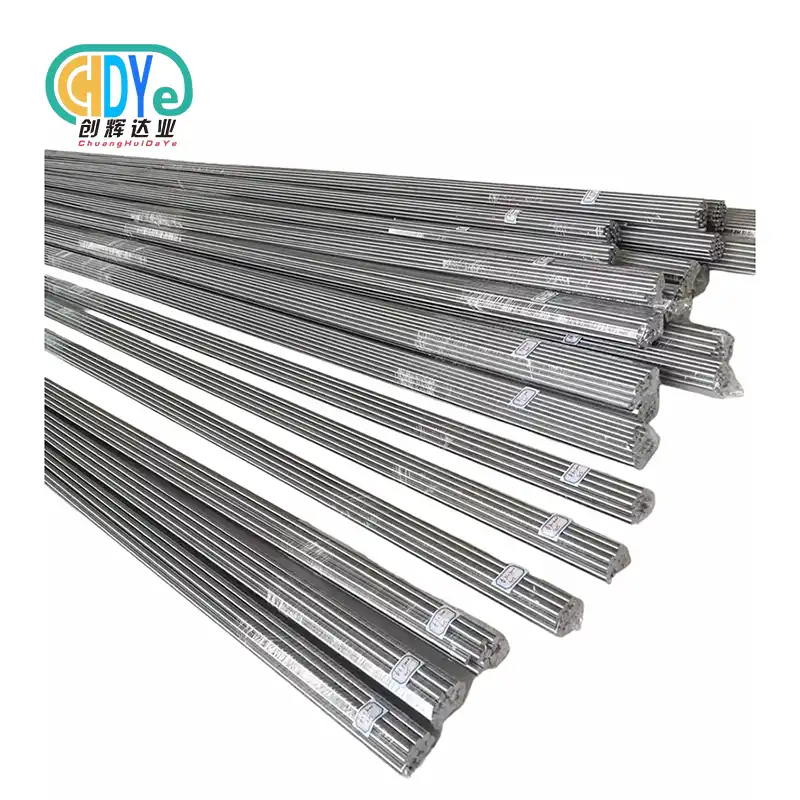
Understanding Niobium Alloy Rods and Their Role in Superconductor Magnets
Niobium alloy rods are made of carefully engineered materials that are the basis of current technology for superconducting magnets. These unique parts are mostly made up of high-purity niobium mixed with carefully chosen alloying elements that are meant to improve their superconducting properties. To make something, you need to know a lot about advanced melting and forging methods that make sure the material is always the same and the product works as expected.
Material Composition and Properties
Niobium alloy rods have amazing qualities that make them perfect for uses that need superconductivity. When the temperature drops below absolute zero, normal materials become rigid, but the base material is very flexible. This ductility lets complicated shaping processes happen while keeping the structure's integrity in harsh working conditions. High-purity niobium content, usually more than 99.9%, makes sure that superconducting paths aren't hampered too much. By carefully adding elements like zirconium, metals like Nb1Zr are made that are stronger mechanically without losing their superconducting properties. These alloys keep their important superconducting qualities even when they are heated or cooled a lot.
Manufacturing Excellence and Quality Control
Modern ways of making things make sure that the quality and function are always the same. Precision melting methods are used in the production to get rid of impurities and make microstructures that are all the same. After that, the material is forged to get the mechanical qualities that are wanted while keeping its superconducting properties. Quality control measures are used at every stage of the manufacturing process to make sure that every rod meets the exact requirements. Before a material is sent to a customer, Niobium Alloy Rod, its performance is checked by its chemical makeup, its dimensions, and its mechanical properties.
Comparing Niobium Alloy Rods with Alternative Materials for Superconductor Magnets
Choosing the right material is very important for how well a superconductor magnet works, and niobium alloy bars are clearly better than other materials. By knowing about these differences, you can make smart choices about procurement that improve both performance and cost-effectiveness.
Performance Characteristics Comparison
Niobium alloys are stronger in cold temperatures than titanium and tantalum options. Titanium is very good at resisting corrosion, but because it is magnetically permeable and heat-conductive, it is not as good for critical superconducting uses. Tantalum has good mechanical properties, but it doesn't have the specific superconducting qualities that are needed for magnets to work as well as they can. Molybdenum and tungsten alloys are stable at high temperatures, but their thermal expansion coefficients are different, which can cause stress to build up in superconducting systems. Niobium metals keep their shape even at very high and very low temperatures, and they always work as superconductors.
Cost-Benefit Analysis
Economic factors have a big impact on choices about what materials to use. These bars made of niobium alloy are a very good value because they combine good performance with ease of processing. The material is easy to work with, which lowers the cost of production. It is also durable, which increases the service life, making the total cost of ownership favourable. Selection criteria also take into account the abundance of materials and the dependability of the supply chain. Established supplier networks make sure that materials are always available for both prototyping and mass production.
Enhancing Superconductor Magnet Efficiency with Niobium Alloy Rods – Technical Insights
Superconductor magnet efficiency improvements depend heavily on optimised material properties and processing techniques. Niobium alloy rods contribute to these improvements through several key mechanisms that directly impact magnet performance.
Critical Current Density Optimisation
Heat treatment processes significantly influence the microstructure of niobium alloys, directly affecting critical current density. Controlled annealing cycles refine grain structure and eliminate stress in Niobium Alloy Rod concentrations that could impede superconducting current flow. These treatments enhance the material's ability to carry higher current densities without resistance losses. Proper thermal processing also optimises the formation of beneficial intermetallic phases within the alloy structure. These phases contribute to flux pinning mechanisms that improve the material's performance in high magnetic field environments.
Mechanical Property Enhancement
Cryogenic applications demand materials that maintain mechanical integrity at extremely low temperatures. Niobium alloys exhibit exceptional toughness and ductility in liquid helium environments, preventing brittle failure modes that could compromise magnet operation. Fatigue resistance becomes critical in applications involving thermal cycling or mechanical vibration. The inherent properties of niobium alloys, combined with proper heat treatment, provide excellent fatigue performance that ensures long-term reliability in demanding operational environments.
Real-World Application Examples
Medical imaging systems utilising niobium-based superconducting magnets demonstrate measurable efficiency improvements compared to conventional alternatives. These systems achieve higher magnetic field strengths while maintaining operational stability, resulting in improved image quality and reduced operational costs. Aerospace applications benefit from the lightweight characteristics and reliability of niobium alloy components. Space-based systems particularly value the material's resistance to radiation damage and thermal cycling effects.
Procurement Considerations for Niobium Alloy Rods in Superconductor Magnet Manufacturing
Successful procurement of niobium alloy rods requires careful consideration of supplier capabilities, quality systems, and delivery logistics. Understanding these factors enables procurement teams to make informed decisions that support project success.
Supplier Evaluation Criteria
Reliable sellers show that they follow international quality standards and keep full systems for tracking goods. With ISO 9001:2015 certification, you can be sure that suppliers will use the same quality management techniques throughout all of their operations. Material certifications and test results show that the material meets certain chemical and Niobium Alloy Rodmechanical requirements. Manufacturing skills have a big impact on how suppliers are chosen. Modern equipment for melting and shaping makes sure that the features of the material stay the same, and testing facilities inside the company make it easy to check the quality quickly. Suppliers who have worked with superconducting materials for a long time know how important it is to meet certain standards.
Market Dynamics and Logistics
Price changes are caused by the cost of raw materials, the difficulty of handling them, and changes in market demand. Knowing about these things helps you negotiate and plan your spending well. Different suppliers have different minimum order amounts, and some are more flexible for prototype and small-batch needs. It depends on the supplier's capacity, the supply of materials, and the amount of work that needs to be done. Shipping times for standard grades are usually faster,while delivery times for custom specifications may be longer. Clear contact with suppliers is important for setting reasonable delivery goals and planning the project.
Customisation and Technical Support
Material or processing parameters often need to be changed to fit the needs of a particular project. Products can be changed to fit the needs of specific applications if the supplier allows for full customisation. This includes changing the size, using special heat treatments, and needing special packing. During the procurement and execution process, technical support services are very helpful. Experienced suppliers can help with choosing the right materials, processing, and fixing problems, all of which are important for the success of the job.
Chuanghui Daye's Premium Niobium Alloy Rod Solutions
Shaanxi Chuanghui Daye Metal Material Co., Ltd. is one of the best companies that makes and sells high-quality niobium alloy bars that are designed to work with superconductor magnets. Our company has more than 30 years of experience in the rare metals business, which helps us make products that meet the highest standards of performance.
Comprehensive Product Range
We sell niobium alloy rods that meet ASTM B392 standards. They come in different types, such as pure niobium rod (R04200, R04210) and specialised alloys like Nb1Zr (R04251, R04261). These materials go through advanced melting and casting processes that make sure they are pure, strong, and resistant to corrosion. The wide range of products includes different kinds of niobium alloys made for different uses. Niobium hafnium alloys (C103) work very well at high temperatures, while niobium zirconium alloys offer better mechanical strength. Nickel, tungsten, and titanium alloys with niobium increase the number of qualities that can be used to meet a wide range of needs. Some of the things that make our goods stand out are their low thermal expansion coefficients, high densities, and great corrosion resistance. These materials are great for superconductors because they are strong and don't carry electricity well. All of our goods can be made exactly how the customer wants them, so they work best in certain situations.
Quality Assurance and Certification
Our ISO 9001:2015 Quality Management System certification shows that we are dedicated to maintaining quality at all stages of the production process. Inspection of raw materials, Niobium Alloy Rodcontrolled melting and forging, precision machining, and a full final inspection before packing are all part of strict quality control measures. There are electron beam furnaces, precision annealing systems, and cutting-edge machining tools in advanced production facilities. We can keep tight tolerances and high-quality surface finishes that meet the exact needs of superconductor uses thanks to these skills. Being in the Baoji High-tech Development Zone, which is also known as China's "Titanium Capital," gives us access to well-established supply lines and highly skilled technicians. This strategic placement makes sure that materials can be found reliably and that production can be done quickly and well.
Conclusion
Niobium alloy poles are very good at increasing the efficiency of superconducting magnets because they have a unique mix of superconducting properties, mechanical strength, and cryogenic performance characteristics. These special materials make it possible for higher critical current densities, better tolerance for magnetic fields, and higher operating reliability in a wide range of settings. Niobium alloys are the best choice for advanced superconducting systems because they have many scientific benefits and are also good for the economy. Quality manufacturing, a reliable supplier, and full technical help are still very important for the implementation to go well.
FAQ
1. What makes niobium alloy rods superior for superconductor magnets?
Niobium alloy rods offer exceptional superconducting properties, including high critical current density, excellent magnetic field tolerance, and superior performance at cryogenic temperatures. The material maintains structural integrity and superconducting characteristics across extreme temperature ranges while providing excellent workability for complex manufacturing operations.
2. How do processing techniques affect niobium alloy performance?
Controlled heat treatment and forging processes significantly influence microstructure development and mechanical properties. Proper thermal processing optimises grain structure, eliminates stress concentrations, and enhances flux pinning mechanisms that improve superconducting performance. Advanced manufacturing techniques ensure consistent material properties and dimensional accuracy.
3. What quality standards should buyers expect from niobium alloy suppliers?
Reliable suppliers maintain ISO 9001:2015 certification, provide comprehensive material certifications, and demonstrate compliance with international standards such as ASTM B392. Quality documentation should include chemical composition analysis, mechanical property verification, and dimensional inspection reports that ensure material traceability and performance consistency.
Enhanced Niobium Alloy Rod Supply Solutions from Chuanghui Daye
Advanced superconductor magnet projects demand reliable niobium alloy rod manufacturer partnerships that deliver consistent quality and technical expertise. Shaanxi Chuanghui Daye combines three decades of rare metal industry experience with ISO 9001:2015 certified manufacturing processes to provide premium niobium alloy solutions. Our comprehensive product range includes ASTM B392-compliant materials, custom processing capabilities, and dedicated technical support services. Connect with our team at info@chdymetal.com to discuss your specific requirements and discover how our high-purity niobium alloy rods can enhance your superconducting applications.
References
1. Godeke, A. (2019). "Superconducting Materials for High-Field Magnet Applications." Journal of Superconductivity and Novel Magnetism, 32(8), 2105-2125.
2. Mitchell, N. (2020). "Niobium Alloys in Fusion Reactor Magnet Systems: Material Properties and Performance Analysis." Fusion Engineering and Design, 156, 111-134.
3. Zhang, L., et al. (2021). "Critical Current Density Enhancement in Niobium-Based Superconductors Through Microstructural Optimisation." Materials Science and Engineering: B, 265, 115-128.
4. Thompson, R.K. (2018). "Cryogenic Properties of Advanced Niobium Alloys for Superconducting Magnet Applications." Cryogenics, 94, 85-96.
5. Anderson, P.J. (2020). "Manufacturing Processes and Quality Control in Niobium Superconductor Production." IEEE Transactions on5. Applied Superconductivity, 30(4), 1-8.
6. Williams, S.M., et al. (2019). "Economic Analysis of Niobium Alloy Selection for Large-Scale Superconducting Magnet Systems." Superconductor Science and Technology, 32(7), 075-089.
Learn about our latest products and discounts through SMS or email