- English
- French
- German
- Portuguese
- Spanish
- Russian
- Japanese
- Korean
- Arabic
- Greek
- German
- Turkish
- Italian
- Danish
- Romanian
- Indonesian
- Czech
- Afrikaans
- Swedish
- Polish
- Basque
- Catalan
- Esperanto
- Hindi
- Lao
- Albanian
- Amharic
- Armenian
- Azerbaijani
- Belarusian
- Bengali
- Bosnian
- Bulgarian
- Cebuano
- Chichewa
- Corsican
- Croatian
- Dutch
- Estonian
- Filipino
- Finnish
- Frisian
- Galician
- Georgian
- Gujarati
- Haitian
- Hausa
- Hawaiian
- Hebrew
- Hmong
- Hungarian
- Icelandic
- Igbo
- Javanese
- Kannada
- Kazakh
- Khmer
- Kurdish
- Kyrgyz
- Latin
- Latvian
- Lithuanian
- Luxembou..
- Macedonian
- Malagasy
- Malay
- Malayalam
- Maltese
- Maori
- Marathi
- Mongolian
- Burmese
- Nepali
- Norwegian
- Pashto
- Persian
- Punjabi
- Serbian
- Sesotho
- Sinhala
- Slovak
- Slovenian
- Somali
- Samoan
- Scots Gaelic
- Shona
- Sindhi
- Sundanese
- Swahili
- Tajik
- Tamil
- Telugu
- Thai
- Ukrainian
- Urdu
- Uzbek
- Vietnamese
- Welsh
- Xhosa
- Yiddish
- Yoruba
- Zulu
How to Select Quality tantalum rods for sale?
Search tantalum rods for sale, and you’ll discover lots of entries, but they aren’t all created equal. Some come straight from skilled manufacturers with approved techniques; others come from dealers who can’t tell you where the metal came from or how it was produced. Tantalum is costly and is typically employed in vital equipment; thus, the cost of a bad choice is substantial. A rod of dubious purity, rough surfaces, or improper grade might fail in chemical service, waste machining time, or be rejected by your own client. This tutorial teaches you step by step how to choose quality tantalum rods for sale: what quality actually means, what grades and standards to compare, how excellent rods are made, and how to assess the provider behind the offer.
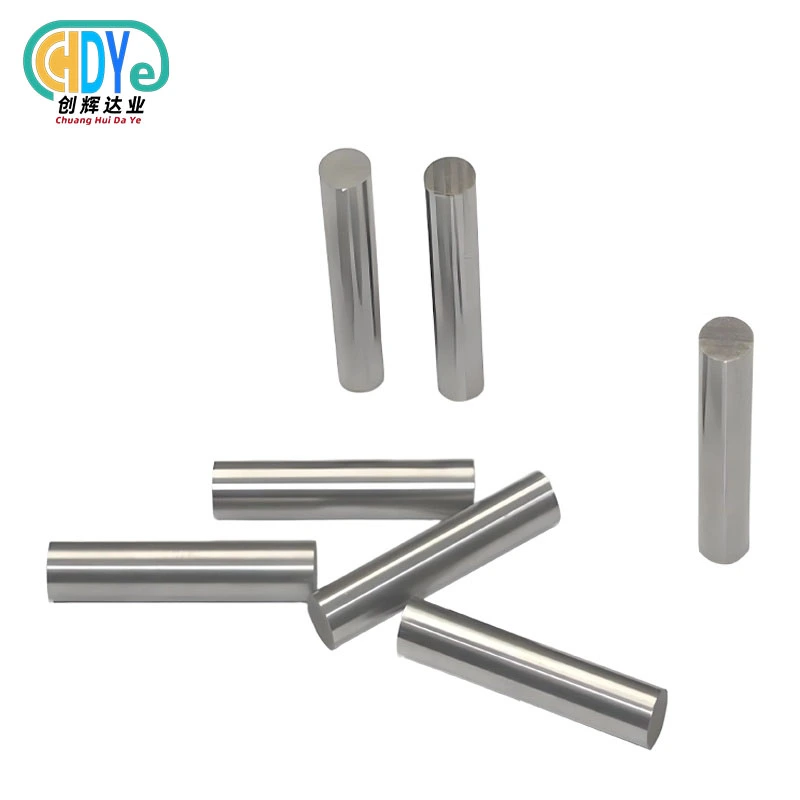
Why Quality Matters When Buying Tantalum Rods for Sale
The Real Cost of Poor-Quality Tantalum
Most consumers will notice the price first when looking for tantalum rods for sale; however, this is seldom the most relevant statistic. You may buy a cheap rod with too many impurities, and it can break in drawing or machining, corrode earlier than intended, or fail inspection after you've already spent money on fabrication. Rework, delays, and replacement shipments might quickly cost more than the initial saving. An unexpected breakdown in important systems, such as chemical reactors or medical equipment, may potentially be a danger to safety and reputation. The best method to prevent costly errors is to judge value by total cost throughout the life of the part, not by unit price alone.
Core Properties You Are Paying For
Tantalum is selected for a small set of qualities, and good grade rods must deliver on all those features. The metal is non-reactive to most acids and body fluids, forming a durable protective oxide coating for excellent corrosion resistance in hostile chemical conditions. It is also biocompatible for medical and surgical applications, has high temperature stability, is great in workability and has extended service life, reducing replacement costs. When shopping for tantalum rods for sale, inquire how the provider manages the variables responsible for these attributes, which include purity, structure, and surface condition. If the answers are explicit and recorded, then the rod is much more likely to operate as advertised.
Matching the Rod to Your Application
The best tantalum rod is not the most costly, but the one that best fits your needs. A chemical factory has certain acids and temperatures to handle, a medical maker wants clean and well-documented material, and a vacuum equipment builder is looking for stability at high temperature. Before you start looking for tantalum rods for sale, jot down your operating circumstances, the item you want to create, the tolerances you want, and the quantity you need. If you provide this knowledge to the supplier, they may propose the proper grade and size, and you are protected from paying for features you do not need or missing a feature you need.
Grades, Materials and Specifications to Compare
Understanding Available Grades
Compare grades carefully since they describe what the rod is composed of and how it behaves. We provide unalloyed tantalum, R05200, in the pure grade for conventional applications as well as tantalum-tungsten alloys for increased strength, powder-metallurgy tantalum for particular purposes, and bespoke alloys with customized compositions. When you are looking for tantalum rods for sale, ask the provider to quote the grade and the standard and confirm both on your PO. Grade names and numbers might be confusing, so don’t depend on quick descriptions. Ask for the composition restrictions in writing. Our experts would be happy to explain the differences and recommend the most inexpensive grade for your design.
| Grade Type | Typical Role | Main Advantage |
|---|---|---|
| Unalloyed tantalum (R05200) | General applications, chemical equipment | Excellent corrosion resistance and ductility |
| Tantalum-tungsten alloys | Parts needing higher strength | Enhanced strength, better heat performance |
| Powder-metallurgy tantalum | Specialized uses | Controlled structure for specific needs |
| Custom alloys | Special projects | Tailored composition |
Purity, Chemistry and Standards
Quality is a matter of purity and chemistry. Our tantalum rods are constructed from pure tantalum ingots and are produced to established worldwide standards such as ASTM B365 for tantalum and tantalum alloy rod and wire. Ask any supplier for a chemical analysis report for each batch revealing the quantities of oxygen, nitrogen, carbon, hydrogen, and metallic impurities, as these elements impact ductility, workability, and corrosion resistance. Be aware of postings that use just imprecise terms such as "high purity" without giving you a number or benchmark to go by. If the supplier gives you explicit limitations, backs them up with test data, and encourages you to ask questions, you may have a lot more confidence in the material.
Dimensions, Tolerances and Surface Condition
Even perfect chemistry will not help if the rod does not match your procedure. The diameter, length, straightness, tolerance, and surface quality all impact the ease with which the rod may be machined or produced. We provide both standard and custom sizes, and the precise drafting permits tight tolerances when necessary. When ordering tantalum rods for sale, describe the diameter range, the tolerance, the required straightness of the rod, and whether you need a cleaned or polished surface. A clean, smooth surface is also easy to check and less likely to hide faults. When you choose a size near your final product, you also reduce wasted pricey metal.
How Quality Tantalum Rods for Sale Are Manufactured
Material Selection and Cold Working
Quality starts with the beginning material. We use high-purity tantalum ingots, and the metal is cold worked by forging, rolling, and swaging to the necessary specifications. Each stage increases the strength and surface quality and enhances the grain structure. Cold working is particularly crucial for tantalum, which is soft and ductile, since it enables producers to construct the necessary qualities without melting the metal again. When a tantalum rod supplier for sale can clearly define these early steps, it is an indication that they have a grip on the process and know how choices made at this time affect the final rod.
Precision Drawing and Heat Treatment
After the major shaping operations, precision drawing draws the rod through dies to produce tight tolerances and a constant diameter. Then heat treatment is performed with stress relief and grain-structure optimization to restore ductility and enhance the behavior of the rod in machining and shaping. These procedures may be done in-house since our firm has the annealing furnaces, an electron beam furnace, smelting equipment, rolling machines, lathes, sawing machines, and shearing machines. Buyers of tantalum rods for sale have shorter lead times, fewer handling hazards, and a clearer line of accountability if an issue arises regarding the final rod because of the in-house control.
Surface Finishing and Quality Testing
Surface finishing and quality testing are the last production stages. Rods are cleaned and polished to specification and examined and verified so that the material sent is the same as the order. Our manufacture is carried out according to a Quality Management System compliant with ISO 9001:2015, which includes raw material inspection, melting and forging, machining and forming, and final inspection and packing. You may ask this system to build a record for each batch of tantalum rods offered for sale and examine it. The table below explains each step and its function so you can compare it with what other providers say when you question them about their process.
| Manufacturing Step | Purpose |
|---|---|
| Material selection | Start with high-purity tantalum ingots |
| Cold working | Forge, roll, and swage to desired dimensions |
| Drawing operations | Achieve tight tolerances and consistent diameter |
| Heat treatment | Relieve stress and optimize grain structure |
| Surface finishing | Clean and polish to specification |
| Quality testing | Inspect and certify the finished rod |
Choosing a Reliable Supplier of Tantalum Rods for Sale
Manufacturer Versus Trader
A manufacturer makes the goods. A trader resells stuff manufactured by other people. There's nothing inherently awful about either, but there is a difference when anything goes wrong, or if you require specific sizes. A producer of tantalum rods for sale can tell you where each lot comes from, modify measurements, and react to technical queries immediately. Shaanxi Chuanghui Daye Metal Material Co., Ltd. produces tantalum, niobium, titanium, tungsten, and molybdenum products at its own plants and serves clients from over 50 countries. When you contact any supplier, ask whether they manufacture the rods themselves, and if not, what process they go through to check the quality of the material they offer.
Certification, Documents and Traceability
Documents make a promise a reality. Trusted tantalum rod suppliers for sale will give a material test certificate, dimensional inspection records, and traceability to each manufacturing lot, as well as verification of a recognized quality system such as ISO 9001:2015. These data are crucial to consumers in regulated areas and to anybody who has to account to an auditor. Ask to view the documentation before you make a big purchase, and make sure that the certificate is up to date and in the company’s name. If a provider won’t share paperwork, they may not be comfortable with the quality of the content, and that’s an excellent cause to search elsewhere.
Experience, Service and Global Delivery
And long-term partnership. Think about it. We are located in the Baoji High-tech Development Zone, the so-called "Titanium Capital of China", with strong transport connectivity and well-established industrial support for efficient shipping. Founded by an expert with over 30 years' experience in the rare metal sector, we follow a philosophy: quality first, customer first. This means practical guidance, timely replies, and the flexibility to deliver standard or bespoke requirements for purchasers of tantalum rods for sale. Decide. Use the chart below to help you evaluate vendors on a level playing field.
| Question to Ask | A Good Answer Looks Like |
|---|---|
| Do you manufacture the rods? | Yes, with described equipment and process |
| Which grade and standard apply? | A named grade and standard, confirmed in writing |
| Can you provide a chemical analysis? | Yes, for every lot |
| Which quality certificate do you hold? | Current ISO 9001:2015 certificate |
| Can you make custom sizes? | Yes, with stated tolerances |
| Where do you ship? | Worldwide, with clear lead times |
Conclusion
When you buy tantalum rods for sale of good quality, you should not only consider the price but also the purity, grade, standards, dimensions, production method, and the source of the metal. Tantalum rods from high-purity ingots, cold worked, drawn, heat treated, and properly examined will provide the corrosion resistance, biocompatibility, and high-temperature performance that tantalum is recognized for. Shaanxi Chuanghui Daye Metal Material Co., Ltd. is located in Baoji, the “Titanium Capital” of China, and offers clients all over the globe over 30 years of expertise in rare metals and ISO 9001:2015 certified quality control. Contact our staff now and let us assist you with choosing the perfect rod for your project.
FAQ
Q1. What should I check first when buying tantalum rods for sale?
A: Start with grade, purity, and the governing standard, then confirm diameter, length, tolerance, and surface condition, and ask for a chemical analysis report for the lot.
Q2. Which grades do you offer?
A: We offer unalloyed tantalum, tantalum-tungsten alloys for higher strength, powder-metallurgy tantalum for specialized uses, and custom alloys made to your requirements.
Q3. Can you supply custom sizes?
A: Yes. We provide standard dimensions and custom specifications, with precision drawings available for tight tolerances.
Q4. Which industries use tantalum rods?
A: They are used in chemical processing, medical and surgical applications, vacuum and high-temperature equipment, electronics, and precision component manufacturing.
Q5. Do you ship internationally?
A: Yes. We serve customers in more than 50 countries, and our team will confirm lead times and packaging when we send your quotation.
Contact Us Today for Quality Tantalum Rods for Sale
Ready to buy tantalum rods from a manufacturer you can trust? Shaanxi Chuanghui Daye Metal Material Co., Ltd. supplies premium tantalum rods for sale, together with niobium, titanium, tungsten, and molybdenum materials, to customers in more than 50 countries. Send us your grade, diameter, tolerance, length, quantity, and application, and our experienced team will respond quickly with a tailored quotation and the documents you need. Whether you need a trial order or regular supply, we are ready to help with expert advice and dependable delivery. Email us now at info@chdymetal.com and start your next project with metal you can rely on.
References
1. Cardonne, S. M., Kumar, P., Michaluk, C. A., & Schwartz, H. D. (1995). Tantalum and its alloys. International Journal of Refractory Metals and Hard Materials, 13(4), 187–194.
2. Cardarelli, F. (2018). Materials Handbook: A Concise Desktop Reference (3rd ed.). Springer.
3. ASTM International. (2016). ASTM B365: Standard Specification for Tantalum and Tantalum Alloy Rod and Wire. ASTM International.
4. Robin, A., & Rosa, J. L. (2000). Corrosion behavior of niobium, tantalum and their alloys in hot hydrochloric and phosphoric acid solutions. International Journal of Refractory Metals and Hard Materials, 18(1), 13–21.
5. Black, J. (1994). Biological performance of tantalum. Clinical Materials, 16(3), 167–173.
6. International Organization for Standardization. (2015). ISO 9001:2015 Quality Management Systems – Requirements. ISO.
 Sputtering Target_1785915604108.webp)

Learn about our latest products and discounts through SMS or email