- English
- French
- German
- Portuguese
- Spanish
- Russian
- Japanese
- Korean
- Arabic
- Greek
- German
- Turkish
- Italian
- Danish
- Romanian
- Indonesian
- Czech
- Afrikaans
- Swedish
- Polish
- Basque
- Catalan
- Esperanto
- Hindi
- Lao
- Albanian
- Amharic
- Armenian
- Azerbaijani
- Belarusian
- Bengali
- Bosnian
- Bulgarian
- Cebuano
- Chichewa
- Corsican
- Croatian
- Dutch
- Estonian
- Filipino
- Finnish
- Frisian
- Galician
- Georgian
- Gujarati
- Haitian
- Hausa
- Hawaiian
- Hebrew
- Hmong
- Hungarian
- Icelandic
- Igbo
- Javanese
- Kannada
- Kazakh
- Khmer
- Kurdish
- Kyrgyz
- Latin
- Latvian
- Lithuanian
- Luxembou..
- Macedonian
- Malagasy
- Malay
- Malayalam
- Maltese
- Maori
- Marathi
- Mongolian
- Burmese
- Nepali
- Norwegian
- Pashto
- Persian
- Punjabi
- Serbian
- Sesotho
- Sinhala
- Slovak
- Slovenian
- Somali
- Samoan
- Scots Gaelic
- Shona
- Sindhi
- Sundanese
- Swahili
- Tajik
- Tamil
- Telugu
- Thai
- Ukrainian
- Urdu
- Uzbek
- Vietnamese
- Welsh
- Xhosa
- Yiddish
- Yoruba
- Zulu
Can tantalum round rods improve heat exchanger performance?
A heat exchanger is easy to create a basic picture of, yet within a chemical plant, they are exposed to some of the most severe conditions in the entire process. Hot acids, aggressive fumes, and frequent temperature cycling attack the metal, and once corrosion begins, efficiency diminishes, leaks develop, and maintenance costs soar. So tantalum round rods can boost heat exchanger performance? Honestly? Yes. But not like you think. Tantalum does not change a bad design into a good one. It keeps surfaces clean, buildings intact, and equipment working as planned for years under conditions that degrade normal metals. In this article, we look at the function of tantalum round rod in heat exchangers, the features that are important, its practical uses, and what to examine before you make a purchase.
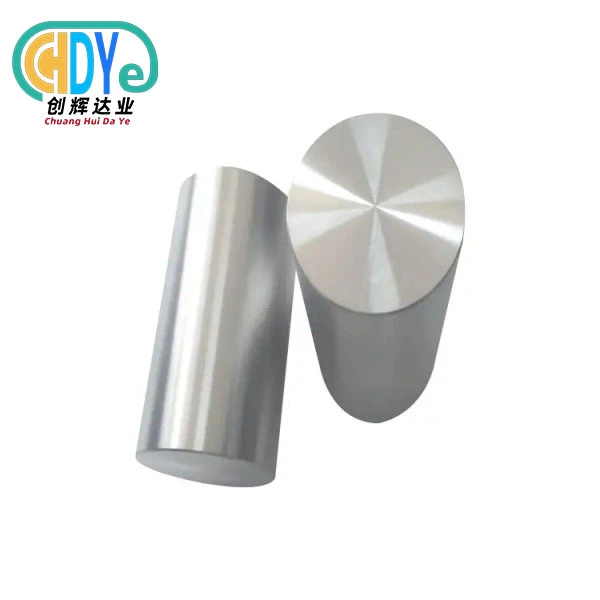
How Tantalum Round Rod Relates to Heat Exchanger Performance
Performance Means More Than Thermal Conductivity
When engineers consider how well a heat exchanger performs, they often think about the rate at which heat transfers from one fluid to another. It is determined by the heat conductivity, the surface area, the wall thickness, and the fouling. The thermal conductivity of tantalum is around 57 W/mK, which is much higher than stainless steel and titanium but much lower than copper. The tubes and plates of the same metal family are employed in harsh acid duty, although a tantalum round rod is not usually the principal heat transfer surface in most systems. But more crucially, the preservation of the metal is critical for long-term performance. No matter how excellent its conductivity seems on paper, a material that corrodes rapidly loses its surface, forms deposits, and finally fails.
How Corrosion Damages Heat Exchanger Efficiency
Corrosion impacts a heat exchanger in multiple ways simultaneously. Metal loss thins walls and weakens supports. Corrosion products build deposits that insulate surfaces. Leaks enable process fluids to mix or escape. Each of these factors limits heat transmission and increases the energy required to keep the process on target. Ordinary stainless steel may be easily damaged in hot acid service. A tantalum round rod for internal supports, tie rods, or fasteners resists many hostile chemicals by virtue of a stable oxide coating; thus, the structure retains its form and the surfaces remain cleaner. That’s the most obvious way tantalum safeguards efficiency, maintaining the equipment as it was.
Where a Tantalum Round Rod Fits in the Design
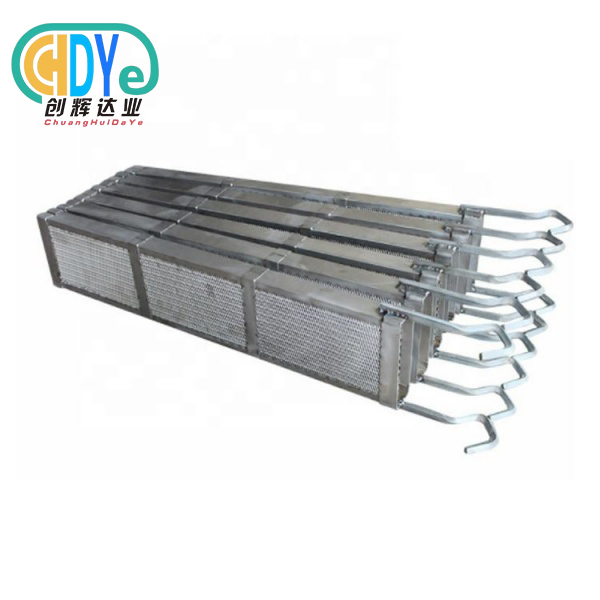
Most heat exchangers are manufactured using tubes, plates, shells, baffles, and supporting hardware. A tantalum round rod is primarily a supporting and fabricating material. Rods may be machined to make tie rods, spacers, baffle supports, stay bolts, fasteners, spargers, electrodes, tiny fittings, and specific parts. In a unit where the tubes are composed of corrosion-resistant metal, the supporting hardware must also be corrosion-resistant; otherwise, it will be the weak link. The use of a tantalum round rod for these pieces ensures the corrosion resistance of the assembly. Designers should still examine chemical compatibility for the individual fluids, temperatures, and concentrations before final material selection.
Properties of Tantalum Round Rod That Matter in Heat Exchanger Service
Corrosion Resistance in Aggressive Fluids
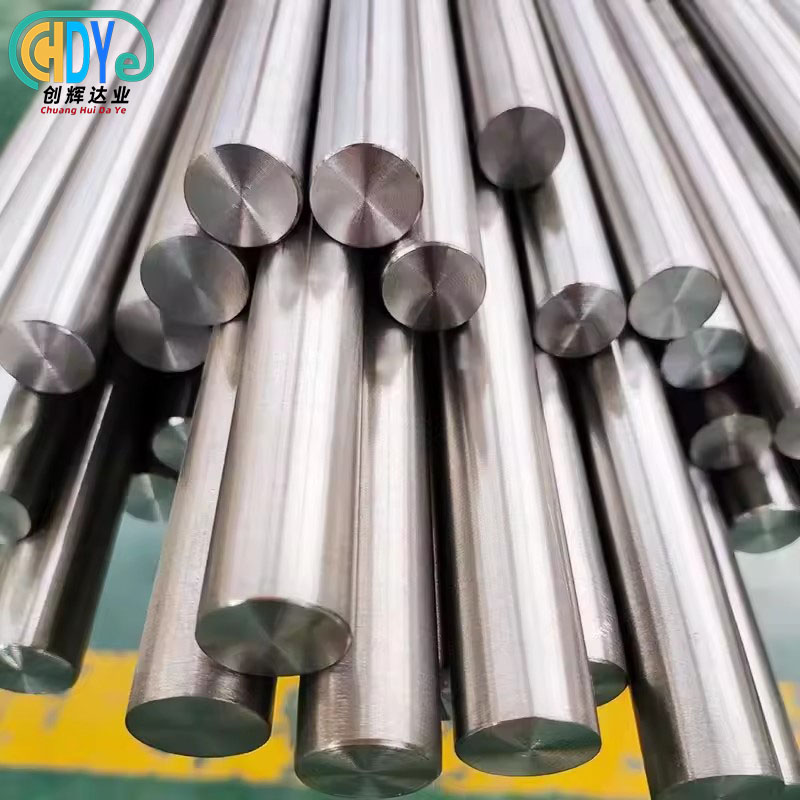
The primary benefit of tantalum round rod is its corrosion resistance. Tantalum creates a durable protective oxide coating and shows excellent resistance to many harsh chemical conditions, including several hot acid streams that damage other metals. This protection is part of the metal and will self-heal if the surface is damaged. This protection is important within equipment that cannot be readily examined. However, tantalum is not impervious to everything: hydrofluoric acid, fuming sulfuric acid, and boiling strong alkalis may attack it, and compatibility should always be evaluated for the particular chemicals, temperatures, and concentrations in your process. A competent source will assist you in looking at these issues before you purchase.
High Melting Point and Thermal Stability
Since heat exchangers are all about temperature, thermal stability is a must. Tantalum has a melting temperature of around 3,017°C, meaning a tantalum round rod is acceptable for certain high-temperature applications, especially in a vacuum or protected environment. Caution at high temperatures, since tantalum will absorb gases such as oxygen, nitrogen, and hydrogen, which will embrittle it. Practically, this involves assessing operating temperature, environment, and the probability of hydrogen pick-up, particularly when tantalum contacts other metals in an acidic electrolyte. Its heat resistance and strength allow designers a large safety factor not found in most conventional metals within the permissible limits.
Ductility and Machinability
You can only utilize a material if you can make the bits you require out of it. Tantalum is moderately ductile; therefore, a tantalum round rod may be machined into fasteners, electrodes, and other components, but the correct cutting tools and machining settings are required. Use sharp tools, modest speeds, and enough lubrication to prevent galling, a frequent problem with tantalum. The rod is turnable, drillable, and threadable; thus, one bar may provide several distinct tiny pieces for the same heat exchanger project. Choosing the proper diameter lowers machining time and waste, which is important since tantalum is a costly metal. The table below compares characteristics of heat exchangers.
| Property | Tantalum | Titanium | Stainless Steel |
|---|---|---|---|
| Thermal conductivity (approx.) | About 57 W/m·K | About 20 W/m·K | About 15–16 W/m·K |
| Resistance to hot acids | Excellent | Moderate | Limited |
| Melting point | About 3,017°C | About 1,668°C | About 1,400–1,450°C |
| Ductility | Good | Good | Good |
| Cost | Higher | Medium | Lower |
Where Tantalum Round Rod Is Used in Heat Exchangers and Related Equipment
Supports, Tie Rods and Fasteners
The most straightforward usage of tantalum round rod in heat exchangers is for internal construction. Tie rods secure baffles, spacers keep tubes in alignment, and fasteners hold sections together. All are in continual contact with the process fluid. When a steel tie rod corrodes, baffles shift, tubes vibrate, and damage spreads fast. In many acid services, this failure route is blocked by a round rod of tantalum so that the unit retains its shape and flow pattern. These pieces are modest, but safeguard a much greater investment. For plant owners, replacing poor supporting gear with tantalum is typically an affordable option to prolong the life of a costly exchanger.
Chemical Processing and Vacuum Equipment
Heat transfer is seldom done in isolation. The reactors, evaporators, vacuum furnaces, and process pipework are located next to the exchanger, and tantalum round rod is utilized in chemical processing equipment and vacuum furnace components. Rods become shafts, probes, sparger elements, and supports in these systems, and the same corrosion and temperature resistance that protects a heat exchanger protects the remainder of the line. Using only one material family for linked equipment may simplify spare parts and limit the possibility of galvanic issues from mixed metals. Tantalum round rod is often combined with other tantalum goods such as sheets, tubes, and fabricated components to satisfy a project from a single source by customers.
Electrodes, Laboratory and Specialty Components
In addition to major facilities, tantalum round rod supports laboratory and specialist work for heat transfer and corrosion testing. It is machined into industrial electrodes, precision parts, test fixtures and specialty metal components for use in pilot heat exchangers, corrosion test loops and research equipment. Laboratories use tantalum because it remains clean, doesn't contaminate samples, and test findings remain reproducible over lengthy runs. In this area, small orders and bespoke lengths are typical; therefore, flexibility from the provider is necessary. If you are developing a prototype, just let us know the diameter and cut length you require, and we can confirm availability before you commit.
| Application | Typical Parts from Tantalum Round Rod | Benefit |
|---|---|---|
| Heat exchanger internals | Tie rods, spacers, baffle supports, fasteners | Stable structure in hot acids |
| Chemical processing equipment | Shafts, probes, sparger parts | Corrosion resistance |
| Vacuum furnace components | Supports, fixtures | High-temperature stability |
| Industrial electrodes | Electrode rods, connectors | Chemical inertness |
| Laboratory and test equipment | Test fixtures, specialized components | Cleanliness and repeatability |
Ordering and Fabrication Guidance for Tantalum Round Rod
Specifications to Confirm Before You Order
Confirm the machining and performance-affecting aspects before buying a tantalum round bar. We provide rods in a variety of diameters and lengths, so you may choose the material grades and dimensions that best suit the processing processes you have in mind. For machining or fabrication purposes, we suggest that you validate rod diameter, tolerance, straightness, and surface quality before ordering. Tell us the chemical medium, temperature range, and environment too, and we can talk about whether tantalum is a good option. We find that by putting these ideas down, we avoid misunderstandings and can propose a rod to fit your design at minimum expense.
| Item to Confirm | Why It Matters |
|---|---|
| Rod diameter | Determines machining allowance and material use |
| Tolerance | Ensures parts fit assemblies correctly |
| Straightness | Important for long supports and tie rods |
| Surface condition | Affects cleanliness and corrosion behavior |
| Grade and cut length | Matches your processing method and availability |
Fabrication and Handling Practices
A good fabrication process maintains the value of the metal. Store each tantalum round rod in clean, dry conditions and handle with clean gloves. Keep the tantalum round rod free from carbon steel dust and other pollutants that may mark the surface. Use sharp tools and appropriate cutting settings during machining. If you are going to weld or do any high-temperature operation, you need to protect the metal with a vacuum or inert gas. Hot tantalum takes up gases quickly and becomes brittle. Clean parts properly before installation after manufacture. These are basic actions, but they are the difference between a component that will endure for years and one that breaks prematurely due to preventable damage.
Working with a Reliable Tantalum Supplier
The final criterion is the firm that makes the rod. Shaanxi Chuanghui Daye Metal Material Co., Ltd. is located in the Baoji High-tech Development Zone, regarded as the "Titanium Capital" of China, with convenient transportation and a perfect industrial foundation. Our founder has more than 30 years of expertise in rare metals, and our facilities include annealing furnaces, electron beam furnaces, smelting equipment, rolling machines, lathes, sawing machines, and shearing machines. Our raw material inspection, melting and forging, machining and forming, final inspection, and packing are ISO 9001:2015 certified. With this method, every tantalum round rod order has the same high quality and straightforward communication from quote to delivery.
Conclusion
Tantalum round rod bars generally increase the efficiency of heat exchangers by preserving the structure, keeping surfaces clean, and prolonging service life in corrosive, high-temperature situations, rather than by increasing heat transfer by themselves. They are used for tie rods, supports, fasteners, and associated components to keep the equipment efficient and dependable. Shaanxi Chuanghui Daye Metal Material Co., Ltd., based in Baoji, the "Titanium Capital" of China, has over 30 years of rare metal expertise and is ISO 9001:2015 certified for quality control. If you require reliable and economical corrosion-resistant components for your plant, contact our experts immediately and tell us about your project.
FAQ
Q1. Can a tantalum round rod really improve heat exchanger performance?
A: Yes, mainly by resisting corrosion, keeping supports and surfaces in good condition, and reducing deposits and leaks, which helps the exchanger keep its designed efficiency.
Q2. Which heat exchanger parts can be made from tantalum round rod?
A: Common parts include tie rods, spacers, baffle supports, stay bolts, fasteners, spargers, and electrodes, machined from the rod to your drawings.
Q3. What should I confirm before ordering?
A: Confirm the rod diameter, tolerance, straightness, surface condition, grade, and cut length, along with the chemicals, temperatures, and concentrations in your process.
Q4. Is tantalum suitable for all chemical environments?
A: No. It resists many aggressive chemicals, but hydrofluoric acid, fuming sulfuric acid, and hot strong alkalis can attack it, so compatibility should always be checked first.
Q5. Can you supply different sizes?
A: Yes. We supply tantalum round rods in different diameters and lengths according to material availability and your processing requirements.
Contact Us Today for Your Tantalum Round Rod Needs
Want to protect your heat exchangers from corrosion and downtime? Shaanxi Chuanghui Daye Metal Material Co., Ltd. supplies premium tantalum round rods, together with niobium, titanium, tungsten, and molybdenum materials, to chemical, vacuum, electronic, and laboratory customers around the world. Send us your grade, diameter, tolerance, length, and application details, and our experienced team will reply promptly with a tailored quotation and practical advice. Whether you need a small trial order or regular supply, we are ready to help with dependable delivery and clear communication. Email us now at info@chdymetal.com and let us help your equipment perform for longer.
References
1. Cardonne, S. M., Kumar, P., Michaluk, C. A., & Schwartz, H. D. (1995). Tantalum and its alloys. International Journal of Refractory Metals and Hard Materials, 13(4), 187–194.
2. Cardarelli, F. (2018). Materials Handbook: A Concise Desktop Reference (3rd ed.). Springer.
3. Obin, A., & Rosa, J. L. (2000). Corrosion behavior of niobium, tantalum and their alloys in hot hydrochloric and phosphoric acid solutions. International Journal of Refractory Metals and Hard Materials, 18(1), 13–21.
4. Schweitzer, P. A. (2010). Fundamentals of Corrosion: Mechanisms, Causes, and Preventative Methods. CRC Press.
5. Shah, R. K., & Sekulić, D. P. (2003). Fundamentals of Heat Exchanger Design. John Wiley & Sons.
6. International Organization for Standardization. (2015). ISO 9001:2015 Quality Management Systems – Requirements. ISO.
Learn about our latest products and discounts through SMS or email