- English
- French
- German
- Portuguese
- Spanish
- Russian
- Japanese
- Korean
- Arabic
- Greek
- German
- Turkish
- Italian
- Danish
- Romanian
- Indonesian
- Czech
- Afrikaans
- Swedish
- Polish
- Basque
- Catalan
- Esperanto
- Hindi
- Lao
- Albanian
- Amharic
- Armenian
- Azerbaijani
- Belarusian
- Bengali
- Bosnian
- Bulgarian
- Cebuano
- Chichewa
- Corsican
- Croatian
- Dutch
- Estonian
- Filipino
- Finnish
- Frisian
- Galician
- Georgian
- Gujarati
- Haitian
- Hausa
- Hawaiian
- Hebrew
- Hmong
- Hungarian
- Icelandic
- Igbo
- Javanese
- Kannada
- Kazakh
- Khmer
- Kurdish
- Kyrgyz
- Latin
- Latvian
- Lithuanian
- Luxembou..
- Macedonian
- Malagasy
- Malay
- Malayalam
- Maltese
- Maori
- Marathi
- Mongolian
- Burmese
- Nepali
- Norwegian
- Pashto
- Persian
- Punjabi
- Serbian
- Sesotho
- Sinhala
- Slovak
- Slovenian
- Somali
- Samoan
- Scots Gaelic
- Shona
- Sindhi
- Sundanese
- Swahili
- Tajik
- Tamil
- Telugu
- Thai
- Ukrainian
- Urdu
- Uzbek
- Vietnamese
- Welsh
- Xhosa
- Yiddish
- Yoruba
- Zulu
Is GR4 Titanium Bar the Best Choice for High-Stress Parts?
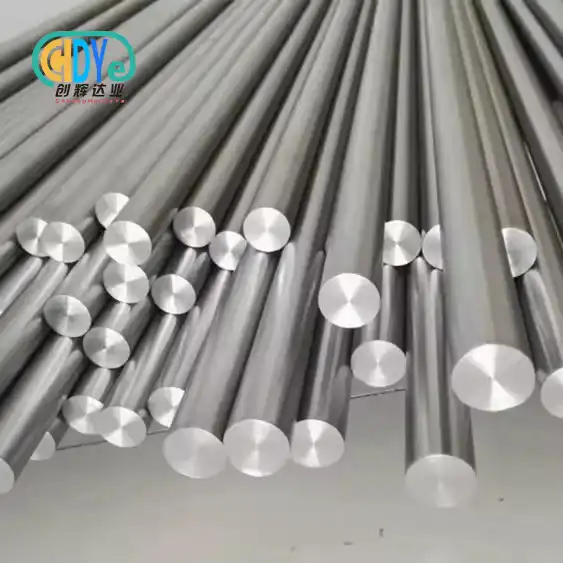
When engineers choose materials for high-stress parts, they have to answer a very important question: what material is the strongest, least likely to rust, and lightest? More and more, the answer seems to be commercially pure titanium Grade 4. This Gr4 titanium bar is the strongest unalloyed titanium on the market because it has a unique mix of mechanical strength and chemical stability. Lower-grade pure titanium isn't strong enough, gr4 titanium bar and expensive alloys make things more complicated. Grade 4 fills the gap perfectly for demanding uses in aerospace, chemical processing, and medical device making.
Understanding GR4 Titanium Bar: Properties and Manufacturing
Chemical Composition That Drives Performance
Grade 4 titanium is different from commercially pure titanium because it has managed interstitial strengthening. Grades 1 through 3 focus on being easy to shape and having the best corrosion protection. Grade 4 has more iron and more oxygen (up to 0.40%) in its alpha-phase microstructure. This carefully chosen mix gives it a tensile strength above 550 MPa, which is about the same as mild steel, while keeping titanium's well-known resistance to oxidising conditions. The material keeps titanium's natural biocompatibility, which makes it very useful in places where metals with vanadium, like Grade 5, might be harmful to living things. The first step in our manufacturing process at Shaanxi Chuanghui Daye Metal Material Co., Ltd. is getting high-quality titanium sponge from trusted sources. During production, we strictly follow the ASTM B348, ASME SB348, and ASTM F-67 guidelines. Before processing starts, each batch goes through a thorough chemical study to make sure the composition is correct.
Manufacturing Excellence From Baoji's Titanium Capital
Our company in the Baoji High-tech Development Zone has advanced manufacturing tools and 30 years of experience working with rare metals. There are several important steps in the production process that make sure the standard stays high. When we put raw materials into our electron beam furnace for primary heating, they don't get contaminated because the furnace is vacuum-formed. The molten titanium is then forged, which improves the mechanical qualities and smooths out the grain structure. Forged billets are turned into bar stock with very tight tolerances for size during rolling processes. To get the microstructure we want, our rolling tools use controlled deformation at certain temperatures. After being rolled, the bars go into our annealing furnace, where they are carefully heated to release the stresses that built up during plastic deformation. This step of annealing keeps the metal from acting in strange ways during later welding or machining processes at the customer's location. The last step in the manufacturing process is surface treatment. The alpha case is a layer of oxygen-rich material that forms on the surface during high-temperature processing. Our centerless grinding and gr4 titanium bar turning tools remove it.
GR4 Titanium Bar vs Other Materials: Comparing Performance and Suitability
Grade 4 Versus Other Titanium Grades
When you compare widely pure titanium grades, you can see why Grade 4 is so important. Grade 2 pure titanium is the most common type. It is very resistant to rust and easy to shape, but its tensile strength is only 345 MPa. Premature plastic deformation happens when hydraulic parts or structural fasteners are loaded above Grade 2's limit. When you go up to Grade 4, the strength goes up by 60% without affecting how well it resists corrosion in chloride-filled seas or acidic chemical streams. By adding aluminium and vanadium, Grade 5 titanium metal (Ti-6Al-4V) can reach a tensile strength of about 900 MPa. This amazing strength comes with trade-offs that make it less useful. The alloying elements make the metal less resistant to corrosion in some reducing acids. They also make the material much more expensive and make bonding more difficult. Because vanadium is biologically active, medical device makers avoid using Grade 5 for implanted parts. Grade 4 gets rid of these worries while still being strong enough for orthopaedic tools and dental implant abutments.
Titanium Grade 4 Against Stainless Steel 316
Austenitic stainless steel 316 is a workhorse in chemical processes that doesn't rust and is often compared to Grade 4 titanium by procurement teams. Even though 316 stainless steel costs less per kilogram at first, titanium is usually the better choice when you look at the total cost of ownership. The 8.0 g/cm³ density of stainless steel makes parts 45% heavier than titanium's 4.5 g/cm³ density. This affects shipping costs and the way aerospace systems are loaded structurally. Stress corrosion cracking can happen in chloride settings. This is a catastrophic failure mode where tensile stress and corrosive attack work together to spread cracks quickly. Marine heat exchangers and chemical plants along the coast that replace broken stainless steel parts with Grade 4 titanium get rid of this failure mechanism for good. Titanium's passive oxide layer grows back right away when it gets damaged, giving it self-healing security that chloride-contaminated stainless steel can't match. When it comes to a rotating gear, where centrifugal forces increase with mass, the weight advantage is very important. Grade 4 is used to make pump shafts and turbine parts that use less power and bearing load than steel versions. These operational savings add up over the decades that the equipment is used, making up for the higher original cost of the materials.
Decision Making: Why Choose GR4 Titanium Bar for High-Stress Parts?
Strength-to-Weight Performance That Reduces System Mass
For engineers making weight-sensitive parts, switching from aluminium or steel to Grade 4 titanium has a lot of benefits that build on top of each other. Lower component mass lowers inertial loads during acceleration, which makes moving equipment use less energy. Structures made with titanium bars can hold the same loads with smaller cross-sections, which makes room for more features or better aerodynamics. When it comes to aerospace uses, these weight savings are especially useful because every kilogram taken off the airframe structure means more payload capacity or longer range. Defence companies that build unmanned aerial vehicles (UAVs) make the flights last longer by using titanium parts instead of heavier ones. The stiffness of the material keeps the structure straight even though it is lighter, so it doesn't bend in ways that hurt aerodynamics or sensor alignment.
Corrosion Resistance That Extends Service Life
Industrial equipment that works in corrosive environments gr4 titanium barhas high lifetime costs that are mostly made up of maintenance costs. Chemical processing plants, offshore energy sites, and marine platforms are constantly under attack from chloride salts, acidic condensates, and oxidising chemicals. Steel parts need protective coatings that wear off over time and need to be checked and reapplied on a frequent basis. Grade 4 titanium doesn't need any coating upkeep because its surface is naturally passive. The effect on the economy goes beyond saving money on paint and labour. Failures due to corrosion happen without warning, which stops production and calls for emergency repairs. During planned maintenance windows, replacing weak steel parts with titanium bars stops future failures and raises equipment availability metrics. Chemical companies that use continuous processes value this dependability because when a single component fails, it can cause shutdowns that last for days and cost millions of dollars in lost production.
Procurement Guide: Sourcing GR4 Titanium Bar Efficiently and Reliably
Identifying Qualified Manufacturers and Suppliers
Authenticity of materials is a major worry when buying them, especially when fake or incorrectly identified grades get into supply chains. Reputable companies that make Gr4 titanium bars keep a lot of certification paperwork that links each lot back to its original melt. Mill test papers show the chemical make-up, the mechanical properties, and that the product meets all the standards that apply. Buyers should ask for these certificates with every shipment to make sure the values stated are within the limits set by the seller. If a supplier has ISO 9001:2015 certification, it means they use systematic quality management methods. This certificate shows that you are dedicated to process control, continuous growth, and making sure your customers are happy. Facilities that are audited have regular third-party checks to make sure that processes are still working and that paperwork is still up to date. Buying from certified manufacturers lowers the chance of buying something because the quality of the product will be the same on all orders. When choosing a provider, geographic factors are taken into account. The Baoji area in China has been making titanium products for many years, so it has a mature supply chain with specialised tools and skilled workers. This grouping effect lowers costs through economies of scale while keeping the same level of technical ability. Because we are in the middle of this industrial ecosystem, we have unique access to raw materials, processing services, and quality inspection tools.
Pricing Transparency and Order Quantity Considerations
Titanium bar pricing reflects raw material costs, processing complexity, and order volume. Larger purchases typically qualify for volume discounts as fixed setup costs are distributed across more units. Buyers planning ongoing requirements benefit from establishing supplier relationships that recognise purchase history and future volume commitments. Transparent pricing structures itemise material, processing, testing, and logistics components, enabling accurate cost comparisons between suppliers. Minimum order quantities balance supplier efficiency against customer inventory carrying costs. Standard bar sizes may have lower MOQs compared to custom dimensions requiring dedicated production runs. We work with customers to structure orders meeting their immediate needs while optimising manufacturing efficiency. Combining multiple diameter or length specifications into a single order often satisfies MOQ requirements while providing inventory flexibility. Lead time management requires coordination between procurement schedules and supplier production capacity. Standard configurations are maintained in stock ship within days, while custom processing adds production and quality assurance time. Providing forecasts for anticipated requirements allows manufacturers to schedule capacity and secure raw materials proactively, compressing delivery timelines when purchase orders arrive. Rush orders receive priority gr4 titanium barhandling, though premium charges may apply to expedite processing and shipping.
Industry Use Cases and Success Stories Featuring GR4 Titanium Bar
Aerospace Applications Demanding Reliability
Commercial aircraft manufacturers incorporate Grade 4 titanium fasteners throughout airframe assemblies exposed to environmental extremes. Wing structures experience cyclic loading during every flight while confronting temperature swings from tropical heat to stratospheric cold. Titanium fasteners resist corrosion from deicing chemicals and moisture infiltration while maintaining clamping force under vibration. The material's thermal expansion compatibility with carbon fibre composites prevents loosening as structures heat and cool during flight operations. Defence contractors building fighter aircraft specify Grade 4 for hydraulic system components where fluid pressure pulsations create fatigue loading. Actuator rods and valve bodies fabricated from this grade withstand millions of pressure cycles without crack initiation. The material's resistance to hydraulic fluid chemistry prevents degradation, maintaining dimensional stability and surface finish throughout decades of service.
Marine Industry Performance in Harsh Conditions
Offshore drilling platforms operate in corrosive seawater under extreme mechanical loading. Drill string components encounter corrosive drilling muds, high contact stresses, and impact loading during operations thousands of meters below deck. Grade 4 titanium drill collars and stabiliser bars reduce string weight, enabling deeper drilling before reaching derrick capacity limits. The material's corrosion resistance extends component life in saltwater environments that rapidly consume steel equivalents. Desalination plants processing seawater into potable water rely on corrosion-resistant materials for critical components. Heat exchanger tubes and pump shafts fabricated from Grade 4 titanium eliminate corrosion failures that plague stainless steel installations. The smooth titanium surface resists biofouling accumulation, maintaining heat transfer efficiency and reducing cleaning frequency. Facilities report operational cost reductions and improved reliability after retrofitting with titanium components.
Conclusion
Selecting materials for high-stress applications requires balancing multiple performance criteria against economic constraints. Grade 4 titanium bars deliver an exceptional combination of strength, corrosion resistance, and weight efficiency that outperforms traditional materials across demanding industrial sectors. The material bridges the gap between lower-strength commercially pure grades and complex titanium alloys, providing engineers with a reliable solution for components facing mechanical loads in corrosive environments. Manufacturing expertise concentrated in Baoji's titanium industrial cluster ensures consistent quality and competitive pricing through mature supply chains and specialised processing capabilities. When procurement decisions account for total lifecycle costs, including maintenance, replacement frequency, and operational efficiency, Grade 4 titanium demonstrates compelling value despite higher initial material costs.
FAQ
1. What makes Grade 4 titanium stronger than other commercially pure grades?
Grade 4 achieves superior strength through controlled interstitial strengthening, specifically higher oxygen content reaching 0.40% compared to lower grades. This interstitial strengthening mechanism increases tensile strength to 550 MPa minimum while maintaining the alpha-phase microstructure characteristic of commercially pure titanium. The elevated oxygen and iron levels create solid solution strengthening without alloying elements like aluminium or vanadium found in Grade 5.
2. How does the gr4 titanium bar compare cost-wise to stainless steel 316?
While titanium carries higher per-kilogram material costs, lifecycle analysis often favours Grade 4 in corrosive applications. Stainless steel suffers stress corrosion cracking in chloride environments, necessitating premature replacement. Titanium's 45% weight advantage reduces structural loading and shipping expenses. Chemical processing plants report that eliminating corrosion-related failures and maintenance justifies the initial investment through improved equipment availability and extended service intervals.
3. What are typical lead times when ordering Grade 4 titanium bars?
Lead times vary based on specification and order volume. Standard diameter bars from existing inventory typically ship within one week. Custom dimensions requiring dedicated production runs need two to four weeks for processing, quality assurance testing, and certification documentation preparation. Providing advance forecasts enables manufacturers to optimise scheduling and secure raw materials proactively, potentially compressing delivery timelines for planned requirements.
4. Can Grade 4 titanium be welded, and what precautions are necessary?
Grade 4 exhibits excellent weldability comparable to other commercially pure titanium grades. Successful welding requires inert gas shielding using argon to protect the weld pool and heat-affected zone from atmospheric contamination. Oxygen, nitrogen, and hydrogen absorption during welding causes embrittlement and reduces ductility. Proper shielding gas coverage, clean joint preparation, and appropriate filler metal selection ensure sound welds matching base material properties.
Partner With Chuanghui Daye: Your Trusted Gr4 Titanium Bar Supplier
Selecting the right material supplier impacts project success as significantly as material gr4 titanium barchoice itself. Shaanxi Chuanghui Daye brings over three decades of rare metal expertise to every customer partnership, combining advanced manufacturing capabilities with responsive technical support. Our ISO 9001:2015 certified facility in Baoji provides comprehensive processing from raw material melting through precision machining and quality certification. We maintain competitive factory-direct pricing while delivering the flexible order quantities, rapid prototyping, and custom processing services that demanding applications require. Whether your project involves aerospace components, chemical processing equipment, or medical devices, our engineering team provides material selection guidance and processing recommendations tailored to your specifications. Contact us today at info@chdymetal.com to discuss your gr4 titanium bar requirements with experienced professionals committed to your project success.
References
1. Boyer, R., Welsch, G., and Collings, E.W. (1994). Materials Properties Handbook: Titanium Alloys. ASM International, Materials Park, Ohio.
2. Donachie, Matthew J. (2000). Titanium: A Technical Guide, 2nd Edition. ASM International, Materials Park, Ohio.
3. Schutz, R.W. and Thomas, D.E. (1987). Corrosion of Titanium and Titanium Alloys. In Metals Handbook, 9th Edition, Volume 13: Corrosion. ASM International.
4. ASTM International. (2021). ASTM B348: Standard Specification for Titanium and Titanium Alloy Bars and Billets. West Conshohocken, Pennsylvania.
5. Lutjering, Gerd and Williams, James C. (2007). Titanium, 2nd Edition. Springer-Verlag, Berlin Heidelberg.
6. Peters, M., Kumpfert, J., Ward, C.H., and Leyens, C. (2003). Titanium Alloys for Aerospace Applications. Advanced Engineering Materials, Volume 5, Issue 6.
Learn about our latest products and discounts through SMS or email