- English
- French
- German
- Portuguese
- Spanish
- Russian
- Japanese
- Korean
- Arabic
- Greek
- German
- Turkish
- Italian
- Danish
- Romanian
- Indonesian
- Czech
- Afrikaans
- Swedish
- Polish
- Basque
- Catalan
- Esperanto
- Hindi
- Lao
- Albanian
- Amharic
- Armenian
- Azerbaijani
- Belarusian
- Bengali
- Bosnian
- Bulgarian
- Cebuano
- Chichewa
- Corsican
- Croatian
- Dutch
- Estonian
- Filipino
- Finnish
- Frisian
- Galician
- Georgian
- Gujarati
- Haitian
- Hausa
- Hawaiian
- Hebrew
- Hmong
- Hungarian
- Icelandic
- Igbo
- Javanese
- Kannada
- Kazakh
- Khmer
- Kurdish
- Kyrgyz
- Latin
- Latvian
- Lithuanian
- Luxembou..
- Macedonian
- Malagasy
- Malay
- Malayalam
- Maltese
- Maori
- Marathi
- Mongolian
- Burmese
- Nepali
- Norwegian
- Pashto
- Persian
- Punjabi
- Serbian
- Sesotho
- Sinhala
- Slovak
- Slovenian
- Somali
- Samoan
- Scots Gaelic
- Shona
- Sindhi
- Sundanese
- Swahili
- Tajik
- Tamil
- Telugu
- Thai
- Ukrainian
- Urdu
- Uzbek
- Vietnamese
- Welsh
- Xhosa
- Yiddish
- Yoruba
- Zulu
Titanium Coil Wire for Custom Applications: What to Know?
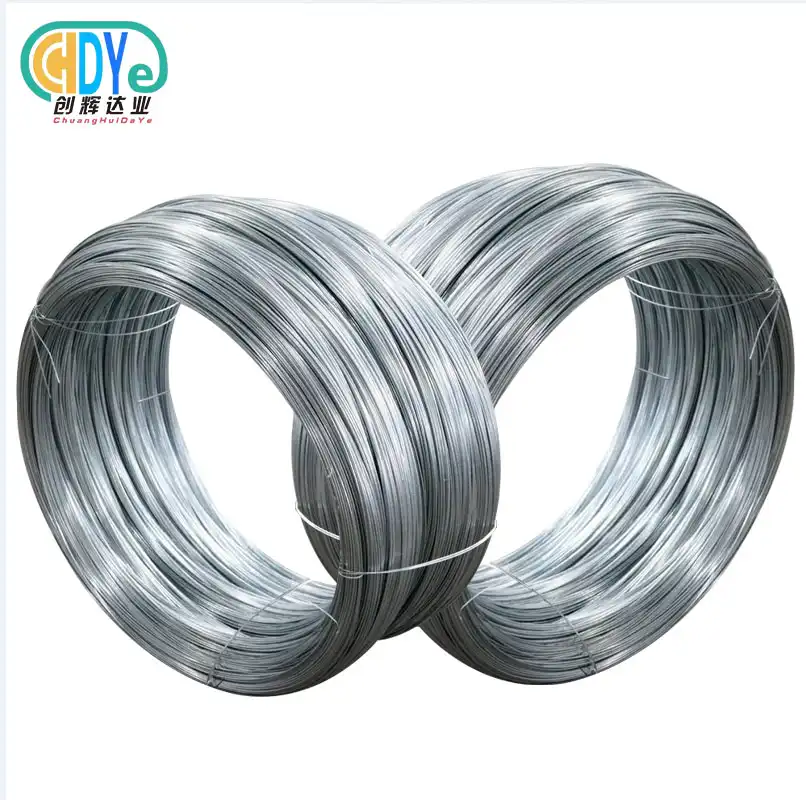
When looking for materials for important business uses, knowing the specs for titanium coil wire can make or break your project. Titanium coil wire is a long, spooled form of commercially pure or alloyed titanium that is made through precise cold-drawing or hot-rolling processes. It is made to work in automated production settings. This material comes in diameters from 0.1 mm to 5 mm and solves some of the biggest problems in high-volume production by getting rid of the need for regular downtime for manual reloading. Depending on the grade chosen, it has tensile strengths between 345 MPa and 895 MPa. Because it is coiled, it can be easily added to automated welding systems, used in additive manufacturing processes, and to make precise parts for industries like aircraft, medical devices, and chemical processing.
Understanding Titanium Coil Wire: Properties and Specifications
Titanium wire in coil format represents a significant advancement in material handling for modern manufacturing operations. Unlike cut-length alternatives, the continuous spooled configuration solves critical workflow interruptions that procurement managers frequently encounter in high-throughput production environments.
Material Grades and Their Industrial Relevance
The two grades that are most important for business meet different engineering needs. Grade 2 (commercially pure titanium) is the best choice for chemical processing equipment, heat exchangers, and other uses where flexibility is more important than ultimate strength. It is highly resistant to rust and easy to shape. The tensile strength of this grade is usually around 345 MPa, and it has great elongation properties that make complex shaping operations easier. Grade 5, which is chemically named Ti-6Al-4V, is the workhorse alloy that makes up about half of all the titanium used in industry. The addition of aluminium and vanadium alloys makes an alpha-beta microstructure that has tensile strengths of up to 895 MPa and a density of only 4.43 g/cm³. Manufacturers of aerospace parts use this type for structural parts because the strength-to-weight ratio has a direct effect on how much fuel they use and how much they can carry. Because the material can keep its mechanical properties at high temperatures, it is essential for turbine parts and fasteners that are subject to thermal cycling.
Technical Specifications That Matter for Procurement
Knowing more about the technical factors than just diameter measurements is important for choosing the right material. Tensile strengths between 345 and 895 MPa show not only the grade changes but also how hard the material becomes after being worked. Annealed states give the most flexibility, while cold-worked states make them stronger at the cost of stretching. Not only should procurement teams specify the grade, but also the temper condition, so that it can be processed in the right way later on. Differences in density of 4.43 to 4.51 g/cm³ may not seem like a big deal, but they add up over hundreds of parts in weight-critical applications like aerospace assemblies. When engineers replace traditional materials with titanium ones, they use these exact density specs to figure out how much space they need for things like satellite structures or aircraft control systems. Titanium's resistance to corrosion is probably the most important property that makes it useful in chemical, petrochemical, and marine settings. The substance creates a stable, self-healing oxide layer that protects against titanium coil wire chloride-induced stress corrosion cracking better than stainless steel alternatives. This is a type of failure that happens a lot in saltwater settings and chemical processing. This passive layer stays intact even when the pH level changes from very acidic to very basic. This lowers the cost of upkeep and greatly increases the life of the equipment.
Applications and Advantages of Titanium Coil Wire in Custom Solutions
Manufacturing engineers across diverse sectors increasingly specify titanium wire in coil format to solve persistent challenges that traditional materials cannot adequately address. The material's unique property combination opens possibilities that fundamentally alter product design approaches.
Medical Device Manufacturing Applications
Titanium is very biocompatible and doesn't rust in body fluids, which makes it useful in biomedical uses. Manufacturers of orthopaedic implants use Grade 2 wire for bone fixation devices because it has a modulus of elasticity that is more like natural bone than stainless steel options. This means that it doesn't act as a stress shield, which can slow down healing. Cardiovascular device makers use titanium wire to make stents and guidewires because it meets the needs for radiopacity, strength, and hemocompatibility. Surgical instrument makers like the material because it can be autoclaved many times without breaking down. The wire can be shaped in many different ways, which allows laparoscopic tools to have complicated spring mechanisms while still being strong enough to work reliably during minimally invasive procedures. A big company that makes medical devices said that when they switched their forceps production line from stainless steel to Grade 5 titanium wire, the failure rates of their instruments dropped by 40%. This shows that the new wire is more reliable, which has a direct effect on patient safety and surgical outcomes.
Aerospace and Defence Component Fabrication
Manufacturers of aerospace products are constantly under pressure to make planes lighter while keeping the safety limits and structural integrity. Titanium coil wire is used as a raw material for additive manufacturing methods such as Wire Arc Additive Manufacturing (WAAM). This lets complex structural parts be made with material utilisation rates higher than 90%. This is in contrast to traditional subtractive machining, which wastes a lot of material as chips. Titanium wire is used by aerospace fastener manufacturers for cold-heading operations that make bolts, rivets and other speciality fasteners. This method cuts down on material costs and environmental impact while speeding up production times for low-volume, high-complexity parts. The coiled format lets the material feed continuously into automated heading machines, so there are no breaks for human loading that slow down production. Contractors in the defence industry use Grade 5 wire for armour and structural parts in unmanned aerial vehicles. Every gram of weight savings directly leads to longer flight times or more cargo space.
How to Select the Right Titanium Coil Wire for Your Needs
Material selection represents a critical decision point that influences manufacturing efficiency, product performance, and lifecycle costs. A systematic evaluation approach helps procurement professionals and design engineers navigate the specification landscape effectively.
Evaluating Application-Specific Requirements
Before making a choice, you need to have a good idea of the mechanical loads and environmental conditions that your device will be subjected to over its lifetime. Components that are only under tensile loading in safe environments may work fine with Grade 2 material. However, Grade 5's better mechanical properties are usually needed for situations with cyclic loading, high temperatures, or combined stress states. Temperature exposure is a very important factor to consider. Both grades have properties that are much better than those of aluminium alloys, but Grade 5 is better at resisting creep at temperatures above 300°C, which makes it better for exhaust parts and turbine uses. The chemical exposure assessment should look at more than just the main service environment. It should also look at cleaning agents, sterilisation processes, and accidental contact with corrosive substances during maintenance tasks. The formability requirements affect the choice of material, especially when wire drawing, spring forming, or complex bending is needed. Because Grade 2 is more flexible, it can handle tighter bend radii and more complicated forming sequences without cracking. On the other hand, Grade 5 may need intermediate titanium coil wire annealing steps during multi-stage forming processes to recover its flexibility after work hardening.
Diameter and Dimensional Tolerance Considerations
Choosing the right wire thickness affects both how well it works mechanically and how easy it is to make. Fine diameters between 0.1 and 0.5 mm are useful in electronics, medical sutures, and speciality filter screens where it's important to have a small cross-sectional area. Handling these small gauges carefully is important to keep them from getting tangled up or damaged during processing. Diameters between 0.5 and 2.0 mm are the most useful range for general industrial uses, such as making welding wire, springs, and fasteners. This range is good for buying in bulk because the materials are easy to get, the prices are competitive, and the manufacturing processes are well-known. The larger diameters, ranging from 2.0 to 5.0 mm, are used for structural applications, heavy-duty fasteners, and parts that need a lot of cross-sectional area to be load-bearing. Dimensional tolerances have a direct effect on manufacturing yield rates and the quality of the finished product. For these sizes, tolerances are usually not as important, but it may be hard to get tight coiling without leaving behind stress that could affect straightness after unwinding. For diameters less than 1 mm, standard commercial tolerances are usually ±0.05 mm. For bigger sizes, they get wider to ±0.10 mm. Tighter tolerances may be necessary for applications that need precise fits or automated assembly processes, even if they cost more. On the other hand, standard commercial tolerances can save money for applications that don't need to be as exact.
Procurement Guide: Buying Titanium Coil Wire Efficiently
Strategic procurement approaches reduce total acquisition costs while ensuring material availability aligns with production schedules. Understanding market dynamics and supplier capabilities positions buyers to negotiate favourable terms and maintain supply chain resilience.
Identifying Reliable Supply Partners
The global titanium supply chain concentrates significant capacity in specific geographic regions, with processing capabilities concentrated in areas with established rare metal industries. Suppliers located in established manufacturing centres often benefit from proximity to raw material sources, specialised equipment availability, and experienced technical workforces that collectively reduce production costs and improve quality consistency. Evaluating supplier technical capabilities should extend beyond basic manufacturing equipment to include engineering support services. Suppliers offering material selection guidance, application-specific recommendations, and prototype quantities for testing demonstrate commitment to customer success beyond transactional relationships. This technical partnership becomes particularly valuable when developing new products or transitioning from alternative materials.
Volume-Based Pricing and Strategic Buying
Titanium wire pricing structures typically incorporate significant volume breaks that reward consolidated purchasing. Buyers procuring 100 kg or more per order often secure pricing 15-25% below small-quantity rates, creating an incentive to consolidate requirements across multiple projects when material specifications align. The economic order quantity analysis should balance carrying costs against price breaks to optimise total procurement costs. Annual supply agreements with volume commitments provide price stability and priority allocation during periods of tight market supply. These arrangements prove particularly valuable in industries with long product development cycles, where design freeze occurs months before production ramp. Locking pricing early in the development cycle eliminates material cost uncertainty that could compromise product margin projections.
Manufacturing Process and Quality Assurance
Understanding how titanium wire transforms from raw material to finished titanium coil wire product provides insight into quality drivers and helps procurement professionals appreciate why certain specifications command premium pricing. Manufacturing rigour directly correlates with material consistency and reliability in demanding applications.
Raw Material Sourcing and Melting Operations
The manufacturing journey begins with titanium sponge, the primary form of commercially pure titanium produced through the Kroll process. This porous material undergoes vacuum arc remelting (VAR) to create homogeneous ingots with controlled chemistry and minimised interstitial contamination. The VAR process subjects titanium to multiple melting cycles in high vacuum, removing volatile impurities and ensuring chemical uniformity throughout the ingot. Alloy additions for Grade 5 material occur during the melting stage, with precise additions of aluminium and vanadium to achieve target composition ranges. Chemical analysis verifies composition before casting proceeds, with spectroscopic techniques providing rapid elemental analysis to confirm specification compliance. This front-end quality control prevents entire melts from proceeding if chemistry falls outside specification windows.
Wire Drawing and Dimensional Control
Ingots undergo hot forging and rolling to create wire rod feedstock, typically in diameters from 6 to 10 mm. This intermediate product then feeds into multi-stage drawing operations that progressively reduce diameter through precision dies. Each drawing pass typically reduces diameter by 15-20%, with accumulated work hardening necessitating intermediate annealing to restore ductility for subsequent passes. Cold drawing imparts dimensional precision and surface finish characteristics that distinguish finished wire from cast or forged forms. Drawing die geometry, lubrication selection, and drawing speed parameters all influence final surface quality and dimensional consistency. Manufacturers operating modern drawing equipment with closed-loop tension control achieve diameter tolerances within ±0.02 mm, meeting requirements for precision applications.
Conclusion
Titanium coil wire represents a critical enabling material for industries demanding exceptional strength-to-weight ratios, corrosion resistance, and biocompatibility in demanding applications. Understanding the distinctions between Grade 2 and Grade 5 materials, recognising how diameter and surface finish selections impact downstream processing, and establishing relationships with capable suppliers collectively position procurement professionals to make informed decisions that optimise both technical performance and lifecycle costs. The material's unique properties solve persistent challenges that traditional alternatives cannot adequately address, justifying the initial cost premium through extended service life, reduced maintenance requirements, and enhanced product performance. Strategic procurement approaches incorporating volume consolidation, realistic lead time planning, and supplier technical partnerships ensure material availability aligns with production schedules while controlling total acquisition costs.
FAQ
1. What determines the appropriate grade selection between Grade 2 and Grade 5?
Grade selection primarily depends on your application's strength requirements and operating temperature. Grade 2 suits applications prioritising corrosion resistance and formability over ultimate strength, making it ideal for chemical processing equipment and medical devices operating at room temperature. Grade 5 becomes necessary when tensile strength exceeding 800 MPa is required or when components operate at elevated temperatures above 300°C, such as aerospace structural elements and turbine components.
2. How does coil format compare to straight length wire for manufacturing efficiency?
Coiled wire dramatically reduces downtime in automated manufacturing operations by eliminating frequent material reloading. Continuous feeding systems maintain consistent tension and feed rates, improving weld quality in automated TIG and MIG applications. The format proves particularly valuable in Wire Arc Additive Manufacturing and cold-heading operations, where production throughput directly correlates with minimal feed interruptions.
3. What lead times should buyers expect for custom diameter requirements?
Standard diameters in Grade 2 and Grade 5 typically ship within three to four weeks. Custom diameters require specialised drawing die fabrication, extending timelines to eight to twelve weeks depending on the supplier's production queue and raw material availability. Planning new product development timelines should incorporate these extended lead times to prevent schedule compression during production ramp phases.
Source Your Titanium Coil Wire from a Trusted Manufacturer
Shaanxi Chuanghui Daye Metal Material Co., Ltd. combines over three decades of titanium coil wire of rare metal expertise and modern manufacturing capabilities to deliver titanium coil wire that meets the exacting standards of aerospace, medical device, and chemical processing industries. Located in Baoji—China's recognised Titanium Capital—our facility benefits from proximity to raw material sources and specialised equipment suppliers that collectively enable competitive pricing without compromising quality. We manufacture Grade 2 and Grade 5 titanium coil wire in diameters from 0.1 to 5 mm, backed by ISO 9001:2015 certification and comprehensive material traceability documentation. Our engineering team provides application-specific recommendations to help you select optimal specifications, while our flexible production capabilities accommodate both large-volume orders and prototype quantities for development projects. Contact our team at info@chdymetal.com to discuss your requirements with a knowledgeable titanium coil wire supplier committed to your project's success.
References
1. Boyer, R., Welsch, G., & Collings, E.W. (1994). Materials Properties Handbook: Titanium Alloys. ASM International, Materials Park, Ohio.
2. Donachie, M.J. (2000). Titanium: A Technical Guide, 2nd Edition. ASM International, Materials Park, Ohio.
3. Lütjering, G., & Williams, J.C. (2007). Titanium, 2nd Edition. Springer-Verlag, Berlin Heidelberg.
4. Peters, M., Kumpfert, J., Ward, C.H., & Leyens, C. (2003). Titanium Alloys for Aerospace Applications. Advanced Engineering Materials, Volume 5, Issue 6.
5. Schutz, R.W., & Watkins, H.B. (1998). Recent Developments in Titanium Alloy Application in the Energy Industry. Materials Science and Engineering A, Volume 243, Issues 1-2.
6. Veiga, C., Davim, J.P., & Loureiro, A.J.R. (2012). Properties and Applications of Titanium Alloys: A Brief Review. Reviews on Advanced Materials Science, Volume 32, Number 2.
Learn about our latest products and discounts through SMS or email