- English
- French
- German
- Portuguese
- Spanish
- Russian
- Japanese
- Korean
- Arabic
- Greek
- German
- Turkish
- Italian
- Danish
- Romanian
- Indonesian
- Czech
- Afrikaans
- Swedish
- Polish
- Basque
- Catalan
- Esperanto
- Hindi
- Lao
- Albanian
- Amharic
- Armenian
- Azerbaijani
- Belarusian
- Bengali
- Bosnian
- Bulgarian
- Cebuano
- Chichewa
- Corsican
- Croatian
- Dutch
- Estonian
- Filipino
- Finnish
- Frisian
- Galician
- Georgian
- Gujarati
- Haitian
- Hausa
- Hawaiian
- Hebrew
- Hmong
- Hungarian
- Icelandic
- Igbo
- Javanese
- Kannada
- Kazakh
- Khmer
- Kurdish
- Kyrgyz
- Latin
- Latvian
- Lithuanian
- Luxembou..
- Macedonian
- Malagasy
- Malay
- Malayalam
- Maltese
- Maori
- Marathi
- Mongolian
- Burmese
- Nepali
- Norwegian
- Pashto
- Persian
- Punjabi
- Serbian
- Sesotho
- Sinhala
- Slovak
- Slovenian
- Somali
- Samoan
- Scots Gaelic
- Shona
- Sindhi
- Sundanese
- Swahili
- Tajik
- Tamil
- Telugu
- Thai
- Ukrainian
- Urdu
- Uzbek
- Vietnamese
- Welsh
- Xhosa
- Yiddish
- Yoruba
- Zulu
Top Benefits of Titanium Rod in Medical Implants
Manufacturing companies that make medical devices from titanium rods are turning more and more to titanium rods for making improved implants because they are biocompatible, strong, and don't rust. The titanium rod is a solid, cylinder-shaped product made from commercially pure titanium or titanium alloys through precise forging and rolling. It solves important problems in the medical field by preventing immune rejection reactions, withstanding physiological loads for decades, and keeping its structural integrity in the body's corrosive environment. These materials solve the weight-strength problem by having a density about 45% lower than stainless steel, but the same tensile strength. They also make sure that patients are safe and that implants last a long time. This guide talks about why titanium rods are so important in orthopaedic, dental, and cardiovascular applications. It gives procurement workers useful information about material grades, performance standards, and how to find them.
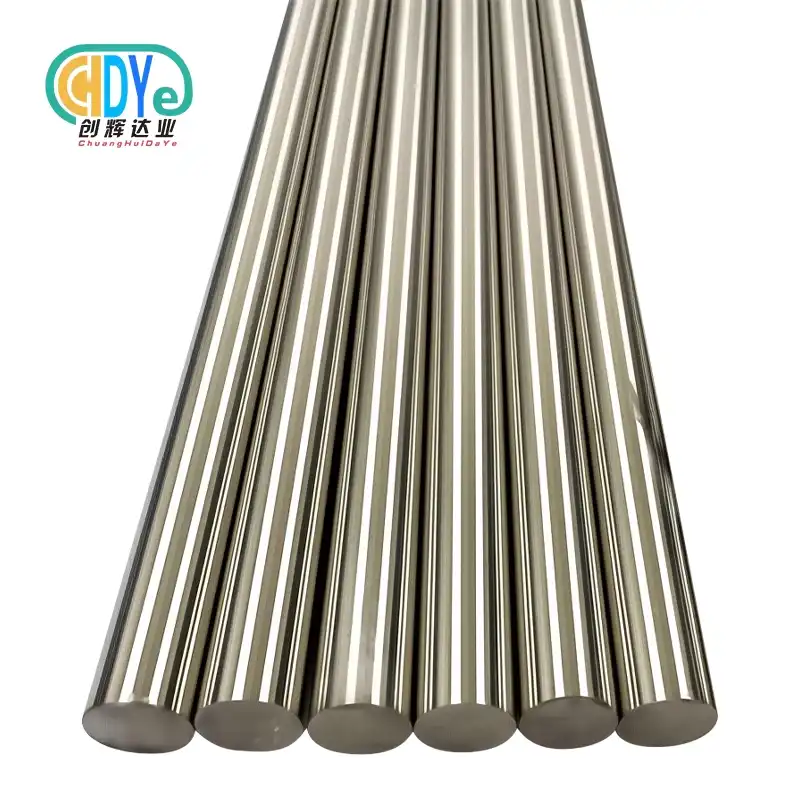
Understanding Titanium Rods in Medical Implants
What Defines Medical-Grade Titanium Rods
Titanium rods for medical implants are high-integrity cylinder-shaped mill products that are made from either pure titanium that is sold in stores or special alloys. Unlike regular metal bars, medical-grade versions are made following strict procedures such as vacuum melting, multi-stage casting, and controlled heat treatment to get rid of inclusions and improve the microstructure. The stuff is used as raw material to make spinal rods, intramedullary nails, tooth implant abutments, and bone fixation screws. Our factory in Baoji, China's famous Titanium Capital, uses electron beam furnaces and precision rolling tools to make rods that meet ASTM F67 and ASTM F136 standards. This makes sure that the process can be tracked from the titanium sponge to the finished part.
Key Material Grades in Medical Applications
Grade 2 economically pure titanium is the best material for non-load-bearing uses because it is very flexible and easy to shape. This grade has very few interstitial elements (0.25% oxygen maximum), which keeps its ability to be cold-bent during surgery contouring. Grade 5 titanium metal (Ti-6Al-4V) is the most common type used for load-bearing applications. It has a tensile strength of over 895 MPa and doesn't wear down even after millions of stress cycles. Grade 23, an extra-low interstitial form of Ti-6Al-4V, makes it harder for important orthopaedic implants to break. Each grade goes through a lot of tests, such as ultrasonic flaw detection and grain size analysis, to make sure that the material is free of flaws and can be used for titanium rods lasting human implantation.
Top Benefits of Titanium Rods in Medical Implants
Exceptional Biocompatibility and Osseointegration
Titanium is very compatible with human flesh because it has a stable, non-reactive oxide layer (TiO₂) that forms on its own when it comes into contact with body fluids. This passive film stops the release of ions that cause the inflammatory reactions that are common in metals that contain nickel. Studies in humans show that titanium implants have osseointegration rates higher than 95%. This is because bone cells directly bond to the oxide surface without making a fibrous encapsulation. Because the material isn't magnetic, it can be used for MRI scans, which is a big problem with options made of stainless steel. Titanium has a history of lowering the number of revision surgeries needed because of biological rejection, which is good for procurement workers who are looking for materials for orthopaedic applications.
Superior Mechanical Strength and Fatigue Resistance
The strength-to-weight ratio of Grade 5 titanium alloy is higher than that of both stainless steel and cobalt-chromium alloys. This is important for load-bearing implants that are put through repeated physiological pressures. Because titanium has an elastic modulus of 110 GPa, which is lower than steel's 200 GPa and higher than the elastic modulus of cortical bone (18 GPa), it lowers the stress shielding effects that cause bone to break down around hard implants. For properly treated rods, fatigue testing shows endurance limits above 500 MPa. This makes sure that the structure stays strong even after decades of articulation cycles in hip and knee replacements. The material keeps these properties even when the temperature changes during sterilisation and implantation. This gives procurement teams faith in the long-term dependability of the device.
Titanium Rod Grades and Their Suitability for Medical Implants
Grade 2 Commercially Pure Titanium Applications
Grade 2 titanium is used for dental implants, cranial fixation plates, and non-load-bearing orthopaedic gear where flexibility is more important than strength. This grade can bend during surgery to fit the shape of the body because it has a minimum tensile strength of 345 MPa and an extension of more than 20%. Because it has less interstitial content than Grade 1, it is easier to join and put together devices with more than one part. When buying Grade 2 rods, procurement teams should ask for proof that the oxygen level is less than 0.25% to make sure the best ductility. As part of our production services, we can do precise centerless grinding to get surface finishes below 0.8 μm Ra, which is important for parts that need totitanium rods be polished without losing their accuracy in terms of size.
Grade 5 Ti-6Al-4V for Load-Bearing Devices
Because it can reach 930 MPa of maximum tensile strength when annealed, Ti-6Al-4V alloy is the most common material for hip stems, spinal rods, and intramedullary nails. Solid solution stiffening makes the aluminium content stronger, and vanadium stabilises the beta phase to make it easier to shape. This grade can handle repeated loads that would wear down lesser materials. This was proven by testing procedures that simulated 10 million walking cycles. For surgical implants, procurement requirements should refer to ASTM F136, which has stricter limits on impurities than industrial-grade F1472. Our production lots are checked for grain size compliance with ASTM E112 standards. This makes sure that the microstructures are always the same and eliminates the risk of early wear failure.
Comparison of Titanium Rods with Alternative Metals in Medical Applications
Titanium Versus Stainless Steel Performance
Even though 316L stainless steel is cheaper, titanium is better at being biocompatible and resistant to corrosion, which leads to better clinical results that can be measured. Stainless steel implants have been shown to release nickel ions that can reach levels of up to 150 μg/L in the tissues around them. This makes 10-15% of patients very sensitive. Titanium doesn't show any ion loss when the conditions are the same. When stainless steel (200 GPa) and bone don't have the same elastic modulus, stress shielding happens. This speeds up bone density loss around implants. This doesn't happen as quickly with titanium (110 GPa modulus). Even though titanium costs two to three times more to buy at first, the lower rate of revision surgeries and better patient satisfaction make up for the extra cost for manufacturers who care about quality.
Titanium Against Cobalt-Chromium Alloys
Cobalt-chromium alloys compete with titanium in articulating joint surfaces where wear resistance is critical. However, titanium's superior biocompatibility and lower density make it preferable for structural components. Cobalt-chromium's 8.3 g/cm³ density creates heavier implants that complicate minimally invasive surgical approaches. Recent studies linking cobalt ion release to pseudotumor formation have prompted regulatory scrutiny of cobalt-chromium modular junctions, whereas titanium components show no analogous complications. For procurement specifications balancing wear performance with biological safety, titanium ceramic composites or surface-treated titanium alloys now provide viable alternatives to traditional cobalt-chromium solutions.
Procurement Considerations: How to Source Quality Titanium Rods for Medical Implants
Evaluating Supplier Credentials and Certifications
Medical-grade material sourcing demands verification of supplier quality management systems beyond basic ISO 9001 certification. Procurement teams should confirm ASTM certification marks, request FDA registration documentation for US-destined products, and audit supplier compliance with the EU Medical Device Regulation 2017/745 where applicable. Suppliers operating in established titanium manufacturing hubs like Baoji benefit from concentrated technical expertise and supply chain infrastructure that supports consistent quality. Our facility maintains comprehensive traceability systems linking finished rods to source ingot chemistry, heat treatment parameters, and inspection data—documentation that streamlines customer qualification audits, titanium rods, and regulatory submissions.
Understanding Pricing Structures and Volume Economics
Titanium rod pricing reflects multiple variables: raw material titanium sponge costs, processing complexity, dimensional tolerances, and order volume. Standard diameter rods (10-100mm) from established grades typically range $40-80 per kilogram for commercial quantities, with premiums applied for tight tolerances or specialized surface finishes. Volume commitments above 500kg often unlock tiered pricing discounts of 10-15%, while custom alloy formulations may incur development charges. Procurement strategies should balance unit cost against total landed cost, including freight, import duties, and inventory carrying costs. Our factory-direct model eliminates distributor markups, allowing competitive pricing structures that benefit manufacturers operating on compressed margins.
Lead Times and Custom Manufacturing Capabilities
Standard grade rods in common diameters ship within 4-6 weeks from confirmed orders, while custom specifications requiring special melting or non-standard dimensions extend timelines to 10-14 weeks. Procurement planning should account for additional time for third-party testing if customer specifications mandate independent verification of mechanical properties or biocompatibility. Our integrated manufacturing capabilities—from melting through final machining—compress lead times compared to suppliers relying on external processing steps. Fast prototyping services support R&D initiatives requiring small-batch quantities for device development, with flexible minimum order quantities as low as 10kg for qualifying projects.
Conclusion
Titanium rods have completely changed the way medical implants are made because they offer a unique mix of biocompatibility, mechanical performance, and corrosion protection that can't be found in any other material. From Grade 2's ability to be shaped in dental uses to Grade 5's strength in load-bearing orthopaedic devices, these materials help solve important clinical problems and support new device designs. When purchasing medical-grade titanium, procurement professionals should work with ISO-certified manufacturers who offer full quality documentation, competitive factory-direct pricing, and technical know-how to help them understand complicated material specs. As the need for medical devices changes toward implants that last longer and have a smaller profile, titanium's performance advantages make it the material of choice for companies that care about patient outcomes and follow the rules.
FAQ
1. Why is titanium preferred over stainless steel for medical implants?
Titanium offers superior biocompatibility with negligible ion release, eliminating the nickel hypersensitivity reactions documented in 10-15% of stainless steel implant recipients. Its elastic modulus more closely matches bone, reducing stress shielding effects that cause periprosthetic bone loss. While stainless steel costs less initially, titanium's extended implant lifespan and reduced revision surgery rates deliver better total cost of ownership for quality-focused manufacturers.
2. Which titanium grade is recommended for load-bearing implants?
Grade 5 Ti-6Al-4V represents the industry standard for load-bearing applications, including hip stems, spinal rods, and intramedullary nails. Its tensile strength exceeding 895 MPa and proven fatigue resistance through millions of stress cycles make it suitable for permanent orthopedic implants. Grade 23 ELI variants offer enhanced fracture toughness for critical applications where implant failure consequences are severe.
3. What are typical lead times for bulk titanium rod orders?
Standard grade materials in common dimensions ship within 4-6 weeks for orders above minimum quantities. Custom specifications requiring special alloy compositions or non-standard sizes extend timelines to 10-14 weeks to accommodate melting schedules and processing requirements. Expedited production is available for qualifying urgent projects, with lead time reductions negotiable based on manufacturing capacity and material availability at the time of order placement.
Partner With Chuanghui Daye for Medical-Grade Titanium Rod Solutions
Shaanxi Chuanghui Daye delivers precision-manufactured titanium rods that meet the exacting standards of medical device manufacturers worldwide. Located in Baoji's established titanium industry cluster, we combine advanced electron beam melting technology with ISO 9001:2015 certified quality systems to produce materials fully compliant with ASTM F67 and F136 specifications. Our engineering team provides technical consultation on grade selection, custom machining services for prototype development, and complete traceability documentation supporting regulatory submissions. Medical device manufacturers benefit from our factory-direct pricing on both standard and custom titanium rod configurations, with flexible order quantities accommodating both R&D sampling and production-scale requirements. Contact our procurement specialists at info@chdymetal.com to discuss your project specifications and receive tailored quotations from a trusted titanium rod supplier committed to quality, reliability, and responsive service.
References
1. Niinomi, M. (2019). "Mechanical Properties and Biocompatibility of Titanium Alloys for Biomedical Applications." Materials Transactions, Vol. 60, No. 8, pp. 1313-1325.
2. Geetha, M., Singh, A.K., Asokamani, R., and Gogia, A.K. (2009). "Ti-Based Biomaterials: The Ultimate Choice for Orthopedic Implants – A Review." Progress in Materials Science, Vol. 54, Issue 3, pp. 397-425.
3. Long, M. and Rack, H.J. (1998). "Titanium Alloys in Total Joint Replacement—A Materials Science Perspective." Biomaterials, Vol. 19, Issue 18, pp. 1621-1639.
4. ASTM International (2021). "ASTM F136-13: Standard Specification for Wrought Titanium-6Aluminum-4Vanadium ELI Alloy for Surgical Implant Applications." West Conshohocken, PA: ASTM International.
5. Chen, Q. and Thouas, G.A. (2015). "Metallic Implant Biomaterials." Materials Science and Engineering: R: Reports, Vol. 87, pp. 1-57.
6. Kaur, M. and Singh, K. (2019). "Review on Titanium and Titanium-Based Alloys as Biomaterials for Orthopedic Applications." Materials Science and Engineering C, Vol. 102, pp. 844-862.
Learn about our latest products and discounts through SMS or email