- English
- French
- German
- Portuguese
- Spanish
- Russian
- Japanese
- Korean
- Arabic
- Greek
- German
- Turkish
- Italian
- Danish
- Romanian
- Indonesian
- Czech
- Afrikaans
- Swedish
- Polish
- Basque
- Catalan
- Esperanto
- Hindi
- Lao
- Albanian
- Amharic
- Armenian
- Azerbaijani
- Belarusian
- Bengali
- Bosnian
- Bulgarian
- Cebuano
- Chichewa
- Corsican
- Croatian
- Dutch
- Estonian
- Filipino
- Finnish
- Frisian
- Galician
- Georgian
- Gujarati
- Haitian
- Hausa
- Hawaiian
- Hebrew
- Hmong
- Hungarian
- Icelandic
- Igbo
- Javanese
- Kannada
- Kazakh
- Khmer
- Kurdish
- Kyrgyz
- Latin
- Latvian
- Lithuanian
- Luxembou..
- Macedonian
- Malagasy
- Malay
- Malayalam
- Maltese
- Maori
- Marathi
- Mongolian
- Burmese
- Nepali
- Norwegian
- Pashto
- Persian
- Punjabi
- Serbian
- Sesotho
- Sinhala
- Slovak
- Slovenian
- Somali
- Samoan
- Scots Gaelic
- Shona
- Sindhi
- Sundanese
- Swahili
- Tajik
- Tamil
- Telugu
- Thai
- Ukrainian
- Urdu
- Uzbek
- Vietnamese
- Welsh
- Xhosa
- Yiddish
- Yoruba
- Zulu
What Makes Tantalum Rod 1mm Ideal for Chemical Processing?
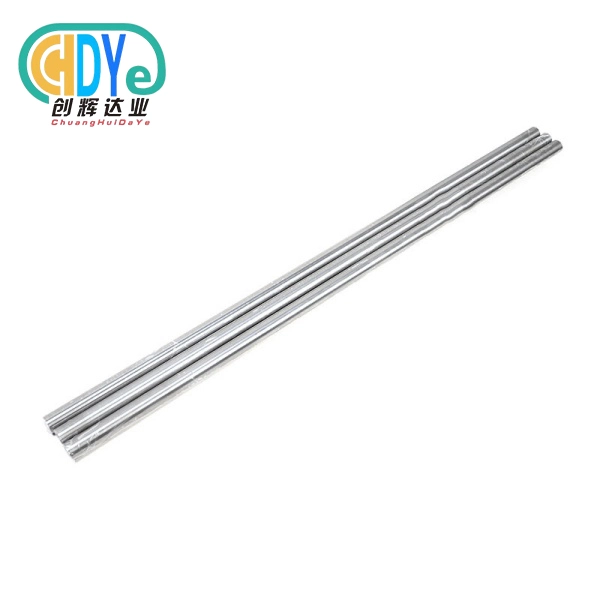
Chemical plants and laboratories work with some of the most aggressive substances in industry, from hot concentrated acids to reactive process streams that destroy ordinary metals within months. In these settings, even small components such as probes, supports, electrodes, and fine fittings must survive without corroding or contaminating the process. A tantalum rod 1 mm in diameter is often chosen for exactly these jobs. It combines the extreme corrosion resistance of tantalum with a slim, precise profile that fits compact equipment. This article explains why a tantalum rod of 1 mm performs so well in chemical processing, which grades and specifications are available, and how to source it reliably.
Why Tantalum Rod 1mm Performs So Well in Chemical Processing
Exceptional Corrosion Resistance in Harsh Media
Tantalum is considered to be one of the most corrosion-resistant metals available. A 1 mm tantalum rod really shows that behaviour. The formation of a dense, stable oxide film protects the metal from the action of most acids, such as hydrochloric, nitric and sulphuric acid, in a wide range of concentrations and temperatures. The only exceptions are hydrofluoric acid and strong alkalis. For chemical engineers, this means thin parts can continue to be used for long periods of time without thinning, pitting, or failure. This means less downtime, lower replacement costs, and safer operation in environments where metal failure could result in leaks or product contamination.
Ultra-High Purity and Process Cleanliness
Purity is important when a component is added directly into a reaction vessel or into a sampling line. The tantalum rod 1 mm of Shaanxi Chuanghui Daye has a tantalum content above 99.9%; therefore, it releases almost nothing to the surrounding solution and does not introduce unwanted ions. This is particularly useful in fine chemical, pharmaceutical, and laboratory work, where even trace contamination can spoil a batch or distort test results. The high purity also gives the rod stable electrical and thermal behaviour, which is useful for applications such as electrodes and heating elements, where consistent performance over many operating cycles is important.
Thermal Stability and Mechanical Reliability Under Stress
Many chemical processes are carried out at elevated temperatures, and a 1 mm tantalum rod retains its properties well in those conditions. Tantalum has a very high melting point and retains its structure when heated, and its natural ductility allows it to bend a bit without cracking. This is important for thin sections that are subject to vibration, thermal cycling or handling stress. The rod resists both heat and chemical attack at the same time, so designers can use it where other thin metals would either soften or corrode. This makes it a reliable choice for demanding, long-running installations.
The table below summarises the main performance benefits of a tantalum rod 1 mm in chemical processing.
| Property | Benefit in Chemical Processing |
|---|---|
| Purity above 99.9% | Minimises contamination of process solutions |
| Stable oxide film | Resists most acids and corrosive media |
| High melting point | Maintains properties at elevated temperatures |
| Ductility | Withstands bending, vibration, and thermal cycling |
| Biocompatibility | Suitable for biological and medical-related uses |
Specifications and Grades of Tantalum Rod 1 mm
Available Grades and Their Differences
Specifying a tantalum rod 1 mm: First Step – Choosing the Right Grade. R05200, a pure tantalum grade with a minimum content of 99.9%, is suited for most chemical and laboratory uses. We also offer R05400 and tantalum-tungsten alloys like R05252 that have 10% tungsten and provide greater strength at high temperatures. Custom alloys are available to order. The pure grades offer the best corrosion resistance and formability. The tungsten-containing grades are used where extra strength is needed. You can order, and our team can help you to compare grades to your operating conditions.
Dimensions, Tolerances, and Customised Lengths
A 1 mm tantalum rod is much prized for its accuracy. Our rods are all made to 1 mm diameter, within very tight tolerances, and we can provide them in lengths of up to 500 mm to suit your design requirements. Tantalum rods 2 to 100 mm in diameter (for larger projects). Also, tantalum rods are available in customised sizes under ASTM B 365. Accurate dimensions help engineers build repeatable assemblies, prevent fitting problems, and reduce machining time. If you need a particular length or a special tolerance for your application, let us know the details, and we will check what can be produced.
Standards, Testing, and Documentation
Industrial buyers want to know that a tantalum rod of 1 mm is what it claims to be. Our products are manufactured to ASTM B 365, the accepted standard for tantalum and tantalum alloy rods and wire. We test every batch for dimensions, surface quality, and composition, and we can provide the inspection information your quality team requires. “Having a standard helps in comparing suppliers, qualifying materials and maintaining documentation consistency across projects,” he said. It also makes purchasing departments feel more confident when they order small, high-value components that need to function exactly as expected.
| Item | Specification |
|---|---|
| Grades | R05200 (pure Ta, 99.9% min), R05400, R05252 (Ta-10W), custom alloys |
| Standard diameter | 1 mm, with larger sizes of 2–100 mm available |
| Length | Up to 500 mm for 1 mm rods, customised as needed |
| Standard | ASTM B 365 |
| Purity | Above 99.9% |
Applications and Sourcing of Tantalum Rod 1 mm
Typical Uses in Chemical and Laboratory Equipment
Tantalum rod 1mm is commonly used in chemical processing for thermocouple protection, small supports, stirrer parts, probes, and fine electrodes. It is a trusted material in the laboratory for experimental setups requiring strong acids or high temperatures. Its excellent electrical properties also make it usable in electronic components. Its biocompatibility opens the door to medical and biological applications. The rod is so thin that designers can include it in small reactors and analytical instruments where thicker pieces would not fit. The product is used in so many industries because of that flexibility.
Manufacturing Process and Quality Control
Good manufacturing practices lead to good performance. We start with high-purity tantalum ingots and use cold-working methods such as forging, rolling, swaging, and precision drawing to produce each tantalum rod of 1 mm. This process has many steps and produces excellent dimensional accuracy and superior surface finish. Our workshop has annealing furnaces, electron beam furnaces, rolling machines, lathes, sawing and shearing equipment. Controlled by our ISO 9001:2015 system, raw material inspection, melting and forging, machining and forming, and final inspection and packaging, each rod meets strict specifications before shipment.
Choosing a Trusted Supplier with Proven Experience
It’s not just about the material but about the supplier you choose. Shaanxi Chuanghui Daye Metal Material Co., Ltd. is situated in the Baoji High-tech Development Zone, China's "Titanium Capital", with convenient transportation and a mature industrial base. The company was founded by a rare metal expert with more than 30 years of experience and operates on a quality-first, customer-first philosophy. We also offer titanium, niobium, tungsten, and molybdenum products in addition to each tantalum rod 1 mm, which means you can source a number of materials from one reliable partner and simplify your purchasing.
Conclusion
A tantalum rod 1 mm offers chemical processing and laboratory users a rare mix of corrosion resistance, purity, thermal stability, and precise dimensions. Choosing the correct grade, confirming the specification, and working with an experienced supplier all help you get the most from the material. Shaanxi Chuanghui Daye Metal Material Co., Ltd. brings more than 30 years of expertise, advanced forging and rolling equipment, and ISO 9001:2015 quality control to every order. Reach out to our team to discuss your requirements and receive dependable, cost-effective tantalum products built to your needs.
FAQ
Q: What purity does your 1 mm tantalum rod have?
A: Our rods contain more than 99.9% tantalum, which provides excellent corrosion resistance and keeps process contamination to a minimum.
Q: What lengths are available?
A: A tantalum rod 1 mm can be supplied in lengths up to 500 mm, and customised lengths are available to suit your project.
Q: Which grades can I choose?
A: We offer R05200 pure tantalum, R05400, and the tantalum-tungsten alloy R05252, as well as custom alloys on request.
Q: Does the rod meet an industry standard?
A: Yes. Our tantalum rods follow ASTM B 365, the standard specification for tantalum and tantalum alloy rods and wire.
Q: Can I order larger diameters?
A: Yes. Besides 1 mm rods, we produce tantalum rods from 2 to 100 mm in diameter, with customised sizes available.
Order Your Tantalum Rod 1mm Today
Ready to upgrade your chemical processing or laboratory equipment with a dependable 1 mm tantalum rod? Shaanxi Chuanghui Daye Metal Material Co., Ltd. combines high-purity material, advanced production equipment, and more than 30 years of rare metal experience to serve customers worldwide. Send us your grade, length, and quantity requirements, and our team will reply promptly with technical advice and a competitive quote. Contact us today at info@chdymetal.com to request samples, specifications, or customised sizes, and let us help your next project run safely and efficiently.
References
1. Cardarelli, F. Materials Handbook: A Concise Desktop Reference. Springer, 2018.
2. Cardonne, S. M., Kumar, P., Michaluk, C. A., and Schwartz, H. D. Tantalum and Its Alloys. International Journal of Refractory Metals and Hard Materials, 1995.
3. Buckman, R. W. "New Applications for Tantalum and Tantalum Alloys." JOM, 2000.
4. Black, J. "Biological Performance of Tantalum. "Clinical Materials, 1994.
5. Balla, V. K., Bodhak, S., Bose, S., and Bandyopadhyay, A. "Porous Tantalum Structures for Bone Implants: Fabrication, Mechanical, and In Vitro Biological Properties. "Acta Biomaterialia, 2010.
6. ASTM International. ASTM B365: Standard Specification for Tantalum and Tantalum Alloy Rod and Wire.
Learn about our latest products and discounts through SMS or email