- English
- French
- German
- Portuguese
- Spanish
- Russian
- Japanese
- Korean
- Arabic
- Greek
- German
- Turkish
- Italian
- Danish
- Romanian
- Indonesian
- Czech
- Afrikaans
- Swedish
- Polish
- Basque
- Catalan
- Esperanto
- Hindi
- Lao
- Albanian
- Amharic
- Armenian
- Azerbaijani
- Belarusian
- Bengali
- Bosnian
- Bulgarian
- Cebuano
- Chichewa
- Corsican
- Croatian
- Dutch
- Estonian
- Filipino
- Finnish
- Frisian
- Galician
- Georgian
- Gujarati
- Haitian
- Hausa
- Hawaiian
- Hebrew
- Hmong
- Hungarian
- Icelandic
- Igbo
- Javanese
- Kannada
- Kazakh
- Khmer
- Kurdish
- Kyrgyz
- Latin
- Latvian
- Lithuanian
- Luxembou..
- Macedonian
- Malagasy
- Malay
- Malayalam
- Maltese
- Maori
- Marathi
- Mongolian
- Burmese
- Nepali
- Norwegian
- Pashto
- Persian
- Punjabi
- Serbian
- Sesotho
- Sinhala
- Slovak
- Slovenian
- Somali
- Samoan
- Scots Gaelic
- Shona
- Sindhi
- Sundanese
- Swahili
- Tajik
- Tamil
- Telugu
- Thai
- Ukrainian
- Urdu
- Uzbek
- Vietnamese
- Welsh
- Xhosa
- Yiddish
- Yoruba
- Zulu
Pure Niobium Rod
2.Standard: ASTM B 392
3.Dimensions: Diameter: 3-120mm* Length:<2m customized
Pure Niobium Rod for Chemical, Superconducting and HPHT Use: ASTM B392 R04200/R04210, 99.9%–99.99% Purity
A metal that stays tough as the temperature falls is often what chemical work needs. Superconducting jobs need it too. So do HPHT jobs. Pure Niobium Rod comes from Shaanxi Chuanghui Daye Metal Material Co., Ltd. (CHDY). The starting point is unalloyed niobium. Electron Beam Melting is the method used to make it. Grades R04200 and R04210 of ASTM B392 cover the bar. Purity runs from 99.9% (3N) up to 99.99% (4N). Density sits at 8.57 g/cm³. The melting point is 2,468 °C. Tensile strength: 125 MPa fully annealed, up to 585 MPa when hard. Stretch past 30% before it snaps, that is what the fully annealed rod does. Nitric acid leaves it untouched. HCl does nothing to it either. Lithium and sodium also leave it alone.
What Is Rod?
This product is a semi-finished bar of unalloyed niobium. Shops machine it into finished parts. Electron Beam Melting makes the material.
A lot of refractory metals crack at room temperature rather than bend. Niobium stays ductile when cold. Machining it is possible. You can form it too. Nitric acid does not attack it. Neither does HCl. Lithium and sodium are safe with it as well. It works well for superconducting jobs. Nuclear jobs are a good fit too. A high Residual Resistance Ratio (RRR) explains this. This is helped by a low thermal neutron absorption cross-section.
Specifications
 |
 |
 |
 |
 |
 |
 |
 |
Values not listed here are not specified in the current product data. Ask CHDY to confirm any additional requirement before ordering.

Material Behavior
Physical: At 2,468 °C niobium melts. Hot vacuum service parts are one use for it.
Chemical: A stable Nb₂O₅ layer sits on the surface and protects it. Oxygen attacks niobium between 200 and 400 °C. Nitrogen acts the same way. Hydrogen does too. Heating therefore needs a vacuum or a shield of inert gas. Check the acid you plan to use before ordering. Concentration matters. Temperature plays a part as well.
Mechanical: Annealed stock stretches past 30% before it breaks. Tough machining jobs get easier because of that. Interstitial control is what counts most. Hardness climbs when extra oxygen sits in the metal. Ductility then falls. In R04200, carbon is capped below 100 ppm. Oxygen is held under 150 ppm as well. That lowers the risk of embrittlement.
Applications
You will find pure niobium rod stock in three main areas.
Synthetic diamond manufacturing: Rod segments become parts for HPHT presses at machine shops. Very hot conditions are normal inside those presses. A high melting point is why niobium holds up well there.
Superconducting systems (MRI/NMR): SRF cavities and cryomodule parts are where niobium turns up most often. Rod stock also gets machined into structural parts for particle accelerators. Got a superconducting project? Ask for an RRR above 300.
Chemical processing: Valve stems and thermowells get cut from rod. Rod also goes into agitator shafts. In acid environments, niobium can take the place of tantalum. It costs less. Concentration and temperature need checking first, though.
Quality Control
- Chemical analysis: Need to pick up O, N, H and C? Glow Discharge Mass Spectrometry (GDMS) handles that job. Inert Gas Fusion (IGF) is another way to do it.
- Ultrasonic testing: Voids get found with AMS 2631 or ASTM E2375 testing. Cracks show up as well. Inclusions too. Aerospace parts depend on this check. So do rotating parts.
- Grain size: Micrographic analysis to ASTM E112 confirms the structure is uniform. It holds at #6 or finer.
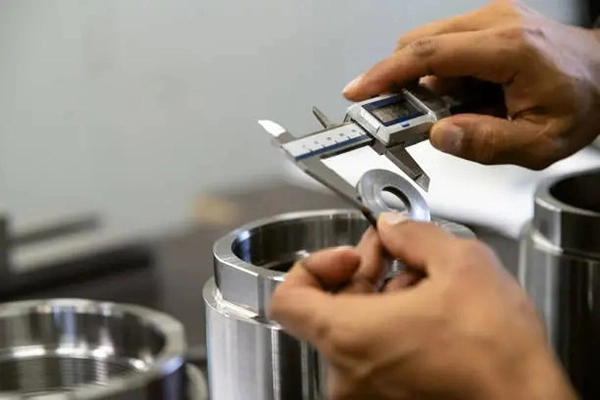
- Dimensions and surface: Tolerances from h7 to h9 get checked by laser micrometers. Fluorescent penetrant testing is what catches laps and seams.
Ask CHDY which tests and documents apply to your order.
Grade and Material Selection for Pure Niobium Rod
For This product, choose R04200 (Type 1) when the job is nuclear. That grade is Reactor Grade. It has the tightest impurity limits. R04210 (Type 2) is Commercial Grade. Its limits are a little higher, for general chemical resistance. Cost and neutron cross-section needs pull in different directions. Your choice has to balance them.
Other elements can also go into niobium alloys. Additions like these change how the metal acts. Strength at high heat can go up. Ductility and corrosion resistance may matter more, though. In that case, plain niobium with no alloys is the right pick.
At 8.57 vs 16.6 g/cm³, niobium's density is roughly half that of tantalum. The price tag is usually lower too. For hydrochloric acid service, choose niobium and it will hold up. One exception exists. Tantalum comes out ahead once the acid is highly concentrated and the temperature climbs past 150 °C.
Machining and Welding Guidance
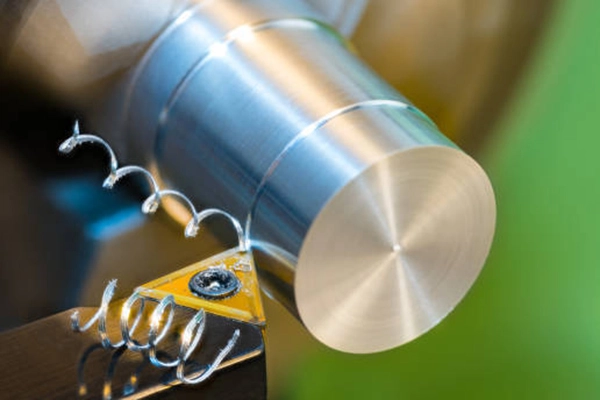
The metal is gummy. Galling can start with little warning. Go with high-speed steel, or use selected carbide tools. A water-soluble coolant free of chloride helps. Keep speeds low. Avoid welding onto the tool.
Welding needs a vacuum chamber. A purged glove box built for TIG containment also works. Above 260 °C, gas enters fast. Shielding must remain tight at that point. Argon at 99.999% purity is one route. Another is keeping the vacuum below 1×10⁻⁴ Torr.
Supply and Customization
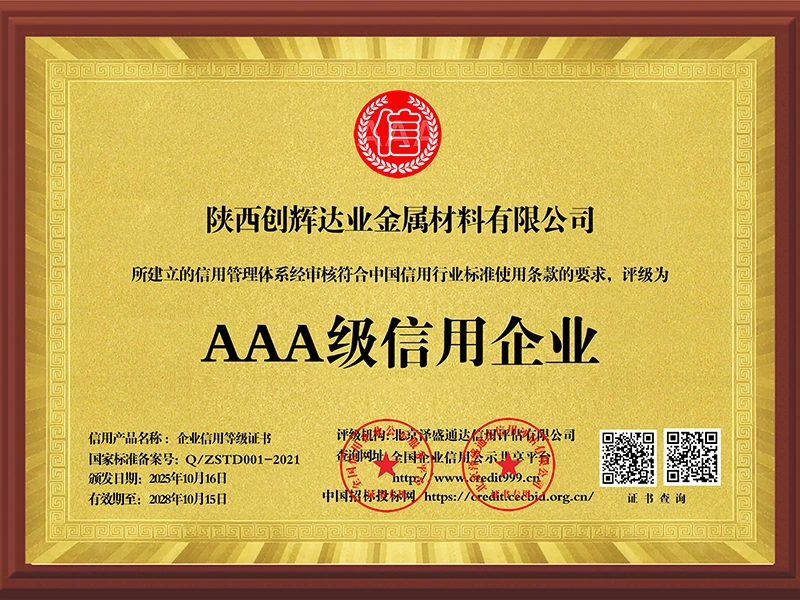
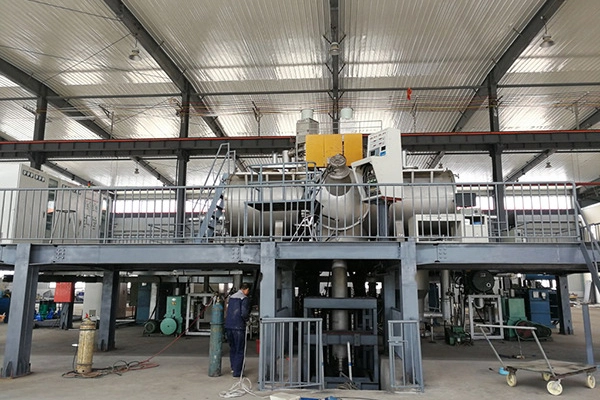
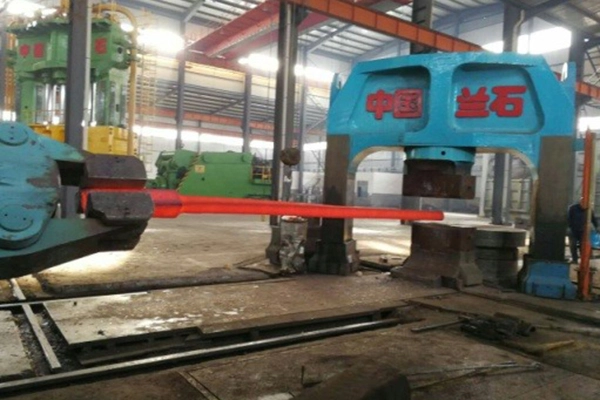
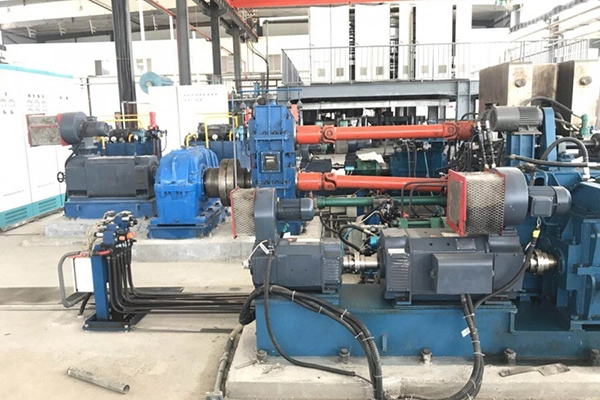
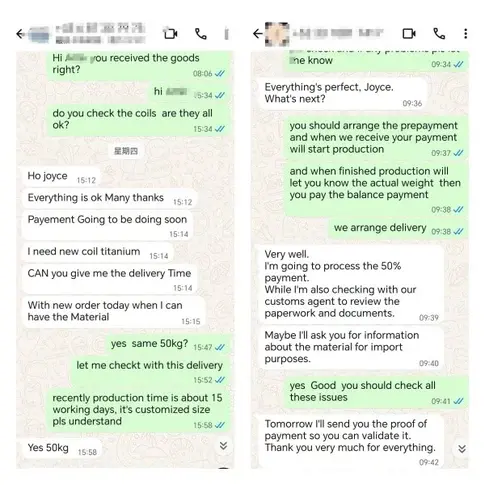
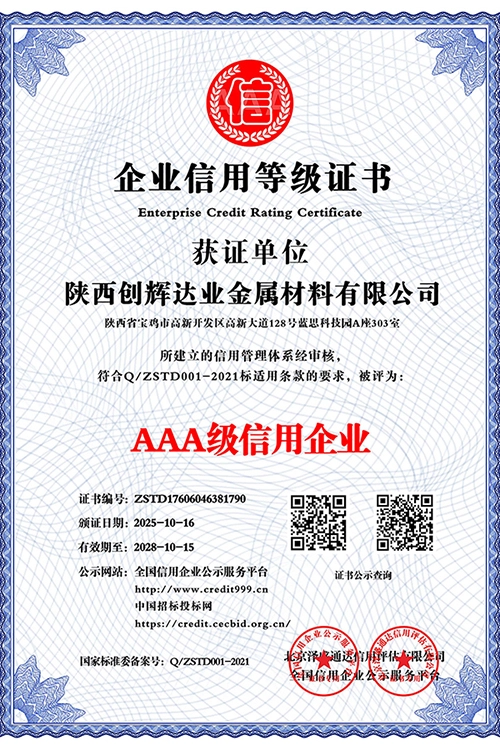
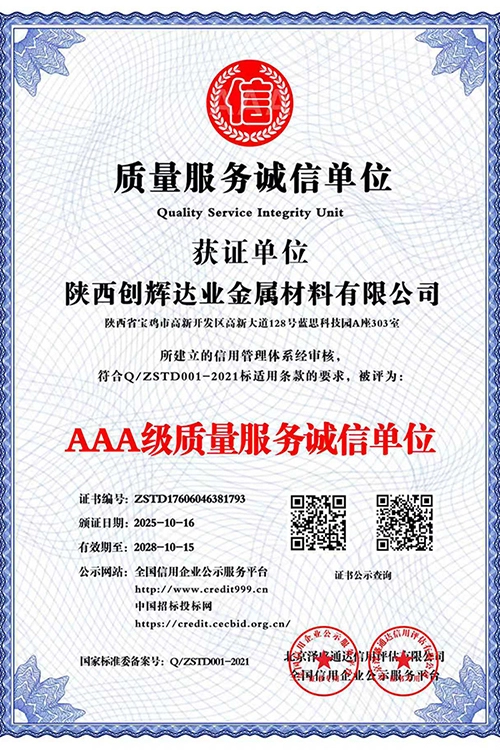
Our plant sits in the Baoji High-tech Development Zone, Shaanxi. That part of the country goes by the name China's "Titanium Capital". Rare metals have been our founder's trade for more than 30 years. Titanium, tantalum, niobium, tungsten, molybdenum, zirconium and nickel all sit in the range. Alloys built from those metals are there too. Buyers come from metallurgy. Electronics, medical and special steel firms order as well. Shipments have gone out to the United States, Germany, South Korea and Singapore. Other markets get them too.
Want a quote for a Pure Niobium Rod? Send us the grade, the diameter and length, the finish you need, and the number of pieces. Diameters, lengths and material specs come in several options at CHDY.


 |
 |
 |
|
|
|
|
|
 |
 |
 |
 |


 |
 |
 |
 |
 |
 |
FAQ
Q: After you weld a niobium rod, can it still be ductile?
A: Yes. Do the work in a vacuum chamber or a glove box that has been purged. Above 260 °C, welding in open air brings on embrittlement.
Q: Why does RRR matter when buying?
A: RRR indicates purity through electron scattering. Superconducting use needs above 300, which points to high purity and good thermal conductivity at cryogenic temperatures. Chemical-use rods are listed at about 30–40.
Q: For my case, which is the better fit, unalloyed niobium or a niobium alloy?
A: Pick unalloyed niobium when ductility and corrosion resistance are what matter most to you. More strength is needed at high temperatures. An alloy wins at that point.
Q: When I ask for a quote, what details do you need from me?
A: Give us the grade. It is either R04200 or R04210. We also need the diameter and the length. Say which surface finish you want, and how many pieces. Tell us what the part is for. If you have a drawing, send that too.
Contact Us
Send your drawing, grade and quantity to info@chdymetal.com. CHDY will review the details and reply with a quote for your Pure Niobium Rod order.
Learn about our latest products and discounts through SMS or email