- English
- French
- German
- Portuguese
- Spanish
- Russian
- Japanese
- Korean
- Arabic
- Greek
- German
- Turkish
- Italian
- Danish
- Romanian
- Indonesian
- Czech
- Afrikaans
- Swedish
- Polish
- Basque
- Catalan
- Esperanto
- Hindi
- Lao
- Albanian
- Amharic
- Armenian
- Azerbaijani
- Belarusian
- Bengali
- Bosnian
- Bulgarian
- Cebuano
- Chichewa
- Corsican
- Croatian
- Dutch
- Estonian
- Filipino
- Finnish
- Frisian
- Galician
- Georgian
- Gujarati
- Haitian
- Hausa
- Hawaiian
- Hebrew
- Hmong
- Hungarian
- Icelandic
- Igbo
- Javanese
- Kannada
- Kazakh
- Khmer
- Kurdish
- Kyrgyz
- Latin
- Latvian
- Lithuanian
- Luxembou..
- Macedonian
- Malagasy
- Malay
- Malayalam
- Maltese
- Maori
- Marathi
- Mongolian
- Burmese
- Nepali
- Norwegian
- Pashto
- Persian
- Punjabi
- Serbian
- Sesotho
- Sinhala
- Slovak
- Slovenian
- Somali
- Samoan
- Scots Gaelic
- Shona
- Sindhi
- Sundanese
- Swahili
- Tajik
- Tamil
- Telugu
- Thai
- Ukrainian
- Urdu
- Uzbek
- Vietnamese
- Welsh
- Xhosa
- Yiddish
- Yoruba
- Zulu
niobium alloy tube
2. Standard: ASTM B 394
3. State: Hard, semi-hard and soft
4.Size: customized
Niobium Alloy Tube – ASTM B394, Custom Sizes for Superconducting and Chemical Use
Niobium alloy tube is what superconducting magnet makers buy from Shaanxi Chuanghui Daye Metal Material Co., Ltd. Chemical processing engineers also source it there. Each tube follows ASTM B394. Outer diameter and wall thickness come from your spec. Pick the state you need: hard, semi-hard or soft. Titanium makes up 45–55% of grades such as Nb-47Ti and Nb-50Ti. Density runs from 5.7 to 6.0 g/cm³. Critical temperature lands at 9.2–9.8 K. Superconducting magnet billets are one common job. Aerospace hydraulic lines are another. Corrosive heat exchangers come up often too. Send a drawing and the quote you get is built around your requirements.
What Is a Niobium Titanium Alloy Tube?
The niobium titanium (NbTi) alloy tube counts as one kind of refractory metal part. Titanium takes up 45–55% of it, and niobium fills the rest. Nb-47Ti and Nb-50Ti are the two grades you meet most. Strength goes up once titanium is added, compared with pure niobium. Workability stays, though.
During billet assembly for superconductor production, this this product works as a diffusion barrier and as a cladding sleeve. Copper contamination gets held back that way. Multifilamentary structures also stay intact.
Specifications
Technical Parameters
|
Size |
OD3-100*wall thickness 0.5-5mm*Length200-6000mm |
|
Material |
Pure niobium and niobium alloy |
|
Grade |
R04200, R04210, R04251,R04261 |
|
Standard |
ASTM B394 |
|
Purity |
> 99.95% or 99.9% |
|
Density |
8.57g/cm3 |
|
Type |
Seamless and welded |
|
Characteristic |
Melting point: 2468℃ / Boiling point: 4744℃ |
|
Product Features |
Excellent Corrosion Resistance, Good resistance to effect of heat |
|
Packing |
Plastic foam inside, wooden box outside |
|
Delivery time |
Stock size within 1-5 days, normal production time about 15 days |
|
Payment terms |
30%TT in advance,70% balance before shipment |
Physical and Mechanical Properties
 |
 |
 |
 |
 |
 |
 |
 |
Parameters not listed above, such as dimensional tolerances, length, surface finish, MOQ, lead time and warranty, are not specified on this page. Please request them together with your drawing.
Performance Summary
The tube stays strong at room temperature. It is ductile too, so cold working and drawing both work well. Titanium in the mix creates a stable oxide film. That film stands up to aggressive acids.
That figure, 9.2–9.8 K, is the critical temperature. At or below it, the alloy turns superconducting. High-field magnets lean on NbTi for exactly this reason.
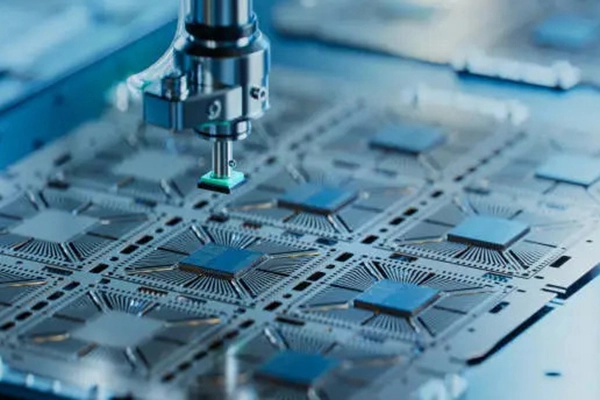
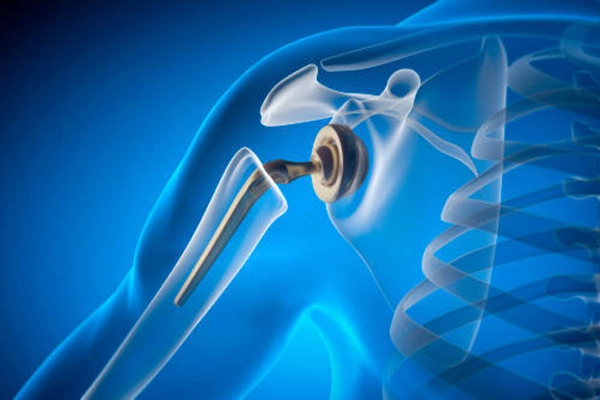
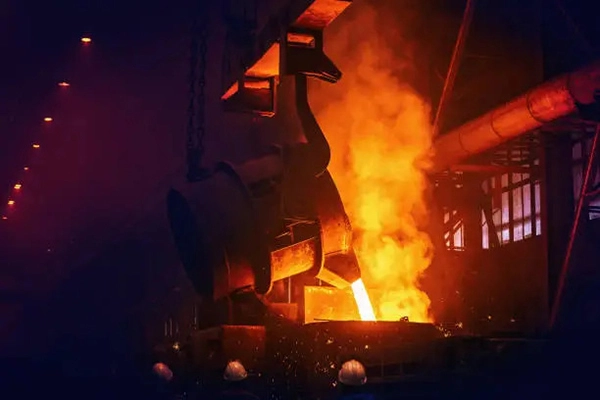



Applications
Superconducting magnet fabrication. NbTi tube is used in MRI and NMR systems. It also goes into particle accelerator magnets. There it works as a starting sleeve or a barrier inside multifilamentary wire billets. Billet stacking gets easier with it. Before drawing the wire, the geometry stays exact.
Hydraulic and propulsion systems in aerospace. Strength and low weight come together in this tube. High-pressure hydraulic lines are one place it fits. Structural supports inside propulsion systems are another. Weight drives the choice there.
Corrosive chemical heat exchangers. In acid recovery and hydrometallurgical extraction, this niobium alloy tube can be specified for heat exchanger service with aggressive media, based on its listed resistance to nitric and hydrochloric acid.
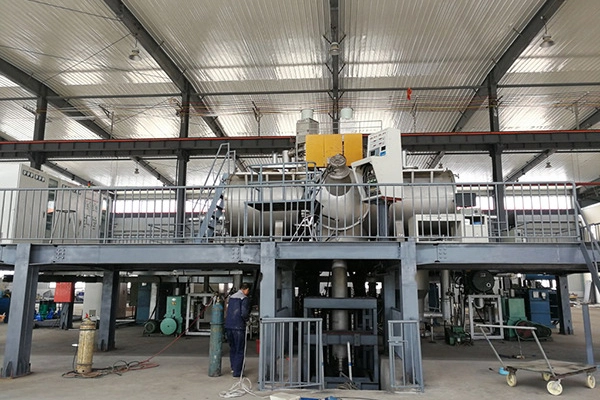
Quality Control Checks
Here is what we check. After you send the inquiry, let us know which tests you want. Also tell us the acceptance criteria.
- Chemical composition analysis: We confirm the Nb/Ti ratio with GDMS (Glow Discharge Mass Spectrometry) or ICP-OES. Oxygen and nitrogen stay under 50–150 ppm. Carbon and hydrogen do too. Those low levels help prevent brittleness.
- Ultrasonic testing (UT): ASTM E213 is the standard this test follows. It finds internal flaws that run lengthwise. Crosswise flaws are caught too. Delamination and inclusions also show up.
- Dimensional and surface inspection: A laser micrometer checks the OD and ID. Wall thickness consistency gets checked too. Surface cracks and pits show up under eddy current testing (ASTM E426).
- Mechanical testing: At room temperature, tensile strength is checked. Yield strength is measured too. Elongation is recorded too. Tests at 4.2 K are available for superconducting certification.
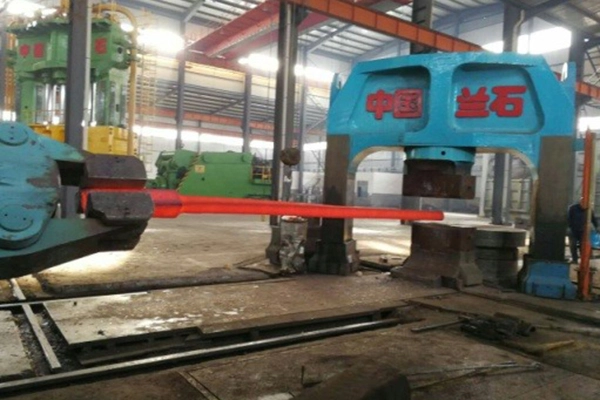
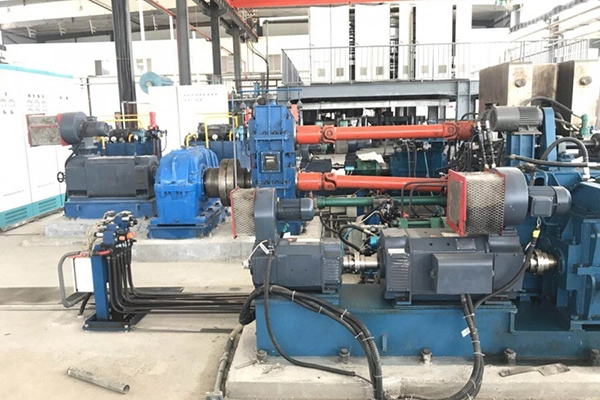
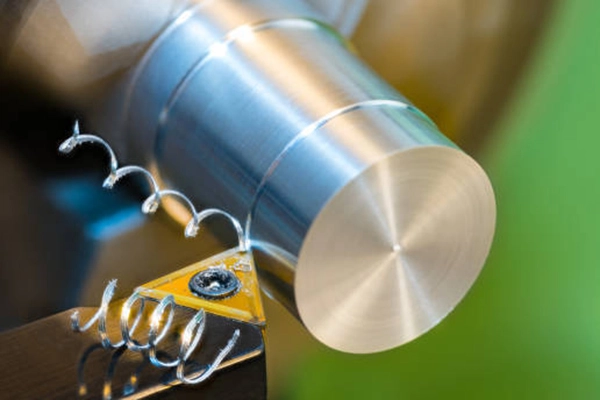
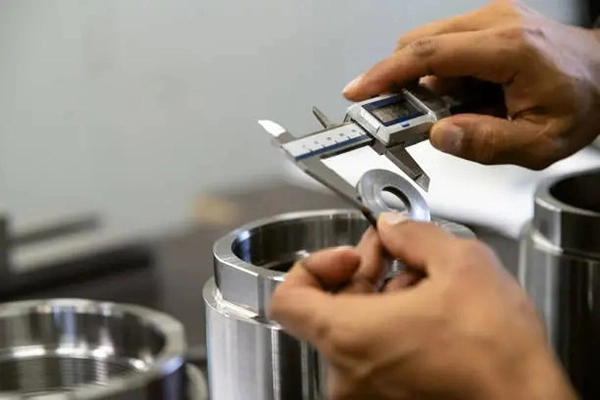
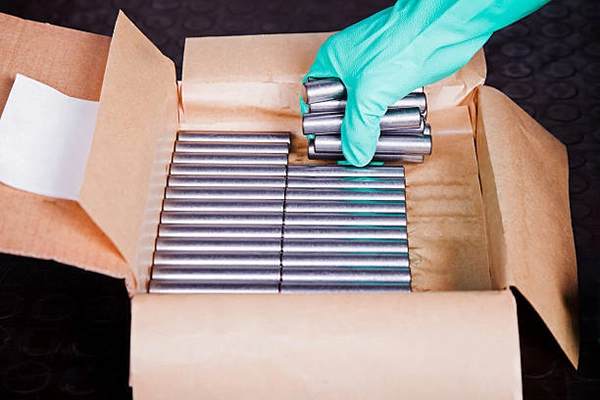
Custom Sizes and Purchasing Guide for niobium alloy tube
Tubes are made to your drawing. To receive an accurate quotation for This product, send the following:
- Outer diameter and wall thickness
- Grade (Nb-47Ti or Nb-50Ti)
- State (hard, semi-hard or soft)
- Whether the tube is for superconducting use
If the tube is for superconducting use, say so in your inquiry so that 4.2 K tensile testing can be discussed before production.
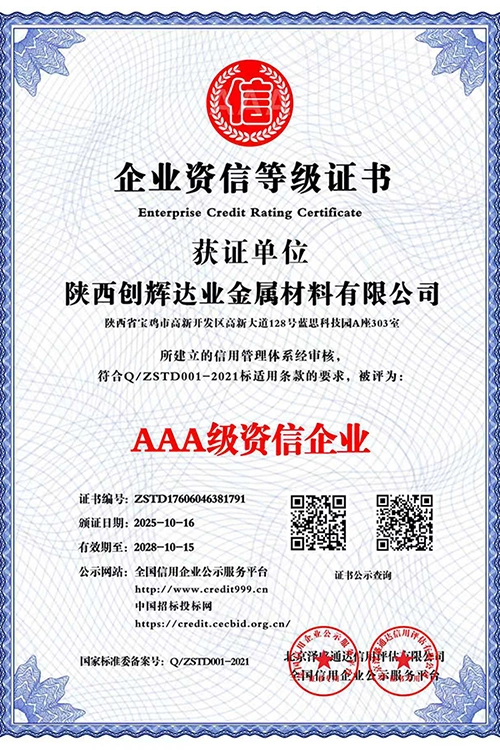
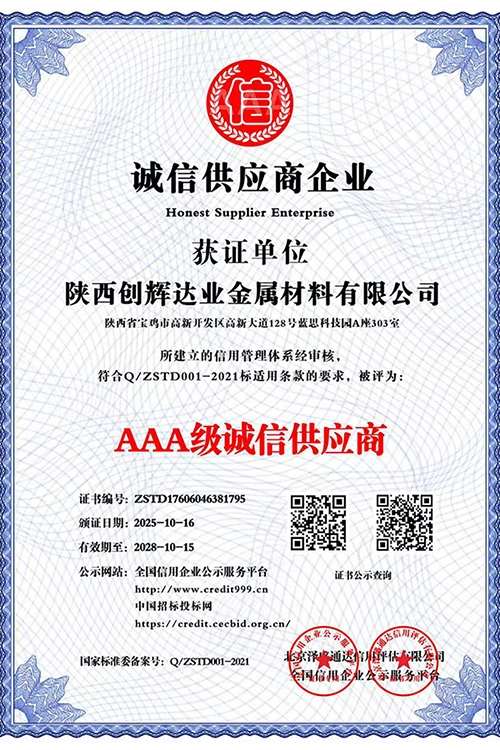
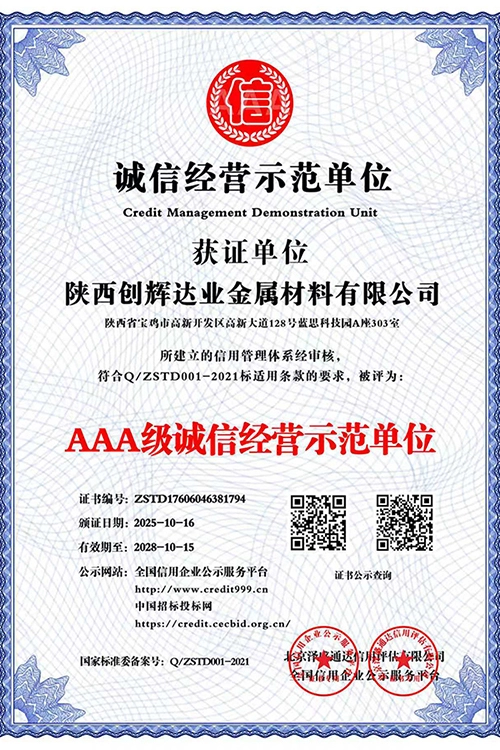
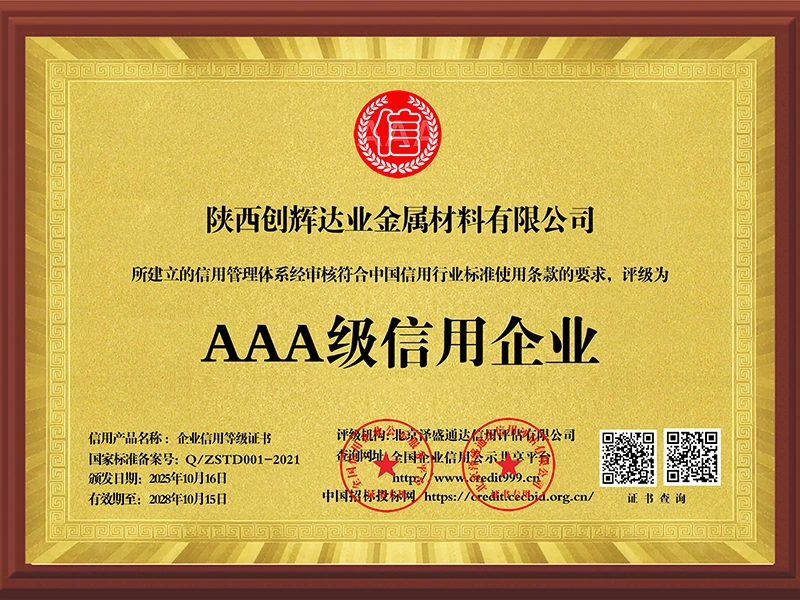
About Shaanxi Chuanghui Daye
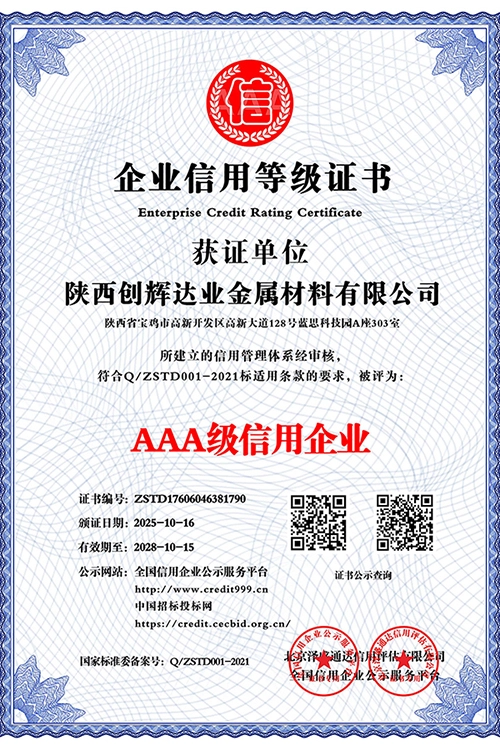
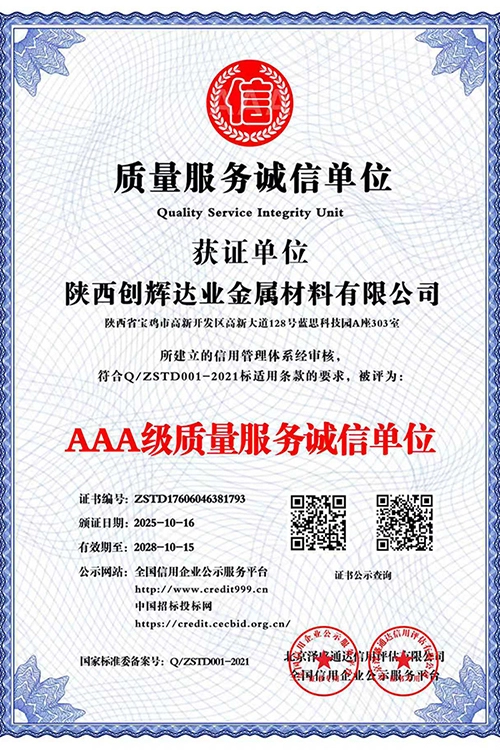
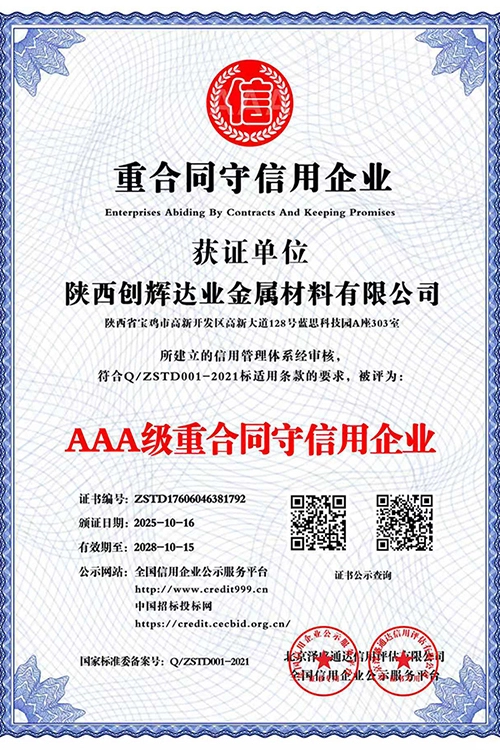
Shaanxi Chuanghui Daye Metal Material Co., Ltd. is based in Baoji High-tech Development Zone, Shaanxi Province, China. People call this area the "Titanium Capital". The founder has more than 30 years of experience in the rare metal industry.
Main products include titanium. Tantalum is another product. Niobium, tungsten, molybdenum, zirconium and nickel are also part of the range. Other non-ferrous and rare metal alloy products are available too. These serve the metallurgy field. Electronics is another field. Medical and special steel are also covered. The company reports niobium alloy tube shipments to more than 50 countries. The United States is one market. Germany is another. South Korea and Singapore are also on the list.
|
|
|
|
|
 |
 |
 |
 |


 |
 |
 |
 |
 |
 |

FAQ
Q: What is the biggest benefit of NbTi tube compared with pure niobium tube?
A: Mix titanium into pure niobium. Density drops. Tensile strength goes up too, and the metal becomes easier to shape. Type II superconducting behavior is another reason this alloy matters, along with a higher critical field.
Q: How does temperature affect performance?
A: This metal takes structural loads at room temperature. It resists corrosion well, and it is strong. The critical temperature sits at 9.2–9.8 K. Take it down to that point or lower, and the alloy becomes superconducting. Zero resistance, then. Magnet work calls for exactly that.
Q: Does machining this this product give you trouble?
A: Yes. Titanium and niobium both gall and seize. Slow cutting speeds help. Flood the cut with coolant and that helps as well. Tool wear and deformation stay down with both. Carbide tools work. High-speed steel works too.
Q: Can it be welded?
A: Yes, as long as the environment stays controlled. Oxygen and nitrogen pickup cause the embrittlement. Weld with TIG in a vacuum, or in high-purity argon or helium, and no pickup occurs. Electron beam welding is another route.
Q: What sizes are available?
A: Most tubes are made to fit the OD and wall thickness you ask for. Capillary tubes start under 1 mm OD. On the large end, pipes can go past 50 mm OD.
Q: Can I request testing at 4.2 K?
A: For superconducting certification, tensile tests at 4.2 K can be done. Put a note about it in your inquiry. That way the team can talk it over with you before production starts.
Contact Us
Send your niobium alloy tube drawing by email to info@chdymetal.com. Tell us the outer diameter, the wall thickness, the grade, and the state.
Learn about our latest products and discounts through SMS or email