- English
- French
- German
- Portuguese
- Spanish
- Russian
- Japanese
- Korean
- Arabic
- Greek
- German
- Turkish
- Italian
- Danish
- Romanian
- Indonesian
- Czech
- Afrikaans
- Swedish
- Polish
- Basque
- Catalan
- Esperanto
- Hindi
- Lao
- Albanian
- Amharic
- Armenian
- Azerbaijani
- Belarusian
- Bengali
- Bosnian
- Bulgarian
- Cebuano
- Chichewa
- Corsican
- Croatian
- Dutch
- Estonian
- Filipino
- Finnish
- Frisian
- Galician
- Georgian
- Gujarati
- Haitian
- Hausa
- Hawaiian
- Hebrew
- Hmong
- Hungarian
- Icelandic
- Igbo
- Javanese
- Kannada
- Kazakh
- Khmer
- Kurdish
- Kyrgyz
- Latin
- Latvian
- Lithuanian
- Luxembou..
- Macedonian
- Malagasy
- Malay
- Malayalam
- Maltese
- Maori
- Marathi
- Mongolian
- Burmese
- Nepali
- Norwegian
- Pashto
- Persian
- Punjabi
- Serbian
- Sesotho
- Sinhala
- Slovak
- Slovenian
- Somali
- Samoan
- Scots Gaelic
- Shona
- Sindhi
- Sundanese
- Swahili
- Tajik
- Tamil
- Telugu
- Thai
- Ukrainian
- Urdu
- Uzbek
- Vietnamese
- Welsh
- Xhosa
- Yiddish
- Yoruba
- Zulu
Tantalum Sputtering Target for Semiconductor and PVD Coating: 3N5 to 5N Purity, Custom Sizes and Textures
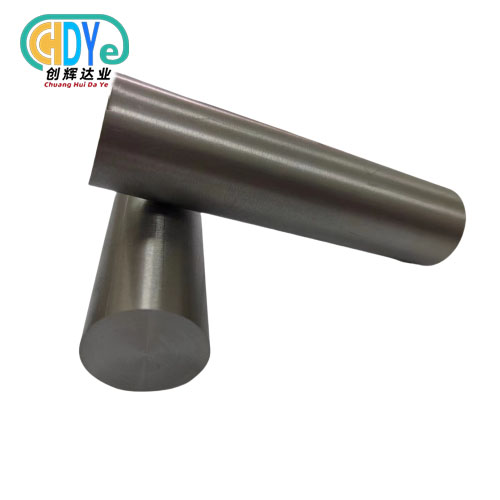
Film quality in magnetron sputtering comes down to the cathode. Wafer fabs count on that. So do the lines that build inkjet printheads and SAW filters. Purity, grain structure, texture, and dimensions get checked by anyone buying a tantalum sputtering target. Shaanxi Chuanghui Daye Metal Material Co., Ltd. (CHDY) ships grades from 3N5 (99.95%) up to 5N (99.999%). Monolithic parts are one option. The other is bonded parts with a Ta + Cu backing plate. Cutting follows your technical drawings. Grain size stays under 50 µm. Density comes in above 16.65 g/cm³. Flatness holds to within 0.1 mm. Check every parameter in the table below against your own process.
How a Tantalum Target Forms a Thin Film
Inside a vacuum chamber the target works as the cathode in magnetron sputtering. Ions with high energy strike the surface of This product. Tantalum atoms come loose. They get knocked free and cross the chamber. On the substrate they land, and a thin film grows there.
Specifications
|
Application |
Electronic Light Source Part;Implantation Parts.etc |
|
Purity |
99.95% Min |
|
Density |
16.65g/cm3 |
|
Surface |
Polished and Black |
|
Size |
Φ50-400m,customized |
|
Chemical Composition |
Pure Tantalum targets, bars |
|
Melting point |
3400℃ |
|
Packing |
Wooden box |
|
Production process |
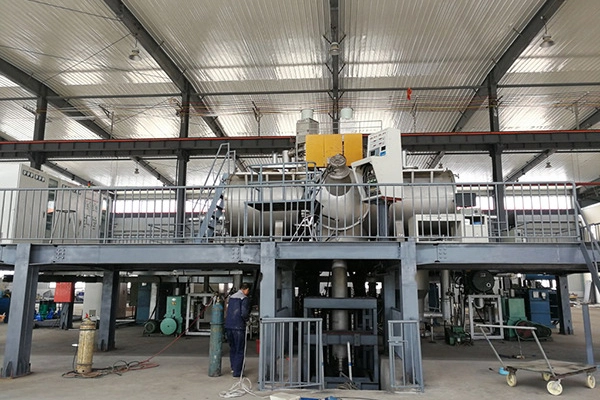
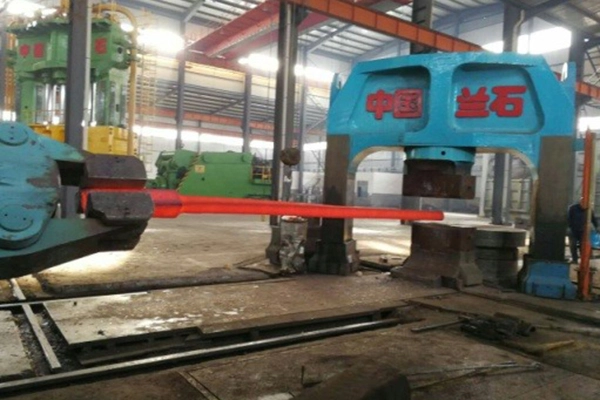
Tantalum raw material - electron beam vacuum melting - forging - polishing - inspection - delivery |
The table lists only the parameters CHDY has provided for this product. Items not shown, such as dimensional tolerances, other impurity limits, test reports, or storage limits, are not stated on this page. Please request them from CHDY in writing before ordering.
Key Features of Tantalum Targets
High melting point. Tantalum melts at roughly 3000 °C. Films of refractory metal in specialized electronic and industrial coating systems rely on that.
Corrosion resistance. Lots of chemical environments do not attack tantalum. How well a film holds up comes down to its structure and its thickness. Processing conditions play a part as well, and so does the environment it works in.
Electrical conductivity. Tantalum carries current. Electricity flows through this metal. Films and compounds built from it show up in some electronic parts. A few thin film structures rely on them as well.
Custom dimensions. Before production begins, look at the diameter. Check the thickness as well. Flatness matters too. So do the mounting requirements. Tight tolerances give little room for error? Include drawings with your inquiry.
Purity, Grain Size, and Texture Choices
Choose the grade that suits your process. Inside this range, 3N5 (99.95%) is the lowest one. Do impurities need tighter control? Then move up to 4N (99.99%) or 4N5 (99.995%). Highest of all is 5N (99.999%). For semiconductor work, match the grade to your process spec before anything else. Next step: ask for a tantalum sputtering target.
Carbon stays under 10 ppm. Oxygen sits at that same level. The same limit applies to nitrogen, Fe, Ni, and Cr. Film properties can shift once interstitial or metallic impurities get in. Test these limits against your qualification requirements. A fine equiaxed grain structure with no porosity gives you even target erosion and steady film thickness. Grain size can be set under 10 µm.
A <100> texture is one option. Picking <111> works too. Mixed texture is what some buyers want, while others go with a predominant {111} one. Sputter yield and film needs can be matched by either choice. How clean the surface is, and how much inclusion the material holds, decides arcing during high-power reactive sputtering. Let us know the surface condition you need when you place the order.
Applications
Semiconductor interconnects. Copper interconnects use tantalum and tantalum nitride films. Liner layers are one job those films do. They work as a diffusion barrier too. That barrier stops Cu from spreading into dielectric materials. What the film ends up made of comes down to the sputtering atmosphere and the process conditions.
Thermal inkjet printheads. A tantalum film normally sits on top of the heating resistors inside a thermal inkjet printhead. It acts as a shield. Cavitation gets fought off by that shield when the ink bubbles collapse. Hot ink can damage parts too. Corrosion is blocked by the same film.
SAW filters and optical coatings. Tantalum-based films are used in SAW filter devices and in optical coatings that need a high refractive index.
Other uses. Tantalum nitride turns up in some thin film resistors. You will find tantalum targets in microelectronics as well as in protective coatings. Labs and universities use them too when they study refractory metal films.
Process Considerations
An integrated circuit can fail for many reasons. One known cause is copper drifting into silicon. A tantalum barrier layer helps block that path. Film uniformity may fall when the deposition rate changes. Grain size and texture are worth putting in the spec for that reason. Nodules turn up on the target surface now and then. Tell CHDY when you place the order if they cause trouble in your process.






Custom shapes, bonding, and supply for tantalum sputtering target
CHDY makes every this product to the purity you state. The shape comes as ordered. Dimensions and surface condition do too. Pick a monolithic design. Or choose a bonded one with a Ta + Cu backing plate.
A Cu backing plate is the usual way to hold the target when sputtering power goes up. It moves heat away as well. A monolithic target can work fine if the cooling is good enough. Check your choice against the cathode design and the power level. Listed flatness sits within 0.1 mm.
About CHDY
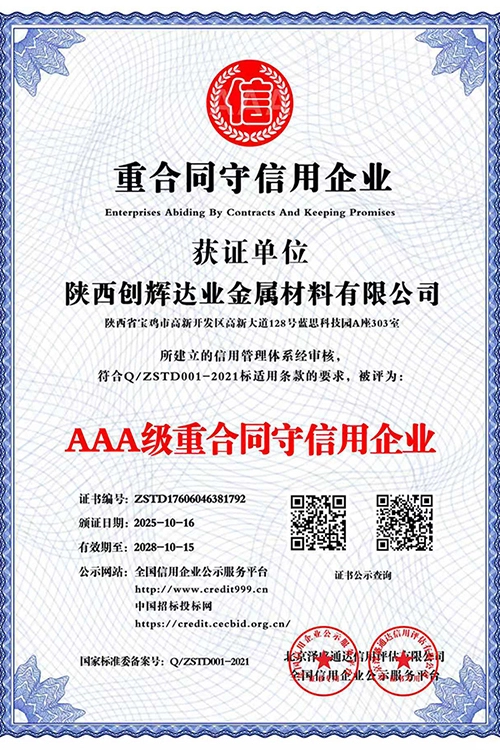
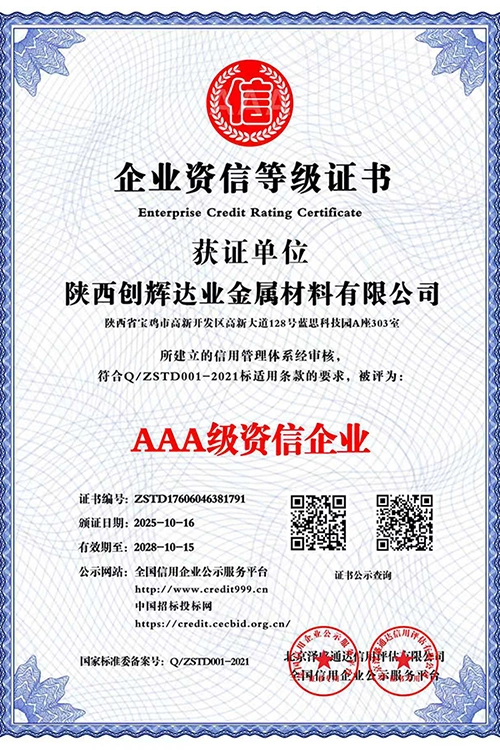
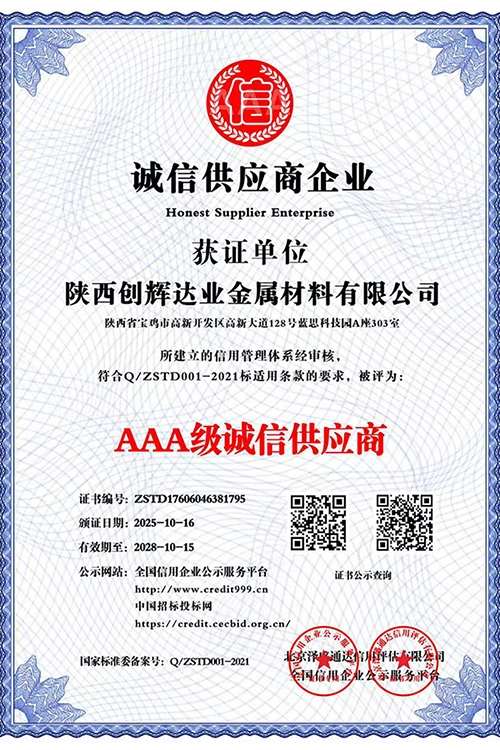
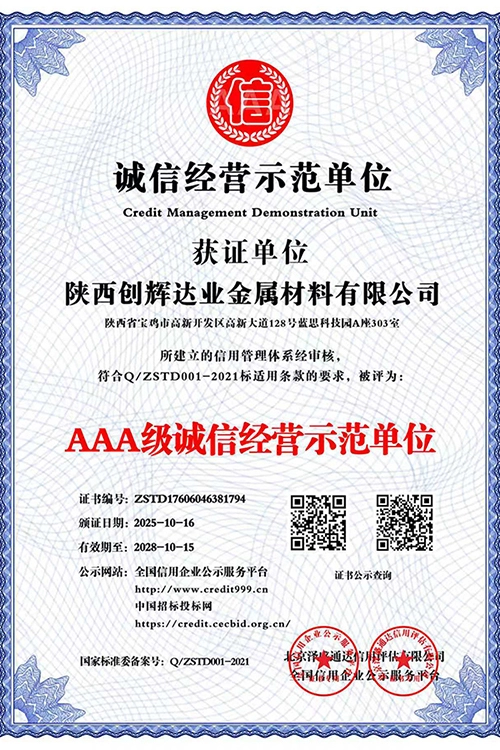
CHDY is based in the Baoji High-tech Development Zone, Shaanxi Province. The founder knows rare metals well. That comes from more than 30 years in the industry. Titanium sits in the line-up. Niobium and tungsten are there too, along with molybdenum, zirconium and nickel. Buyers come from metallurgy and electronics. Medical and special steel fields buy them as well.
Orders have landed with buyers in the United States. Germany, South Korea and Singapore have received shipments too. Add the other markets and the total goes beyond 50 countries and regions. Before you order, settle the purity grade and the impurity limits. Grain size matters, and texture does too. Check dimensions as well. The bonding type counts.
Packaging
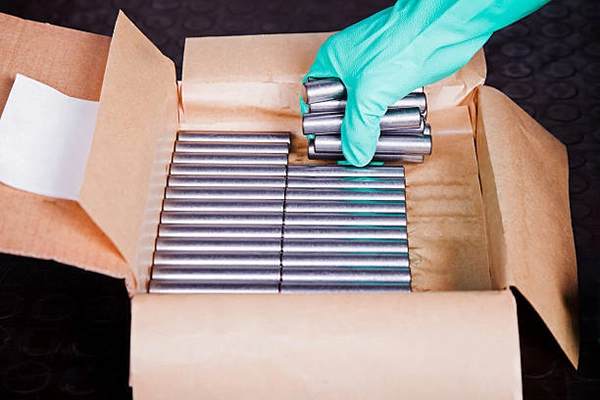
Every target leaves the plant in a vacuum pack. This keeps the tantalum sputtering target surface from oxidizing. Store it in a controlled setting until the moment you install it. Not sure how long you can keep it, or how the surface should be cleaned? Check with CHDY before you use it.
|
Grade |
Chemical composition%, no more than |
|||||||||||
|
Fe |
Si |
Ni |
W |
Mo |
Ti |
Nb |
O |
C |
H |
N |
Ta |
|
|
Ta1 |
0.005 |
0.005 |
0.005 |
0.005 |
0.002 |
0.002 |
0.005 |
0.02 |
0.004 |
0.002 |
0.005 |
Balance |
|
Ta2 |
0.005 |
0.005 |
0.005 |
0.005 |
0.002 |
0.002 |
0.1 |
0.03 |
0.1 |
0.002 |
0.01 |
Balance |
 |
 |
 |
 |
 |
 |
 |
 |
| Specification | Range |
|---|---|
| Diameter | 50-400 mm |
| Thickness | Custom sizes available |
| Tolerance | ±0.02 mm |
| Surface Condition | Vacuum annealed |
| Processing Method | CNC milling machinery |
|
|
|


|
|
|


 |
 |
 |
 |
 |
 |


FAQ
Q: Why does grain size control matter so much for tantalum targets?
A: Grains that are small and even keep the sputter rate steady. Film thickness then stays the same across the wafer. Big grains can make deposition speed and thickness drift.
Q: How does 3N5 purity differ from 4N?
A: Purity for 3N5 is 99.95%. 4N reaches 99.99% purity. Fewer total impurities are in 4N as a result. Choose the grade that matches your process specification.
Q: Do your targets come as monolithic pieces, or are they bonded?
A: Both are available. When a target is bonded, it comes with a Cu backing plate. Match the configuration to your cathode design and to the sputtering power you run.
Q: How can arcing be reduced?
A: Target surface condition plays a part in arcing. Inclusions and process settings matter too. Tell us your sputtering mode and your surface requirements. CHDY will take them into account.
Q: What details should I send with this product order?
A: Send the purity grade and diameter. Thickness, flatness, and mounting requirements are needed too. Texture and surface condition details go in as well. Include technical drawings.
Q: What happens if the data I need isn't on the page?
A: Just ask CHDY to put it in writing. Test reports are one example, tolerances another. Before you order, check availability first.
Contact Us
Send your drawings to info@chdymetal.com. In that same note, your dimensions, Once CHDY sees the tantalum sputtering target requirements you sent, they review them and come back with a quotation.
Learn about our latest products and discounts through SMS or email