- English
- French
- German
- Portuguese
- Spanish
- Russian
- Japanese
- Korean
- Arabic
- Greek
- German
- Turkish
- Italian
- Danish
- Romanian
- Indonesian
- Czech
- Afrikaans
- Swedish
- Polish
- Basque
- Catalan
- Esperanto
- Hindi
- Lao
- Albanian
- Amharic
- Armenian
- Azerbaijani
- Belarusian
- Bengali
- Bosnian
- Bulgarian
- Cebuano
- Chichewa
- Corsican
- Croatian
- Dutch
- Estonian
- Filipino
- Finnish
- Frisian
- Galician
- Georgian
- Gujarati
- Haitian
- Hausa
- Hawaiian
- Hebrew
- Hmong
- Hungarian
- Icelandic
- Igbo
- Javanese
- Kannada
- Kazakh
- Khmer
- Kurdish
- Kyrgyz
- Latin
- Latvian
- Lithuanian
- Luxembou..
- Macedonian
- Malagasy
- Malay
- Malayalam
- Maltese
- Maori
- Marathi
- Mongolian
- Burmese
- Nepali
- Norwegian
- Pashto
- Persian
- Punjabi
- Serbian
- Sesotho
- Sinhala
- Slovak
- Slovenian
- Somali
- Samoan
- Scots Gaelic
- Shona
- Sindhi
- Sundanese
- Swahili
- Tajik
- Tamil
- Telugu
- Thai
- Ukrainian
- Urdu
- Uzbek
- Vietnamese
- Welsh
- Xhosa
- Yiddish
- Yoruba
- Zulu
Titanium Anode for Sodium Hypochlorite Generator
Titanium Anode for Sodium Hypochlorite Generator: ASTM B265 Ru-Ir MMO Coated Anode for Onsite Chlorination
This Titanium Anode for Sodium Hypochlorite Generator is supplied by Shaanxi Chuanghui Daye Metal Material Co., Ltd. Pure titanium makes up the base, in ASTM B265 Grade 1 or 2. On top sits a Ruthenium-Iridium mixed metal oxide (MMO) coating. It measures 8 to 20 microns thick. Chloride ions become active chlorine during brine electrolysis. The coating helps that oxidation move along. Current density is listed at 600–1500 A/m². Run the anode below 1000 A/m² and it usually serves 3 to 5 years. Specs, construction, quality checks, upkeep points, and buying factors for onsite chlorination systems all appear on this page.
What This Anode Is and the Problems It Solves
Chloride ions become active chlorine when brine (NaCl) is electrolyzed. The part that makes this happen is This product, an electrochemical component. Its build is a titanium substrate plus a catalytic layer of Ruthenium and Iridium mixed metal oxides.
Sodium hypochlorite solution gets made right at the site by a sodium hypochlorite generator. Disinfection is the job these units handle. You also skip the hauling of concentrated liquid bleach.
Three common concerns get handled by the anode. First, the energy used to make the disinfectant onsite. Second, electrode failure caused by passivation. Third, the handling risks that come with bulk bleach. Water treatment facilities get a continuous supply of disinfectant this way.
Specifications
The table lists the data provided for this product.
 |
 |
 |
 |
 |
 |
 |
 |
Dimensions do not appear in the table. Neither does electrode shape or connection details. Other data is missing too. Send us your requirements and we will confirm them before you order.

Material and Coating Construction
The base is titanium, ASTM B265 Grade 1 or 2. This substrate is high purity. It carries the coating and holds up against the corrosive conditions inside the cell. A Ruthenium-Iridium MMO layer is then applied to the surface.
Ruthenium is the usual catalyst for chlorine evolution. It brings overpotential down. Less energy then goes into every kilogram of chlorine you make. Coating thickness falls between 8 and 20 microns. A thicker layer fits a longer target service life.
Performance Properties
Electrodes stay a fixed distance apart because the material keeps its shape. Long runs hold a steady cell voltage when that gap does not move. Current efficiency often tops 80%. Strong electrocatalytic activity is what gets it there.
Chlorine evolution takes over from oxygen once the oxygen evolution potential goes above 1.1 V. Inside the cell you get nascent chlorine and alkaline conditions. The coating is made for both.
Application Scenarios
Municipal water disinfection. Drinking water plants can run these big onsite generators. Instead of chlorine gas, they use this anode to disinfect the water.
Industrial cooling water treatment. Hot systems with high salinity are common at power plants and refineries. Hypochlorite generated onsite keeps biofouling in check. The anode still has to keep working under those conditions.
Commercial swimming pool systems. Saltwater chlorination is what busy aquatic centers count on. Bather load goes up and down. Organic contaminants collect. Self-cleaning brings frequent polarity reversal cycles too. Performance still has to hold through all of it.
The coating has to keep its grip and keep working under load. That holds true in all three settings for a Titanium Anode for Sodium Hypochlorite Generator.
Be used in a wide range of industries.

Seawater electrolysis

Marine aquaculture

Chlor-alkali industry

Cathodic protection

Electroplating industry

Non-ferrous metal electrolytic extraction
Quality Control Checks
Tests for this anode type cover the points below.
- Accelerated Life Test: it follows NACE or industrial standards. Long service is compressed into a short test run, and coating durability gets measured that way.
- SEM (Scanning Electron Microscopy): cracks on the surface of the coating are what this test looks for.
- EDX (Energy Dispersive X-ray): this method confirms the Ru-Ir noble metal ratio.
- Cross-Cut adhesion test: the coating has to stay put when the flow is fast. This test looks for any delamination.
- Oxygen Evolution Potential test: shows the anode picks chlorine evolution over oxygen.
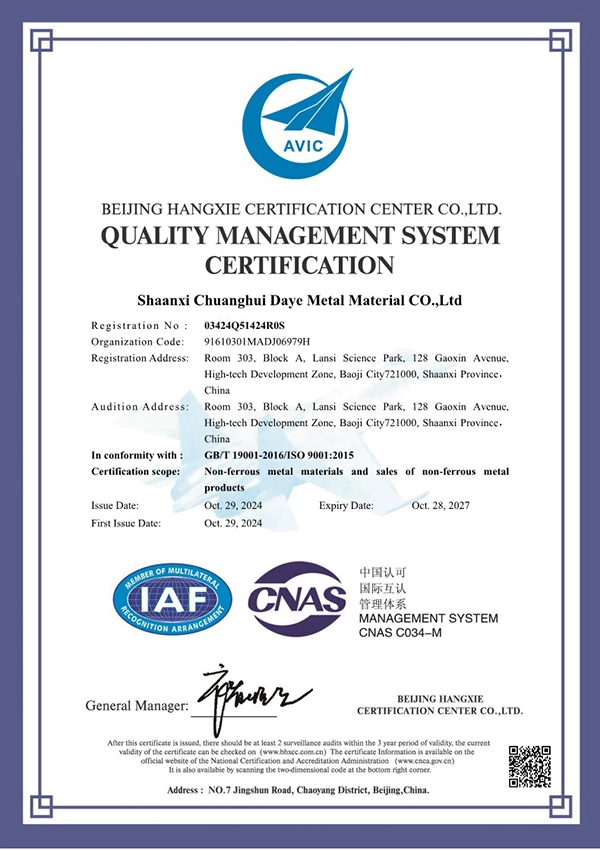
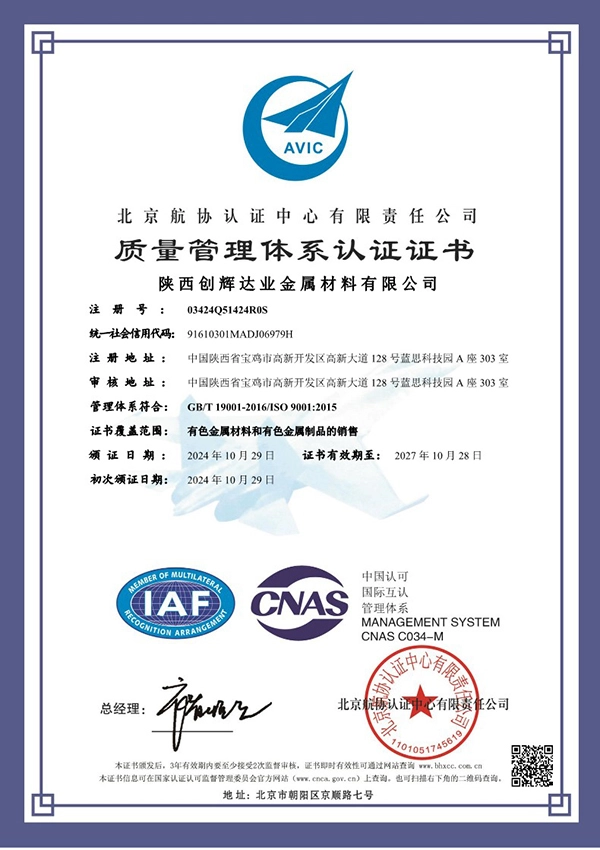
ISO 9001 covers manufacturing. HG/T 2471-2011 covers electrochemical testing. Those are the two quality references that come up. Ask which checks and records apply to your order.


Titanium Anode for Sodium Hypochlorite Generator Operating and Maintenance Notes
Watch the water hardness. When calcium and magnesium run high, the cathode scales up. That scale can reach across to the anode. Set up acid washing at fixed intervals, or reverse the polarity, so the cell stays clean.
Track the voltage trend. A sudden spike usually points to coating passivation or a poor electrical connection at the busbar. Inspect the cell promptly to prevent substrate damage.
When the coating wears out, check the titanium base. If it has no mechanical damage, it can be sandblasted and recoated, which can lower replacement cost over time.
Purchasing Guide for B2B Buyers
Your operating current density is the first thing to look at when you pick a Titanium Anode for Sodium Hypochlorite Generator. Below 1000 A/m², the listed service life is 3 to 5 years. Then match the coating thickness to the life you need. It runs from 8 to 20 microns.
Review the quality checks above and your water conditions, including hardness and salinity. Confirm the busbar connection method for your cell. These answers help narrow the specification before you order.
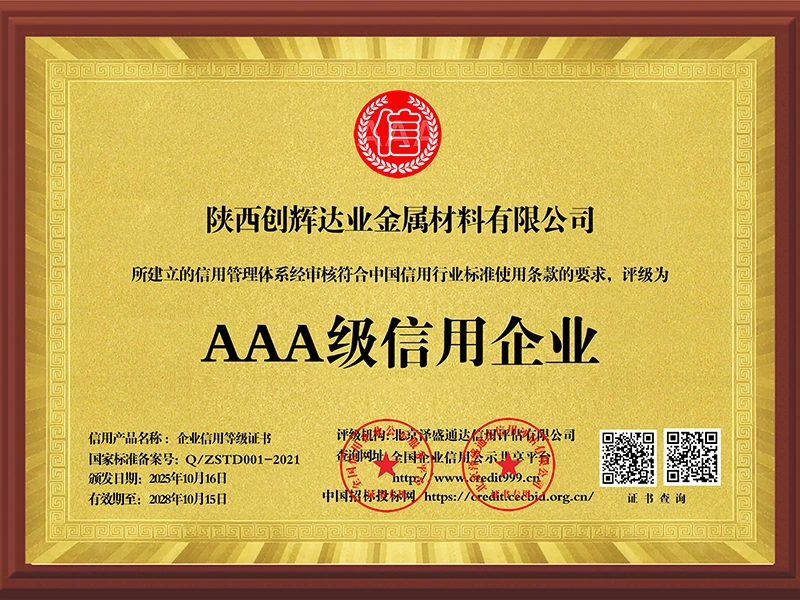
About Shaanxi Chuanghui Daye Metal Material Co., Ltd.
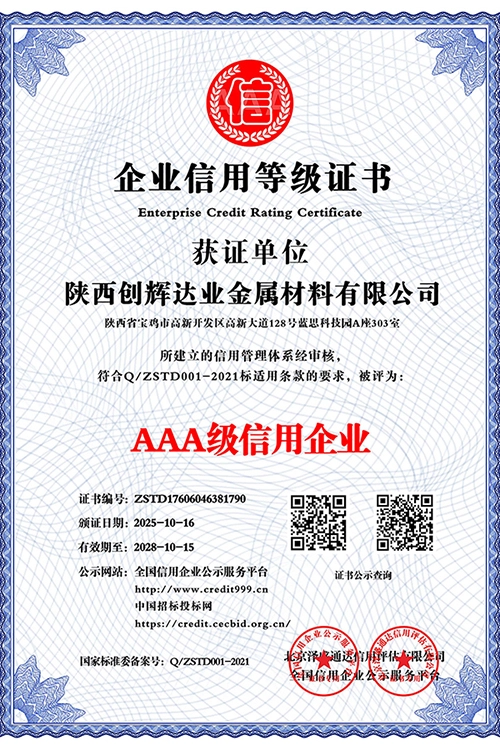
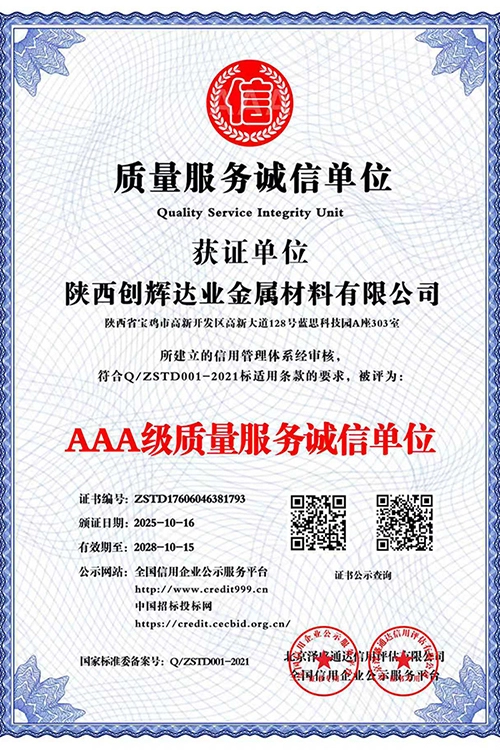
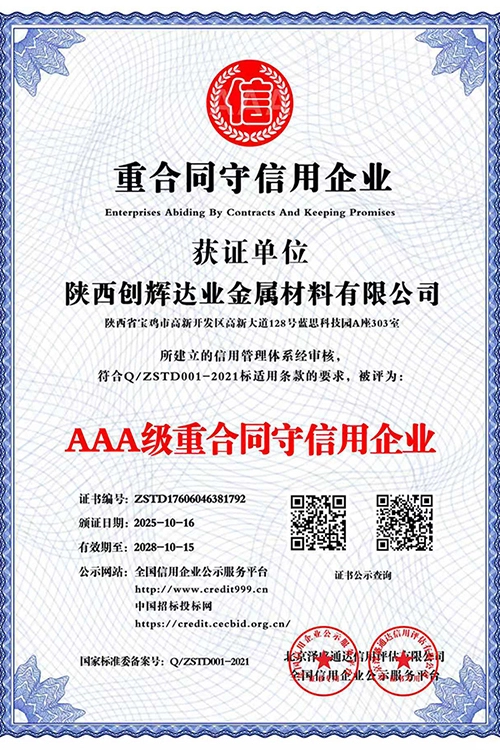
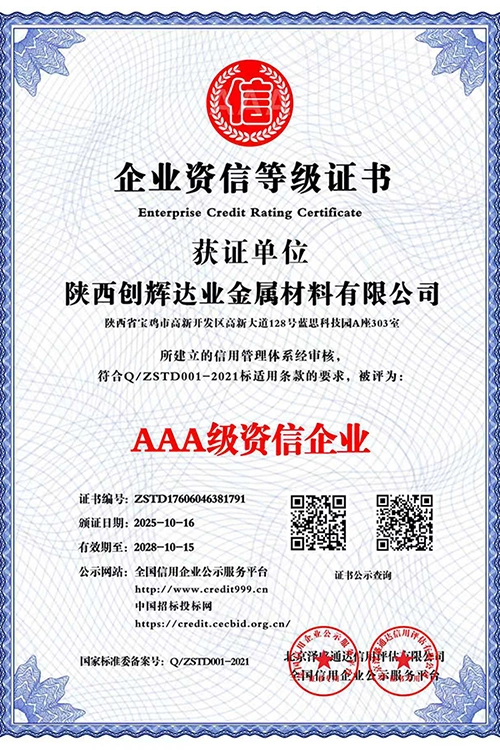
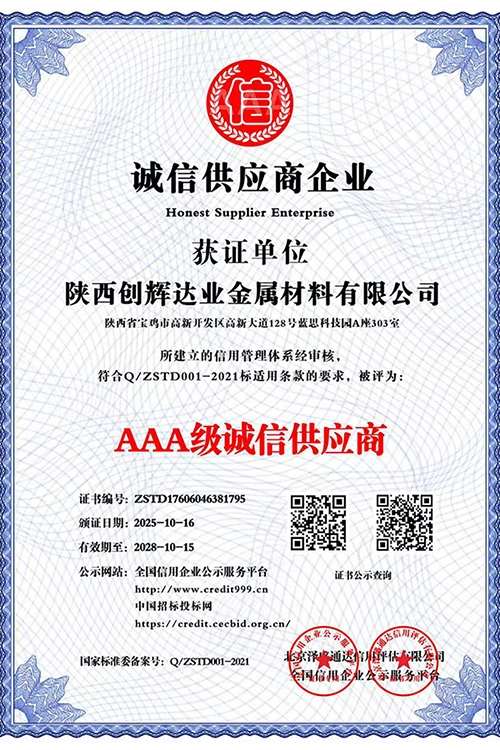
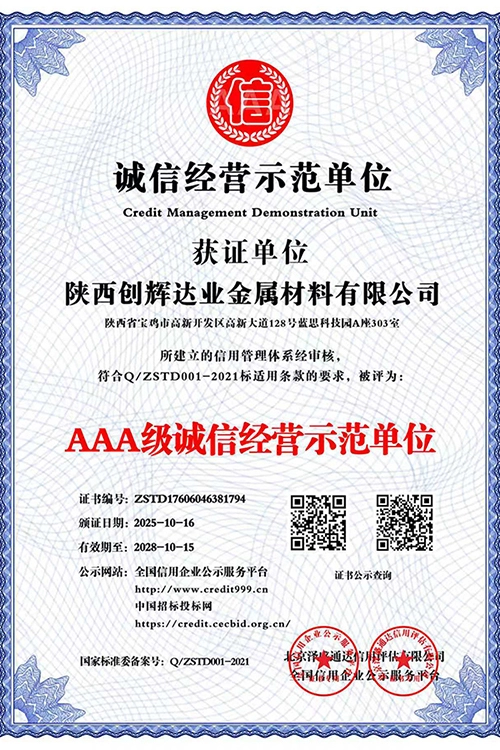
The company is located in Baoji High-tech Development Zone, Shaanxi Province, in Baoji, known in China as the "Titanium Capital". Its founder has more than 30 years of experience in the rare metal industry. Main products include titanium, tantalum, niobium, tungsten, molybdenum, zirconium, nickel, and other non-ferrous and rare metal alloy products.
These products serve the metallurgy, electronics, medical, and special steel fields. They have been applied in the United States, Germany, South Korea, Singapore, and more than 50 countries and regions.


 |
 |
 |
|
|
|
|
|
 |
 |
 |
 |


 |
 |
 |
 |
 |
 |
FAQ
Q: How long does this anode usually last?
A: For this this product, typical service life is 3 to 5 years at current density below 1000 A/m².
Q: What role does water hardness play for the anode?
A: Calcium and magnesium run high, so scale builds up on the cathode. That scale can bridge across to the anode. Schedule acid washing at set intervals, or use polarity reversal.
Q: What is the reason for using Ruthenium in the coating?
A: Chlorine evolution often runs on ruthenium as the catalyst. Overpotential drops when it is used. That can cut the energy you need.
Q: Can the anode substrate be reused?
A: Yes. As long as the titanium substrate has no mechanical damage, you can sandblast it and put on a new coating.
Q: Why does the generator voltage suddenly spike?
A: Most of the time this points to coating passivation, or to a weak electrical connection at the busbar. Check it soon. Putting it off can damage the substrate.
Q: Which tests check coating quality?
A: Typical checks include the Accelerated Life Test, SEM, EDX, the Cross-Cut adhesion test, and the Oxygen Evolution Potential test.
Contact Us
Want to talk through operating current density, Email info@chdymetal.com. We will review your needs. Then we will point you to a Titanium Anode for Sodium Hypochlorite Generator specification that fits.
Learn about our latest products and discounts through SMS or email