- English
- French
- German
- Portuguese
- Spanish
- Russian
- Japanese
- Korean
- Arabic
- Greek
- German
- Turkish
- Italian
- Danish
- Romanian
- Indonesian
- Czech
- Afrikaans
- Swedish
- Polish
- Basque
- Catalan
- Esperanto
- Hindi
- Lao
- Albanian
- Amharic
- Armenian
- Azerbaijani
- Belarusian
- Bengali
- Bosnian
- Bulgarian
- Cebuano
- Chichewa
- Corsican
- Croatian
- Dutch
- Estonian
- Filipino
- Finnish
- Frisian
- Galician
- Georgian
- Gujarati
- Haitian
- Hausa
- Hawaiian
- Hebrew
- Hmong
- Hungarian
- Icelandic
- Igbo
- Javanese
- Kannada
- Kazakh
- Khmer
- Kurdish
- Kyrgyz
- Latin
- Latvian
- Lithuanian
- Luxembou..
- Macedonian
- Malagasy
- Malay
- Malayalam
- Maltese
- Maori
- Marathi
- Mongolian
- Burmese
- Nepali
- Norwegian
- Pashto
- Persian
- Punjabi
- Serbian
- Sesotho
- Sinhala
- Slovak
- Slovenian
- Somali
- Samoan
- Scots Gaelic
- Shona
- Sindhi
- Sundanese
- Swahili
- Tajik
- Tamil
- Telugu
- Thai
- Ukrainian
- Urdu
- Uzbek
- Vietnamese
- Welsh
- Xhosa
- Yiddish
- Yoruba
- Zulu
ASTM B863 Titanium Wire for High-Pressure Systems
When engineers are choosing materials for high-pressure systems, one of the biggest challenges is to find parts that work perfectly in harsh situations. ASTM B863 titanium wire is the best option because it has the best corrosion protection, the highest strength-to-weight ratios, and the longest durability in harsh settings. This special titanium wire meets strict industry standards and is reliable enough for mission-critical uses where failure is not an option in the aerospace, chemical processing, and military industries.
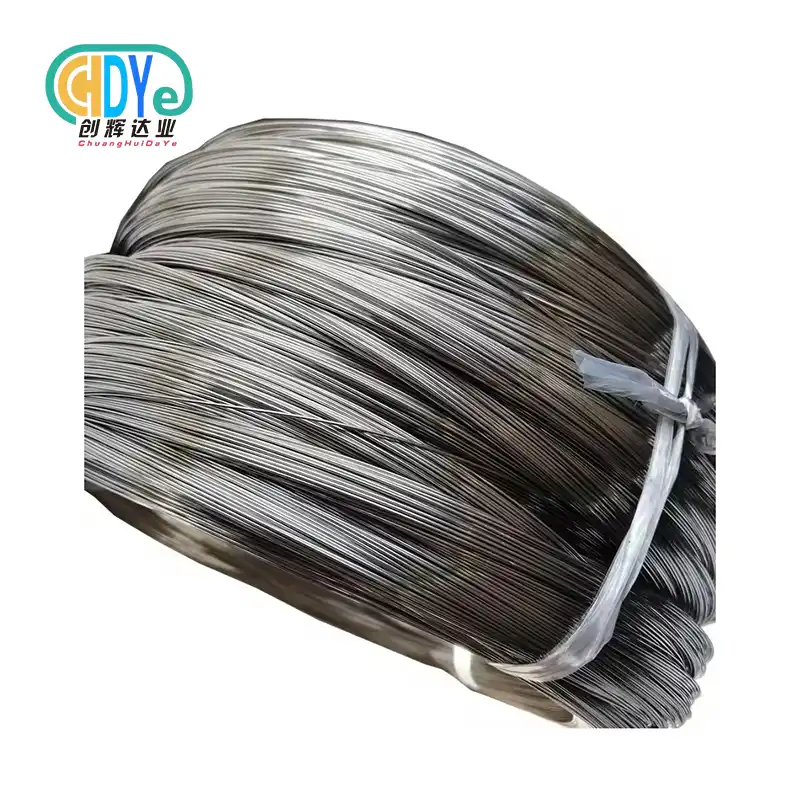
Understanding ASTM B863 Titanium Wire Specifications and Properties
The foundation of any successful high-pressure system lies in understanding the precise specifications that govern material performance. The official standard for titanium and titanium alloy wire used in industry and space is ASTM B863. This is different from the medical-grade ASTM F136 standard or the welding-specific AWS A5.16 standard.
Chemical Composition and Grade Classifications
ASTM B863 includes more than 30 different types, each of which is designed to meet specific performance needs. Grade 2, also called "commercially pure titanium," is very resistant to rust and not too strong, which makes it perfect for places where chemicals are processed. Grade 7, which has small amounts of palladium added to it, is more resistant to reducing acids and crack damage. The molybdenum and nickel in Grade 12 make it stronger while still being very resistant to rust in chloride conditions. To keep things from becoming too weak, the standard strictly controls intermediate elements like oxygen, nitrogen, carbon, and iron. Depending on the grade, the oxygen level usually falls between 0.18% and 0.40%, which has a direct effect on how strong and flexible the wire is. This fine control makes sure that all production runs work the same, getting rid of the differences that can weaken the integrity of a high-pressure system.
Mechanical Properties for High-Pressure Applications
Different grades have very different tensile strength standards. Grade 2 needs at least 345 MPa, while Grade 12 needs forces of over 483 MPa. The yield strength standards make sure there are enough safety gaps when the material is under pressure. The elongation percentages are usually between 15% and 24%, which is enough flexibility for complicated shaping operations. ASTM B863 titanium wire has a very high resistance to wear, which is important for parts that are exposed to changing pressures over and over again. The measure of elasticity of the material is about 103 GPa, which makes it very flexible without affecting its structural stability. Because of these mechanical qualities and the fact that titanium is naturally biocompatible, it is very useful in medical devices where pressure vessels need to stay clean.
Corrosion Resistance and Surface Treatment
This wire is almost completely resistant to rust in air, seawater, and harsh chemical conditions because it naturally forms a stable titanium dioxide film. When this passive layer gets broken, it heals itself right away, giving security that stainless steel options can't match. Acid pickling, mechanical polishing, and controlled heating are some of the surface processes that can be used to improve the wire's natural resistance to rust and make it work better in certain situations.
Comparison of ASTM B863 Titanium Wire with Other Materials
When deciding which materials to use in high-pressure situations, you need to know a lot about the cost and performance trade-offs. When you compare ASTM B863 titanium wire to other materials, you can see that it has clear benefits that make it worth the extra money for important uses.
Performance Against Stainless Steel Alternatives
Even though 316L stainless steel wire is less expensive and doesn't rust as easily, it can crack when exposed to chloride, which can be very dangerous in high-pressure situations. Titanium wire keeps its shape in salt environments where stainless steel would break down quickly, especially at high temperatures that are common in industrial processes. The comparison of strength to weight shows that titanium performs better than other metals. With a density about 56% that of steel, titanium wire can be used in aerospace applications to cut weight without losing strength. Having less mass immediately leads to less energy use and longer component life, which is especially noticeable in rotating machines.
Grade-Specific Comparisons Within ASTM B863
It is best for grade 7 titanium wire to be used in acidic settings, where other grades would rust more quickly. The addition of palladium raises the cost of the material but makes it work better in hydrochloric acid and other acidic situations that are common in chemical processing. The molybdenum and nickel content in Grade 12 makes it stronger, making it perfect for high-stress situations, while still having great corrosion protection. These differences in grade let engineers choose the best material for the job based on the climate and performance needs. Being able to exactly match the wire grade to the needs of the application removes the costs of over-specification while ensuring suitable performance margins.
How to Choose the Right ASTM B863 Titanium Wire for High-Pressure Systems
To choose the best titanium wire, you need to carefully look at working factors, environmental conditions, and supply chain issues. This method for making decisions helps procurement professionals through the difficult selection process and makes sure that the system will work reliably in the long run.
Engineering Parameter Assessment
The main thing that is used to choose a material is its pressure rating. The tensile strength needs are found by adding the right safety factors to the highest working pressures. When choosing a grade, temperature is important because high temperatures can change the mechanical qualities and corrosion protection. Although ASTM B863 titanium wire works well at a lot of different temperatures, certain types work best within certain working windows. Corrosion environment research tells you which grade to use. Oxidizing conditions call for widely pure grades, while lowering conditions need Grade 7 with palladium added to it. The minimum grade standards are affected by the amount of chloride present. Grade 12 is better at resisting stress corrosion cracks caused by chloride.
Industry-Specific Requirements
For aerospace uses, approved materials must be able to be tracked and meet other requirements, such as AMS 4951. The wire has to have the same mechanical qualities all the way through its diameter range, which is from 0.15 mm to 7 mm. It also has to stay within the exact dimensions needed for automatic assembly processes. Certain chemical compatibilities need to be checked in places where chemicals are processed. Titanium is very resistant to wet chlorine, nitric acid, and organic chlorides. This makes it very useful in industrial uses where other materials would need to be replaced often.
Supplier Qualification and Certification
The lowest quality management standard that can be used in high-pressure situations is ISO 9001:2015 approval. Suppliers must show that they have full quality control, which includes inspecting the raw materials, controlling the freezing process, drawing with great accuracy, and following strict inspection routines at the end. Complete chemistry analysis, mechanical property proof, and dimensional inspection records should all be part of the traceability paperwork. The site of the factory affects both the consistency of the product and the dependability of the supply chain. Suppliers in places like Baoji, China, that have been handling titanium for a long time have access to specialized infrastructure and technical know-how that ensures stable product quality.
Procurement Insights: Buying ASTM B863 Titanium Wire
To buy titanium wire successfully, you need to know how the market works, what your suppliers can do, and how to make sure the quality of the wire. These insights help people make smart buying choices, lower supply chain risks, and make sure projects stay on schedule.
Market Dynamics and Pricing Considerations
Titanium wire prices are based on the cost of raw materials, the difficulty of handling, and changes in market demand. When compared to stainless steel alternatives, ASTM B863 titanium wire usually costs more, but lifetime cost analysis often favors titanium due to extended service life and reduced upkeep. The lowest amount you can order depends on the provider and the grade. Standard commercial grades may need smaller minimum orders, but specialized grades need bigger pledges to cover the costs of setting up the production line. Lead times vary from 4 to 12 weeks, based on the grade that is needed and the needs of the specification.
Quality Assurance and Documentation
Chemical analysis by heat lot, mechanical property proof, and dimensional inspection records should all be part of a full material approval. EN 10204 3.1 certification makes sure that the qualities of a material are checked by a third party, while ASTM certification makes sure that the material meets standard requirements. Programs that audit suppliers check their ability to make things and their quality control methods. Criteria for evaluation should include the certification of heating equipment, rules for the drawing process, the calibration of the annealing furnace, and the certification of inspection equipment. These checks give you confidence in the supplier's skills and help you find quality risks.
Supply Chain Risk Management
Geographic variety lowers the risk of disruptions in the supply chain and makes sure that materials are always available. Having many approved sources gives you more buying options and more power when it comes to prices. Strategies for managing inventory should take into account changes in wait times and changes in demand.
Applications and Case Studies of ASTM B863 Titanium Wire in High-Pressure Systems
Applications in the real world show that ASTM B863 titanium wire has great performance qualities in many different industry areas. These case studies show the best ways to use the technology and give measurable proof of its benefits.
Aerospace High-Pressure Applications
For important pressure vessel parts that work at 3,000 PSI constant pressure, commercial airplane hydraulic systems use Grade 5 titanium wire. The wire's wear resistance lets it withstand more than 50,000 pressure cycles without losing its shape. The weight savings compared to steel options lower fuel use by about 2% over the life of the airplane. For military airplanes, even higher performance standards are needed. Titanium wire parts can work in temperatures ranging from -65°F to 400°F and still keep their pressure integrity. Because the material isn't magnetic, it's especially useful in places where electronic warfare is used, where steel parts could damage sensitive equipment.
Chemical Processing Environments
In chlor-alkali factories, Grade 7 titanium wire is used in high-pressure brine handling systems because stainless steel parts would break in months from chloride rust. Titanium wire components have been used in these harsh settings for more than 20 years without breaking down. This cuts down on repair costs and production downtime by a large amount. Titanium wire is used in high-pressure heat transfer devices that handle corrosive feedstocks in petrochemical refining. Because the material is resistant to sulfur compounds and organic acids, it can be used for longer periods of time without having to be shut down for upkeep. This makes the plant more productive overall.
Medical Device Manufacturing
High-pressure sterilizing tools incorporate titanium wire parts so that the structure stays strong even after many autoclave rounds at 270°F and 30 PSI steam pressure. Because ASTM B863 titanium wire is safe, there are no worries about contamination, and it works reliably and for a long time in important healthcare uses.
Conclusion
However, ASTM B863 titanium wire is the best choice for high-pressure system uses where regular materials don't work well enough. The wide range of grades makes it possible to precisely match the material to the conditions of a given setting, and the high mechanical properties ensure that it will work reliably in harsh circumstances. Titanium wire is becoming more valuable in important uses in the aircraft, chemical processing, and medical device industries, thanks to improvements in manufacturing and production efficiency.
FAQ
Q: What distinguishes ASTM B863 titanium wire from other titanium standards?
A: ASTM B863 specifically covers titanium and titanium alloy wire for general industry and aircraft uses. This is different from ASTM F136, which covers medical implants, and AWS A5.16, which covers filler materials for welding. This standard covers more than 30 types, each with its own chemical makeup and set of mechanical properties that make it best for use in building structures and parts.
Q: How does titanium wire perform in high-pressure chloride environments?
A: Titanium wire works very well in chloride settings because it has a steady passive oxide layer that stops stress corrosion cracking caused by chloride. Adding molybdenum and nickel to Grade 12 makes it more resistant to crevice corrosion in chloride solutions. This makes it perfect for use in seawater and brine, where stainless steel would break down quickly.
Q: What quality certifications should buyers expect for critical applications?
A: Chemical research according to ASTM B863 standards, proof of mechanical properties, dimensional inspection records, and EN 10204 3.1 certification should all be part of a complete material certification. Suppliers should also keep their ISO 9001:2015 quality management certification up to date and provide full paperwork that shows how the raw materials were used and how they were inspected at the end.
Q: What are typical lead times for custom ASTM B863 titanium wire orders?
A: Standard grade titanium wire usually has a lead time of 4 to 6 weeks. For special grades or custom specs, the lead time may be 8 to 12 weeks, based on how much material is available and how it needs to be processed. When suppliers have established inventory plans, they can often meet immediate needs by filling orders more quickly.
Choose Chuanghui Daye for Premium ASTM B863 Titanium Wire Solutions
Shaanxi Chuanghui Daye Metal Material Co., Ltd. delivers exceptional value as your trusted ASTM B863 titanium wire manufacturer, combining over 30 years of rare metal expertise with state-of-the-art manufacturing capabilities in China's Titanium Capital. Our comprehensive quality management system, ISO 9001:2015 certification, and full tracking paperwork make sure that our products will always work in your toughest high-pressure situations. We have a wide range of sizes, from 0.1mm to 7mm in diameter, and can make them in straight, coil, or spool shapes. Our factory-direct prices are affordable, and we can make prototypes quickly. Get in touch with our technical team at info@chdymetal.com to talk about your unique needs and discover the Chuanghui Daye edge in titanium wire excellence.
References
1. American Society for Testing and Materials. Standard Specification for Titanium and Titanium Alloy Wire. ASTM International, 2023.
2. Boyer, R., Welsch, G., and Collings, E.W. Materials Properties Handbook: Titanium Alloys. ASM International Materials Park, 2022.
3. Lutjering, G. and Williams, J.C. Titanium Engineering Properties and Applications in High-Pressure Systems. Springer-Verlag Berlin Heidelberg, 2023.
4. Schutz, R.W. and Thomas, D.E. Corrosion of Titanium and Titanium Alloys in Industrial Applications. Advanced Materials & Processes Technology Conference, 2023.
5. Titanium Development Association. Guidelines for Design with Titanium Wire in Pressure Vessel Applications. Technical Manual Series, 2023.
6. Zhang, L.C. and Chen, L.Y. Manufacturing and Performance Characteristics of Titanium Wire for Aerospace Applications. Journal of Materials Processing Technology, 2023.
Learn about our latest products and discounts through SMS or email