- English
- French
- German
- Portuguese
- Spanish
- Russian
- Japanese
- Korean
- Arabic
- Greek
- German
- Turkish
- Italian
- Danish
- Romanian
- Indonesian
- Czech
- Afrikaans
- Swedish
- Polish
- Basque
- Catalan
- Esperanto
- Hindi
- Lao
- Albanian
- Amharic
- Armenian
- Azerbaijani
- Belarusian
- Bengali
- Bosnian
- Bulgarian
- Cebuano
- Chichewa
- Corsican
- Croatian
- Dutch
- Estonian
- Filipino
- Finnish
- Frisian
- Galician
- Georgian
- Gujarati
- Haitian
- Hausa
- Hawaiian
- Hebrew
- Hmong
- Hungarian
- Icelandic
- Igbo
- Javanese
- Kannada
- Kazakh
- Khmer
- Kurdish
- Kyrgyz
- Latin
- Latvian
- Lithuanian
- Luxembou..
- Macedonian
- Malagasy
- Malay
- Malayalam
- Maltese
- Maori
- Marathi
- Mongolian
- Burmese
- Nepali
- Norwegian
- Pashto
- Persian
- Punjabi
- Serbian
- Sesotho
- Sinhala
- Slovak
- Slovenian
- Somali
- Samoan
- Scots Gaelic
- Shona
- Sindhi
- Sundanese
- Swahili
- Tajik
- Tamil
- Telugu
- Thai
- Ukrainian
- Urdu
- Uzbek
- Vietnamese
- Welsh
- Xhosa
- Yiddish
- Yoruba
- Zulu
Can a Titanium Coil Tube Reduce Maintenance and Operating Costs?
Absolutely—titanium coil tubes deliver measurable reductions in both maintenance frequency and operating expenses across industrial applications. Their passive oxide layer regenerates instantly when scratched, eliminating the corrosion failures that plague copper and stainless steel in aggressive environments. This self-healing property extends service intervals from years to decades, while the smooth inner surface resists fouling that degrades heat transfer in conventional materials. Combined with thinner wall construction enabled by titanium's exceptional strength-to-weight ratio, these tubes maintain peak thermal efficiency without the energy penalties caused by scale buildup, directly translating superior material science into bottom-line savings for chemical processors, marine equipment operators, and heat exchanger manufacturers.
Understanding Titanium Coil Tubes and Their Key Properties
What Defines a High-Performance Coiled Tube
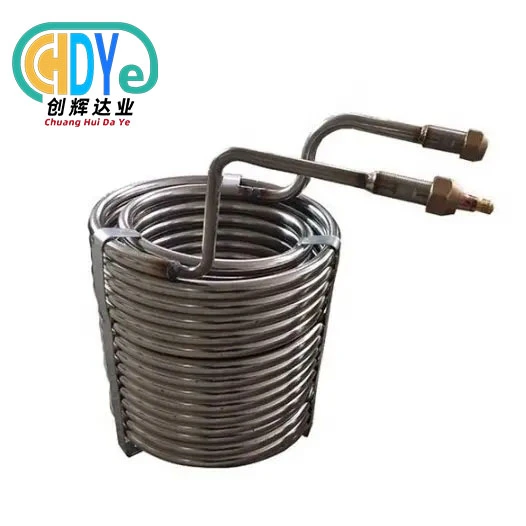
Titanium Coil Tubes are long pieces of seamless or welded tubing that are cold-formed into helical, serpentine, or spiral shapes without any joints in the middle. These parts are made by Shaanxi Chuanghui Daye Metal Material Co., Ltd. using precise coiling and vacuum annealing methods that keep the material's integrity while achieving uniform curvature and great roundness. Commercially pure ASTM B338 Grade 1 or Grade 2 titanium is used in most industry uses. Grade 2 has higher tensile strength while still being easier to shape for tight bending radii. The process starts with high-purity seamless tubes that are cold-bent several times. Next, they are heated to controlled temperatures for stress-relief annealing, which gets rid of any remaining stresses that might affect their wear performance.
Core Material Advantages Driving Industrial Adoption
A passive titanium dioxide film forms naturally on surfaces that are exposed. This protects against pitting corrosion, which would destroy 316L stainless steel in saltwater or chlorinated environments. This oxide layer is only a few nanometers thick, but if it gets broken mechanically, it heals itself in milliseconds, protecting the surface permanently without any upkeep. Instead of raw conductivity, thermal performance improves when fouling factors are removed. Copper conducts heat more easily, but titanium's smooth surface stops the buildup of scale that insulates copper tubes after months of use. With a density of 4.51 g/cm³, the material makes equipment that weighs 45% less than steel equivalents. This means that less structural support is needed, and installation is easier in places with limited space, like chemical processing skids or offshore platforms.
Performance Comparison with Conventional Materials
To account for corrosion loss, stainless steel coils need wall thickness allowances of 1.5 to 2.0 mm. Titanium tubes, on the other hand, can work safely with wall thickness allowances of 0.6 to 0.8 mm because they don't have any corrosion allowances. This advantage in terms of size raises heat transfer rates by shortening the length of the conduction path and expanding the area of internal flow. Copper-nickel alloys only last two to four years in seawater cooling applications before they pit and need to be replaced. Grade 2 titanium installations have been known to last fifteen to twenty years in the same conditions. Aluminum is cheaper, but it doesn't have the chemical resistance needed for acidic or chlorinated process fluids. This means it can only be used in safe water-glycol systems, while titanium's benefits only make it worth the extra cost in high-reliability or space-constrained situations.
How Titanium Coil Tubes Reduce Maintenance and Operating Costs
Eliminating Corrosion-Related Failures and Downtime
Because of localized cracking that causes small leaks, chemical processing plants that use cupronickel heat exchangers usually replace the tube bundles every 36 to 48 months. Plants that switched from copper alloys to titanium immersion coils have proof that Titanium Coil Tube installations in similar caustic soda evaporators have worked nonstop for over 15 years without any pressure loss or contamination problems. Getting rid of unplanned shutdowns is very valuable. For example, a petrochemical plant's heat exchanger can need to be fixed in 48 hours, which can cost $150,000 in lost production plus $25,000 in fast parts and extra work. Maintenance teams don't have to replace gaskets and plug tubes over and over again, which is what needs to be done to keep metal systems working. Instead, they use skilled workers on activities that add value instead of fixing things that are broken.
Sustaining Thermal Efficiency Over Decades
Fouling resistance saves money over time because it lasts longer, rather than just saving money one time. Within 6 to 12 months of being exposed to seawater, copper tubes form biofilm and calcium carbonate deposits that lower heat transfer coefficients by 30 to 40 percent. This means that operators must either increase flow rates or accept lower capacity. An obstructed 500 kW chiller can cost more than $8,000 a year in extra power costs from energy penalties. Titanium's surface is chemically inactive, and it doesn't have any galvanic corrosion products, so scales don't stick to it. This means that the equipment keeps working at the right temperature for as long as it's supposed to. Chemical cleaning times are extended from every three months to once a year or longer. This cuts down on acid use, the cost of treating wastewater, and the lost production that comes with having to shut down systems for maintenance.
Quantified Savings from Extended Service Life
Over the course of 15 years, a marine desalination plant that switched from cupronickel condenser tubes to titanium coil bundles saw a total cost of ownership drop of more than 60%. The initial material premium of $85,000 was paid back in 4.2 years by not having to replace the system as often, cleaning it less often, and using less energy to pump the water. Pharmaceutical companies that use titanium serpentine coils in reactor jacketing say that they save money on validation costs because the stable, non-reactive surface eliminates the risk of product contamination that needs expensive revalidation studies when switching to new heat exchanger parts after stainless steel systems fail due to corrosion.
Procurement Considerations When Choosing Titanium Coil Tubes
Understanding Pricing Structures and Lead Times
Grade 2 titanium costs between $18 and $28 per kilogram, based on the world market and the size of the order. 316L stainless steel costs between $8 and $12 per kilogram. The manufactured coil premium is based on more than just the raw material. It also includes the skilled cold-working and annealing skills needed to make tight-radius turns without micro-cracking. Standard lead times from qualified manufacturers like Chuanghui Daye are between 4 and 6 weeks for custom geometries. Delivery times can be shortened for repeat orders or standard coil configurations that are kept in stock. Buying in bulk can save you 12 to 18% and make managing spare parts easier. One way to do this is to use the same tube diameters for all of your projects.
Specifying Grades and Customization Parameters
Grade 1 is the most flexible and can be used for very complicated shaping tasks. Grade 2 is the standard for coil tube uses because it has 20% higher tensile strength with little loss in bendability. Important specification factors include the outer diameter of the tube (6–38 mm is common), the wall thickness (0.3–2.0 mm), the coil diameter (200–3000 mm), and the overall height. Engineers at Chuanghui Daye work directly with customers to make sure that these measurements are perfect for each heat exchanger shell, maximizing surface area while ensuring a good fit. Surface finish choices—bright annealed, pickled, or polished—affect both the initial cost and how easy it is to clean in the long run. In clean pharmaceutical or food processing environments, bright annealed surfaces are worth the extra cost.
Verifying Supplier Certification and Quality Systems
While ISO 9001:2015 certification is a good way to make sure that the manufacturing process is being controlled, procurement professionals should also make sure that suppliers follow titanium-specific quality procedures. These include being able to trace raw materials back to mill test reports, testing finished coils for 100% hydrostatic or helium leaks, and making sure that they meet ASTM B338 requirements for size and strength. To make sure that the stresses caused by cold working have been properly relieved, ask for proof of the annealing temperature profiles and the post-forming grain structure analysis. Chuanghui Daye is located in Baoji, which is known as China's Titanium Capital. This gives them access to vertically integrated supply chains and metallurgical expertise that they have built up over 30 years. This lets them get the fast technical support and material certifications they need to meet the codes for pressure vessels in regulated industries, including Titanium Coil Tube requirements.
Comparing Titanium Coil Tubes with Other Materials for Cost Efficiency
Titanium versus Stainless Steel in Corrosive Environments
Austenitic stainless steels depend on chromium oxide passivation, which breaks down when chloride levels rise above 200 ppm. This can cause stress corrosion cracking and crevice corrosion in chemical processing streams or seawater. Titanium can't be damaged by chloride, so these failure modes don't happen. This makes the original cost prices of 2.5 to 3.5 times greater through longer service life. When smaller walls are taken into account, titanium's total fixed cost advantage grows even more. A stainless steel coil that needs 1.8mm walls to allow for corrosion can be replaced with a 0.8mm titanium coil that weighs less, ships faster, and costs less to ship. In remote places like offshore platforms, where getting repair crews to the site can cost more than the part itself, differences in maintenance costs become very important.
Copper Alloys versus Titanium in Heat Exchange Applications
Copper-nickel 90/10 has a thermal conductivity of 50 W/m·K, which is higher than titanium's 17 W/m·K and suggests better heat transfer performance. In practice, this theoretical advantage goes away within months because copper tubes get fouling layers that keep heat from moving through them. In a power plant condenser, side-by-side tests showed that titanium coils kept 97% of their design performance after 8 months of seawater service, while copper tubes lost 35% of their initial capacity. The clean surface effect is especially useful in places with bad water quality or a lot of biological activity, since copper is easily biofouling and needs strong chemical treatment programs that cost a lot and are hard to follow for environmental reasons.
Lifecycle Cost Analysis Framework
A correct economic evaluation includes net present value estimates that take into account the cost of capital, the frequency of upkeep, the amount of energy used, and the timing of replacement over realistic analysis periods of 15 to 20 years. Titanium Coil Tubes are the best choice when three things come together: harsh environments that corrode other materials so quickly that they only last three to five years; high reliability needs where unplanned downtime costs a lot of money; and limited space or weight where titanium's strength-to-weight advantage makes system design easier. Chemical plants that use chlorinated hydrocarbons, marine vessels that work in tropical waters with a lot of biofouling, and pharmaceutical reactors that need to transfer heat without contaminating it are all great examples of places where lifecycle cost models strongly favor titanium, even though it costs more at first.
Practical Guidelines for Integrating Titanium Coil Tubes in Your System
Assessing Application Suitability and Operating Conditions
Characterizing the environment is the first step in choosing a material. Titanium works best in oxidizing environments (pH 2–12), but it needs to be carefully considered in strongly reducing environments or environments with fluoride ions above low levels. Most process fluids can handle temperatures from very cold to 300°C, but the exact limits depend on the pressure and chemistry of the fluid. For slurry services, the recommended flow speed is usually between 3 and 5 m/s to avoid erosion and rust. However, clean liquids can handle speeds up to 20 m/s without any damage. For applications requiring reliable heat transfer and corrosion resistance, a Titanium Coil Tube can be considered as part of the system design. According to ASME Section VIII calculations, pressure ratings depend on the diameter of the tube, the thickness of the wall, and the bending radius. The engineering staff at Chuanghui Daye provides burst pressure certifications and stress analysis documentation that are needed to meet pressure vessel code requirements.
Maintenance Best Practices for Maximizing Service Life
Titanium doesn't rust, so it doesn't need as much care. However, tubes should be inspected every 6 to 12 months to make sure they are still solid and to look for damage from vibrations or outside hits. It can handle harsh chemical cleaning with diluted hydrochloric or sulfuric acid solutions that would break down softer metals. This means that any buildup of deposits can be removed effectively without risking attack by base metals. When systems that handle suspended solids use mechanical backflushing at high speeds, particles don't build up as quickly. Titanium shouldn't be connected directly to copper or brass parts without electrical isolation, because galvanic cells can speed up the rusting of the less-valuable metal. For coils that are subject to pulsating flow, the right system design includes vibration dampening and enough support spacing to keep the coils from wearing out from vibrations caused by flow.
Strategic Procurement and Supplier Partnership
For a Titanium Coil Tube application to go well, the provider should be involved early on in the design phase, rather than being treated as a replacement part that is added after the system architecture is set in stone. Through collaborative engineering reviews, it is possible to find ways to improve both the heat performance and the ease of manufacture of coil shape, which could lower costs and raise reliability. Make framework deals with qualified providers like Chuanghui Daye to get first-choice schedule for production and access to technical help during commissioning. Ask for a full mill test record with information on the chemical make-up, mechanical properties, and dimensional inspections that can be fully tracked for regulatory and quality assurance reasons.
Conclusion
Titanium Coil Tubes reduce the need for upkeep and running costs by resisting corrosion, keeping temperatures stable, and lasting longer, which more than makes up for the higher original cost of the materials. The self-healing oxide protection, fouling resistance, and lightweight sturdiness all work together to make the product more cost-effective. This is especially useful in harsh chemical environments, marine uses, and high-reliability systems where downtime costs a lot. When making buying decisions, people should look at the total cost of ownership, which includes things like maintenance labor savings, energy efficiency retention, and getting rid of the need to replace things over and over again. Strategic partnerships between suppliers and ISO-certified manufacturers make sure that you can get the technical help and quality documentation you need for the best system integration and compliance with regulations.
FAQ
Q: How does heat transfer efficiency compare between titanium and copper coil tubes?
A: Copper's 400 W/m·K thermal conductivity is higher than titanium's 17 W/m·K in the lab, but after a few months of use, the performance changes back to what it was before. Titanium's smooth, non-reactive surface stops biofilm and scale from forming, which insulates copper tubes. Field data shows that titanium keeps 95%+ of its design capacity, while copper systems that get clogged lose 60–70% of their efficiency. Titanium's strength allows for thinner walls (0.6–0.8mm vs. 1.2–1.5mm for copper), which improves overall heat transfer coefficients even though the material itself is less conductive.
Q: What service life should I expect in seawater cooling applications?
A: When made correctly, Grade 2 Titanium Coil Tubes have design lives of 15 to 20 years in salt water service, while cupronickel alloys only last 2 to 4 years. This is based on the idea that the flow speed guidelines and regular mechanical cleaning protocols will be followed. Marine desalination plants and offshore platforms have titanium systems that have been used for more than 20 years without being replaced. This is in tropical seawater, which breaks down copper metals in 30 to 36 months.
Q: Can titanium coils handle high-pressure refrigerant systems?
A: When the wall thickness is calculated according to the ASME Section VIII Division 1 code, Grade 2 seamless titanium tubing can handle high-pressure refrigerants like R410A. With the right safety factors, standard walls of 0.8 to 1.2 mm can handle working pressures up to 40 bar. Engineers at Chuanghui Daye do estimates for burst pressure and give hydrostatic test approvals that show that each coil design is pressure-tight.
Q: Which titanium grade should I specify for coil applications?
A: Grade 2 commercially pure titanium is the standard for coiled tube uses because it has the best mix of being able to be shaped for tight bending radii and being strong enough to hold pressure. Grade 1 is the most flexible and can be used for very specific shaping tasks, but it gives up 20% of its tensile strength. Grade 9 titanium alloy is good for jobs that need more strength at high temperatures, but it costs 40–50% more and doesn't resist corrosion as well in some chemical environments.
Get Started with Premium Titanium Coil Tube Solutions from Chuanghui Daye
Shaanxi Chuanghui Daye Metal Material Co., Ltd. has been working with rare metals for 30 years and uses ISO 9001:2015 certified manufacturing methods to make Titanium Coil Tubes that are precisely engineered to meet your needs. Our facility is in Baoji, which is known as China's Titanium Capital. It has high-tech electron beam melting, precision cold-forming, and vacuum annealing tools that make coils that meet ASTM B338 standards and can be fully traced back to their source. Our engineering team can help you with any shape you need, from the initial design review through completion. This includes serpentine shapes for chemical reactors, helical shapes for heat exchanges, and custom geometries for specific uses. Contact us at info@chdymetal.com to talk about your project needs with experienced Titanium Coil Tube experts who know how to get what chemical processors, marine equipment manufacturers, and pharmaceutical companies want: reliable, cost-effective solutions backed by full quality documentation.
References
1. American Society of Mechanical Engineers. ASME SB-338: Specification for Seamless and Welded Titanium and Titanium Alloy Tubes for Condensers and Heat Exchangers. ASME International, 2021.
2. Schutz, R.W. "Titanium in Seawater Applications: A Review." Corrosion Engineering, Science and Technology 46, no. 4 (2011): 379-388.
3. Francis, R. The Corrosion of Copper and Its Alloys: A Practical Guide for Engineers. Houston: NACE International, 2010.
4. Pourbaix, M. Atlas of Electrochemical Equilibria in Aqueous Solutions. 2nd ed. Houston: National Association of Corrosion Engineers, 1974.
5. Cotton, J.B. "The Performance of Titanium in Marine Environments." Materials Performance 28, no. 9 (1989): 56-62.
6. Handbook Committee. ASM Handbook Volume 2: Properties and Selection—Nonferrous Alloys and Special-Purpose Materials. Materials Park: ASM International, 1990.

Learn about our latest products and discounts through SMS or email