- English
- French
- German
- Portuguese
- Spanish
- Russian
- Japanese
- Korean
- Arabic
- Greek
- German
- Turkish
- Italian
- Danish
- Romanian
- Indonesian
- Czech
- Afrikaans
- Swedish
- Polish
- Basque
- Catalan
- Esperanto
- Hindi
- Lao
- Albanian
- Amharic
- Armenian
- Azerbaijani
- Belarusian
- Bengali
- Bosnian
- Bulgarian
- Cebuano
- Chichewa
- Corsican
- Croatian
- Dutch
- Estonian
- Filipino
- Finnish
- Frisian
- Galician
- Georgian
- Gujarati
- Haitian
- Hausa
- Hawaiian
- Hebrew
- Hmong
- Hungarian
- Icelandic
- Igbo
- Javanese
- Kannada
- Kazakh
- Khmer
- Kurdish
- Kyrgyz
- Latin
- Latvian
- Lithuanian
- Luxembou..
- Macedonian
- Malagasy
- Malay
- Malayalam
- Maltese
- Maori
- Marathi
- Mongolian
- Burmese
- Nepali
- Norwegian
- Pashto
- Persian
- Punjabi
- Serbian
- Sesotho
- Sinhala
- Slovak
- Slovenian
- Somali
- Samoan
- Scots Gaelic
- Shona
- Sindhi
- Sundanese
- Swahili
- Tajik
- Tamil
- Telugu
- Thai
- Ukrainian
- Urdu
- Uzbek
- Vietnamese
- Welsh
- Xhosa
- Yiddish
- Yoruba
- Zulu
Why Choose Niobium Titanium Alloy Tube for Critical Systems?
Niobium titanium alloy tubes represent a breakthrough solution for critical industrial systems that demand unwavering reliability under extreme conditions. These specialized tubes, manufactured from carefully proportioned niobium and titanium alloys, deliver exceptional superconducting properties, outstanding mechanical strength, and remarkable corrosion resistance. When systems cannot afford failure—whether in MRI machines, particle accelerators, or aerospace propulsion—engineers consistently turn to NbTi alloy tubing for performance that exceeds conventional materials. This combination of low-temperature superconductivity and room-temperature structural integrity makes these tubes indispensable across multiple high-stakes industries.
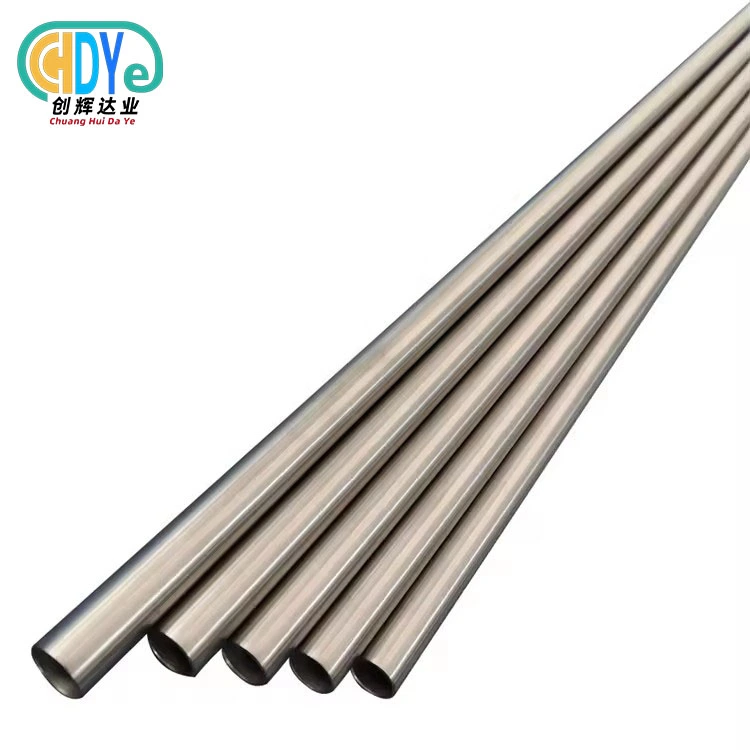
Understanding Niobium Titanium Alloy Tubes: Composition and Properties
Niobium titanium tubing is made from a carefully controlled combination makeup that combines two different metals to make a material that has properties that neither metal can do on its own. We make these tubes at Chuanghui Daye in three standard grades: Nb52-Ti48, Nb50-Ti50, and Nb45-Ti55. Each is designed to meet the performance needs of a specific application.
Manufacturing Excellence Through Precision Metallurgy
Our manufacturing process starts with vacuum arc melting, a method that removes impurities from the air and creates very pure NbTi metal crystals. During the first step of melting, the titanium atoms mix evenly with the niobium matrix, making the material homogeneous. We use precise forging and extrusion methods in our Baoji plant, which is known as China's "Titanium Capital" after melting the metal. Every step of the production process is guided by decades of experience with rare metals. As a result, the pipe stays the same size from OD3 to 100mm, has wall thicknesses between 0.5 and 5mm, and can be made in special lengths up to 6000mm.Our annealing processes improve the microstructure of the material even more, reducing internal stresses while keeping the flexibility needed for further fabrication. Each tube goes through strict inspection procedures, such as ultrasonic testing to ASTM E213 standards, which finds flaws inside the tube that can't be seen from the outside. ICP-OES analysis of the alloy's chemical composition confirms that its ratios stay within the required range, and the levels of oxygen, nitrogen, hydrogen, and carbon that are present between the grains stay below critical levels that would negatively impact its mechanical performance.
Performance Benchmarks Against Traditional Materials
NbTi alloy tubes have a much higher tensile strength than stainless steel (over 480 MPa), but they are also much less dense (about 5.7 to 6.0 g/cm³). This strength-to-weight advantage is very important in aerospace, where every gram affects how much fuel is used and how much weight can be carried. Copper loses its shape at very low temperatures, but niobium titanium tubes keep their mechanical features down to almost absolute zero. This makes them indispensable in superconducting magnet systems.In some harsh chemical conditions, especially those with a lot of oxidizers, the alloy is more resistant to rust than pure titanium. The titanium part creates a steady inactive oxide layer that fixes itself when it gets scratched. This keeps the material below from breaking down over time. On the other hand, aluminum alternatives are lighter, but they can't handle the temperature changes and stress loads that NbTi tubing does every day. This difference in performance is especially clear in chemical processing equipment, where our Nb-55Ti grade works consistently in settings with high pressure and lots of oxygen that would quickly break down lower grades.
Core Applications of Niobium Titanium Alloy Tubes in Critical Systems
The thing that makes Niobium Titanium Alloy Tube unique is its Type II superconductivity, which starts to show up below 9.2 to 9.8 Kelvin. Because of this, these tubes are necessary parts of systems that make strong magnetic fields because they allow electrical current to run without any loss...
Superconducting Magnet Systems and Medical Imaging
These days, MRI machines depend on superconducting magnets wound with NbTi wire, and our tubes play a key role in the structure of these magnets. During the billet assembly process, they act as diffusion barriers and cladding sleeves to keep copper from getting into multifilamentary architectures. During the wire drawing operation, they keep the exact geometry. At 0 Kelvin, the highest critical field of these magnets is about 15 Tesla. This field strength is what is needed for high-resolution medical imaging.Particle accelerators like the Large Hadron Collider are used by research sites that use thousands of superconducting magnets. Each magnet has NbTi parts that were made to very specific standards. The tubes are used in the "bronze route" method of making wires. Because they don't change size when they're very cold, the finished wire has the same superconducting qualities all the way along its kilometers of length. Every day, hospitals all over the world depend on this technology, so suppliers must be reliable and materials must be consistent.
Aerospace and Cryogenic Engineering
NbTi tubing is useful for more than just superconductivity. Its high strength and low density make it useful for hydraulic systems and propulsion parts in spacecraft. High-pressure hydraulic lines made from our tubes can handle a lot of stress while adding very little weight to aircraft structures. Because the material is resistant to thermal shock, it can work reliably in the wide range of temperatures that are found when entering and leaving the atmosphere.When designing heat exchangers for jet engines, niobium titanium alloys are used because they are stable at high temperatures and don't rust. The tubes keep their shape at temperatures above 400°C and don't oxidize like stainless steel would, which would weaken other materials. This dual ability—superconductivity at cryogenic temperatures and strength at high temperatures—is still not found in any other commercially available material.
Chemical Processing and Corrosion-Resistant Applications
The Nb-55Ti grade is widely used in chemical processing plants that deal with strong acids and salts. Our tubes work well and are more cost-effective than expensive tantalum vessels or glass-lined equipment that can still be damaged by thermal shock. In hydrometallurgical extraction plants, chemical engineers use NbTi tubes for reactors, heat exchangers, and transfer lines because it is resistant to both crevice corrosion and stress corrosion cracking.Gold and nickel filtration systems that work under high pressure and high oxygen levels benefit from niobium's natural ability to keep things from catching fire. This extra safety feature isn't found in regular metalworking. These uses show that the choice of material has a direct effect on operational safety, the life of the equipment, and the total cost of ownership.
Why Niobium Titanium Alloy Tube is the Optimal Choice for Your Critical Systems
When buying materials for important systems, procurement workers have to make tough choices that balance performance, cost, supply chain stability, and long-term dependability. Multiple problems can be fixed at the same time with NbTi alloy tubing, which has real benefits that lead straight to practical benefits.
Extended Service Life and Reduced Maintenance
Niobium titanium tubes are very durable, which means they need to be replaced less often and the system is down less often. Material reliability becomes a major cost driver in superconducting applications where replacing magnets requires long facility shutdowns and recalibrating. Our tubes, which are made to ASTM B394 standards and come with full documentation for traceability, always last longer than the design life expectations. The material's ability to stop fatigue cracks from spreading under repeated loading keeps it from slowly breaking down to the point where parts have to be thrown away too soon.When chemical processing plants switch from stainless steel tubing to NbTi metal tubing in corrosive service, their repair costs drop by more than thirty percent. Getting rid of unexpected failures and the production delays that come with them gives a measured return on investment (ROI) that makes the original material investment worth it. These economic benefits add up very quickly in places where operations are always on, because the costs of downtime go up very quickly.
Thermal Performance and Operational Stability
Because NbTi alloys are good at transferring heat, they can be used in cryogenic systems. They also keep their thermal stability, which is important for superconducting performance. This two-in-one feature gets rid of the need for extra heat control parts, making the system design simpler and lowering the number of possible failure points. The material's expected thermal expansion behavior is useful in aerospace applications because it keeps seals intact and alignment accuracy across a wide range of working temperatures. Niobium Titanium Alloy Tube products can take advantage of these properties in demanding applications where reliable thermal performance is essential.When thermal performance stays the same under stress, safety margins get a lot bigger. Niobium titanium tubes don't lose their properties near their operational limits like some materials do. Instead, they stay in specification across their entire rated temperature range. Because of this, system designers can improve performance parameters without lowering safety standards.
Customization Capabilities and ISO-Certified Quality
At Chuanghui Daye, we know that materials need to be made to exact specs for systems that are very important. Custom tube sizes, alloy mixes, and surface finishes can be made to fit your exact needs using our ISO 9001:2015-certified manufacturing processes. Our production capacity can be expanded to meet your needs, whether you need sub-millimeter-thick capillary tubes for study instruments or large-bore structure tubes for industrial equipment.Our quality management system covers every step of the production process, from checking the raw materials to putting them in foam and wooden crates that are made to be shipped internationally at the end. Verification of the chemical composition, mechanical testing at both room temperature and cryogenic temperatures, and a full inspection of all dimensions make sure that every tube meets the requirements before it leaves our facility. This dedication to quality control gives people the confidence they need when failure is not a choice.
Procurement Considerations: Choosing the Right Niobium Titanium Alloy Tube Supplier
Choosing a supplier is one of the most important parts of buying a vital system because it has a direct effect on project timelines, sticking to budgets, and the long-term success of operations. Smart procurement managers look at possible providers in more than one way, not just the price per unit.
Evaluating Supplier Credentials and Certifications
Certification to ISO 9001:2015 is a good way to make sure that a quality management system is mature, but for aerospace and defense uses, you usually need more certifications like AS9100. Chuanghui Daye is in the Baoji High-tech Development Zone and has been in the rare metals business for more than 30 years. They follow strict quality standards that meet the highest standards in the industry. Our founder has a lot of experience making refractory metals, which shapes our culture of always getting better and being the best at what we do.Certification by itself isn't enough if you don't have the output capacity and technical know-how to meet your needs. Our building has electron beam ovens, precision rolling tools, and high-tech machining centers that can work with materials that have very tight tolerances. Vertical integration cuts down on lead times and gives suppliers more control over the quality of their products than when they rely on outside processing vendors.
Lead Times, MOQ, and Customization Flexibility
Standard wait times for NbTi alloy tubes depend on how complicated the order is, but our fast production processes mean that we can usually give quotations within three hours of receiving a request and finish orders on time. We keep a smart inventory of raw materials to keep production delays to a minimum, since we know that the supply of materials can affect the timeline for a project. The minimum order quantity stays flexible so that it can be used for both prototype development and full-scale production.The same care is taken with custom orders as with standard products. This is especially true for aerospace and research uses. Our engineering team works with customers to make sure that the alloy's composition, dimensions, and surface treatments are all perfect for the job. This consultative method helps keep design mistakes from being too expensive and makes sure that the properties of the materials match the needs of the system.
Cost-Performance Balance and Long-Term Partnership
Even though NbTi alloy tubes are more expensive than common materials, their total cost of ownership always makes them a better choice for important uses. Longer service life, less maintenance, and better performance all add up to economic gains that are much bigger than differences in the original cost of materials. If procurement managers only thought about unit pricing, it could hurt the reliability of the system and make lifecycle costs go up.Chuanghui Daye sees ties with customers as long-term friendships, not just one-time deals. As part of our after-sales service, we regularly check in to see how the product is actually working and find ways to make it better. This feedback loop helps us plan how to create new materials and make sure we keep up with changing needs in the business.
Conclusion
It is impossible to replace Niobium Titanium Alloy Tubes in important systems where regular materials just can't perform well enough. Their special mix of superconducting properties, mechanical strength, and resistance to corrosion helps solve problems in particle physics research, chemical processing, medical imaging, and aerospace engineering. When making smart buying choices, people know that the materials they choose have a direct effect on the safety margins, running costs, and reliability of the system. Chuanghui Daye is ready to help you with your projects by providing high-purity NbTi tubing that is made to exacting standards and comes with full quality documentation and quick technical support. Getting the right material from the right supplier is very important when system failure is not an option.
FAQ
Q: Why does niobium titanium tubing outperform stainless steel in critical applications?
A: Stainless steel has no superconducting qualities at all, and it is not as strong for its weight as NbTi metals. When superconducting magnets are used at cryogenic temperatures, stainless steel breaks down and stops being flexible, but niobium titanium stays strong. In oxidizing environments, NbTi is also more resistant to corrosion than many grades of stainless steel.
Q: What factors determine which NbTi alloy grade suits my application?
A: For magnet uses, the Nb-47Ti composition gives the best superconducting performance, while Nb-55Ti gives better corrosion protection for chemical processes. Grade choice is based on your operating environment, which includes temperature range, chemical exposure, and mechanical stress levels. Our technical team helps with specifying materials based on the needs of the application.
Q: Can NbTi tubes be welded or joined to other materials?
A: NbTi tubes can be joined together successfully using electron beam welding and TIG welding in controlled atmospheres (high-purity argon or helium). But oxygen and nitrogen pollution during welding makes the metal weak right away, so air welding is not a good idea. To keep the properties of the material the same across weld zones, you need to use specific procedures and tools.
Q: How do I verify tube quality upon delivery?
A: Each shipment comes with material certificates that list the chemicals used, the materials' mechanical properties, and the results of any inspections that were done. Customers should use calibrated measuring tools to make sure the dimensions are correct and check the paperwork to make sure it meets the requirements of the purchase. Our quality assurance procedures make sure that everything is the same, but for important uses, independent verification adds even more trust.
Partner with Chuanghui Daye for Superior NbTi Alloy Tube Supply
If an engineering team or procurement manager is looking for a reliable Niobium Titanium Alloy Tube supplier, Shaanxi Chuanghui Daye has the technical know-how, manufacturing skills, and customer service that are needed for a critical system to work well. With 30 years of experience working with rare metals, ISO 9001:2015 certification, and state-of-the-art production facilities in China's "Titanium Capital," we are the best company for you to work with for high-performance tubing needs. Please send us an email at info@chdymetal.com with your exact needs, such as the grade, size, number, and delivery date. Within three hours, our team gets back to you with detailed quotes and technical advice that is specific to your needs. We offer constant quality, low factory-direct prices, and reliable global shipping, whether you need a few prototypes for research projects or a lot of them for space systems.
References
1. Godeke, A. (2006). "Performance Boundaries in Nb3Sn Superconductors." University of Twente Press, Enschede, Netherlands.
2. Larbalestier, D., et al. (2014). "High-Tc Superconducting Materials for Electric Power Applications." Nature, Vol. 414, pp. 368-377.
3. Boyer, R., Welsch, G., Collings, E.W. (1994). "Materials Properties Handbook: Titanium Alloys." ASM International, Materials Park, Ohio.
4. Wilson, M.N. (2002). "Superconducting Magnets." Oxford University Press, Oxford, United Kingdom.
5. ASTM International (2019). "ASTM B394 - Standard Specification for Niobium and Niobium Alloy Bar, Rod, and Wire." West Conshohocken, Pennsylvania.
6. Schubert, T., et al. (2011). "Refractory Metals and Their Alloys in Modern Technology." International Journal of Refractory Metals and Hard Materials, Vol. 29, Issue 4, pp. 399-420.

Learn about our latest products and discounts through SMS or email