- English
- French
- German
- Portuguese
- Spanish
- Russian
- Japanese
- Korean
- Arabic
- Greek
- German
- Turkish
- Italian
- Danish
- Romanian
- Indonesian
- Czech
- Afrikaans
- Swedish
- Polish
- Basque
- Catalan
- Esperanto
- Hindi
- Lao
- Albanian
- Amharic
- Armenian
- Azerbaijani
- Belarusian
- Bengali
- Bosnian
- Bulgarian
- Cebuano
- Chichewa
- Corsican
- Croatian
- Dutch
- Estonian
- Filipino
- Finnish
- Frisian
- Galician
- Georgian
- Gujarati
- Haitian
- Hausa
- Hawaiian
- Hebrew
- Hmong
- Hungarian
- Icelandic
- Igbo
- Javanese
- Kannada
- Kazakh
- Khmer
- Kurdish
- Kyrgyz
- Latin
- Latvian
- Lithuanian
- Luxembou..
- Macedonian
- Malagasy
- Malay
- Malayalam
- Maltese
- Maori
- Marathi
- Mongolian
- Burmese
- Nepali
- Norwegian
- Pashto
- Persian
- Punjabi
- Serbian
- Sesotho
- Sinhala
- Slovak
- Slovenian
- Somali
- Samoan
- Scots Gaelic
- Shona
- Sindhi
- Sundanese
- Swahili
- Tajik
- Tamil
- Telugu
- Thai
- Ukrainian
- Urdu
- Uzbek
- Vietnamese
- Welsh
- Xhosa
- Yiddish
- Yoruba
- Zulu
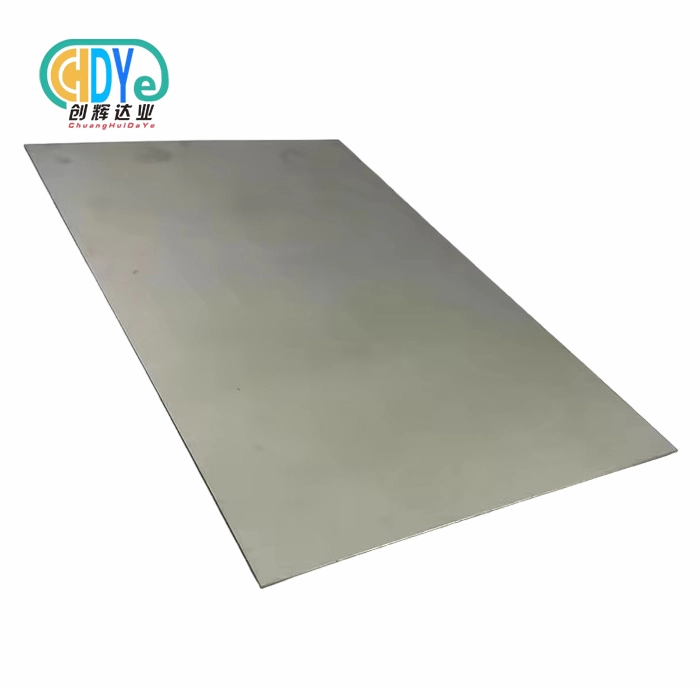
Can GR2 Titanium Sheet Plate Replace Stainless Steel?
The answer is yes, gr2 titanium sheet plate can effectively replace stainless steel in many industrial applications, particularly where superior corrosion resistance, weight reduction, and long-term performance are critical. Grade 2 commercially pure titanium offers exceptional resistance to chloride-induced stress corrosion cracking and pitting corrosion, problems that commonly affect stainless steel in marine and chemical environments. While the initial material cost is higher, the extended service life, reduced maintenance requirements, and weight savings often result in lower total cost of ownership for demanding applications in aerospace, chemical processing, and marine engineering sectors.
Understanding GR2 Titanium Sheet Plate and Stainless Steel: Key Specifications and Properties
Chemical Composition and Microstructure Analysis
Grade 2 titanium sheet is the most common commercially pure titanium standard. It has a single-phase alpha microstructure that gives it the best mix of mechanical qualities and formability. Titanium is the main element in the material, and the levels of oxygen, iron, carbon, and nitrogen in the spaces between the atoms are carefully controlled so that they are all less than 0.25%, 0.30%, 0.08%, and 0.03%, respectively. This exact science makes sure that the material is very flexible while still being strong enough for structural uses.
Austenitic stainless steels, on the other hand, have 18–20% chromium and 8–12% nickel. 316 types also have 2–3% molybdenum to make them more resistant to rust. The austenitic structure makes the metal easy to shape, but it also makes it vulnerable to chloride stress corrosion cracking above 60°C. Titanium, on the other hand, doesn't have this problem because it forms a passive oxide layer.
Mechanical Properties and Performance Metrics
According to ASTM B265 standards, gr2 titanium sheet plate has a tensile strength of 345–483 MPa and a yield strength of 275–450 MPa. The substance is very resistant to wear and stays flexible at very low temperatures, unlike many types of stainless steel that harden below -40°C. Compared to stainless steel, which has a density of 7.9–8.1 g/cm³, aluminum's density of 4.51 g/cm³ makes it about 45% lighter, which is a big plus in situations where weight is important.
Most types of stainless steel are stronger than others. For example, 316L has a tensile strength of 515–620 MPa and a yield strength of 205–310 MPa. But this strength edge isn't as strong when you think about how much stronger titanium is compared to its weight and how it doesn't break down in the environment as stainless steel does over time.
Thermal and Physical Characteristics
Depending on the needs of the application, the temperature qualities show that each material has its own unique benefits. Titanium Grade 2 has a low thermal conductivity of 16.4 W/m·K, which makes it good for thermal barrier uses. Stainless steel 316, on the other hand, has a higher thermal conductivity of 16.3 W/m·K, which makes it better for heat transfer. Both materials stay strong up to 400–450°C, but titanium needs to be protected from air above 425°C to keep its surface from oxidizing.
Performance and Application Analysis: Where GR2 Titanium Sheets Excel Over Stainless Steel
Superior Corrosion Resistance in Aggressive Environments
The great performance of Grade 2 titanium sheets comes from their ability to create a stable, self-healing titanium dioxide passive layer that protects against rust caused by chlorine. This quality makes the material very useful in situations where it will be exposed to salt water, since even 316L types of stainless steel can rust in pits and cracks. Titanium is very resistant to oxidizing acids, wet chlorine conditions, and hypochlorite solutions that quickly damage stainless steel surfaces. This is very helpful for chemical processing businesses.
When titanium sheets are used for heat exchanger tubes, condenser parts, and floating platform structures in marine engineering, there are clear benefits. The material stays strong in high-velocity ocean flows of more than 20 m/s, which kills most materials through erosion and corrosion. Power plants that use seawater cooling systems say that switching from stainless steel to titanium parts has stretched service times and lowered repair costs.
Aerospace and High-Performance Applications
Aerospace companies are asking for gr2 titanium sheet plate more and more for non-structural airplane parts, ducting systems, and firewalls. Reducing weight has a direct effect on fuel economy and loading capacity. The material's high strength-to-weight ratio lets wall sections be thinner while still keeping structural integrity. This helps reduce the total weight of the airplane. Additionally, titanium's biocompatibility makes it necessary for making medical devices, especially implants, which need materials that can safely bond with human flesh.
Grade 2 titanium can be formed in a variety of ways, such as by deep drawing, bending, and hydroforming, without the problems that come with work hardening that are common in precipitation-hardened metals. Using inert gas shielding for welding works well, but you need to use the right method and keep the atmosphere under control to keep the corrosion resistance qualities and keep them clean.
Long-Term Cost Effectiveness and Reliability
Lifecycle cost analysis shows big economic benefits, even though the starting prices of materials are higher. When used in corrosive conditions, titanium parts in factories have 20–30 years longer service lives than stainless steel options. Not having to repair things regularly, having less downtime for upkeep, and not having any corrosion-related failures saves a lot of money that pays for the better materials within three to five years of use.
Comparing GR2 Titanium with Stainless Steel: Making the Right Choice for Your Project
Strength, Weight, and Environmental Performance Evaluation
To choose between titanium and stainless steel, you need to carefully look at a number of performance factors while also keeping project needs and price limits in mind. Stainless steel has better pure strength values and lower material costs, so it can be used in places where corrosion isn't a problem and weight isn't the most important thing. However, the gr2 titanium sheet plate's better resistance to corrosion and lighter weight become very important in harsh settings where material failure has serious effects.
Environmental performance research shows that titanium works better in marine environments, chemical processing environments, and situations where it will be exposed to high temperatures and acidic media. The material's features don't change at all when the temperature does. Stainless steel, on the other hand, may sensitize, form the sigma phase, or crack from stress corrosion under the same conditions.
Grade Selection and Specification Considerations
Knowing the order of titanium grades can help you choose the best material for a given job. Grade 1 is the most workable and weakest, so it can be used for deep writing and complicated shapes. For general commercial use, gr2 titanium sheet plate is the best combination of strength and formability. Grade 5 (Ti-6Al-4V) is the strongest material for construction uses, but it is harder to work with and costs more.
During the choosing process, the needs for manufacturing, environmental exposure, and mechanical properties must all be taken into account. For projects that need middling strength and good corrosion protection, Grade 2 is the best choice. On the other hand, Grade 5 may be better for high-stress structural uses, even though it is more complicated and costs more.
Strategic Procurement and Value Engineering
To successfully use titanium, you need to buy things in a way that takes into account the value of the whole job, not just the cost of the materials. Long-term supply contracts, bulk buying deals, and standardizing on certain grades and sizes can all cut unit costs by a large amount while still making sure that materials are available on time for production plans. Working with experienced sources who know how to process titanium can help you avoid making mistakes that cost a lot of money when choosing materials and planning how to make them.
Procurement Insights: How to Source Quality GR2 Titanium Sheet Plate
Supplier Evaluation and Quality Assurance
To find trustworthy makers, you need to carefully look at their production skills, quality control systems, and industry certifications. ISO 9001:2015 certification sets the basic standards for quality management. Aerospace providers often keep AS9100 or NADCAP licenses for more specialized processing capabilities. To properly qualify a material, it needs to have certificates of chemical makeup, records of mechanical property tests, and proof of its traceability.
When you look at a production center, you should look at its melting equipment, rolling tools, annealing ovens, and inspection equipment. To make sure the quality and uniformity of the materials, advanced providers use vacuum arc remelting, electron beam melting, and cold rolling. The supplier's ability to meet specific project needs is based on their surface finishing skills, such as their ability to pickle, anneal, and mechanically shine.
Logistics and Supply Chain Considerations
The following important factors affect the success of buying and delivery:
- Minimum order quantities typically range from 500-1000 kg for standard dimensions, with custom sizes requiring higher minimums to justify setup costs
- Lead times vary from 4-8 weeks for standard specs to 12-16 weeks for custom metal or processing needs that aren't standard.
- Packaging and shipping protocols must protect material integrity during transit, utilizing moisture barriers, protective films, and appropriate crating for international shipments
- Documentation requirements include material certificates, dimensional inspection records, and compliance statements for regulated industries
These factors in buying have a direct effect on project timelines and budgets, so it's important to work with sellers early on to set realistic delivery dates. Building ties with several qualified sources helps make sure that you have a steady supply of goods at prices that are competitive for long-term needs.
Cost Optimization and Negotiation Strategies
To handle costs well, you need to know what factors affect the price of titanium, such as the cost of the raw materials, the difficulty of the processing, and changes in market demand. Long-term contracts with volume promises can often get better prices and ensure the supply of materials when the market is short. When you use the same sizes and specs for multiple jobs, you can order more and save money at the same time.
Conclusion
Gr2 titanium sheet plate is a better choice than stainless steel in situations where long-term dependability, resistance to rust, and light weight are important. The starting cost of the materials is higher, but the longer service life, lower upkeep needs, and lack of corrosion-related failures often make the investment worth it through better lifecycle economics. Because the material is so easy to shape, weld, and is biocompatible, it can be used in more fields than just stainless steel. This is especially true in the chemical processing, medical device, aircraft, and naval industries. For execution to go smoothly, the needs of the application must be carefully considered, suppliers must be carefully chosen, and processing issues must be fully understood in order to get the most out of titanium's performance benefits, which make it the best choice for tough industrial uses.
FAQ
Q: What are the main chemical differences between GR2 titanium and stainless steel?
A: Gr2 titanium sheet plate contains 99.2% pure titanium with controlled interstitial elements (oxygen, nitrogen, carbon) below 0.25% total, while stainless steel 316L contains 17-20% chromium, 10-14% nickel, and 2-3% molybdenum. This fundamental difference in chemistry makes titanium more resistant to corrosion because it forms stable oxide layers. Stainless steel, on the other hand, depends on chromium oxide passivation, which can break down in chloride conditions.
Q: How do high-temperature performance characteristics compare between the materials?
A: Both materials can keep their shape up to 400–450°C, but titanium needs to be protected by a neutral atmosphere above 425°C to keep the surface from oxidizing and alpha-case from forming. At these temperatures, stainless steel can work in air, but it may become more sensitive, and carbide particles may form, which makes it less resistant to rust. Titanium keeps its strength better at high temperatures and doesn't break down in the sigma phase as some types of stainless steel do.
Q: What are typical lead times for custom titanium sheet orders?
A: Standard gr2 titanium sheet plate requirements are 4–8 weeks from known sources. Lead times for custom dimensions, special surface finishes, or non-standard chemicals are 12–16 weeks. In these time frames, the material is melted, rolled, annealed, inspected, and paperwork is made. Rush orders may be possible, but they may cost more and require accepting standard mill finishes instead of custom surface treatments.
Partner with Chuanghui Daye for Premium GR2 Titanium Sheet Solutions
Shaanxi Chuanghui Daye delivers exceptional gr2 titanium sheet plate manufacturing capabilities backed by over 30 years of rare metal industry expertise and ISO 9001:2015 certification. Located in China's "Titanium Capital" of Baoji, our advanced production facilities include electron beam furnaces, precision rolling equipment, and comprehensive inspection systems, ensuring consistent quality for global aerospace, chemical processing, and medical device manufacturers. Contact our technical team at info@chdymetal.com to discuss your specific project requirements and receive competitive quotes from a trusted Gr2 titanium sheet plate supplier committed to excellence in quality, delivery performance, and customer satisfaction.
References
1. Boyer, R., Welsch, G., & Collings, E.W. (2007). Materials Properties Handbook: Titanium Alloys. ASM International Publishing.
2. American Society for Testing and Materials. (2019). ASTM B265-15 Standard Specification for Titanium and Titanium Alloy Strip, Sheet, and Plate. ASTM International.
3. Schutz, R.W. & Thomas, D.E. (2018). Corrosion of Titanium and Titanium Alloys in Industrial Applications. Corrosion Engineering Handbook, Third Edition.
4. Lutjering, G. & Williams, J.C. (2015). Titanium: Engineering Materials and Processes. Springer-Verlag Berlin Heidelberg.
5. Davis, J.R. (2016). ASM Specialty Handbook: Stainless Steels vs. Titanium Alloys in Marine Environments. ASM International.
6. Rack, H.J. & Qazi, J.I. (2020). Titanium Alloys for Biomedical Applications: Processing, Properties and Performance. Materials Science and Engineering Reports.


Learn about our latest products and discounts through SMS or email