- English
- French
- German
- Portuguese
- Spanish
- Russian
- Japanese
- Korean
- Arabic
- Greek
- German
- Turkish
- Italian
- Danish
- Romanian
- Indonesian
- Czech
- Afrikaans
- Swedish
- Polish
- Basque
- Catalan
- Esperanto
- Hindi
- Lao
- Albanian
- Amharic
- Armenian
- Azerbaijani
- Belarusian
- Bengali
- Bosnian
- Bulgarian
- Cebuano
- Chichewa
- Corsican
- Croatian
- Dutch
- Estonian
- Filipino
- Finnish
- Frisian
- Galician
- Georgian
- Gujarati
- Haitian
- Hausa
- Hawaiian
- Hebrew
- Hmong
- Hungarian
- Icelandic
- Igbo
- Javanese
- Kannada
- Kazakh
- Khmer
- Kurdish
- Kyrgyz
- Latin
- Latvian
- Lithuanian
- Luxembou..
- Macedonian
- Malagasy
- Malay
- Malayalam
- Maltese
- Maori
- Marathi
- Mongolian
- Burmese
- Nepali
- Norwegian
- Pashto
- Persian
- Punjabi
- Serbian
- Sesotho
- Sinhala
- Slovak
- Slovenian
- Somali
- Samoan
- Scots Gaelic
- Shona
- Sindhi
- Sundanese
- Swahili
- Tajik
- Tamil
- Telugu
- Thai
- Ukrainian
- Urdu
- Uzbek
- Vietnamese
- Welsh
- Xhosa
- Yiddish
- Yoruba
- Zulu
Why Is GR2 Titanium Sheet Plate Ideal for Corrosive Environments?
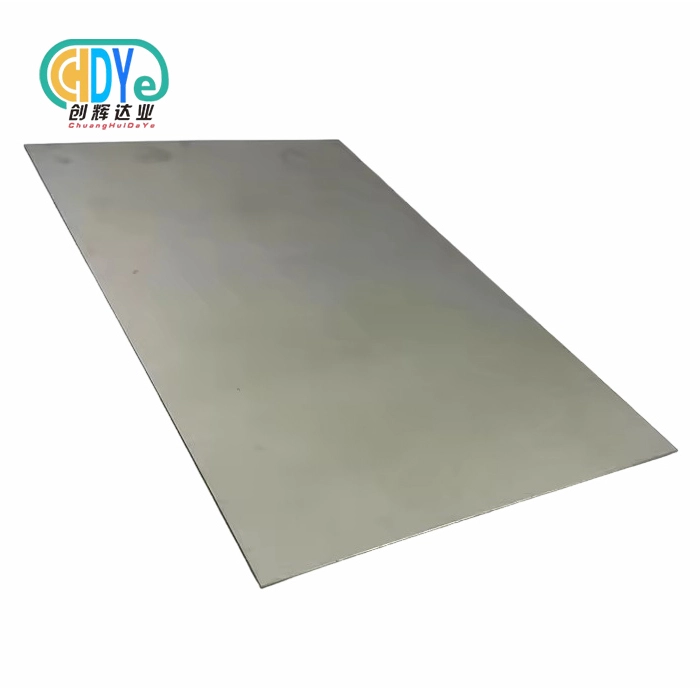
When industrial facilities face aggressive chemical environments, material selection becomes critical for operational success and safety. GR2 titanium sheet plate emerges as the preferred solution for corrosive applications due to its exceptional corrosion resistance, superior mechanical properties, and proven performance in harsh industrial conditions. This commercially pure Grade 2 titanium material offers an optimal balance of strength, ductility, and chemical stability that surpasses traditional materials like stainless steel and aluminum in demanding environments.
Understanding GR2 Titanium Sheet Plate
Chemical Composition and Material Properties
GR2 titanium sheet plate, which is also called Grade 2 titanium, is commercially pure titanium that has small amounts of imperfections that make it work better. The material has iron, oxygen, nitrogen, and hydrogen in measured amounts, but at least 99.2% of it is titanium. This particular mix has a minimum yield strength of 275 MPa (40 ksi) and is very flexible, stretching more than 20% in just one year.GR2 titanium sheet plate has an alpha-phase crystal structure in its microstructure, which makes it easy to shape and join. It is commercially pure, which makes it better at resisting rust and cold-forming than titanium alloys like Grade 5 (Ti-6Al-4V). This makes it perfect for complex manufacturing needs.
Key Mechanical and Physical Characteristics
Because of its functional qualities, the GR2 titanium sheet plate is perfect for building structures in places where corrosion is a problem. This material has a tensile strength range of 345–483 MPa and is very resistant to wear. It keeps its shape even when it's being loaded and unloaded many times, which is common in chemical processing equipment. The material's density of 4.51 g/cm³ makes it much lighter than options made of stainless steel while still providing the same or better mechanical performance. This decrease in weight is especially useful for marine uses and aircraft parts, where weight optimization has a direct effect on how well they work and how much fuel they use.
Corrosion Resistance and Performance in Challenging Environments
Oxide Film Formation and Protective Mechanisms
GR2 titanium sheet plate is very resistant to corrosion because it can form a steady, self-healing oxide layer when it comes in contact with air or water. This thin film of titanium dioxide (TiO₂) is only 2 to 10 nanometers thick, but it protects very well against harsh chemicals, acids, and saltwater. The National Association of Corrosion Engineers did research that shows this material corrodes at a rate of less than 0.0025 mm/year in seawater, while 316L stainless steel corrodes at a rate of 0.1 to 1.0 mm/year in the same conditions. This protective oxide layer grows back right away when it gets broken, so the material will be protected from rust for as long as it is used.
Performance in Specific Corrosive Media
Chemical manufacturing conditions have their own problems that need to be solved, and this is where the GR2 titanium sheet plate performs better than other materials. In chlor-alkali factories, it doesn't react with wet chlorine gas and hypochlorite solutions, which quickly crack austenitic stainless steels due to stress corrosion. The fact that it doesn't rust or biofoul in seawater makes it very useful for marine uses. When compared to copper-nickel options, desalination plants that use this material for heat exchanger plates have longer service intervals and lower servicing costs. The material is very useful for seaside power plants because it doesn't erode or rust when exposed to fast-moving saltwater with sand or silt in it.
Comparative Performance Analysis
When it comes to conditions that are corrosive, the GR2 titanium sheet plate is clearly better than other kinds. While Grade 1 titanium is slightly more resistant to corrosion, Grade 2 titanium is stronger and can be used in construction uses. Even though Grade 5 titanium metal is harder, it is less resistant to corrosion in seawater and more likely to become weak from hydrogen in some chemical conditions. The performance comparison also includes materials that aren't made of titanium. Even though Hastelloy C-276 and Inconel 625 are very resistant to rust, they are much more expensive and harder to work with than commercially pure titanium products.
Practical Considerations for the Procurement of GR2 Titanium Sheet Plates
Technical Specifications and Quality Standards
Manufacturing guidelines for GR2 titanium sheet plate make sure that all providers provide the same level of quality and performance. The ASTM B265 and ASME SB265 standards set limits on the chemical makeup, mechanical qualities, and size variations of titanium sheet goods. Following these rules makes sure that materials can be tracked and quality is maintained all along the supply chain. Thicknesses range from 0.5mm to 50mm, and widths go up to 3000mm. This allows for a wide range of industrial uses, from thin covering sheets to thick structure plates. Surface finishing choices, such as bright, polished, pickled, and sandblasted finishes, let you make changes based on the needs of the product and your personal taste.
Quality Assurance and Testing Protocols
Manufacturers with a good reputation use a variety of quality control methods, such as laser emission spectrometry to look at the chemical makeup of their products and ASTM-standard mechanical testing. Mill test papers have all the paperwork you need to track something down, like records of the heat treatment, dimensional checks, and ratings of the surface quality. Verification by a third party through independent testing laboratories adds another level of quality guarantee for important uses. Ultrasonic testing, dye penetrant inspection, and metallographic examination all make sure that the material is solid and doesn't have any internal flaws that could affect how well it works in corrosive environments.
Supplier Selection Criteria
To find reliable providers, you need to look at their production skills, quality certifications, and expert support services. ISO 9001:2015 approval shows that quality management systems are in place and that the company is committed to always making things better. Suppliers with licenses in aircraft or medical devices have advanced quality control skills that can be used in tough industry settings. Lead times for normal specifications are usually between 4 and 8 weeks, but faster delivery is possible for jobs that need it right away. Different suppliers have different minimum order numbers, but in general, they are between 100 kg and 500 kg, based on the exact sizes and finishes that are needed.
Application Insights: Industries and Use Cases Benefiting from GR2 Titanium
Chemical Processing and Petrochemical Industries
A lot of the equipment in the chemical processing business is made of GR2 titanium sheet plate, which can handle harsh chemicals and high temperatures. It is used to make reaction vessels, storage tanks, and heat exchanger parts that last for decades in places where stainless steel ones break after only a few months. Due to its resistance to chlorine-rich conditions, it is used in chlor-alkali production plants for stable anodes and cathode starter sheets. Because the material can handle changing temperatures and chemicals, it is necessary for electrowinning processes used to make copper and zinc.
Marine and Offshore Engineering
The great value of this material in saltwater settings is shown by marine uses. Titanium plate is used for seawater pipe systems, heat exchanger shells, and structural parts that are exposed to saltwater environments on offshore oil sites. Microbiologically affected corrosion doesn't affect this material, so it can be used reliably in subsea uses. When implemented in evaporator surfaces and wastewater pipes, desalination plants save a lot of money on running costs. The rule for zero corrosion margin lets engineers make parts that are thinner, which increases heat transfer efficiency while lowering material costs.
Aerospace and Defence Applications
Manufacturers of aerospace parts use this material for airplane structures, engine casings, and hydraulic systems that need to be resistant to rust and light. Because the material is very strong for its weight and doesn't wear down easily, it helps airplanes fly better and need less upkeep. Materials that are reliable have a direct effect on tactical readiness and staff safety in military uses such as chemical protection systems, submarine hull sections, and parts of naval vessels. The fact that the material is not magnetic makes it even more useful for underwater uses that need to be stealthy.
Comparative Analysis and Strategic Decision-Making for Buyers
Cost-Benefit Analysis Against Alternative Materials
While GR2 titanium sheet plate costs more up front than stainless steel options, titanium is often a better choice in places that are prone to corrosion because it has a lower total cost of ownership. Lifecycle cost benefits are big because upkeep is done less often, the service life is longer, and corrosion allowances are no longer used. A study of the economics of heat exchanger uses shows that it usually pays for itself in three to five years by cutting down on downtime and repair costs. The fact that the material can be recycled and has a scrap value adds to its economic benefits at the end of its useful life, which supports environmentally friendly manufacturing methods.
Performance Trade-offs and Material Selection Guidelines
When choosing materials, you have to think about things like the surroundings, how they will be loaded mechanically, and the limitations of the way they can be made. It is great for tasks that need mild strength and great corrosion protection. Grade 5 titanium alloy, on the other hand, is better for high-strength structural tasks that will be exposed to less severe rust. When choosing a material, temperature is very important. For example, it keeps its good qualities up to 300°C in oxidizing conditions. For uses at higher temperatures, Grade 7 or Grade 12 titanium metals with better protection against oxidation may be needed.
Conclusion
GR2 titanium sheet plate represents the optimal material choice for corrosive environments due to its unique combination of corrosion resistance, mechanical properties, and fabrication versatility. The material's proven performance in chemical processing, marine engineering, and aerospace applications demonstrates its value proposition across diverse industrial sectors. When procurement decisions prioritize long-term reliability, operational efficiency, and total cost of ownership, GR2 titanium consistently outperforms alternative materials in demanding corrosive environments.
FAQ
Q: What makes GR2 titanium better than stainless steel in places where corrosion is a problem?
A: GR2 titanium creates an oxide layer that heals itself, which makes it more resistant to rust than stainless steel, especially in places with a lot of salt. 316L stainless steel pits when it comes into contact with seawater, but GR2 titanium has 40–400 times lower rust rates in the same situations.
Q: Is it possible to weld the GR2 titanium sheet plate well?
A: Yes, GR2 titanium can be welded very well using either TIG or MIG welding methods. Oxidation can't happen during welding as long as there is enough protective gas, like argon or helium. Because the material is commercially pure, there are no worries about mechanical phase changes that make welding titanium alloys harder.
Q: What are the typical lead times for GR2 titanium sheet plate procurement?
A: Standard lead times are between1 and 2 weeks, but they can be shorter or longer based on the size and style of the product. If you need something quickly, you may be able to get it produced faster, but it usually costs more. Planning purchase plans around these lead times helps make sure that projects stay on schedule.
Q: How does the weather affect the way GR2 titanium works in places where it is corrosive?
A: In most settings, GR2 titanium stays very resistant to rust up to 300°C. After this point, oxidation rates go up a lot, and creep strength becomes an important thing to think about when designing. If you need to use titanium metals at higher temperatures, Grade 7 or Grade 12 might work better.
Q: When looking for a GR2 titanium sheet plate, what quality standards should buyers check?
A: Check that the mill test certificates you ask for confirm that the chemical makeup and mechanical properties meet ASTM B265/ASME SB265 standards. The manufacturer's ISO 9001:2015 approval makes sure that the quality management system is followed, and testing by a third party adds extra security for important uses.
Partner with Chuanghui Daye for Superior GR2 Titanium Sheet Plate Solutions
Shaanxi Chuanghui Daye Metal Material Co., Ltd. stands as your trusted Gr2 titanium sheet plate manufacturer, leveraging over 30 years of rare metal industry expertise from China's renowned "Titanium Capital" in Baoji. Our ISO 9001:2015 certified facility delivers high-purity GR2 titanium sheet plate with complete traceability documentation and competitive factory-direct pricing. Contact our technical team at info@chdymetal.com to discuss your specific corrosive environment requirements and receive customized material solutions backed by our advanced manufacturing capabilities and quality assurance protocols.
References
1. Boyer, R., Welsch, G., and Collings, E.W. "Materials Properties Handbook: Titanium Alloys." ASM International, Materials Park, Ohio, 1994.
2. Schutz, R.W. and Thomas, D.E. "Corrosion of Titanium and Titanium Alloys." Metals Handbook, Volume 13: Corrosion, ASM International, 1987.
3. Donachie, Matthew J. "Titanium: A Technical Guide, Second Edition." ASM International Materials Park, Ohio, 2000.
4. Cotton, J.D. and Clark, R.K. "Titanium in Marine Environments: Corrosion Resistance and Fabrication Guidelines." National Association of Corrosion Engineers, Houston, Texas, 1995.
5. Lutjering, G. and Williams, J.C. "Titanium: Engineering Materials and Processes." Springer-Verlag Berlin Heidelberg, 2003.
6. Peters, M., Kumpfert, J., Ward, C.H., and Leyens, C. "Titanium Alloys for Aerospace Applications." Advanced Engineering Materials, Volume 5, Issue 6, 2003.

Learn about our latest products and discounts through SMS or email