- English
- French
- German
- Portuguese
- Spanish
- Russian
- Japanese
- Korean
- Arabic
- Greek
- German
- Turkish
- Italian
- Danish
- Romanian
- Indonesian
- Czech
- Afrikaans
- Swedish
- Polish
- Basque
- Catalan
- Esperanto
- Hindi
- Lao
- Albanian
- Amharic
- Armenian
- Azerbaijani
- Belarusian
- Bengali
- Bosnian
- Bulgarian
- Cebuano
- Chichewa
- Corsican
- Croatian
- Dutch
- Estonian
- Filipino
- Finnish
- Frisian
- Galician
- Georgian
- Gujarati
- Haitian
- Hausa
- Hawaiian
- Hebrew
- Hmong
- Hungarian
- Icelandic
- Igbo
- Javanese
- Kannada
- Kazakh
- Khmer
- Kurdish
- Kyrgyz
- Latin
- Latvian
- Lithuanian
- Luxembou..
- Macedonian
- Malagasy
- Malay
- Malayalam
- Maltese
- Maori
- Marathi
- Mongolian
- Burmese
- Nepali
- Norwegian
- Pashto
- Persian
- Punjabi
- Serbian
- Sesotho
- Sinhala
- Slovak
- Slovenian
- Somali
- Samoan
- Scots Gaelic
- Shona
- Sindhi
- Sundanese
- Swahili
- Tajik
- Tamil
- Telugu
- Thai
- Ukrainian
- Urdu
- Uzbek
- Vietnamese
- Welsh
- Xhosa
- Yiddish
- Yoruba
- Zulu
Why Choose Titanium Alloy Sheet Over Stainless Steel?
When choosing between a titanium alloy sheet and stainless steel for important business uses, the choice often determines the success of the project. Titanium metals are essential for the aircraft, medical, and chemical processing industries because they are biocompatible, have high strength-to-weight ratios, and are very resistant to corrosion. While stainless steel is still a good choice for most uses, titanium's special qualities make it more valuable in the long run by requiring less upkeep, lasting longer, and working better in harsh conditions where other materials fail.
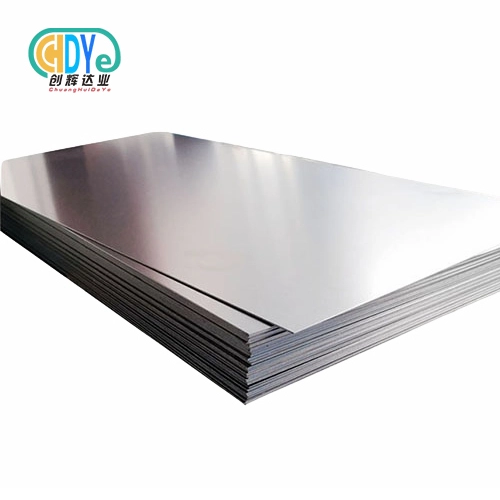
Understanding Titanium Alloy Sheets vs Stainless Steel Sheets
Chemical Composition and Material Properties
The main difference between these materials is the mix of elements that make them up. Titanium is the main element in titanium alloys, but aluminum, vanadium, or other elements are often added to improve certain qualities. Some of the most common grades are Grade 2 (commercially pure titanium), Grade 5 (Ti-6Al-4V), and variations made just for certain businesses. On the other hand, stainless steel is mostly iron with more than 10.5% chromium. It may also contain nickel, molybdenum, or other alloying elements, and comes in types like 304 and 316. The study of densities shows that titanium has a big edge. Stainless steel usually has a density of 7.9 to 8.1g/cm³, which is 43% more than titanium metal's density of about 4.5g/cm³. This weight loss directly leads to less fuel use in aircraft and lighter loads on structures in marine settings.
Manufacturing Processes and Quality Standards
Vacuum arc remelting, electron beam melting, and precise cold rolling are some of the advanced techniques used to make titanium alloy sheets today. These methods make sure that the nanoscale stays the same and get rid of any pollution that might hurt performance. Strict standards, like ASTM B265 for titanium sheets and AMS specs for aircraft uses, are used for quality control. Even though the process of making stainless steel is very old, it still uses the same melting and rolling methods. Titanium is not magnetic and has a unique thermal behavior, so it needs to be handled in a different way because of its magnetic qualities and different thermal growth characteristics.
Core Advantages of Titanium Alloy Sheets Over Stainless Steel
Superior Corrosion Resistance in Aggressive Environments
In harsh settings, titanium's advantage of not rusting stands out even more. Titanium naturally creates an inactive oxide layer that fixes itself when it gets broken. This layer protects titanium very well against chloride conditions, acids, and high-temperature oxidation. This quality is very useful in places where contamination is a big problem, like in chemical processing equipment, sea uses, and medical implants. Titanium doesn't crack easily under stress, which is a problem for stainless steel in harsh, high-stress settings. This is especially helpful for aerospace makers. Chemical processing plants say that equipment lasts a lot longer when it has titanium parts that are exposed to harsh chemicals that would quickly wear down stainless steel options.
Weight Reduction and Structural Performance Benefits
The titanium alloy sheet has advantages over other materials in terms of weight. Engineers can make structures that are smaller and lighter without sacrificing mechanical performance because the material has a high strength-to-weight ratio. In aerospace uses, using titanium parts instead of stainless steel parts in structural applications can save 15 to 20 percent of fuel. Medical device makers use this lighter weight to make devices more comfortable for patients. For example, they make prosthetics and surgery tools that are lighter so that surgeons don't get tired during long procedures. Because titanium is biocompatible, you don't have to worry about metal ions leaking out like you might with some types of stainless steel in long-term implant uses.
Enhanced Fatigue Resistance and Service Life
Titanium also has a major edge when it comes to fatigue function. In many situations, the material is better than stainless steel because it can handle repeated loads without cracks spreading. Based on test results, titanium parts have been able to withstand millions of stress cycles that would have broken similar stainless steel parts. These performance traits mean that repair schedules can be shortened and service intervals can be increased. This is especially helpful in aircraft and industrial settings where the cost of downtime has a big effect on how well operations run.
Comparative Procurement Considerations for B2B Purchasing Managers
Lifecycle Cost Analysis and Budget Planning
Even though a titanium alloy sheet costs more than stainless steel at first, a full lifetime study often shows that it is a better value. Longer service life, less upkeep, and weight-related operational savings often make up for higher initial investments within 3 to 5 years of operation. The people who work in procurement should look at the total cost of ownership, which includes the costs of materials, labor, installation, upkeep, and repair. Industries that can't afford to have equipment break down often benefit from titanium's dependability and long service life, which makes the higher cost worth it.
Supplier Certification and Quality Assurance
Because titanium products have specific processing needs and strict quality standards, it is very important to choose providers that are qualified. The bare minimum is ISO 9001:2015 certification, but AS9100 approval and unique material traceability documents are often needed for aerospace uses. For each batch, dependable suppliers should give full mill test certificates, chemical analysis results, and proof of mechanical properties. In the titanium market, luxury sellers are different from commodity suppliers because they can offer unique sizes, fast prototyping, and expert support services.
Supply Chain Reliability and Lead Times
To manage the operations of the supply chain, you need to know that titanium takes longer to process than regular stainless steel. It is necessary to plan, especially for unique specs or grades that aren't common. Getting to know providers who offer inventory programs or flexible order numbers can help you avoid shipping delays. When thinking about global supply, shipping costs should be taken into account. These costs are more important for titanium because it has a higher value-to-weight ratio than most other materials.
How to Effectively Choose the Best Titanium Alloy Sheet Grade
Matching Grade Selection to Application Requirements
The grades you choose have a direct effect on how well you do and how much it costs. For a titanium alloy sheet, titanium that is commercially pure (Grades 1-4) is very good at resisting rust and being shaped for use in chemical processes. Grade 5 (Ti-6Al-4V) is stronger and can be used in medical and aircraft applications that need better mechanical properties. The environment is a very important factor in choosing grades. For uses at high temperatures, certain metals may be needed to make them less likely to creep. On the other hand, titanium stays flexible at very low temperatures, while stainless steel becomes rigid.
Balancing Performance Requirements with Cost Constraints
To optimize costs, you need to know what speed levels are needed for different uses. Over-specifying grade choices can make materials more expensive than they need to be, and under-specifying can cause things to break down early and need expensive repairs. Working with suppliers who have a lot of knowledge can help you find the best mix between performance needs and price limits. Custom metal development could be a good way to save money for high-volume uses that need performance levels that aren't met by regular grades. When the investment in creation is spread out over a lot of products or long-term supply deals, it makes sense.
Certification and Traceability Requirements
Industries that are regulated need detailed records that show where the materials come from and where they go after they are delivered. When making medical devices, you need materials that are FDA-compliant and can be fully tracked. For aerospace uses, you need materials that meet specific AMS or military standards. Early on in the buying process, knowing what certifications are needed can help avoid delays and make sure that rules are followed. Suppliers should back up their material pedigree and quality assurance methods with thorough paperwork.
Real-World Applications and Case Studies Demonstrating Titanium Alloy Sheet Superiority
Aerospace Industry Weight Optimization
Commercial airplane makers say that using titanium alloy sheet components in structural uses makes a big difference in how much fuel they use. A big airline found that switching from stainless steel to Grade 5 titanium made wing parts 18% lighter. This saved the company more than $2.3 million in fuel costs per airplane over the course of 20 years. Military aerospace uses of titanium show how well it works in harsh conditions. For example, fighter aircraft parts stay strong during high-G movements and temperature changes that would cause other materials to break down due to wear.
Medical Device Biocompatibility Advantages
Because titanium metals are better at biocompatibility and osseointegration, most orthopedic device makers have switched to them. Studies in humans have shown that titanium implants are better for patients than stainless steel ones because they are less likely to be rejected and better integrate with the bone. Titanium is used to make MRI-compatible surgical tools because it is not magnetic. This lets surgeons do treatments that would not be possible with ferromagnetic stainless steel instruments. The ability to prevent rust is very important in sterilization methods that use strong chemicals that would normally damage other materials.
Industrial Chemical Processing Applications
Chemical processing plants that use titanium heat exchangers say that they last longer than 25 years in harsh settings where stainless steel versions need to be replaced every 5 to 7 years. When a petrochemical plant switched to titanium parts in handling streams that were high in chloride, upkeep costs dropped by 60%. Titanium is resistant to corrosion in seawater, as shown by offshore platforms that use titanium pipe systems that are still in good shape after 15 years or more of constant saltwater exposure without the need for protection coatings that are needed for stainless steel options.
Conclusion
Ultimately, the choice between titanium alloy sheet and stainless steel comes down to the needs of the product and the cost over its entire life. Titanium is better than stainless steel for harsh conditions that need extreme rust resistance, weight reduction, and longer service life. Stainless steel can still be used for many general-purpose tasks. A thorough study of the features of materials, buying factors, and performance data from real-world situations helps people make smart choices that improve performance and lower costs for important commercial uses.
FAQ
Q: What makes titanium alloy sheets more corrosion-resistant than stainless steel?
A: Titanium naturally forms an inactive oxide layer that fixes itself when it gets broken. This makes it better at protecting against chloride conditions, acids, and high-temperature oxidation. Unlike the chromium oxide layer that protects stainless steel, this passive layer stays stable over a wider pH and temperature range.
Q: How significant is the weight difference between titanium and stainless steel sheets?
A: The titanium alloy sheet is about 43% lighter than stainless steel sheets of the same size. This is because titanium has a density of about 4.5g/cm³, while stainless steel has a density of 7.9–8.1g/cm³. By lowering the weight, this directly leads to less need for structural loading and less fuel saved in shipping.
Q: When does the higher cost of titanium sheets become justified?
A: Lifecycle cost analysis usually shows that titanium starts to be cost-effective in three to five years for uses in harsh settings, where weight is important, or where downtime costs are high. The longer work life and lower upkeep needs often make up for the higher cost of the materials at first.
Q: Can titanium alloy sheets be processed using standard fabrication equipment?
A: Titanium needs special care when it comes to processing because it reacts quickly at high temperatures and hardens over time. Standard cutting and shaping tools can be used, but the right tools, cooling methods, and steps to keep the work from getting dirty are necessary for production to go well.
Partner with Chuanghui Daye for Premium Titanium Alloy Sheet Solutions
Shaanxi Chuanghui Daye stands as your trusted titanium alloy sheet supplier, leveraging over 30 years of rare metal industry expertise from China's renowned "Titanium Capital" in Baoji. Our ISO 9001:2015 certified manufacturing facility produces Grade 1, Grade 2, and Grade 5 (Ti-6Al-4V) sheets using advanced electron beam furnaces and precision rolling equipment. Whether you require custom specifications for aerospace applications or standard grades for chemical processing, our technical team provides comprehensive support from material selection through delivery. Contact us at info@chdymetal.com to explore how our high-purity titanium solutions can optimize your manufacturing processes and reduce lifecycle costs.
References
1. Boyer, R., Welsch, G., & Collings, E.W. (2007). Materials Properties Handbook: Titanium Alloys. ASM International, Materials Park, Ohio.
2. Lutjering, G., & Williams, J.C. (2014). Titanium: Engineering Materials and Processes. Springer-Verlag, Berlin, Germany.
3. American Society for Testing and Materials. (2019). ASTM B265-19: Standard Specification for Titanium and Titanium Alloy Strip, Sheet, and Plate. ASTM International, West Conshohocken, Pennsylvania.
4. Donachie, M.J. (2000). Titanium: A Technical Guide, 2nd Edition. ASM International, Materials Park, Ohio.
5. Peters, M., Kumpfert, J., Ward, C.H., & Leyens, C. (2003). Titanium Alloys for Aerospace Applications. Advanced Engineering Materials, Volume 5, Issue 6.
6. Rack, H.J., & Qazi, J.I. (2006). Titanium Alloys for Biomedical Applications. Materials Science and Engineering C, Volume 26, Issues 6-7.
Learn about our latest products and discounts through SMS or email