- English
- French
- German
- Portuguese
- Spanish
- Russian
- Japanese
- Korean
- Arabic
- Greek
- German
- Turkish
- Italian
- Danish
- Romanian
- Indonesian
- Czech
- Afrikaans
- Swedish
- Polish
- Basque
- Catalan
- Esperanto
- Hindi
- Lao
- Albanian
- Amharic
- Armenian
- Azerbaijani
- Belarusian
- Bengali
- Bosnian
- Bulgarian
- Cebuano
- Chichewa
- Corsican
- Croatian
- Dutch
- Estonian
- Filipino
- Finnish
- Frisian
- Galician
- Georgian
- Gujarati
- Haitian
- Hausa
- Hawaiian
- Hebrew
- Hmong
- Hungarian
- Icelandic
- Igbo
- Javanese
- Kannada
- Kazakh
- Khmer
- Kurdish
- Kyrgyz
- Latin
- Latvian
- Lithuanian
- Luxembou..
- Macedonian
- Malagasy
- Malay
- Malayalam
- Maltese
- Maori
- Marathi
- Mongolian
- Burmese
- Nepali
- Norwegian
- Pashto
- Persian
- Punjabi
- Serbian
- Sesotho
- Sinhala
- Slovak
- Slovenian
- Somali
- Samoan
- Scots Gaelic
- Shona
- Sindhi
- Sundanese
- Swahili
- Tajik
- Tamil
- Telugu
- Thai
- Ukrainian
- Urdu
- Uzbek
- Vietnamese
- Welsh
- Xhosa
- Yiddish
- Yoruba
- Zulu
Can Pure Niobium Round Bars Improve High-Temperature Performance?
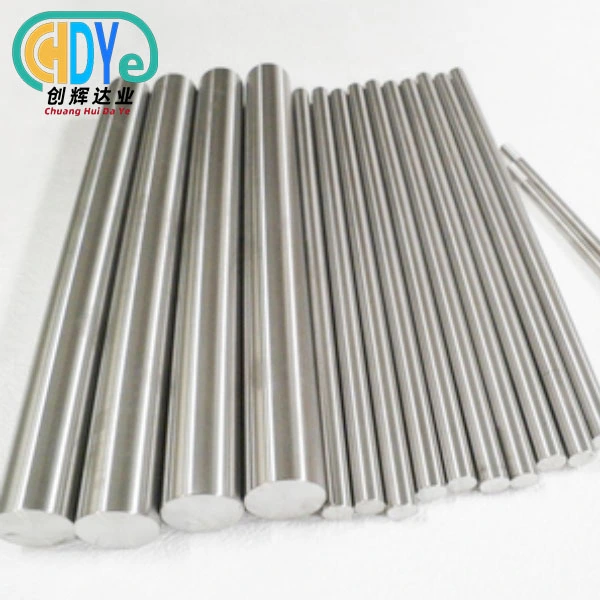
High purity pure niobium round bars provide significant benefits for high temperature performance in demanding industrial applications. The bars are made from niobium, a brittle metal that is more than 99.9% pure. They keep their shape at temperatures where most alloys would melt. Because they are dense at 8.57 g/cm³ and melt at 2,468°C, they have a good strength-to-weight ratio. Its tensile strength is between 200 and 350 MPa, and it can still be bent even when heated to very high temperatures. Based on well-known mining technology, niobium round bars are a high-performance material that has been used in aircraft, chemical processing, electronics, and other industries.
Understanding Pure Niobium Round Bars and Their High-Temperature Properties
Niobium (Nb, Atomic Number 41) is a refractory metal in the group with tungsten, molybdenum, and tantalum. It has a very high melting point (2468 °C) and a stable body-centred cubic crystal structure, which enables it to sustain mechanical performance at temperatures when titanium and stainless steel lose dimensional stability.
How Niobium Compares to Other Structural Metals at Elevated Temperatures
Niobium is a good metal for engineering that is used every day. At temperatures above 600°C, stainless steel softens, while at temperatures above 550°C, titanium metals creep a lot. Niobium works about the same way in terms of heat, but it is much less dense (8.57 g/cm 3). Because of this, niobium is often a cheaper and lighter option for aircraft parts where weight may be a major issue. Along with protecting against nitric, hydrochloric, and sulfuric acids, niobium's natural oxide coating also acts as a passive corrosion barrier in these same environments. This is an advantage that other common alloys do not have.
The Role of Purity in Thermal Stability
High-temperature behavior is directly governed by material purity. Interstitial impurities, oxygen, nitrogen, hydrogen, and carbon, tend to diminish ductility and to expedite embrittlement above 200 degrees C. Chuanghui Daye manufactures pure niobium round bars with a Nb concentration of more than 99.9% in accordance with ASTM B392. ASTM B392 has a very low level of hazardous trace elements. This high level of purity maintains ductility (elongation usually >20%) and assures uniform performance from manufacturing batch to production batch.
The Advantages of Using Pure Niobium Round Bars in High-Temperature Environments
Niobium is a popular building material in many fields that work in harsh chemical and thermal environments. The reasons are based on material science that has been proven, not on claims made in advertising.
The main reasons why niobium rod stock is the best material for tough jobs are these performance advantages:
- Thermal load: Niobium's tensile strength drops to 200–350 MPa after being exposed to high temperatures for a long time. Because they are reliable, chemical reactors and furnace fixtures need to change parts less often, which saves plant owners money over the long term.
- Inertness of chemicals in harsh environments. Acids like sulfuric acid, hydrochloric acid, and most organic acids can't break down niobium up to 100°C. Niobium parts are used in heat exchangers, valve stems, and bayonet heaters in chemical processing plants. These parts would quickly wear down unusual steels.
- In the production of electronics and semiconductors, niobium bars with smooth, polished surfaces (Ra < 0.8 µm) cut down on outgassing in high-vacuum rooms. This cuts down on pump-down times and keeps films clean during physical vapor deposition (PVD) processes.
Because of these advantages, parts last longer, there is less unplanned downtime, and total material costs are lower in the chemistry, aircraft, and technology businesses. When procurement teams ask for high-purity niobium, they often report fewer failures in the field than when they use lower-grade refractory alternatives.
Machining and Heat Treatment of Pure Niobium Round Bars for Optimal Performance
“Fabrication needs to be done very carefully to take full advantage of a niobium stock.” Soft and ductile, niobium is readily produced, but if the machining conditions are not adequately controlled, it has a tendency to gall against cutting blades.
Recommended Machining Practices
High-speed steel (HSS) tools are better than carbide tools for most niobium machining tasks because they don't microweld as much between the workpiece and the tool edge. Coolants that dissolve in water and aggressive chip loads help move heat away from the cutting zone, which helps maintain surface quality. For vacuum uses, a finish that is centerless ground or polished will make it less likely that the surface will get dirty and help lower the rate of outgassing.
Heat Treatment Considerations
All heat treatments on pure niobium round bars must be carried out in a vacuum furnace or in high-purity inert gas (argon or helium). Above 400 °C, niobium quickly absorbs oxygen and becomes quite brittle. Controlled annealing restores ductility and relieves residual stresses without sacrificing purity by re-crystallizing the grain structure following cold working. “Chuanghui Daye’s annealing furnace and electron beam melting equipment enable us to achieve full traceability from raw material inspection to final heat treatment, with each bar conformed to customer specifications ahead of shipping.
How to Choose the Right Pure Niobium Round Bars for Your High-Temperature Applications
Selecting the correct niobium bar specification requires matching material grade, dimensional range, and surface condition to your application's exact requirements.
Key Procurement Parameters to Evaluate
Our products come in lengths of up to 1,000 mm and widths ranging from 1 mm to 50 mm. If you need something different, just let us know. Two types of surface finishes are polished and rolled. For vacuum and electronics uses, polished surfaces are better. Pure niobium is not as strong as alloy grades of niobium like Nb-1Zr or C-103. Alloy grades have better creep resistance over 1,000°C, but they are less flexible and cost more. 99.9% pure unalloyed niobium is the best value for money when it comes to most chemical processing and technology uses.
Also, purchasing managers should ask suppliers to give them chemical certificates, mill test reports (MTRs), and documents for measuring sizes. Full paperwork keeps your supply chain safe and lets you pass quality checks in controlled areas like airplanes and medical products.
Trusted Niobium Round Bar Suppliers and What to Look For
Supply chain reliability matters as much as material quality. A single batch of out-of-specification material can halt production lines and trigger costly rework.
Evaluating Supplier Credentials
An ISO 9001:2015 certification means that quality control is done at every step of the production process, from the raw materials to the final review and packing. This is an important part of any good niobium bar maker. When it comes to suppliers, stable groups that make rare metals have a well-established industrial infrastructure and can guarantee raw materials.
People in Shaanxi Province call the Baoji High-tech Development Zone the "Titanium Capital of China." This is the place where Chuanghui Daye Metal Material Co., Ltd. is. Someone with more than 30 years of experience in the rare metal business started the company, which is ISO 9001:2015 approved. There are a lot of tools they use in-house, like precision lathes, rolling machines, and electron beam ovens. We check the raw material, how they heat and cast, how they are made, and finally their size and chemical makeup before we send them. People from the US, Europe, and Asia are just a few of the places we ship to. You can count on our wait times, and every order comes with all the paperwork we need to keep track of it.
Conclusion
High-temperature performance of pure niobium round bars with high purity (above 99.9%) greatly enhances aerospace, chemical processing, electronics, and medical applications. They also have a higher melting point, resist corrosion, and keep their ductility under thermal stress. This may justify their use in demanding service conditions instead of stainless steel and titanium. The best way to get regular results is to work with a company that has been ISO certified and can provide full paperwork. Niobium should be part of your material selection process if your projects need a refractory metal that has the right mix of performance, machinability, and long-term supply security.
FAQ
1. Are pure niobium round bars suitable for high-temperature vacuum applications?
Yes. Niobium performs reliably in vacuum environments at elevated temperatures, provided processing occurs below 400°C in an atmosphere. Above that threshold, vacuum or inert gas protection is mandatory to prevent oxygen absorption and embrittlement.
2. What diameters and lengths does Chuanghui Daye offer?
We supply niobium bars from 1 mm to 50 mm in diameter and up to 1,000 mm in length. Custom dimensions are available for specialized project requirements.
3. How does niobium corrosion resistance compare to titanium and stainless steel?
Niobium resists concentrated sulfuric, hydrochloric, and nitric acids at temperatures where both titanium and stainless steel experience significant material loss. It is the preferred choice for highly aggressive chemical environments.
4. Can niobium bars be customized for small-batch R&D orders?
Absolutely. We support flexible small-batch production and fast prototyping, making our materials accessible to university research teams and development engineers alongside large-volume industrial buyers.
5. What certifications should I request from a niobium bar supplier?
Request ISO 9001:2015 certification, ASTM B392 compliance documentation, mill test reports (MTRs), and full chemical composition certificates for every shipment.
Partner with Chuanghui Daye for Premium Pure Niobium Round Bars
Shaanxi Chuanghui Daye delivers certified pure niobium round bars with Nb >99.9% purity, factory-direct pricing, and full traceability documentation for every order. As a trusted pure niobium round bar manufacturer backed by ISO 9001:2015 certification and 30+ years of rare metal expertise, we support custom dimensions, fast prototyping, and reliable global delivery. Contact our technical team today to discuss your project specifications and receive a competitive quote. Reach us at info@chdymetal.com.
References
1. Savchenko, V.I., et al. — Journal of Nuclear Materials, 2007
2. Hebda, J. — Niobium Technical Report: Properties and Applications of Niobium Alloys, CBMM/TMS, 2001
3. ASTM International — ASTM B392: Standard Specification for Niobium and Niobium Alloy Bar, Rod, and Wire, 2019
4. Cardonne, S.M., et al. — International Journal of Refractory Metals and Hard Materials, 1995
5. Totten, G.E. & MacKenzie, D.S. — Handbook of Aluminum: Physical Metallurgy and Processes, Marcel Dekker, 2003
6. Schussler, M. & Gilpin, C. — Corrosion Resistance of Tantalum and Niobium in Chemical Environments, Fansteel Inc. Technical Report, 1998
Learn about our latest products and discounts through SMS or email