- English
- French
- German
- Portuguese
- Spanish
- Russian
- Japanese
- Korean
- Arabic
- Greek
- German
- Turkish
- Italian
- Danish
- Romanian
- Indonesian
- Czech
- Afrikaans
- Swedish
- Polish
- Basque
- Catalan
- Esperanto
- Hindi
- Lao
- Albanian
- Amharic
- Armenian
- Azerbaijani
- Belarusian
- Bengali
- Bosnian
- Bulgarian
- Cebuano
- Chichewa
- Corsican
- Croatian
- Dutch
- Estonian
- Filipino
- Finnish
- Frisian
- Galician
- Georgian
- Gujarati
- Haitian
- Hausa
- Hawaiian
- Hebrew
- Hmong
- Hungarian
- Icelandic
- Igbo
- Javanese
- Kannada
- Kazakh
- Khmer
- Kurdish
- Kyrgyz
- Latin
- Latvian
- Lithuanian
- Luxembou..
- Macedonian
- Malagasy
- Malay
- Malayalam
- Maltese
- Maori
- Marathi
- Mongolian
- Burmese
- Nepali
- Norwegian
- Pashto
- Persian
- Punjabi
- Serbian
- Sesotho
- Sinhala
- Slovak
- Slovenian
- Somali
- Samoan
- Scots Gaelic
- Shona
- Sindhi
- Sundanese
- Swahili
- Tajik
- Tamil
- Telugu
- Thai
- Ukrainian
- Urdu
- Uzbek
- Vietnamese
- Welsh
- Xhosa
- Yiddish
- Yoruba
- Zulu
Where Are Tantalum Niobium Plate Products Used?
Tantalum niobium plate products serve critical roles across some of the most demanding industries in the world. These flat-rolled refractory metal sheets are made from alloys of tantalum (Ta) and niobium (Nb) and provide superior corrosion resistance, thermal stability, and mechanical strength where ordinary metals cannot stand. Whether you work in chemical processing, aerospace, semiconductor fabrication, or medical device manufacture, knowing where and why these plates are used helps engineers and procurement teams make wiser, more cost-effective material selections.
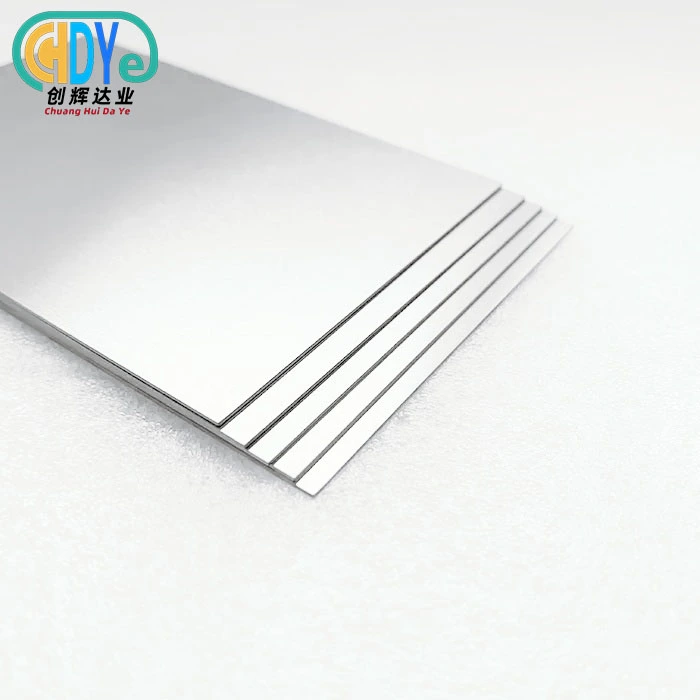
Core Applications of Tantalum Niobium Plates in Industry
These plates appear across multiple high-value sectors. The industries below rely on them not as a luxury specification, but as a practical necessity dictated by operating conditions.
Chemical and Petrochemical Processing
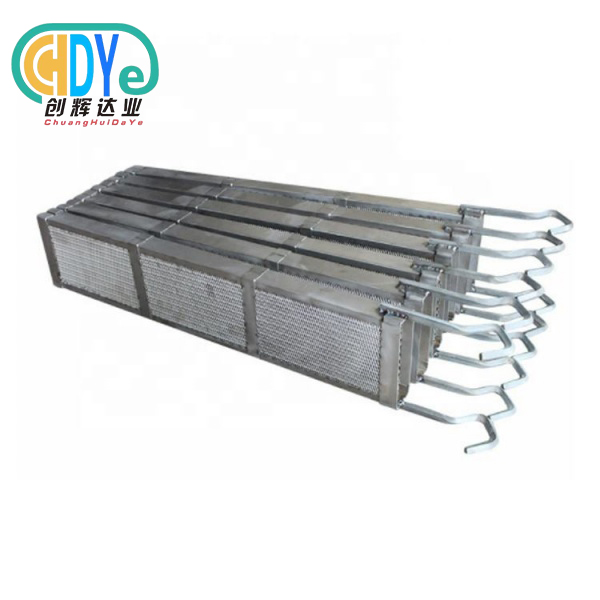
Tantalum niobium alloy sheets are used widely in the chemical processing industry (CPI) for heat exchangers, reactor linings, bayonet heaters, and piping systems that carry highly concentrated acids. Equipment constructed using these plates, or repaired with tantalum-compatible weld filler, has corrosion integrity orders of magnitude beyond stainless-lined counterparts. A study published in Corrosion Science (2019) indicates that tantalum-based materials maintain their structural integrity at concentrations of sulfuric acid beyond 98% at high temperatures, something a benchmark stainless steel cannot achieve.
Aerospace and Defense Manufacturing
Aerospace and defense manufacturers demand materials that hold mechanical strength under intense thermal cycling without adding prohibitive weight. Tantalum niobium plates offer a meaningful density reduction versus pure tantalum while retaining the high-temperature performance required for turbine-adjacent components, shielding panels, and electronic housings. The alloy's stable performance under vacuum conditions further suits it for defense electronics applications.
Electronics and Semiconductor Fabrication
High-purity tantalum niobium plates are used as sputtering targets and structural components in the environment of semiconductor production. Their low interstitial impurities – regulated to ASTM requirements for oxygen, nitrogen, carbon, and hydrogen – avoid contamination that would otherwise degrade wafer yields. These plates are critical for reliable, repeatable performance in vacuum deposition chambers for electronics makers that deposit thin films, capacitor dielectrics, or barrier layers.
Medical Device Manufacturing
Because of their biocompatibility, tantalum-niobium alloys are a desirable alternative for surgical implants, clips, and device housings. These alloys are non-magnetic, hence MRI-compatible, and radiopaque, thereby improving intraoperative visibility under X-ray. Medical-grade plates commonly satisfy ASTM F560, which requires vacuum arc remelting to remove contaminants that are reactive to the biological system.
Together, these four industries represent the overwhelming bulk of worldwide demand for tantalum niobium flat-rolled materials – and each area has distinct, but equally demanding, quality requirements for the material.
Comparing Tantalum Niobium Plates with Alternative Metals: A Procurement Perspective
Procurement choices are seldom based on a single material characteristic. It’s all about cost, availability, lead time, and entire life cycle value. This is how tantalum niobium alloy plates stack up versus more prevalent choices:
- Versus stainless steel: stainless steel is much cheaper per kilogram, but it breaks quickly in hot concentrated mineral acid conditions. The cost advantage it has over a five- to 10 year operating horizon is greatly reduced by equipment replacement cycles. Tantalum niobium plates in acid-heavy CPI applications may survive three to five times longer than stainless components.
- Compared to pure tantalum: Pure tantalum has somewhat better corrosion resistance in certain HF-containing conditions, whereas Ta-40Nb provides roughly 25% weight reductions and significant cost reduction, while delivering the performance required for most industrial applications. For procurement teams faced with financial and weight restrictions, the alloy grade is the realistic solution.
- Titanium vs. Titanium is good in mild corrosion situations and has good strength-to-weight ratios. But in acid reduction settings of corrosion, totally inert tantalum niobium alloy materials lose their advantage.
These comparisons clarify that tantalum niobium plates occupy a distinct performance tier. The higher acquisition cost is offset by extended service life, lower maintenance frequency, and reduced risk of catastrophic equipment failure in critical processes.
How Tantalum Niobium Plates Are Manufactured and Customized
The manufacture of high-grade tantalum niobium flat-rolled products demands the most exact control from the selection of raw materials to the final surface finish. Basic manufacturing flow includes electron beam melting, ingot forging, multi-pass cold rolling, and annealing, each controlled to meet ASTM dimensional and chemistry tolerances.
Advanced producers like Chuanghui Daye have electron beam furnaces and precision rolling equipment that can achieve tight tolerances on thickness and a consistent grain structure, both important for downstream manufacturing. Surface finishes are normally acid-cleaned or electropolished, eliminating drawing lubricants and surface oxides to guarantee clean welds and optimum corrosion performance in service.
Also, bespoke cutting, profiling, and fabrication of machined parts increase the usefulness of these plates to OEM customers beyond typical plate dimensions. Medical device manufacturers and research organizations often define ad-hoc, small-run geometries that need flexible manufacturing capacity. A good manufacturer can handle prototype volumes as well as bigger commercial orders without sacrificing lead times or quality documentation.
Selecting a Trusted Supplier for Tantalum Niobium Plates
Supplier selection directly affects project outcomes. The following criteria separate reliable long-term partners from transactional vendors:
- ISO 9001:2015 certification confirms that quality management systems govern every production stage, from incoming raw material inspection to final packaging.
- ASTM compliance documentation (B708, F560, B394 as applicable) ensures materials meet internationally accepted chemical and mechanical benchmarks.
- Full traceability records provide procurement teams with the documentation chain required for aerospace, medical, and defense regulatory submissions.
- Production capacity and flexibility allow suppliers to handle both urgent small-batch prototype orders and high-volume commercial deliveries without extended delays.
Chuanghui Daye, located in Baoji, known as the center of titanium and rare metal manufacturing in China, satisfies all of these requirements. The firm is ISO 9001:2015 certified and has a fully integrated facility with annealing furnaces, electron beam melting equipment, and precision machining capabilities, founded by an industry veteran with over 30 years of experience in refractory metals.
Conclusion
Tantalum niobium plates address industrial challenges that no generic metal solution can resolve. Their unique mix of acid resistance, thermal durability, biocompatibility, and mechanical workability makes them irreplaceable in the fields of chemical processing, aerospace, semiconductors, and medical manufacturing. Procurement experts familiar with the performance characteristics of this material have a significant advantage when selecting components for long-duration, high-stakes applications. If you choose a recognized, experienced manufacturer, you can be certain that those performance features transfer consistently from spec to final product.
FAQ
1. Why do tantalum niobium plates outperform stainless steel in corrosive environments?
Stainless steel relies on a chromium oxide passive layer that breaks down in reducing acid environments, such as hot hydrochloric or concentrated sulfuric acid. Tantalum niobium alloys form a stable anodic oxide barrier that remains intact across a wide pH range and temperature spectrum, providing corrosion protection that stainless steel cannot match in aggressive chemical service.
2. Are tantalum niobium plates suitable for high-temperature aerospace applications?
Yes. Ta-40Nb plates withstand temperatures exceeding 2,000°C in vacuum or inert atmospheres. Their thermal stability and structural integrity under cyclic thermal loading make them appropriate for aerospace components exposed to extreme temperature fluctuations.
3. How do I select the right alloy grade for my project?
Grade selection depends on operating environment, required density, and budget. Ta-40Nb suits most acid-service and weight-sensitive aerospace applications. Pure tantalum plates remain preferred where HF or fluoride-containing media are present. Consulting directly with a certified manufacturer ensures grade alignment with your specific service conditions.
4. What documentation should I request from a supplier?
Request mill test reports (MTRs), chemical composition certificates, ASTM compliance records, and ISO 9001:2015 certification. For medical or aerospace applications, full material traceability documentation is mandatory.
Partner With Chuanghui Daye for Your Tantalum Niobium Plate Needs
Shaanxi Chuanghui Daye delivers ISO 9001:2015-certified tantalum niobium plate products directly from our Baoji manufacturing facility — backed by over 30 years of rare metal expertise. As a trusted tantalum niobium plate supplier, we offer custom dimensions, fast prototyping, full traceability documentation, and competitive factory-direct pricing. Contact our technical team today at info@chdymetal.com to discuss your specifications and request a quote.
References
1. Corrosion Science — Elsevier, 2019
2. ASM Handbook, Volume 2: Properties and Selection: Nonferrous Alloys and Special-Purpose Materials — ASM International, 2020
3. ASTM B708: Standard Specification for Tantalum and Tantalum Alloy Plate, Sheet, and Strip — ASTM International, 2022
4. ASTM F560: Standard Specification for Unalloyed Tantalum for Surgical Implant Applications — ASTM International, 2021
5. Refractory Metals and Their Industrial Applications — ASTM Special Technical Publication, 2018
6. Journal of Biomedical Materials Research — Wiley, 2020
Learn about our latest products and discounts through SMS or email