- English
- French
- German
- Portuguese
- Spanish
- Russian
- Japanese
- Korean
- Arabic
- Greek
- German
- Turkish
- Italian
- Danish
- Romanian
- Indonesian
- Czech
- Afrikaans
- Swedish
- Polish
- Basque
- Catalan
- Esperanto
- Hindi
- Lao
- Albanian
- Amharic
- Armenian
- Azerbaijani
- Belarusian
- Bengali
- Bosnian
- Bulgarian
- Cebuano
- Chichewa
- Corsican
- Croatian
- Dutch
- Estonian
- Filipino
- Finnish
- Frisian
- Galician
- Georgian
- Gujarati
- Haitian
- Hausa
- Hawaiian
- Hebrew
- Hmong
- Hungarian
- Icelandic
- Igbo
- Javanese
- Kannada
- Kazakh
- Khmer
- Kurdish
- Kyrgyz
- Latin
- Latvian
- Lithuanian
- Luxembou..
- Macedonian
- Malagasy
- Malay
- Malayalam
- Maltese
- Maori
- Marathi
- Mongolian
- Burmese
- Nepali
- Norwegian
- Pashto
- Persian
- Punjabi
- Serbian
- Sesotho
- Sinhala
- Slovak
- Slovenian
- Somali
- Samoan
- Scots Gaelic
- Shona
- Sindhi
- Sundanese
- Swahili
- Tajik
- Tamil
- Telugu
- Thai
- Ukrainian
- Urdu
- Uzbek
- Vietnamese
- Welsh
- Xhosa
- Yiddish
- Yoruba
- Zulu
What Makes a Top Pure Niobium Plate Factory Stand Out?
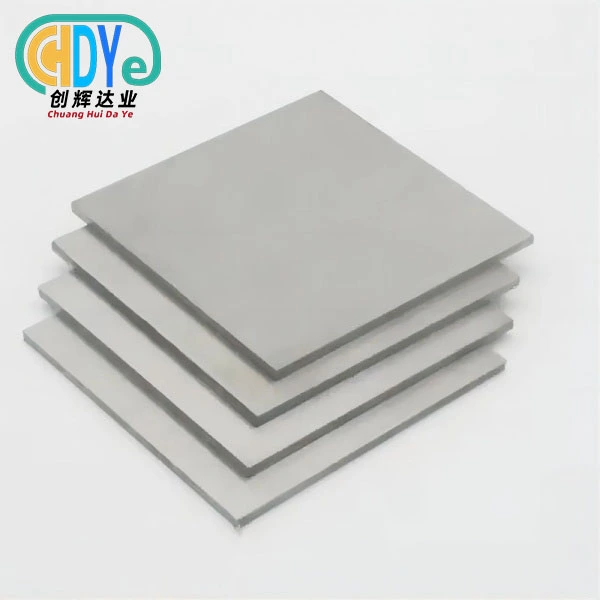
A good pure niobium plate factory stands out by using only pure materials, making sure their products are perfect, and making sure their supply chain works well. When buying niobium sheet metal for electronics, aerospace structures, or chemical processing equipment, procurement teams need more than just a price quote. They need to find a manufacturer that can consistently provide certified, high-purity niobium plate with quality documentation that can be tracked, customizable dimensions, and quick technical support. You can tell the difference between an average provider and a truly capable plant by looking at both performance results and project risk.
Core Dimensions That Define a Top Pure Niobium Plate Factory
Advanced Metallurgical Production
The way a firm makes its products has a direct bearing on the quality of the plates it produces. To meet the interstitial purity levels demanded by demanding applications, leading manufacturers use electron beam melting (EBM) or vacuum arc remelting. Once melted, the ingots are next forged under controlled conditions and sent through many stages of rolling to align the grain structure and improve tensile properties.” Ductility may be recovered by vacuum annealing at 1,000 – 1,200°C for a completely recrystallized microstructure with grain sizes of ASTM E112 No. 6 or finer following cold working. This eliminates surface imperfections (e.g., orange-peel texture) that impair downstream forming processes.
Dimensional Range and Grade Flexibility
A competent producer must provide a realistic dimensional envelope. Shaanxi Chuanghui Daye Metal Material Co., Ltd. supplies pure niobium plates with a thickness range from 0.5mm to 50mm, width up to 1000mm, and length up to 3000mm. Three purity levels for different application requirements:
- Commercial Grade (Nb ≥99.9%) - An economical choice for most industrial and chemical applications where precise nuclear-grade impurity control is not necessary.
- High-Purity Grade (Nb >99.95%) – Suitable for semiconductor manufacturing, precision electronics, and high-tech materials research where interstitial contamination must be minimized.
- Ultrahigh Purity Grade (Nb ≥99.99%) – Required for the manufacture of superconducting RF cavities and components of particle accelerators for which Residual Resistance Ratio (RRR) values are more than 300.
These grades cover the whole range of B2B procurement demands from large industrial purchases to tiny batch research samples.
Certification and Quality Traceability
ASTM B393, which differentiates Reactor Grade RO4200 from Commercial Grade RO4210, should be met by any reputable provider. In addition, the ISO 9001:2015 certification proves that quality management is being implemented at all levels, starting with raw material inspection, melting, rolling, heat treatment, dimensional verification, and packing of the finished product. Chuanghui Daye is ISO 9001:2015 certified and employs inert gas fusion (IGF) analysis to ensure that the interstitial impurities of oxygen are below 150 ppm, thereby avoiding the deterioration of ductility. Ultrasonic testing reveals internal laminations prior to the plates leaving the plant.
Strategic Advantages of Leading Niobium Plate Suppliers
What differentiates good manufacturers from commodity traders is the ability to provide reliably. A fully integrated producer operating electron beam furnaces, rolling mills, annealing furnaces, and precision machining centers manages the complete value chain. This vertical integration means we rely less on third-party contractors, manufacturing cycles are shorter, and we can directly intervene on quality at each level.
These are the operational benefits that set apart the best pure niobium plate companies:
- Flexible order scale – Top companies can handle both large industrial orders and small-batch research volumes, without pushing clients to meet strict minimum purchase amounts. This is very helpful for colleges, R&D institutions, and OEM customers establishing new product lines.
- Competitive factory-direct pricing - Chuanghui Daye and other manufacturers may provide per-kilogram prices based on true production costs rather than distributor markups, which allows for more predictable long-term procurement planning.
- Responsive technical assistance – We have experienced metallurgists on staff who can advise on grade selection, machining parameters (niobium’s sticky nature means sharp HSS tools and water-soluble coolants are necessary), and welding procedures (always in vacuum or inert gas conditions over 200°C).
These capabilities immediately address the procurement constraints that waste engineering teams' time and budget on high-priority projects.
How Top Factories Solve Common Procurement Challenges
If an aerospace contractor demands corrosion-resistant niobium sheet with documented mechanical testing data and a two-week turnaround, a non-vertically integrated facility just can't provide. Chuanghui Daye’s plant in Baoji, known as China’s Titanium Capital and a worldwide center for refractory metal processing, has annealing furnaces, electron beam equipment, and comprehensive machining infrastructure all under one roof.
The same applies to post-delivery assistance. With comprehensive batch traceability documentation and a quality guarantee, procurement managers won’t have to scramble for documents in the event of any regulatory audit. Procurement teams like the sort of supplier connection that stems from proactive communication in production in the long term, such as updates on progress and early reporting of any significant deviations. Real-world partnerships with chemical equipment makers and aircraft OEMs have confirmed Chuanghui Daye’s ability to reliably achieve ASTM-mandated tolerances on repeat orders.
Why Choose a Certified and Experienced Pure Niobium Plate Manufacturer?
Chuanghui Daye was formed by an industry specialist with more than 30 years of expertise in rare metal fabrication. This institutional knowledge provides practical benefits such as good metallurgical judgment in process development, a comprehension of international standards such as ASTM B393 and ISO 9001:2015, and the ability to adapt solutions to changing project demands.
At this level of expertise, manufacturers also engage in sustainable process improvements and digital quality management to meet an increasing set of stringent environmental and performance criteria in the U.S. and European markets. A multi-product rare metals manufacturer offers B2B customers a significant supply consolidation benefit of a single qualified source for niobium plate, tantalum sheet, tungsten rod, or titanium components — fewer vendor qualifications, standardized documentation, and a single point of technical contact.
Conclusion
When looking for a top factory for pure niobium plate, review manufacturing capabilities, purity verification, certification compliance, and the supplier’s true ability to meet your dimensions and grade needs. Factories that combine electron beam melting, controlled rolling, vacuum annealing, and strict non-destructive testing into one auditable process will be worth considerably more than wholesalers that use spot-market procurement. Chuanghui Daye has 30 years of manufacturing experience, ISO 9001:2015 accreditation, and a full suite of products, making it a reliable long-term partner for procurement teams in the aerospace, chemical, electronics, and medical sectors throughout the globe.
FAQ
1. What certifications should a niobium plate supplier hold?
At minimum, look for ISO 9001:2015 quality management certification and compliance with ASTM B393, which defines both Reactor Grade (RO4200) and Commercial Grade (RO4210) niobium plate. Suppliers should provide full material test reports, including chemical composition and mechanical property data, for every batch.
2. How does pure niobium compare to tantalum plate for chemical applications?
Niobium offers a lower density (8.57 g/cm³ versus tantalum's 16.65 g/cm³) and competitive corrosion resistance below approximately 150°C. Tantalum outperforms niobium in highly oxidizing environments at elevated temperatures, but niobium delivers a superior strength-to-weight ratio and more accessible pricing for many chemical processing applications.
3. Can niobium plate be welded on-site?
Niobium absorbs oxygen and nitrogen aggressively above 200°C. Welding must be performed inside a high-vacuum electron beam chamber or within a strictly controlled argon or helium inert-gas enclosure. Any exposure to ambient air during welding will cause embrittlement and compromise weld integrity.
4. What lead times are typical for custom niobium plate orders?
Lead times vary by order volume and dimensional complexity. Standard sizes typically ship within 1-2 weeks. Custom dimensions or ultra-high purity grades may require 2-3 weeks. Contacting the factory early with complete specifications helps secure priority scheduling.
Partner With Chuanghui Daye for Your Niobium Plate Supply
Shaanxi Chuanghui Daye delivers certified pure niobium plate — from 0.5 mm to 50 mm thickness, up to 3,000 mm length — with full ISO 9001:2015 documentation and factory-direct pricing. Whether you need a reliable pure niobium plate manufacturer for bulk aerospace contracts or small-batch research orders, our team is ready to provide grade recommendations, custom dimensions, and fast turnaround. Reach out today at info@chdymetal.com to request a quote.
References
1. ASTM International. ASTM B393: Standard Specification for Niobium and Niobium Alloy Strip, Sheet, and Plate. ASTM International, 2022.
2. Shields, J. A. Refractory Metals and Their Industrial Applications. ASTM Special Technical Publication, 1984.
3. Lide, D. R. (Ed.). CRC Handbook of Chemistry and Physics. CRC Press, 2023.
4. International Organization for Standardization. ISO 9001:2015: Quality Management Systems — Requirements. ISO, 2015.
5. Wadsworth, J., & Nieh, T. G. "Processing and Properties of Refractory Metals and Alloys." JOM: Journal of the Minerals, Metals & Materials Society, 2001.
6. Moskalyk, R. R., & Alfantazi, A. M. "Niobium: A Material for the New Millennium." Minerals Engineering, 2003.
Learn about our latest products and discounts through SMS or email