- English
- French
- German
- Portuguese
- Spanish
- Russian
- Japanese
- Korean
- Arabic
- Greek
- German
- Turkish
- Italian
- Danish
- Romanian
- Indonesian
- Czech
- Afrikaans
- Swedish
- Polish
- Basque
- Catalan
- Esperanto
- Hindi
- Lao
- Albanian
- Amharic
- Armenian
- Azerbaijani
- Belarusian
- Bengali
- Bosnian
- Bulgarian
- Cebuano
- Chichewa
- Corsican
- Croatian
- Dutch
- Estonian
- Filipino
- Finnish
- Frisian
- Galician
- Georgian
- Gujarati
- Haitian
- Hausa
- Hawaiian
- Hebrew
- Hmong
- Hungarian
- Icelandic
- Igbo
- Javanese
- Kannada
- Kazakh
- Khmer
- Kurdish
- Kyrgyz
- Latin
- Latvian
- Lithuanian
- Luxembou..
- Macedonian
- Malagasy
- Malay
- Malayalam
- Maltese
- Maori
- Marathi
- Mongolian
- Burmese
- Nepali
- Norwegian
- Pashto
- Persian
- Punjabi
- Serbian
- Sesotho
- Sinhala
- Slovak
- Slovenian
- Somali
- Samoan
- Scots Gaelic
- Shona
- Sindhi
- Sundanese
- Swahili
- Tajik
- Tamil
- Telugu
- Thai
- Ukrainian
- Urdu
- Uzbek
- Vietnamese
- Welsh
- Xhosa
- Yiddish
- Yoruba
- Zulu
Grade 2 titanium round bar for Aerospace and Medical Industries
Grade 2 titanium round bar stands as the most widely specified commercially pure titanium material in aerospace and medical manufacturing today. Conforming to ASTM B348, ASTM F67, and ASTM F136 standards, this alpha-phase alloy combines excellent corrosion resistance, biocompatibility, and a remarkable strength-to-weight ratio. We manufacture bars from 6mm to 350mm diameter in round, square, and hexagon profiles, delivering performance and reliability across critical applications where material integrity directly impacts safety and operational success.
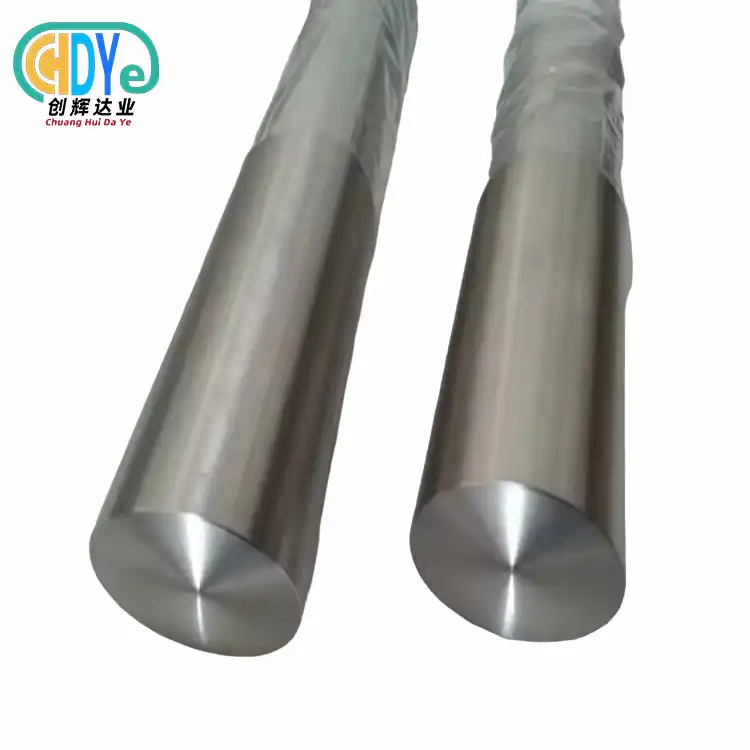
Understanding Grade 2 Titanium Round Bar: Properties and Performance
Chemical Composition and Purity Standards
The managed intermediate chemistry of commercially pure Grade 2 titanium round bar is what makes it unique. Titanium is more than 99% pure, and the material has strict limits on iron (0.30% by weight at most) and oxygen (0.25% by weight at most). These carefully controlled interstitials give the metal a minimum tensile strength of 345 MPa and a minimum yield strength of 275 MPa. They also make the metal predictable in its ability to bend and weld. Higher-grade alloys with aluminium or vanadium don't work as well as Grade 2 titanium round bar, which is made of pure metals and not complex alloys. This makes it naturally more biocompatible and resistant to corrosion in both biological and chemical environments.
Mechanical Performance in Demanding Conditions
When makers of structures for spacecraft look at materials, they check how parts react to changing loads, temperature, and stress from the environment. Grade 2 titanium round bar can stretch more than 20%, which lets it be cold-formed without first being annealed. Its density of 4.51 g/cm³, which is about 56% that of steel, makes aeroplanes lighter while keeping their structural stability. Even at cryogenic temperatures, the material is very tough when hit, which is very important for fuel systems and high-altitude parts. With this mix of flexibility and strength, producers can use forging, rolling, and precise cutting to make shapes with complicated shapes.
Oxidation and Corrosion Resistance Advantages
Chemical processes, exposure to salt water, and body fluids are all conditions that call for materials that don't get localised pitting or stress corrosion cracks. Grade 2 titanium round bar creates a stable, self-healing oxide layer (TiO₂) that repairs itself instantly when it gets damaged. This protects it passively from chlorides, acids, and oxidising media. This quality makes it better than stainless steel in wet chlorine environments and hypochlorite solutions, which are places where regular alloys break down quickly. This feature is very important to companies that make medical devices because it means that repeated sterilisation processes with autoclaves, gamma radiation, or ethylene oxide don't damage the surface or pose a risk of contamination.
Machining Characteristics and Processing Considerations
Grade 2 titanium round bar is difficult to work with because it doesn't conduct heat well and reacts chemically with tool materials. During grinding, heat builds up at the cutting edge instead of spreading out through the body. This makes tool wear happen faster. We deal with these problems by controlling the feed rates, using sharp carbide tools, and using a lot of cooling. Precision lathes and CNC machines set up just for working with titanium are used in our factory to make bars with tight size specs that can be hot-rolled, forged, or precision-ground. When procurement teams understand these small details of processes, they can define the right surface finishes and size needs that balance cost with application needs.
Comparing Grade 2 Titanium Round Bar with Alternative Materials
Grade 2 Versus Grade 5 Titanium Alloy
When buying something, people often compare Grade 2 titanium round bar to Grade 5 (Ti-6Al-4V), which is the most common titanium alloy. Grade 5 has a higher tensile strength (at least 895 MPa), but it can't be shaped or worked in cold conditions. Grade 2 titanium round bar is easier to weld than Grade 5 because it doesn't need to be heated after the welding process. This makes it easier to make fabricated assemblies. The difference in price is usually between 15 and 25 percent less for Grade 2 titanium round bar, which makes it a good choice for uses where modest strength is enough. Manufacturers of medical implants prefer Grade 2 titanium round bar for some instruments and non-load-bearing parts because it has a lower modulus of elasticity (102 GPa vs. 113 GPa for Grade 5) that matches bone properties better, which means it doesn't shield stress as well.
Performance Comparison with Stainless Steel
Even though types of stainless steel like 316L are still commonly used in industry, they have major problems when they are exposed to corrosive conditions. In contrast to stainless steel, which is susceptible to stress corrosion cracking caused by chloride in seawater and chemical processing, Grade 2 titanium round bar is immune to this problem. When used in aerospace, where every kilogram saved means better fuel efficiency and more payload, the strength-to-weight advantage becomes important. Even though stainless steel is cheaper per kilogram, lifetime analysis shows that titanium's longer service life and lower upkeep needs often make up for the original cost. This is especially true for chemical reactors, desalination systems, and offshore platforms.
Aluminum Alloys: Weight Versus Corrosion Trade-offs
Aluminium alloys are less dense than titanium (about 2.7 g/cm³), which makes them appealing to designers who want to cut weight as much as possible. When specific strength (strength divided by density) is taken into account, Grade 2 titanium round bar performs as well as or better than aluminium alloys. Aluminium can't be used in mixed-material systems because it can rust when mixed with metals that aren't the same. This trade-off is clearly shown by aerospace fastener applications: titanium fasteners get rid of galvanic compatibility issues with carbon fibre composites and aluminium structures, but they stay strong in temperature extremes that would damage aluminium parts.
Application Highlights: Why Grade 2 Titanium is Ideal for Aerospace and Medical Use
Aerospace Component Applications and Standards Compliance
Manufacturers of aeroplanes use Grade 2 titanium round bars in parts of the airframe like hydraulic fittings, control system connections, and frames. The material meets strict aerospace material standards like AMS 4921, which makes sure that it can be tracked and comes with certification paperwork that is specific to each lot. Grade 2 titanium round bar is compatible with aviation fuels and hydraulic fluids, which makes it a good material for parts of fuel systems because they don't break down over time. Structures for engine nacelles use the material's resistance to fire and ability to stay strong at temperatures up to 300°C for long periods of time. Our manufacturing methods are in line with AS9100 quality standards, which gives aircraft procurement teams the documentation rigour they need.
Medical Device and Implant Requirements
Biocompatibility is what makes Grade 2 titanium round bar unique for medical uses. The substance doesn't kill cells, so it can be used directly on tissue in surgical implants, orthopaedic screws, and dental bridges. ASTM F67 talks about medical-grade standards in detail, requiring controlled trace elements and surface conditions that stop biological reactions that are bad. Manufacturers of surgical instruments require that the materials are nonmagnetic, which is necessary for MRI compatibility, and that they are easy to smooth to a mirror-like shine, which makes them easier to clean and sterilise. The passivity of the material gets rid of concerns about metallic tastes in dental applications and stops the release of ions that could cause allergic reactions in sensitive patients.
Long-term Cost Benefits and Reliability
The initial cost of materials is only one part of the total economics of ownership. In chemical processing equipment, Grade 2 titanium round bar parts last more than 20 years without needing to be replaced. Stainless steel parts, on the other hand, only last 5 to 7 years in acid media. Because the surface is stable and doesn't erode, maintenance times are much longer. Aerospace companies record weight-related fuel savings that more than make up for material costs over the course of an aircraft's operational lifetime. Medical device makers don't have to worry as much about product liability when materials fail or there are biocompatibility problems. This protects the brand's image and patient safety at the same time.
Procurement Guide for Grade 2 Titanium Round Bar
Evaluating Supplier Qualifications and Certifications
As a basic quality control measure, ISO 9001:2015 approval must be checked on any Grade 2 titanium round bar provider you want to do business with. We have complete quality management systems that check the raw materials, the melting and forging processes, the machining operations, and the final inspection protocols. Our plant in Baoji, which is known as China's "Titanium Capital," gives us access to integrated supply chains and the mechanical knowledge we've built up over 30 years. For each production lot, people in charge of buying things should ask for mill test reports that list the chemical composition, mechanical properties, and heat treatment records. Third-party inspection services can confirm that the product meets ASTM standards, which adds to the confidence for important uses.
Understanding Price Factors and Market Dynamics
Titanium prices depend on how easy it is to get raw materials, how much energy it takes to melt, and how much demand there is around the world from aerospace and defence industries. Grade 2 titanium round bar usually costs 30–40% less than Grade 5 for the same amount of material. This is because it needs less alloying and is easier to handle. Custom sizes and precision cutting cost more, but they save end users time by getting rid of the need to do extra work. We offer affordable factory-direct prices because we control the whole production process, from melting the metal to finishing it off with cutting. Bulk purchasing agreements save money by ensuring a steady supply of goods for ongoing production schedules. International business-to-business rules say that you should pay 30% up front and the rest before shipment. For long-term ties, you can also use a letter of credit.
Custom Specifications and Order Considerations
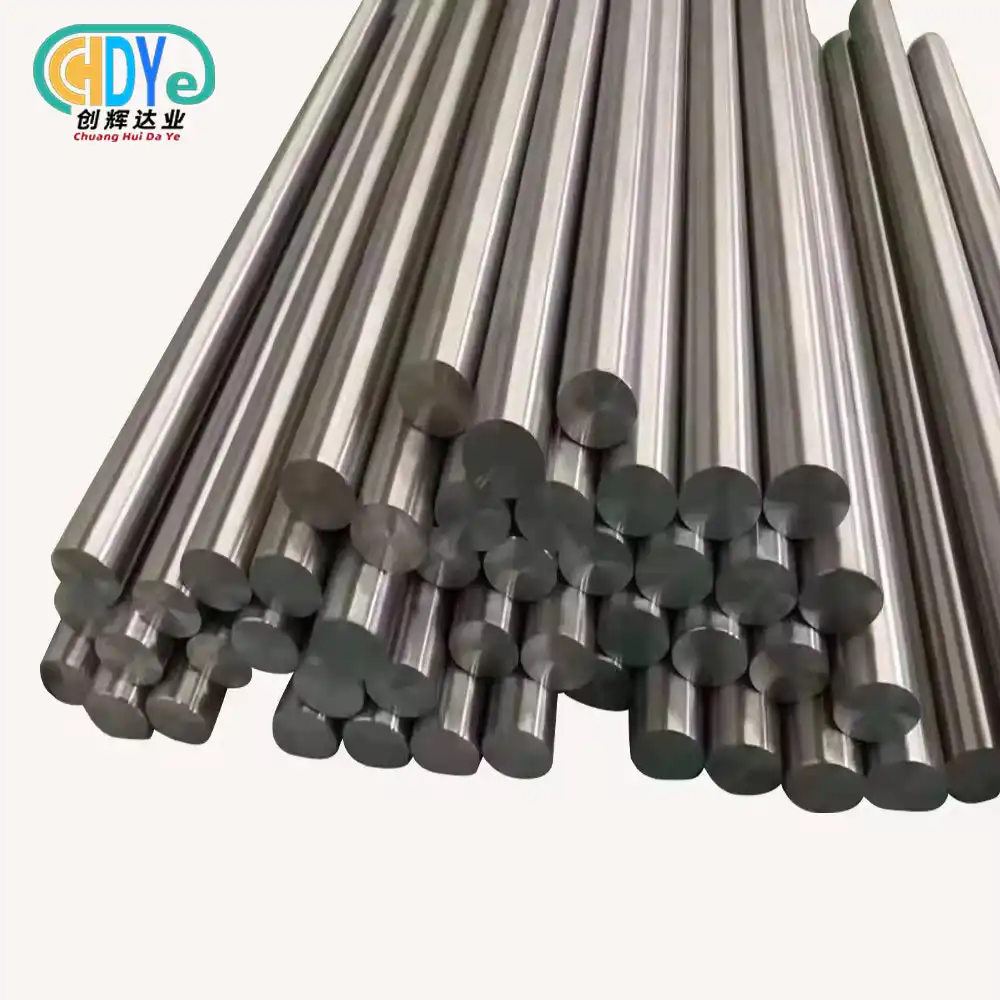
Standard diameters for Grade 2 titanium round bar run from 6 mm to 350 mm, which is wide enough for most uses. Custom lengths can be ordered based on the needs of the project. Specialised machining processes can use square and hexagonal shapes instead of round stock when they need to remove a lot of material. Forged bars have fine grain structures and directional qualities that make them good for high-stress parts, while rolled products are cheap and easy to use for general manufacturing. The types of surface finishes—hot-rolled, machined, or precision-ground—should meet the end surface quality needs and the types of processing that can be done afterward. For rapid prototyping and small-batch orders, we keep common sizes in stock. For custom specifications that need dedicated production runs, the lead time is 4 to 6 weeks.
Conclusion
Grade 2 titanium round bar has a great mix of mechanical performance, resistance to corrosion, and biocompatibility. This makes it an essential material for aircraft and medical manufacturing. It meets the standards set by ASTM B348, ASTM F67, and ASTM F136, which is important for controlled businesses because it guarantees stability and traceability of materials. This material is the best choice for situations where a broken part could have serious safety and financial effects because it has a commercially pure composition, predictable machining properties, and long-term reliability. To make sure that design decisions are in line with performance needs and lifespan cost goals, procurement teams need to know what makes the material better than other metals.
FAQ
Q: What chemical properties make Grade 2 suitable for aerospace applications?
A: Grade 2 titanium round bar is at least 99% pure titanium with iron (≤0.30%) and oxygen (≤0.25%) levels that are managed. This chemistry has a tensile strength of 345 MPa and great ductility, meeting the requirements of AMS 4921 for aerospace use. The low density and high strength-to-weight ratio of the material make structures lighter, and the stable oxide layer keeps them from breaking down in the environment over time.
Q: How does Grade 2 differ from Grade 5 in machinability and corrosion resistance?
A: Grade 2 titanium round bar is easier to cold form and weld than Grade 5, and it doesn't need to be heated up after welding. Even though Grade 5 is stronger overall, Grade 2 titanium round bar is better at resisting rust in reducing acids and chloride conditions. Higher feed rates and less tool wear are possible with Machining Grade 2 titanium round bar, which lowers the cost of making complex parts.
Q: What should medical device manufacturers consider when sourcing Grade 2 bars?
A: For medical uses, the Grade 2 titanium round bar must meet ASTM F67 standards and have been biocompatibility tested and certified for each lot. Suppliers must show that they can control the interstitial parts and surface conditions so that tissues don't respond badly. Check that the company has ISO 9001:2015 certification and ask for material traceability documentation that connects finished bars to the original melt batches so that they can be sent to regulators.
Partner with Chuanghui Daye for Premium Grade 2 Titanium Round Bar Supply
Shaanxi Chuanghui Daye has been working with rare metals for 30 years and is an ISO 9001:2015 qualified company. They can make Grade 2 titanium round bars for aircraft and medical use that are exactly what you need. From melting to precise machining, everything is done at our Baoji plant in one step. This ensures stable quality and low factory-direct prices. As a reliable source of Grade 2 titanium round bars, we can help your projects with full mill certifications, unique sizes from 6mm to 350mm in diameter, and a choice of express, air, or sea freight shipping options. Technical consulting services help you choose the best materials and set the right working settings for your application. Email our team at info@chdymetal.com to talk about how you want to buy titanium, get detailed quotes, or set up an evaluation of a sample. We give your aerospace and medical manufacturing operations the reliable materials and stable supply chains they need.
References
1. American Society for Testing and Materials. (2021). ASTM B348-13: Standard Specification for Titanium and Titanium Alloy Bars and Billets. West Conshohocken: ASTM International.
2. Boyer, R., Welsch, G., & Collings, E.W. (2019). Materials Properties Handbook: Titanium Alloys. Materials Park: ASM International.
3. Donachie, M.J. (2020). Titanium: A Technical Guide, 2nd Edition. Materials Park: ASM International.
4. Froes, F.H. (2018). Titanium in Medical and Dental Applications. Cambridge: Woodhead Publishing.
5. Leyens, C. & Peters, M. (2022). Titanium and Titanium Alloys: Fundamentals and Applications. Weinheim: Wiley-VCH.
6. Schutz, R.W. & Watkins, H.B. (2021). "Recent developments in titanium alloy application in the aerospace industry." Materials Science and Engineering A, Volume 243, pp. 305-315.
Learn about our latest products and discounts through SMS or email