- English
- French
- German
- Portuguese
- Spanish
- Russian
- Japanese
- Korean
- Arabic
- Greek
- German
- Turkish
- Italian
- Danish
- Romanian
- Indonesian
- Czech
- Afrikaans
- Swedish
- Polish
- Basque
- Catalan
- Esperanto
- Hindi
- Lao
- Albanian
- Amharic
- Armenian
- Azerbaijani
- Belarusian
- Bengali
- Bosnian
- Bulgarian
- Cebuano
- Chichewa
- Corsican
- Croatian
- Dutch
- Estonian
- Filipino
- Finnish
- Frisian
- Galician
- Georgian
- Gujarati
- Haitian
- Hausa
- Hawaiian
- Hebrew
- Hmong
- Hungarian
- Icelandic
- Igbo
- Javanese
- Kannada
- Kazakh
- Khmer
- Kurdish
- Kyrgyz
- Latin
- Latvian
- Lithuanian
- Luxembou..
- Macedonian
- Malagasy
- Malay
- Malayalam
- Maltese
- Maori
- Marathi
- Mongolian
- Burmese
- Nepali
- Norwegian
- Pashto
- Persian
- Punjabi
- Serbian
- Sesotho
- Sinhala
- Slovak
- Slovenian
- Somali
- Samoan
- Scots Gaelic
- Shona
- Sindhi
- Sundanese
- Swahili
- Tajik
- Tamil
- Telugu
- Thai
- Ukrainian
- Urdu
- Uzbek
- Vietnamese
- Welsh
- Xhosa
- Yiddish
- Yoruba
- Zulu
Is pure titanium wire Better Than Stainless Steel Wire?
When evaluating materials for demanding industrial applications, the choice between pure titanium wire and stainless steel wire is never straightforward. Both materials possess unique strengths, yet pure titanium wire consistently outperforms stainless steel in critical environments requiring exceptional corrosion resistance, biocompatibility, and lightweight performance. While stainless steel remains economically attractive for general-purpose applications, pure titanium wire—specifically grades compliant with ASTM B863—delivers superior lifecycle value in aerospace, chemical processing, marine, and medical sectors where material failure poses significant operational and safety risks.
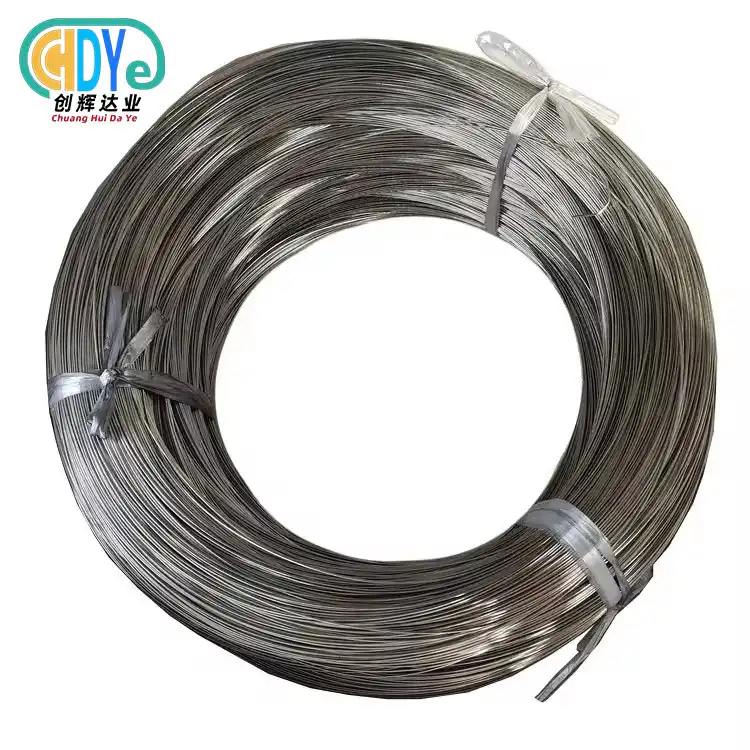
Pure Titanium Wire vs Stainless Steel Wire – Performance Comparison
Corrosion Resistance: Where Titanium Excels
We can tell how different materials work by looking at how they respond to things that could damage them. When titanium is introduced to air, it makes titanium dioxide (TiO₂), which acts as a shield. This is a video that doesn't do anything and can fix itself even if it gets broken. This makes it so that the steel won't break from chloride stress corrosion, which happens a lot at sea and in chemical processing plants.
In active media, tests show that titanium works better. When metals are put in seawater for a long time, stainless steel 316 starts to pit, but commercially pure titanium doesn't show any signs of rust after years of touch. The people who work with nitric acid, chlorine chemicals, and organic acids say that titanium parts make tools last a lot longer than stainless steel parts.
It's easy for stainless steel to work in conditions that are slightly acidic or atmospheric. It is pretty well protected from oxidising conditions by a layer of chromium oxide that is not active. But localised corrosion starts when chloride ions get through this layer. This usually takes place at high temperatures or in shapes that have cracks, like those found in heat exchangers, bolts, and woven mesh.
Mechanical Properties and Strength-to-Weight Ratio
Material decisions in the car and aeroplane businesses are based on how much they weigh. In terms of strength, pure titanium wire is the same as many types of stainless steel, but it is 40% lighter. Better fuel economy, more payload, and less structure loads are all directly caused by this higher density. These are all important for high-performance cars, satellite systems, and aeroplane parts.
Each type has a different strength to rip. Pure titanium wire Grade 2 is used most of the time. It is very easy to shape and has a maximum tensile strength of about 345 MPa. Grade 4 stainless steel can hit 550 MPa, which is close to 304 stainless steel's 515 MPa but still a lot lighter. Because its endurance limits are higher than its yield strength, titanium is a better choice for uses that will be vibrated a lot. This is because it can handle repeated loading.
The ultimate tensile strength of stainless steel can go over 580 MPa in high-end grades like 316L. It is harder than titanium because its elastic stiffness is higher (193 GPa vs. 103 GPa). This is helpful when the material doesn't need to bend as much when it's pulled. That being said, this stiffness can be a problem when you need to be flexible or when you need to keep stress levels low.
Thermal and Electrical Characteristics
How to weld and how much heat needs to be removed depend on how thermally conductive the materials are. Titanium doesn't spread heat very well (about 16 W/mK), so when it's welded, heat is concentrated in small places. To keep the weld clean, you need to use certain settings and protect it with inert gas. Stainless steel can be connected in more usual ways because it conducts electricity better (16.3 W/m·K for austenitic grades).
The size of titanium doesn't change much when the temperature does, because it has a low thermal growth rate. This is a good quality for precise tools and parts of aeroplanes. Due to the fact that neither titanium nor austenitic stainless steel are magnetic, they can be used in systems that are sensitive to electromagnetic radiation and in magnetic resonance imaging equipment.
Application Suitability and Industry Use Cases
Where Titanium Wire Delivers Superior Value
Aerospace companies use pure titanium wire to make parts that need to be safe, like wing fasteners, hydraulic line fittings, and exhaust systems. The material has a high melting point (1668°C), which keeps buildings strong during fires. It also doesn't rust, which is a problem that stainless steel has when it's exposed to water at high levels.
Titanium is very useful in marine applications because it doesn't react with seawater. Pure titanium wire mesh, tubes, and pump parts can last for decades, according to engineers who work on heat exchanges, desalination plants, and platforms that are far from land. When stainless steel is near salty water, crevice corrosion breaks it down, but it doesn't hurt titanium installations. In other words, they don't need costly repair periods or downtime that wasn't planned.
Medical device makers need pure titanium wire that meets ASTM F67 standards for devices that go inside the body. The material is biocompatible, which means it doesn't cause inflammation. It's also non-allergenic, which means it can be used by people who are allergic to nickel, which is found in many stainless steel types. Under FDA rules, orthopaedic implants, oral prosthetics, and surgical tool parts must always be made of medical-grade titanium to keep patients safe.
In chemical processing plants that work with harsh media, like making chlorine, acid pickling, and refining petrochemicals, titanium pipes, valves, and fastening systems are being used more and more. When things are oxidising and reducing, the material doesn't break down quickly. This keeps people safe and the process running smoothly.
When Stainless Steel Remains Preferred
Since stainless steel is less expensive and better at resisting rust, it is often used in building and architecture. In mild climates, 304 or 316 stainless steel is good for installing wire mesh, building cables, and wire rope assemblies.
It is used in parts of car exhaust systems and catalytic converters where the temperature is low (below 800°C), and there is some contact with water. Because the material is cheap, easy to make, and has established supply lines, it is a good choice for mass production.
Surfaces that come into contact with food or medicine must often be made of 316L stainless steel on tools used to handle food and make medicines. Titanium is more inert, but stainless steel is much cheaper, meets FDA standards for cleanliness, and can be used in tanks, pipes, and processing vessels where replacement cycles can be planned and managed.
Procurement Considerations for Pure Titanium Wire and Stainless Steel Wire
Pricing Dynamics and Total Cost of Ownership
A raw material's price is based on how hard it is to get and work with. It costs five to ten times more per kilogram to buy pure titanium wire than the same kind of stainless steel wire, but the difference isn't that big when you add up all the costs. Titanium is more cost-effective in tough environments because it breaks down less often and doesn't need to be fixed as often because of corrosion and upkeep gaps.
Things cost different amounts depending on the grade. Grade 1 titanium is very expensive because the elements in between have to follow strict rules. Grade 2 titanium, on the other hand, is the best mix of price and performance for most business uses. Nickel and molybdenum prices change at the same time as stainless steel prices. These issues make the supply chain less stable, which procurement professionals have to deal with.
We offer affordable factory-direct prices from our Baoji plant in China's "Titanium Valley." We don't have to pay markups to wholesalers because we control the whole production process, from melting the raw materials to drawing the finished wire. Normal stock levels let items be shipped within one to three days, which lowers the cost of having inventory and helps with plans for just-in-time production.
Supplier Selection and Quality Assurance
ISO 9001:2015 certification is a sign of a reliable supplier who is committed to quality. At Chuanghui Daye, our quality management system includes steps for checking the raw materials, keeping an eye on the process, and doing a final check. Every shipment comes with a Material Test Certificate (MTC). These show what the goods are made of chemically, how they work mechanically, and how well they fit their size.
Traceability is important in businesses that are run by people in charge. When we name each batch, it's easy to see the whole supply chain, from the melt lot to the finished product. The aerospace standard AS9100 and the medical device standard ISO 13485 are both met. This paperwork is very important for failure analysis probes or when officials check things out.
Expert partners are different from product sellers because they can tailor. We have different sizes, surface styles (bright-annealed or pickled), and ways to package both straight-cut and coil forms. You can check out the quality of a material before ordering a lot of it by getting free samples. This lowers the risk of getting something and makes sure it can be used with the way you make things.
Lead Times and Logistics
Stainless steel takes about the same amount of time as pure titanium wire to get from our stock to your door. Pure titanium wire ships in one to three business days. Custom specifications can take anywhere from two to four weeks, depending on the size, grade, and number of items needed. Our team that plans production makes sure that shipping times work with your project's due dates. They do this by making claims that are based on reality instead of ones that are too hopeful and lead to problems down the road.
Minimum order quantities take into account the costs of moving goods. Stock sizes can be sent out in small amounts that can be used to test or study. Custom orders need to be at least 50 to 100 tonnes in order for setup costs to be paid. However, we can work with smaller batches for approved development projects.
Making the Right Choice – Decision Support Guide
How to Make the Best Choice: A Guide to Making Choices
Decision Criteria Matrix
By testing materials in a planned way, design mistakes that cost a lot of money can be avoided. Think about these weighted factors based on how important your application is:
- Corrosion severity: Titanium's high price is worth it because it doesn't rust in chloride settings, the ocean, or acidic processes. Stainless steel can be used when the weather is not too bad.
- Weight constraints: Titanium's density improves the performance of aircraft, portable devices, and devices that care about weight in a controlled way. Installations that stay in one place can handle the heavier weight of stainless steel.
- Biocompatibility requirements: To keep the risk of toxicity and allergic reactions to a minimum, titanium is used in medical implants, body jewellery, and other devices that come into contact with skin.
- Temperature extremes: Titanium is a good choice for things that need to stay stable over a wide range of temperatures, or that will be exposed to temperatures above 500°C for a long time because it has a high melting point and a low thermal expansion.
- Budget limitations: When capital budgets make it hard to choose materials and the weather stays warm, stainless steel is a good choice because it costs less up front.
Grade Matching to Applications
Grade 2 commercially pure titanium is good for most industrial uses that need it to be strong and not rust. Most of the time, this grade is used for chemical processing, marine gear, and basic aircraft parts.
No alloys are added to Grade 4, which is the strongest grade of titanium. Strong bolts, springs, and structural wire can be made of it. It can be used when weight reduction is important, but metal complexity (like Ti-6Al-4V) is too high.
Out of all the stainless steels, 316L doesn't rust the most. It's often used in places like chemicals and the ocean where titanium would be too expensive. Once the low-carbon form is heated, it stops becoming sensitive while welding. This means that it keeps its ability to fight corrosion in those areas.
Customization and Technical Support
You can tell how well a procurement works by how technically skilled the suppliers are. To make sure that problems with work-hardening don't happen, our engineering team helps pick the right materials, tells you how to weld, and guides you through the making process. Not having to pay as much to fix mistakes when making a product with this consultative method.
We have many forms, including spool-wound coils for wire EDM, lengths that have been bent and cut for cutting, and sizes that are drawn to order to meet your exact needs. Surface processes like mill finish and electropolished meet the needs of many fields in terms of how they look and how well they work.
Conclusion
When you need better rust protection, biocompatibility, and lighter weight, pure titanium wire is better than stainless steel. Titanium is known to last a long time in the medical, chemical, marine, and aircraft industries. On the other hand, stainless steel is still an affordable option for moderate environments. When it comes to practical needs, the choice of material depends on the situation. Titanium is more expensive, but it can be used in hard conditions, to meet regulations, or for performance-critical tasks. Stainless steel, on the other hand, can be used for general industry purposes. When you work with expert sources, you can be sure that the material specs will meet quality standards, performance goals, and delivery times. These are all things that manufacturing companies need to stay competitive.
FAQ
Q: What advantages does pure titanium wire offer over stainless steel?
A: It is very hard for pure titanium wire to rusting in chloride and acidic environments, but stainless steel is not. Because it is 40% lighter than stainless steel but just as strong, it is useful for use in aeroplanes. Biocompatibility makes it the only acceptable choice for medical equipment because it is safe. This means that people who are allergic to nickel don't have to worry. The substance is not magnetic, so it can be used in electrical tasks that need to stop electromagnetic interference.
Q: Can titanium wire replace stainless steel in marine applications?
A: Of course. Titanium does its best work in and around water, especially when it is submerged. It takes decades of contact with saltwater for stainless steel to start pitting and crevice corrosion, but titanium doesn't show any signs of corrosion. When titanium is used, parts of ships, offshore platforms, and equipment for desalination last a lot longer. This makes up for the higher prices at the beginning because they don't need to be fixed or changed as often.
Q: How can buyers verify titanium wire quality?
A: Ask for Material Test Certificates that show the chemical make-up through spectrochemical analysis, the mechanical properties through tension testing, and the measurements of how well the material fits together in terms of its size. If you have ISO 9001:2015 certification, it means that you manage quality in a planned way. Suppliers with a good reputation keep track of batches and send samples to be tested by someone else before orders are placed for the whole batch. Making sure that a product meets ASTM B863 standards for quality and speed is an important part of the business world.
Contact Chuanghui Daye for Premium Pure Titanium Wire Solutions
At Shaanxi Chuanghui Daye, we've been working with rare metals for over 30 years and are very good at making things in Baoji, which is known as China's Titanium Valley. Trust us to give you pure titanium wire that is approved by ISO 9001:2015 and meets ASTM B863 and AWS A5.16 standards for Grades 1 through 4. We can send standard sizes in one to three days because we keep them in stock, and our engineering team can give you expert advice to help you choose the best material for your needs. We offer low prices on both straight-cut and coil forms that come straight from the factory. You can track it all the way back to the source. People who meet the standards can get free samples of the material to try out. There is no minimum order size, and you can make changes. This means that you can get as many as you need for a sample or as many as you need for production. Send us an email at info@chdymetal.com to tell us about your project and get a price from our application tech experts.
References
1. Donachie, Matthew J. (2000). Titanium: A Technical Guide, 2nd Edition. ASM International.
2. Sedriks, A. John (1996). Corrosion of Stainless Steels, 2nd Edition. John Wiley & Sons.
3. Boyer, Rodney, Welsch, Gerhard, and Collings, E.W., editors (1994). Materials Properties Handbook: Titanium Alloys. ASM International.
4. Cottis, Robert A., et al., editors (2010). Shreir's Corrosion, 4th Edition. Elsevier Science.
5. ASTM International (2020). ASTM B863-20: Standard Specification for Titanium and Titanium Alloy Wire. ASTM International Standards Organization.
6. Schutz, R.W. and Thomas, D.E. (1987). "Corrosion of Titanium and Titanium Alloys," in Metals Handbook, 9th Edition, Volume 13: Corrosion. ASM International, pp. 669-706.
Learn about our latest products and discounts through SMS or email