- English
- French
- German
- Portuguese
- Spanish
- Russian
- Japanese
- Korean
- Arabic
- Greek
- German
- Turkish
- Italian
- Danish
- Romanian
- Indonesian
- Czech
- Afrikaans
- Swedish
- Polish
- Basque
- Catalan
- Esperanto
- Hindi
- Lao
- Albanian
- Amharic
- Armenian
- Azerbaijani
- Belarusian
- Bengali
- Bosnian
- Bulgarian
- Cebuano
- Chichewa
- Corsican
- Croatian
- Dutch
- Estonian
- Filipino
- Finnish
- Frisian
- Galician
- Georgian
- Gujarati
- Haitian
- Hausa
- Hawaiian
- Hebrew
- Hmong
- Hungarian
- Icelandic
- Igbo
- Javanese
- Kannada
- Kazakh
- Khmer
- Kurdish
- Kyrgyz
- Latin
- Latvian
- Lithuanian
- Luxembou..
- Macedonian
- Malagasy
- Malay
- Malayalam
- Maltese
- Maori
- Marathi
- Mongolian
- Burmese
- Nepali
- Norwegian
- Pashto
- Persian
- Punjabi
- Serbian
- Sesotho
- Sinhala
- Slovak
- Slovenian
- Somali
- Samoan
- Scots Gaelic
- Shona
- Sindhi
- Sundanese
- Swahili
- Tajik
- Tamil
- Telugu
- Thai
- Ukrainian
- Urdu
- Uzbek
- Vietnamese
- Welsh
- Xhosa
- Yiddish
- Yoruba
- Zulu
How does pure niobium bar perform in vacuum environments?
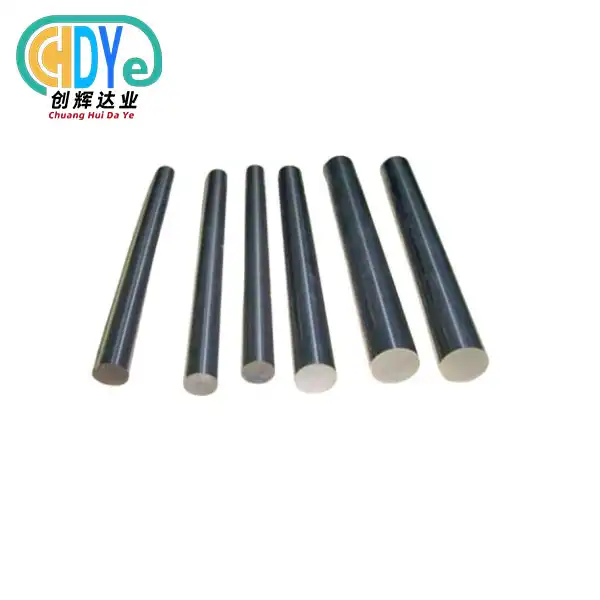
When purchasing and engineering professionals ask how well pure niobium bar works in vacuums, the answer is simple: it works very well. Because it doesn't outgas much, has a steady passive oxide layer, and is very stable at high temperatures, niobium is a great material for high-vacuum and ultra-high-vacuum uses. Niobium bars are more than 99.9% pure, so they keep their shape and chemical inertness even in very dry conditions. This keeps them from getting contaminated and guarantees their long-term dependability. Because of this performance edge, it works better in places where vacuum stability is important, like aircraft propulsion systems, semiconductor fabrication rooms, and chemical processing equipment.
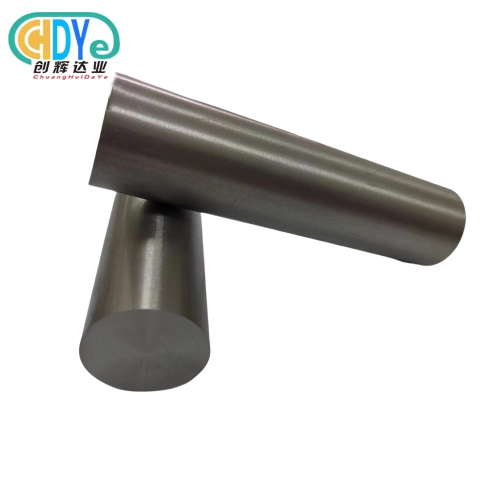
Understanding Pure Niobium Bar and Its Key Properties in Vacuum Applications
When choosing materials for vacuum settings, it's important to pay close attention to the chemical makeup and physical traits of pure niobium bar. Niobium stands out because its qualities are great for vacuum technology, which has very strict needs.
Chemical Composition and Purity Standards
High-purity niobium bars usually have at least 99.9% niobium in them, and reactor-grade bars must have at least 99.95%. Interstitial impurities like oxygen, nitrogen, hydrogen, and carbon must be carefully controlled because high amounts make the material less flexible and speed up the outgassing process. Chuanghui Daye's production follows ASTM B393 guidelines, which make sure that the oxygen level stays below 100 ppm for uses that need to be as compatible with pressure as possible. This level of cleanliness is very important because even small amounts of contaminants can mess up sensitive processes in the making of semiconductors or cause unwanted reactions in chemical processing areas.
Physical and Mechanical Properties Under Vacuum
Niobium's density of 8.57 g/cm³ makes structures stable without being too heavy, which is useful in aircraft uses where using materials efficiently is important. The melting point of 2468°C ensures that parts keep their shape and mechanical qualities even when they are heated and cooled very quickly in vacuum furnaces. In contrast to many hard metals, niobium is very flexible at room temperature. This makes it easier to work with and lowers the chance of breaking during shaping. The body-centered cubic crystal structure makes it easier to work with, so makers can make complicated shapes without using special heated tools.
Corrosion Resistance and Oxide Layer Formation
Niobium naturally makes a thick layer of niobium pentoxide (Nb₂O₅) on its surface when it comes into contact with air. This inactive film can fix itself and is very resistant to most acids, both organic and inorganic, below 100°C. When there is a vacuum around, this oxide layer stays steady and doesn't add to contamination, unlike materials that constantly give off gases or particles. Because of this, niobium bars are perfect for vacuum tanks that need to be maintained less often and keep working well over thousands of rounds.
How Pure Niobium Bar Performs Compared to Alternative Metals in Vacuum Environments
When choosing a material for vacuum uses, pure niobium bar is often put up against titanium, tantalum, and stainless steel. While each metal has its own benefits, niobium is often the best choice when performance and cost are taken into account.
Outgassing Rates and Contamination Control
Outgassing, which is the release of gases that have been absorbed by materials, makes it hard to reach and keep high pressure levels. Niobium has one of the lowest rates of gas release among structural metals, especially when it is baked in a vacuum. Even though stainless steel is cheap, it gives off hydrogen and water vapor at much faster rates than niobium. Titanium doesn't outgas as much as niobium does, but it doesn't react chemically with acidic surroundings as well. Tantalum is similar to niobium in how it releases gases, but it is much more expensive. This means that niobium is a better choice for large-scale vacuum systems from an economic point of view.
Thermal Expansion and Sealing Integrity
The rate of temperature expansion has a direct effect on how well vacuum seals and joints work. Niobium has a thermal expansion coefficient of about 7.3 µm/m·K, which is very close to the coefficient of alumina ceramics, which is often used in vacuum feedthroughs and insulators. This compatibility lowers thermal stress during temperature cycles, which lowers the chance that the seal will break. Stainless steel expands more when it gets hot or cold, which can make seals less reliable in situations where temperatures change a lot. Because of this, niobium is very useful in testing rocket engines and in semiconductor processing equipment where temperatures change all the time.
Machinability and the efficiency of production
Niobium is easier to work with than tungsten or molybdenum, even though it is a hard metal. Because it is soft and bendable, it can be machined normally with high-speed steel tools, as long as the right cutting speeds and coolants are used. Tantalum can be machined in the same way, but it costs more. This makes it easier to make things, which cuts down on costs and wait times. This is important for projects that need custom measurements or fast development. Our Baoji plant uses precise CNC machining and controlled rolling methods to make niobium bars that are either rectangular or round. The thickness of these bars can range from 5 to 350 mm, and the lengths can be changed to fit the needs of the project.
Manufacturing and Heat Treatment Processes Optimizing Niobium Bar for Vacuum Use
To make vacuum-grade pure niobium bars, you need to use complex manufacturing methods that keep the material pure and improve its microstructure. Each step in the production process has a direct effect on how well the finished product works in tough pressure situations.
Electron Beam and Vacuum Arc Remelting
The journey starts with high-quality niobium bars that are melted using electron beams or vacuum arcs. These methods work in high-vacuum environments, which keep the air from contaminating the process and get rid of any leftover impurities through selective vaporization. Electron beam melting, which is done at pressures below 10⁻⁴ Torr, makes sure that the ingot has the same makeup all the way through. This process gets rid of any inclusions or segregation that might weaken the product's material qualities or make it outgas more. Vacuum arc remelting is an alternative method that works well for bigger production amounts and allows for tight control over the concentrations of interstitial elements.
Controlled Rolling and Forging in Clean Environments
After being melted at first, ingots are managed while they are hot in furnaces that keep the temperature stable. Forging and rolling are done in clean areas so that the surfaces don't get dirty and affect how well they work with vacuums. It is very important to keep an eye on the temperature during these steps, because too much heat can cause grains to grow and weaken the material, while not enough heat makes it more likely that it will crack. Over several passes, the bars are gradually shrunk to their final size. In between passes, cooling steps relieve stress and smooth out the grain.
Annealing and Heat Treatment for Reduced Outgassing
Niobium bars are better for vacuum uses in two ways when they are heated. Annealing at temperatures between 1000°C and 1200°C in a high-vacuum environment does two things: it recrystallizes the grain structure, which makes the material more flexible after being cold worked; and it pushes out hydrogen and other gases that were absorbed, which would cause it to outgas while it's being used. At Chuanghui Daye, we use electron beam ovens for vacuum annealing to make sure that the treated bars have the least amount of leftover gas possible. This step in the process is especially important for reactor-grade material that will be used in semiconductors or nuclear power plants, where pollution limits are very low.
Quality Certification and Testing Protocols
Strict quality control checks make sure that every batch meets the standards that have been set. Chemical study using neutral gas fusion measures the amounts of oxygen, nitrogen, hydrogen, and carbon, which confirms that the standards set by ASTM B393 have been met. The tensile strength and elongation qualities are confirmed by mechanical tests according to ASTM E8. The quality of the surface is checked optically to find any pits, scratches, or other flaws that could be used as leak sources in vacuum systems. Our ISO 9001:2015 certification shows that we are dedicated to managing quality in a planned way at all stages of the production process, from checking the raw materials to shipping and packing them up.
Procurement Considerations for Pure Niobium Bars in Vacuum Applications
It takes more than just checking prices to find pure niobium bars for vacuum systems. To make sure a project is successful in the long run, strategic buying involves looking at a lot of different technical and business factors.
Purity Specifications and Certification Requirements
Buyers need to set clear minimum purity levels based on the needs of the product. Type 2 niobium (RO4210), which is commercial grade, is enough for many chemical processing tasks and regular vacuum work. Reactor-grade material (Type 1, RO4200) is needed when it's important to have low neutron absorption or little intermediate contamination. You can be sure that the material meets the requirements by asking for approved test results that list the chemical makeup and mechanical properties. Traceability paperwork that connects finished goods to specific batches of ingots lets you figure out what went wrong if there are performance problems during service.
Dimensional Specifications and Custom Requirements
Standard bar stock comes in both rectangular and round shapes, but special sizes often make the best use of material and cut down on machining waste. We can make things with thicknesses ranging from 5 mm to 350 mm, and we can cut them to any length the customer wants. Setting dimensional limits up front saves money on repairs and makes sure that the new part will work with current tools or assembly fixtures. You should also let them know what kind of surface finish they need. For some vacuum uses, electropolished surfaces work better because they reduce outgassing and particle production even more.
Supplier Evaluation and Quality Assurance
Supply chain risk can be lowered by picking a seller with a good reputation and a track record of success in handling refractory metals. With more than 30 years of experience, Chuanghui Daye knows how to make niobium, tantalum, tungsten, and molybdenum. Being in Baoji, China, the "Titanium Capital," gives us access to well-established supply lines and scientific know-how. With factory-direct buying, there are no markups added by middlemen, so prices are low without lowering quality. Asking for site audits or third-party certificates proves that the company can make things and has good quality control systems.
Lead Times and Order Quantities
Project timelines are affected by the supply of materials and the schedule for production. Standard grades and popular sizes can usually be shipped with shorter wait times. On the other hand, custom standards or reactor-grade purity may need longer production times. Different types of products have different minimum order amounts. Talking about volume early on in the procurement process helps sellers plan the best production runs and offer the best prices. For research centers and prototype development, we can handle small orders that help with testing without needing big investments in cash.
Real-World Applications and Case Studies of Pure Niobium Bars in Vacuum Environments
Niobium is useful in many different types of industries, as shown by real-world examples. Knowing about these uses helps buying teams see ways to make systems work better by choosing the right materials strategically.
Vacuum Chambers and Research into High-Energy Physics
Ultra-high vacuum conditions are needed to keep beam confusion to a minimum in particle accelerators and synchrotron radiation sites. Pure niobium bars made into vacuum chamber parts have low outgassing and high heat conductivity, which are important for these harsh conditions. Niobium's superconducting qualities below 9.25 K make radiofrequency cavities useful in accelerators. The quality of the material directly affects how well the cavities work and how much energy they use. After switching important parts from stainless steel to high-purity niobium, research centers all over the world have seen better beam quality and shorter repair intervals.
Aerospace Propulsion and Rocket Engine Testing
Niobium is used by aerospace companies to make vacuum furnace fittings and parts of propulsion systems that are exposed to high temperatures and toxic gases. Niobium bars are used in exhaust diffuser systems and thrust chamber parts of rocket engines, which is where regular metals would break down quickly. The material's high melting point and resistance to rust at high temperatures make parts last longer and cost less to repair. A big aircraft contractor said that using niobium parts made test fixtures last 40% longer, which directly cut down on operations downtime and increased testing throughput.
Semiconductor Manufacturing Equipment
In order to keep wafers clean during the deposition and polishing processes, the semiconductor industry needs vacuum conditions that are very clean. These strict requirements can be met by using niobium bars that have been made into chamber walls, electrode holders, and heating element supports. The chemical inertness of the material keeps it from reacting badly with process gases, and its low outgassing keeps the base pressure at the right amount for stable film quality. OEM equipment makers have started using niobium parts in the next generation of lithography tools. Controlling contamination has a direct effect on return rates and the cost of making the tools.
Chemical Processing and Corrosive Environments
Even though it's not used in vacuums, niobium's resistance to rust makes it useful for chemical processing equipment that works in partial vacuums or neutral atmospheres. Niobium bars are used for heating coils, stirring shafts, and structural support in reactor vessels that deal with hot sulfuric acid, hydrofluoric acid, or liquid metals. The stable oxide layer stops materials from breaking down and keeps metal ions from getting into product lines. A pharmaceutical company reported that niobium heat exchangers in a vacuum distillation process worked continuously for seven years, while older materials needed to be replaced every year.
Conclusion
Because they don't give off much gas, are chemically stable, and have good thermal qualities, pure niobium bars work very well in vacuum settings. Because it is very pure, has a steady oxide layer, and is easy to machine, the material is better than stainless steel, titanium, and even tantalum in many situations. Engineers and procurement experts can choose the right materials if they know about the manufacturing process, sourcing issues, and real-world performance data. Niobium's special qualities will continue to help the aircraft, semiconductor, and chemical processing businesses come up with new ideas as vacuum technology is used in more difficult situations.
FAQ
Q: What purity level is required for vacuum applications?
A: Vacuum uses typically require pure niobium bar purity levels of at least 99.9%, and 99.95% or higher purity levels are better for ultra-high vacuum systems. The exact purity level depends on how much outgassing is allowed and how sensitive the material is to contamination. For the toughest jobs, reactor-grade material has the lowest amount of intermediate impurities.
Q: Can niobium bars be welded in vacuum systems?
A: Niobium needs a neutral atmosphere or high-vacuum welding methods to keep it from becoming weak from oxygen and nitrogen uptake above 200°C. Good joint quality can be achieved by electron beam welding in vacuum rooms or TIG welding in boxes that have been purged with argon. The vacuum compatibility and mechanical qualities of the material are maintained by using the right bonding techniques.
Q: What effect does surface finish have on how well a cleaner works?
A: The roughness of the surface affects how gases escape and how particles are made. Using electropolishing or mechanical polishing to get the roughness down to sub-micron levels lowers the surface area and the amount of dirt that gets caught, which raises the end vacuum levels. Applications that need pressures below 10⁻⁹ Torr can gain a lot from better surface preparation than normal machined finishes.
Partner with Chuanghui Daye for Premium Pure Niobium Bar Solutions
Shaanxi Chuanghui Daye is ready to help you with your vacuum application needs by making pure niobium bars that are precisely designed and made to your exact specs. As a pure niobium bar maker that is ISO 9001:2015 approved, we have 30 years of experience working with refractory metals and can do advanced production methods like controlled atmosphere rolling, electron beam melting, and thorough testing processes. Our Baoji plant can make rectangular and round shapes with thicknesses ranging from 5 to 350 mm, depending on the size and purity needs of your project. Our technical team can help you with any questions you have, whether you need reactor-grade material for semiconductor equipment or commercial-grade bars for chemical processing systems. They can also give you low factory-direct prices. Email us at info@chdymetal.com to talk about your needs, get certified test results, or set up a visit to our location. We ship all over the world with full paperwork for tracking, and we can do both fast prototyping and large-scale production runs.
References
1. Davis, J.R. (Editor). ASM Specialty Handbook: Heat-Resistant Materials. ASM International, Materials Park, Ohio, 1997.
2. Schultz, J.M. "Refractory Metals in High-Temperature Vacuum Applications." Journal of Vacuum Science & Technology A, Vol. 15, No. 4, 1997, pp. 1473-1482.
3. Cardonne, S.M., Kumar, P., Michaluk, C.A., and Schwartz, H.D. "Tantalum and Its Alloys." International Journal of Refractory Metals and Hard Materials, Vol. 13, No. 1-3, 1995, pp. 187-194.
4. ASTM International. ASTM B393-17: Standard Specification for Niobium and Niobium Alloy Strip, Sheet, and Plate. West Conshohocken, Pennsylvania, 2017.
5. Lafferty, J.M. (Editor). Foundations of Vacuum Science and Technology. John Wiley & Sons, New York, 1998.
6. Reed, R.P. and Clark, A.F. (Editors). Materials at Low Temperatures. American Society for Metals, Metals Park, Ohio, 1983.
Learn about our latest products and discounts through SMS or email