- English
- French
- German
- Portuguese
- Spanish
- Russian
- Japanese
- Korean
- Arabic
- Greek
- German
- Turkish
- Italian
- Danish
- Romanian
- Indonesian
- Czech
- Afrikaans
- Swedish
- Polish
- Basque
- Catalan
- Esperanto
- Hindi
- Lao
- Albanian
- Amharic
- Armenian
- Azerbaijani
- Belarusian
- Bengali
- Bosnian
- Bulgarian
- Cebuano
- Chichewa
- Corsican
- Croatian
- Dutch
- Estonian
- Filipino
- Finnish
- Frisian
- Galician
- Georgian
- Gujarati
- Haitian
- Hausa
- Hawaiian
- Hebrew
- Hmong
- Hungarian
- Icelandic
- Igbo
- Javanese
- Kannada
- Kazakh
- Khmer
- Kurdish
- Kyrgyz
- Latin
- Latvian
- Lithuanian
- Luxembou..
- Macedonian
- Malagasy
- Malay
- Malayalam
- Maltese
- Maori
- Marathi
- Mongolian
- Burmese
- Nepali
- Norwegian
- Pashto
- Persian
- Punjabi
- Serbian
- Sesotho
- Sinhala
- Slovak
- Slovenian
- Somali
- Samoan
- Scots Gaelic
- Shona
- Sindhi
- Sundanese
- Swahili
- Tajik
- Tamil
- Telugu
- Thai
- Ukrainian
- Urdu
- Uzbek
- Vietnamese
- Welsh
- Xhosa
- Yiddish
- Yoruba
- Zulu
What makes titanium welding rod ideal for aerospace parts?
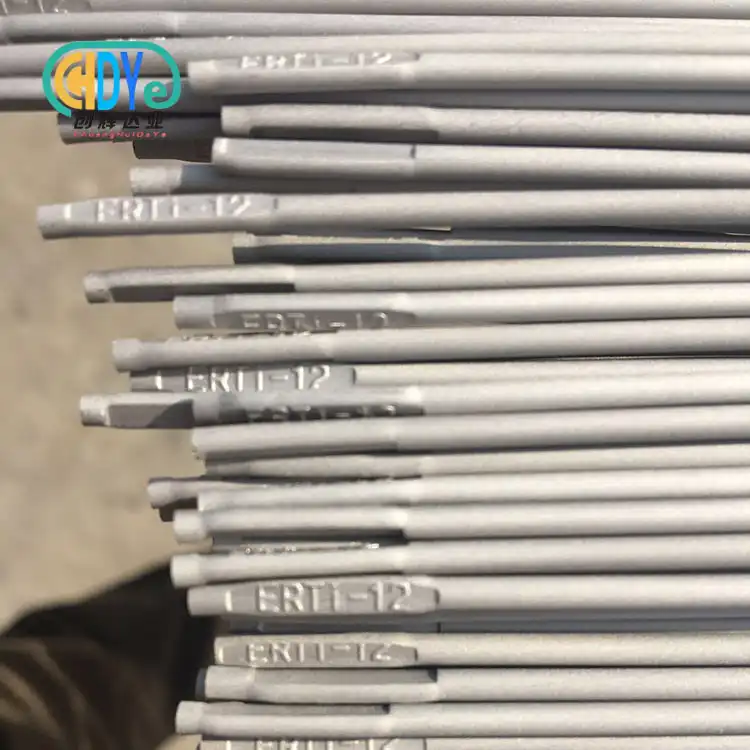
Titanium welding rod is an important part of aircraft manufacturing because it has the best strength-to-weight ratio, resistance to corrosion, and stability at high temperatures. These filler metals help engineers join titanium alloys, which are the main material used to build modern airplanes, engine parts, and hydraulic systems. When titanium's natural properties are transferred correctly through special welding rods, they create joints that work as well as or better than base metals. This keeps the structure strong even under high operating stress and weather exposure.
Understanding Titanium Welding Rods in Aerospace Applications
When making things for aerospace, you need materials that will work reliably in situations where failure is not a choice. Titanium filler metals meet this need because they have special properties in the metalworking process and strict control over their makeup.
Composition and Grade Classifications
Welding rods made for aerospace use meet the standards of AWS A5.16, which sets limits on chemical makeup and mechanical properties. ERTi-2 is commercially pure titanium that has intermediate elements that are managed. For example, the oxygen content is usually between 0.08 and 0.16%, the iron content stays below 0.30%, and the nitrogen content stays below 0.015%. The tensile strength of this material is over 345 MPa, and it is also very flexible, with stretch values above 20%. The low oxygen level balances the risk of brittleness with the increase in strength, making a filler metal that makes joint layers that are flexible and don't crack.
The chemical make-up of ERTi-5 is Ti-6Al-4V, which has about 6% aluminum and 4% vanadium. This way of alloying raises the tensile strength above 895 MPa while still keeping the flexibility needed for tough structural uses. Adding aluminum lowers the density and makes the metal more resistant to rust. Adding vanadium stabilizes the beta phase, which makes the metal easier to shape and weld. When combining high-strength titanium alloy parts in landing gear systems, engine mounts, and main aircraft structures, these rods are a must.
Critical Material Properties for Aerospace Service
Titanium's density is about 4.51 g/cm³, which is about 60% of steel's and 40% heavier than aluminum's. This medium density and high specific strength let aircraft engineers lower the weight of structures without lowering their ability to support weight. Pure titanium has a melting point of 1668°C, which keeps it stable during welding and makes sure that joints stay together in high-temperature service areas like engine rooms and exhaust systems.
Titanium naturally forms a strong, self-healing metal layer that makes it very resistant to rust in a wide range of environments. This passive film grows back right away after the surface is damaged. It protects weld areas from saltwater corrosion in naval aviation uses and chemical attack in fuel system parts. The resistance to rust increases the service life and lowers the number of repair visits, which saves money in the long run.
Typical Aerospace Applications
For fuselage pieces, wing supports, and empennage parts to fit together, thousands of separate welds are needed. Titanium welding rods make it possible to join thin-gauge sheets and structural extrusions, resulting in lightweight units that can withstand repeated loads during flight operations. Titanium filler metals are used by engine makers to make compressor blades, turbine housings, and exhaust tubes, all of which need to be very stable in the face of changes in temperature and pressure. In hydraulic systems, titanium tubing is combined with filler metals that match to keep the pressure stable even when the temperature changes. This is done so that the hydraulic fluids don't corrode the tubing.
Key Welding Techniques and Parameters for High-Quality Aerospace Manufacturing
To get flawless titanium welds, you need to have tight control over the welding process, the working surroundings, and the operational factors. As temperatures above 400°C rise, titanium starts to react, which requires thorough protection plans and strict cleaning rules.
Optimal Welding Processes
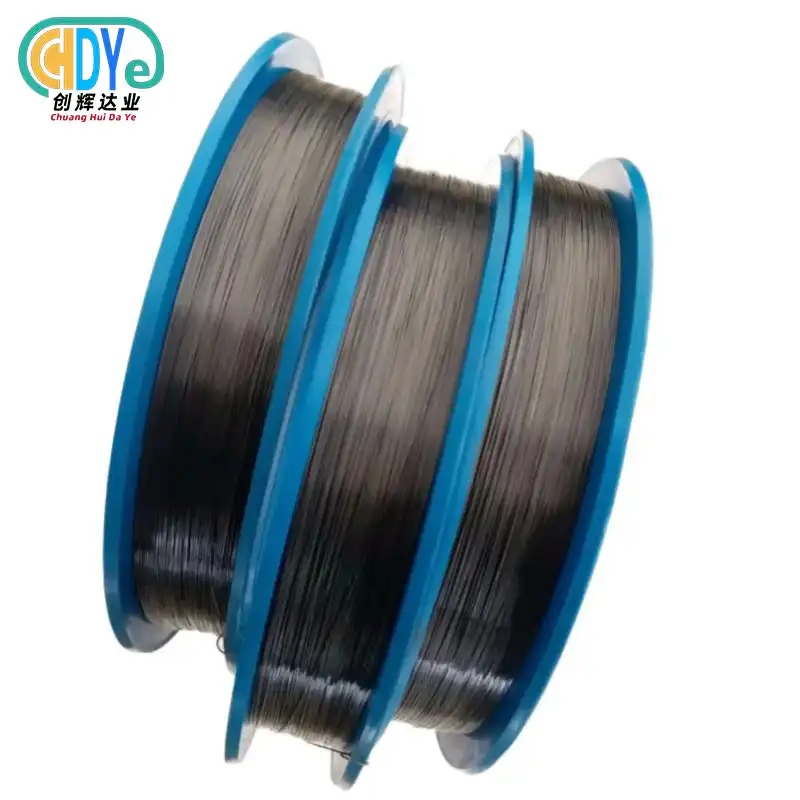
Gas Tungsten Arc Welding (GTAW/TIG) is still the most common way to make titanium parts for aircraft applications. This method makes the arc very stable, lets you precisely control the heat input, and makes very little spatter. The non-consumable tungsten electrode provides concentrated heat, and the argon shielding gas moves oxygen and nitrogen out of the air to keep things clean while the metal solidifies. Pure titanium welding rods with diameters ranging from 1.0 mm to 3.2 mm and normal lengths of 1000 mm are made by Shaanxi Chuanghui Daye Metal Material Co., Ltd. These rods are designed for TIG use where accuracy and weld quality are very important.
For joining bigger pieces, Gas Metal Arc Welding (GMAW/MIG) has faster deposition rates, but it needs more complex shielding setups. Laser welding is becoming more popular in automatic production settings because it produces thin-section parts with few heat-affected zones and little distortion.
Critical Welding Parameters
Keeping the right amount of current in place makes sure that there is enough fusion without too much heat, which could make the heat-affected zone bigger and encourage grain growth. Direct Current Electrode Negative (DCEN) voltage focuses heat on the workpiece instead of the electrode, which makes penetration better. To get full fusion and keep thin materials from burning through, the travel speed must be equal to the heat input.
Coverage of shielding gas is probably the most important factor in titanium welding. Primary torch shielding guards the liquid weld pool, and trailing shields cover the cooling weld bead until it falls below the temperature needed for oxidation. Backing purge systems fill the root side of the joint with inert gas. This stops the backside from oxidizing, which would weaken the joint. Weld bead staining shows that the shielding isn't good enough: silver or light straw coloration means good protection, blue coloration means only moderate shielding, and purple or white coloration means contamination that needs to be removed and rewelded.
Pre-Weld and Post-Weld Procedures
Surface preparation has a direct effect on the quality of the weld. Titanium parts need to be cleaned with a solution to get rid of organic contaminants, and then they need to be cleaned mechanically or chemically to get rid of oxide films. Stainless steel wire cleaning, which is only used for titanium work, prepares the surface mechanically, and acid washing gets rid of stubborn oxide layers. When touching the material, skin oils can't get on gloves that are clean and free of dirt.
Post-weld stress relief techniques lower leftover stresses that could cause cracks to spread when the load is changed over time. Controlled heat processes improve the microstructure and make it more resistant to wear. This is especially important for structural elements that are under a lot of stress and parts that rotate.
Comparative Insights: Titanium Welding Rods vs. Alternatives for Aerospace
Material choice has a big effect on how well a component works, how much it costs over its lifetime, and how reliable it is in operation. Figuring out comparative benefits helps you make choices about what to buy that are in line with engineering needs and your budget.
Titanium versus Steel Filler Metals
Steel welding consumables have lower material costs and easier handling needs, which is why they are still the most popular choice for less difficult jobs. But steel is about twice as dense as titanium, which means that over the life of an airplane, the structure will weigh a lot more and use a lot more fuel. Corrosion-prone materials need protective coats, which make production more difficult and require regular upkeep.
These problems are solved by titanium filler metals, which protect against corrosion without needing special surface processes and reduce weight in a way that directly increases storage capacity or range. The strength-to-weight benefit is especially clear in structures that are heavily loaded, since titanium parts can be made smaller than steel versions while still being able to hold the same amount of weight.
Titanium versus Aluminum Filler Metals
For the lowest-density option, aluminum welding rods are the best choice for titanium welding rods. They are also easy to make and don't cost too much. The material works perfectly for buildings that are fairly loaded and work in a limited temperature range. Aluminum's lower melting point makes welding easier and saves money on tools.
The limits show up when the service is exposed to high temperatures and harsh environments. Aluminum metals lose their strength quickly above 150°C, which means they can't be used in setups close to engines. Concerns about galvanic corrosion appear when aluminum comes into contact with different metals in electrolytes. This means that separation techniques are needed, which are more difficult and heavy. Titanium is the best material for challenging aerospace uses, even though it costs more, because it can withstand temperatures higher than 300°C and works well with galvanic corrosion.
Performance Variations Between Titanium Grades
At the most affordable price in the titanium family, ERTi-2 has great all-around performance, including better flexibility and corrosion protection. When formability and resistance to the environment are more important than exact strength, this grade works great for things like hydraulic tubes, ducting, and non-structural fairings.
The higher price of ERTi-5 is due to its better mechanical qualities and the cost of adding aluminum and vanadium to it. The roughly 50% increase in strength over commercially pure grades makes the investment worthwhile for main structures, landing gear parts, and rotating sections, where weight savings lead to better performance or more payload, which cancel out differences in material costs.
Procurement Considerations
The world availability of titanium sponge, the demand cycles in the aerospace business, and the costs of alloying elements all affect price trends. Procurement risks can be reduced by building relationships with dependable providers who keep quality standards uniform and use open supply chain practices. Shaanxi Chuanghui Daye Metal Material Co., Ltd. is based in Baoji, which is known around the world as China's "Titanium Capital." They use the benefits of making things in the area and their more than 30 years of experience in the rare metals business to offer consistent quality and low factory-direct prices. Bulk buying plans meet the needs of both high-volume production and prototype development, and ISO 9001:2015 certification ensures quality control throughout the entire production process.
How to Choose the Best Titanium Welding Rod Supplier for Aerospace Projects
When choosing a supplier, you should think about the quality of the product, how reliable the delivery is, how much expert help is available, and the total cost of ownership. Material quality can't be compromised in aerospace manufacturing, so qualifying suppliers is an important part of buying.
Essential Qualification Criteria
International quality certificates show that a company is committed to systematic process control and ongoing growth. ISO 9001:2015 approval shows that a company uses standard quality management practices. These include checking raw materials, keeping an eye on the production process, testing the finished product, and setting up systems for corrective action. Aerospace-specific certifications, like AS9100, show that you know the rules and needs for paperwork in the business.
Evaluating Supplier Experience and Reputation
A production capability evaluation should make sure that there is enough industrial capacity, the right tools, and enough technical know-how. Modern factories with electron beam melting, precision casting, and controlled atmosphere processes make sure that materials are always the same. Shaanxi Chuanghui Daye Metal Material Co., Ltd. has complete production lines with melting furnaces, electron beam furnaces, rolling machines, and precise machining centers. Combining Baoji's knowledge of making titanium products and trained workers provides synergistic benefits that improve quality and cut costs.
Customization and Technical Support
When used in aerospace, parts often need to be made of special alloys and have measurements or details that aren't standard. Beyond just supplying raw materials, suppliers who give unique processing services, engineering advice, and suggestions based on specific applications add value. Technical support helps with developing welding procedures and making the process run more smoothly. This cuts down on development times and reduces production risks. Our pure titanium welding rods are made to precise standards with controlled chemical makeup and surface quality, ensuring reliability for aerospace production needs.
Future Trends and Innovations in Titanium Welding Rods for Aerospace
Technological progress is always changing how things are made and how well they work. Understanding new trends lets you change ahead of time and gain a competitive edge in materials procurement.
Automation and Robotic Welding Integration
Automated welding systems make the work more consistent, speed up the process, lower the cost of labor, and make the workplace safer. Robotic TIG welding cells with adaptable control systems watch the arc characteristics in real time and change the settings to keep the best fusion conditions even if the joint fitup or material properties change. For automation to work, the welding consumables need to have tight limits on size and a uniform surface quality. Precision drawing and careful surface cleaning are used to make high-quality titanium rods that maximize the benefits of automation.
Advanced Alloy Development
Metallurgical study is still going on to make new titanium welding rod alloys with better mixtures of properties. It is easier to shape and weld beta-stabilized metals, and their strength values stay close to those of alpha-beta compositions. Intermetallic titanium aluminides can handle higher temperatures than most metals, which makes it possible to build engines of the future that are more efficient. Matching filler metal development makes sure that improved base materials can be welded, cutting down on the time it takes for new designs to reach the market.
Sustainability and Resource Efficiency
Environmental concerns are becoming more and more important in purchasing decisions and business tactics. Titanium recycling technologies reuse waste material from production processes, which cuts down on the use of new materials and the damage they do to the earth. Closed-loop recycling systems take old welding consumables, process trimmings, and rejected parts and put them back into production lines. Socially responsible companies will value suppliers that use environmental management systems to show they are committed to using sustainable practices.
Integration with Additive Manufacturing
Additive manufacturing technologies make it possible to make things with complicated shapes that would not be possible with traditional subtractive methods. Combining additive building with traditional welding techniques creates structures that place materials optimally and weigh as little as possible. Wire-fed additive methods use welding rods as fuel, which means that titanium filler metals can be used for more than just joining. This requires supplies that can feed materials consistently, respond to heat inputs in a controlled way, and solidify in a predictable way.
Conclusion
In conclusion, titanium welding rods work better than any other material in aircraft uses because they are strong for their weight, don't rust, and can handle high temperatures. Joint integrity and component reliability are ensured by knowing grade classifications, learning critical welding parameters, and choosing qualified sources. New technologies offer more progress in automating welding, making alloys, and using environmentally friendly ways to make things. When procurement professionals work with experienced providers, they can get access to technical knowledge and customization, all of which improve the results of aircraft manufacturing.
FAQ
Q: What certifications should I verify when purchasing aerospace-grade welding rods?
A: Make sure that the ERTi classes you choose are in line with AWS A5.16 standards. Ask for material certificates that show that the chemical makeup and mechanical properties have been tested. Check if the provider has quality management system certifications like ISO 9001:2015, which shows that they have a method for controlling the whole process. Certifications that are specific to aerospace, like AS9100, show that you know the business standards and can prove it.
Q: How does weld bead coloration indicate quality?
A: A silver or light straw color shows that the inert gas protection is working right and that the weld layers are of good quality. A blue stain means that there is only a little protection and that oxidation is starting. If it looks purple, white, or flaky gray, it means that the protection has failed, letting in a lot of contamination. Welds that have been contaminated become weak and need to be completely removed before they can be rewelded using the right protective methods.
Q: Can different titanium grades be welded together?
A: Grade matching usually leads to the best results, but managed mismatching can be useful in some situations. When you weld Grade 5 parts together using commercially pure filler, the joints become a little more flexible, which lowers the risk of heat-affected zone cracks. The weld layer will be weaker than the Grade 5 base material, so it needs to be checked by engineers to make sure it can be used in the way it was meant to be used.
Partner with Chuanghui Daye for Aerospace-Grade Titanium Welding Rod Supply
Shaanxi Chuanghui Daye Metal Material Co., Ltd. has been working with rare metals for more than 30 years and uses ISO 9001:2015-approved production methods to make titanium welding rods that are always of high quality for use in aerospace. Because we are in Baoji's specialized titanium industry zone, we have access to cutting-edge production technology and a lot of technical know-how. We offer pure titanium rods in grades ERTi-2 and ERTi-5, with diameters ranging from 1.0 mm to 3.2 mm. These rods are made to AWS A5.16 standards and come with full paperwork that shows how they were made. No matter how many prototypes you need or how many full-scale production units you need, our flexible manufacturing capabilities can meet your needs. Email our expert team at info@chdymetal.com to talk about your needs and get personalized quotes.
References
1. American Welding Society. (2013). "Specification for Titanium and Titanium-Alloy Welding Electrodes and Rods." AWS A5.16/A5.16M:2013.
2. Boyer, R., Welsch, G., & Collings, E.W. (1994). "Materials Properties Handbook: Titanium Alloys." ASM International, Materials Park, Ohio.
3. Donachie, M.J. (2000). "Titanium: A Technical Guide, 2nd Edition." ASM International, Materials Park, Ohio.
4. Liu, S. & Olson, D.L. (1986). "Welding, Brazing, and Soldering." ASM Handbook Volume 6, ASM International.
5. Lutjering, G. & Williams, J.C. (2007). "Engineering Materials and Processes: Titanium, 2nd Edition." Springer-Verlag Berlin Heidelberg.
6. Schutz, R.W. & Watkins, H.B. (1998). "Recent developments in titanium alloy application in the energy industry." Materials Science and Engineering A, Volume 243, Issues 1-2, Pages 305-315.
Learn about our latest products and discounts through SMS or email