- English
- French
- German
- Portuguese
- Spanish
- Russian
- Japanese
- Korean
- Arabic
- Greek
- German
- Turkish
- Italian
- Danish
- Romanian
- Indonesian
- Czech
- Afrikaans
- Swedish
- Polish
- Basque
- Catalan
- Esperanto
- Hindi
- Lao
- Albanian
- Amharic
- Armenian
- Azerbaijani
- Belarusian
- Bengali
- Bosnian
- Bulgarian
- Cebuano
- Chichewa
- Corsican
- Croatian
- Dutch
- Estonian
- Filipino
- Finnish
- Frisian
- Galician
- Georgian
- Gujarati
- Haitian
- Hausa
- Hawaiian
- Hebrew
- Hmong
- Hungarian
- Icelandic
- Igbo
- Javanese
- Kannada
- Kazakh
- Khmer
- Kurdish
- Kyrgyz
- Latin
- Latvian
- Lithuanian
- Luxembou..
- Macedonian
- Malagasy
- Malay
- Malayalam
- Maltese
- Maori
- Marathi
- Mongolian
- Burmese
- Nepali
- Norwegian
- Pashto
- Persian
- Punjabi
- Serbian
- Sesotho
- Sinhala
- Slovak
- Slovenian
- Somali
- Samoan
- Scots Gaelic
- Shona
- Sindhi
- Sundanese
- Swahili
- Tajik
- Tamil
- Telugu
- Thai
- Ukrainian
- Urdu
- Uzbek
- Vietnamese
- Welsh
- Xhosa
- Yiddish
- Yoruba
- Zulu
How Is Polishing Tantalum Rod Done for Industrial Applications?
When you polish a tantalum rod, you use precise surface treatment steps to get a mirror-like shine that gets rid of microcracks, oxidation layers, polishing tantalum rod and contamination zones. In this important step in the manufacturing process, chemical-mechanical polishing is used along with mechanical grinding to turn raw tantalum bars into high-performance parts. When you polish tantalum rods, you get rid of surface stress concentrators and defects. This makes the rods much more resistant to corrosion, reduces particulate shedding in cleanrooms, and extends their fatigue life in demanding chemical processing and semiconductor applications where surface integrity directly affects operational reliability.
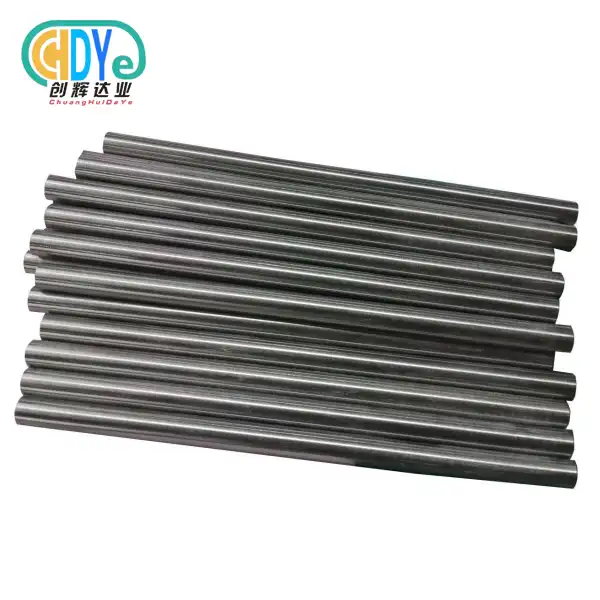
Understanding Tantalum Rod Polishing: Importance and Challenges
Why Surface Finishing Matters in Industrial Applications
Tantalum is very useful in the chemical processing, aircraft, and semiconductor industries because it doesn't react with chemicals and doesn't rust. When we polish tantalum rods, we make these natural qualities even stronger by making smooth surfaces that stop corrosion from starting in one place. The polished finish has a direct effect on how the material reacts to strong acids, high temperatures, and vacuum tanks. A properly finished tantalum surface doesn't rust when exposed to concentrated sulphuric acid at high temperatures. On the other hand, a rough surface with tiny flaws can lose its effectiveness within months of being used. Teams that make things know that the quality of the surface affects the steps that come after. When you weld tantalum parts together, you need surfaces that are clean and free of iron and rust layers. The polished state makes sure that the weld goes through evenly and that few defects form during the fusion process. This is very important when putting together parts of chemical reactors or heat exchangers that work under high temperature stress.
Overcoming Material Hardness and Contamination Risks
Because it is so hard and tends to work-harden during cold processing, tantalum is difficult to work with when treating its surface. Because the metal is 16.65 g/cm³ dense and has a tensile strength between 200 and 300 MPa, it needs special abrasive materials and controlled process settings. Conventional polishing compounds made for softer metals don't work well on harder metals. Instead, diamond-impregnated tools or ceramic abrasives are needed to remove material without leaving surface flaws. Controlling contamination is another very important issue. Processing equipment's iron bits can get stuck on tantalum surfaces, making galvanic cells that cause localised corrosion in service settings. At Chuanghui Daye, our manufacturing routines include strict steps to keep the polishing process from contaminating other parts of the process. These include dedicated processing areas and ferroxyl polishing tantalum rod testing to make sure the surface is more than 99.95% tantalum content before it is shipped.
Overview of Tantalum Rod Polishing Methods: Mechanical vs Chemical
Mechanical Surface Treatment Approaches
To get the surface properties you want, mechanical cleaning uses abrasives that wear away over time. The first step is centerless grinding with coarse-grit wheels to get rid of forge scale and make sure the dimensions are correct. In later steps, smaller abrasives are used, usually going from 120-grit aluminium oxide to 600-grit silicon carbide, to gradually smooth out the surface. In the last step, buffing, felt or cloth wheels are loaded with diamond paste mixtures that range in size from 6 microns to 0.25 microns for mirror finishes. Abrasive flow cutting is better for internal surfaces or shapes that are hard for regular polishing wheels to reach. This abrasive medium is mostly solid and runs under pressure through small passages. It removes material in a controlled way from all surfaces it contacts. This method works especially well when working with tantalum tubes or threaded parts that need the same quality finish on the inside and outside sizes. Things to think about when buying equipment affect both the initial investment and the speed of operations. For large-scale production, high-performance centerless grinders with ceramic-bonded wheels give consistent results. For smaller tasks, standard lathes with special tool posts may work. Controlling the temperature during mechanical processes stops work-hardening and keeps the dimensions stable. To keep tantalum from getting contaminated, coolant systems must be compatible with its chemistry.
Chemical and Electrochemical Polishing Techniques
Chemical cleaning uses controlled acid attacks to break down surface material, leaving behind smooth surfaces that don't need any mechanical stress. Usually, mixes of hydrofluoric and nitric acids are used in the process, and the concentrations and temperatures are carefully controlled. Material is removed mostly from the surface's high points, which eventually smooths out the surface while keeping the dimensions within 0.025 mm of accuracy. This method gets rid of the mechanical stresses that are created during cold working and the thin layer of work-hardened metal that can make it harder to join later. Electrochemical cleaning takes this idea a step further by using electrical potential to speed up the breakdown of surfaces in electrolytic baths. When sulphuric acid or special proprietary formulas are present in the solution, the tantalum rod acts as the anode. The bath temperature and current density are carefully managed to get removal rates of 0.01 to 0.05 mm per processing cycle. The method is very good at making surfaces that are very smooth (Ra values below 0.05 μm) and protects them by adding stable oxide layers that are about 5 nanometres thick.
Step-by-Step Polishing Process for Tantalum Rods in Industrial Settings
Preparation and Initial Inspection
At Chuanghui Daye, we start our quality-focused process by inspecting all of the raw tantalum rod stock that comes in. Each piece is looked at visually under controlled lighting to find flaws on the surface, like cracks, laps, or alien material that could affect the quality of the final finish. Before processing starts, dimensional verification makes sure that the width is consistent within ±0.1 mm. This keeps expensive polishing supplies from being wasted on material that doesn't meet the specifications. Cleaning methods use alkaline detergent solutions and deionised water rinses to get rid of leftover drawing lubricants, oxide films, and handle contamination. There is no way around this preparation step—trying to polish dirty surfaces only pushes the dirt deeper into the material, making underlying flaws that show up as early failure in service. After being cleaned, the rods are either dried with an air knife or baked at a low temperature to get rid of any wetness that might get in the way of chemical reactions or abrasive adhesion.
Executing the Polishing Workflow
Using increasingly finer abrasive stages, the grinding phase sets the base level of surface polishing tantalum rod quality. Using 120-grit aluminium oxide wheels at 1800–2200 surface feet per minute for the first passes gets rid of 0.15–0.25 mm of material, which gets rid of drawing marks and surface flaws. Using 220 grit and 400 grit wheels for intermediate grinding brings down the roughness to about 0.8 μm, while laser micrometres are used to keep an eye on the width all the time. To get the final surface specifications, buffing processes use cotton or felt wheels that have been charged with diamond compounds. Pay close attention to the touch pressure during the process. Too much force creates heat that hardens tantalum, while not enough pressure extends the time it takes to process without improving quality in the same way. Wheel speeds of about 1500 rpm and contact pressures of 2 to 4 kg/cm², which are kept steady by pneumatically controlled tool rests, are usually the best conditions. Using 6-micron, 3-micron, and 1-micron diamond paste in successive buffing steps brings the surface roughness down to below 0.2 μm.
Procurement Considerations for Polished Tantalum Rods
Evaluating Supplier Qualifications
Selecting the right tantalum rod supplier requires assessment of multiple competency factors beyond quoted pricing. ISO 9001:2015 certification demonstrates commitment to systematic quality management, but verification goes deeper. Request evidence of specialised tantalum processing experience through customer references in your specific application sector—chemical equipment fabricators have different requirements than semiconductor tooling manufacturers. Our three decades of expertise at Chuanghui Daye, located in Baoji's "Titanium Capital" industrial cluster, provide access to specialised technical knowledge and supply chain infrastructure that emerging suppliers cannot easily replicate. Production capabilities directly impact your project timeline and flexibility. Suppliers equipped with electron beam melting facilities can produce higher-purity tantalum with tighter compositional control compared to those relying solely on external ingot sources. In-house machining capabilities, including precision lathes, rolling equipment, and dedicated polishing lines, enable faster prototype turnaround and better quality control versus brokers who outsource processing steps. Ask potential suppliers about their capacity for custom diameters between 1–50 mm and flexible length specifications that match your design requirements without forcing compromises or excessive waste.
Understanding Pricing Models and Lead Times
Tantalum pricing reflects both raw material costs and processing complexity. Base metal prices fluctuate with global supply-demand dynamics, particularly mining output from primary sources. Value-added processing charges scale with finish requirements—standard Ra 0.4 μm polished surfaces command lower premiums than mirror finishes requiring Ra 0.1 μm or better. Dimensional tolerances tighter than ±0.05 mm increase machining time and scrap rates, appropriately reflected in quotations. Transparent suppliers provide itemised pricing that separates material, processing, testing, and logistics components, enabling informed value comparisons. Lead time expectations depend on order specifications and supplier inventory practices. Stock diameters in standard lengths may ship within 7–14 days, while custom dimensions requiring dedicated production runs typically need 4–6 weeks from order confirmation. Minimum order quantities for polishing tantalum rods vary by supplier—larger manufacturers may impose 50 kg minimums to justify production setup, while specialty suppliers like Chuanghui Daye accommodate research institutions and prototype developers with flexible small-batch capabilities starting from single pieces. Rush processing options often exist for urgent projects, though premium charges of 15–30% may apply to expedite manufacturing sequences.
Enhancing Industrial Outcomes with Superior Tantalum Rod Polishing
Performance Benefits in Real-World Applications
Optimised surface finishing makes tools last longer in harsh industrial settings. Using rods polished to Ra 0.2 μm instead of standard pickled finishes makes tantalum parts last 40–60% longer in chemical processing plants that use sulphuric acid concentrators. The smoother surface cuts down on the number of places where crevice corrosion can start and on the irregular flow effects that speed up erosion-corrosion attack in fast process streams. This directly means lower costs for maintenance and fewer unplanned shutdowns that mess up production plans. When ultra-smooth tantalum is used in sputtering targets and chamber hardware, semiconductor makers get less particulate contamination. Surfaces finished below Ra 0.1 μm make 75% fewer particles when exposed to plasma than surfaces finished with standard mechanical methods. This change makes wafer yield rates higher and cuts down on expensive scrapped product, giving a return on investment that is many times greater than the extra cost paid for better surface treatment.
Emerging Technologies and Industry Trends
As abrasive flow polishing technologies keep getting better, they use computational fluid dynamics modelling to find the best process settings for shapes that aren't simple. When used with these systems, finishes inside the tantalum tubes and fittings are consistent, which is hard to do with traditional methods. Environmental laws push people to use closed-loop electropolishing systems that recycle electrolytes and neutralise waste streams. This lowers the cost of disposal while still passing stricter standards for discharge. With machine vision and artificial intelligence, automated surface screening can now find microscopic flaws that humans can't see. These systems look at surface topography data from laser cameras to find problems and guess where parts might break before they are put into service. Leading providers are different from those that only use old-fashioned inspection methods because they use these kinds of quality control technologies. At Chuanghui Daye, we keep buying new processing and checking tools to make sure our polished tantalum rods meet the changing needs of the industry while still being cost-effective enough to stay competitive in production.
Conclusion
Polishing tantalum rods requires specialised knowledge combining material science principles with precision manufacturing practices. Understanding the distinctions between mechanical and chemical polishing methods enables informed specification decisions aligned with your application's performance requirements and budget constraints. The systematic approach detailed here—from initial material inspection through final quality verification—ensures consistent results that maximise tantalum's exceptional corrosion resistance and longevity in demanding industrial environments. Successful procurement extends beyond price comparison to encompass supplier capabilities, quality systems, and technical support infrastructure. Partnering with experienced manufacturers who maintain ISO certification, advanced processing equipment, and responsive engineering teams provides the reliability essential for maintaining production schedules and equipment uptime.
FAQ
1. What distinguishes mechanical polishing from electrochemical polishing for tantalum rods?
Mechanical polishing removes material through abrasive contact, offering excellent dimensional control and cost-effectiveness for standard applications. Electrochemical polishing uses controlled dissolution in electrolytic baths, producing ultra-smooth surfaces below Ra 0.1 μm, ideal for semiconductor applications, while eliminating mechanical stresses.
2. How does surface finish quality affect tantalum's corrosion resistance?
Smoother surfaces minimise crevice corrosion initiation points and reduce surface area available for chemical attack. Polished tantalum with Ra below 0.4 μm demonstrates significantly extended service life in aggressive acid environments compared to rougher finishes, where localised corrosion develops more rapidly.
3. What factors influence lead times when ordering custom polished tantalum rods?
Lead times depend on diameter availability, length specifications, finish requirements, and order quantity. Stock sizes may ship within two weeks, while custom dimensions requiring dedicated production runs typically need four to six weeks. Small-batch and prototype orders generally process faster than large-volume shipments requiring extended manufacturing sequences.
Source Premium Polished Tantalum Rods from Chuanghui Daye
Achieving superior results in your chemical processing, laboratory, or semiconductor applications, polishing a tantalum rod starts with selecting a polishing tantalum rod manufacturer committed to quality and technical excellence. Shaanxi Chuanghui Daye Metal Material Co., Ltd. combines three decades of rare metal expertise with ISO 9001:2015 certified manufacturing processes, delivering tantalum rods with >99.95% purity and precision-polished surfaces that meet your exact specifications. Whether you need standard diameters from 1–50 mm or custom configurations for specialised applications, our Baoji facility provides flexible production capabilities, rigorous quality documentation, and responsive technical support. Contact our engineering team at info@chdymetal.com to discuss your requirements and request a detailed quotation today.
References
1. Davis, J.R. (2000). Nickel, Cobalt, and Their Alloys. ASM International Materials Park, OH.
2. Shackelford, J.F., & Alexander, W. (2015). CRC Materials Science and Engineering Handbook (4th ed.). CRC Press.
3. Donachie, M.J. (2000). Titanium: A Technical Guide (2nd ed.). ASM International.
4. Lütjering, G., & Williams, J.C. (2007). Titanium (2nd ed.). Springer-Verlag Berlin Heidelberg.
5. American Society for Testing and Materials. (2019). ASTM B365-12: Standard Specification for Tantalum and Tantalum Alloy Rod and Wire. ASTM International.
6. Schweitzer, P.A. (2010). Fundamentals of Corrosion: Mechanisms, Causes, and Preventive Methods. CRC Press Taylor & Francis Group.
Learn about our latest products and discounts through SMS or email