- English
- French
- German
- Portuguese
- Spanish
- Russian
- Japanese
- Korean
- Arabic
- Greek
- German
- Turkish
- Italian
- Danish
- Romanian
- Indonesian
- Czech
- Afrikaans
- Swedish
- Polish
- Basque
- Catalan
- Esperanto
- Hindi
- Lao
- Albanian
- Amharic
- Armenian
- Azerbaijani
- Belarusian
- Bengali
- Bosnian
- Bulgarian
- Cebuano
- Chichewa
- Corsican
- Croatian
- Dutch
- Estonian
- Filipino
- Finnish
- Frisian
- Galician
- Georgian
- Gujarati
- Haitian
- Hausa
- Hawaiian
- Hebrew
- Hmong
- Hungarian
- Icelandic
- Igbo
- Javanese
- Kannada
- Kazakh
- Khmer
- Kurdish
- Kyrgyz
- Latin
- Latvian
- Lithuanian
- Luxembou..
- Macedonian
- Malagasy
- Malay
- Malayalam
- Maltese
- Maori
- Marathi
- Mongolian
- Burmese
- Nepali
- Norwegian
- Pashto
- Persian
- Punjabi
- Serbian
- Sesotho
- Sinhala
- Slovak
- Slovenian
- Somali
- Samoan
- Scots Gaelic
- Shona
- Sindhi
- Sundanese
- Swahili
- Tajik
- Tamil
- Telugu
- Thai
- Ukrainian
- Urdu
- Uzbek
- Vietnamese
- Welsh
- Xhosa
- Yiddish
- Yoruba
- Zulu
How is the titanium rod for sale manufactured to ASTM Standards?
Manufacturing a titanium rod for sale that complies with ASTM standards involves a rigorous process combining precise raw material selection, advanced metallurgical techniques, strict quality control, and comprehensive testing protocols. Chemical make-up, mechanical properties, size tolerances, and surface quality are all controlled by ASTM standards like B348. This makes sure that every rod works the same way in aerospace, medicine, chemical processing, and industry. Our production method includes controlled casting, vacuum arc remelting (VAR), heat treatment, and full tracking paperwork to make sure that every product we send around the world is safe and reliable.
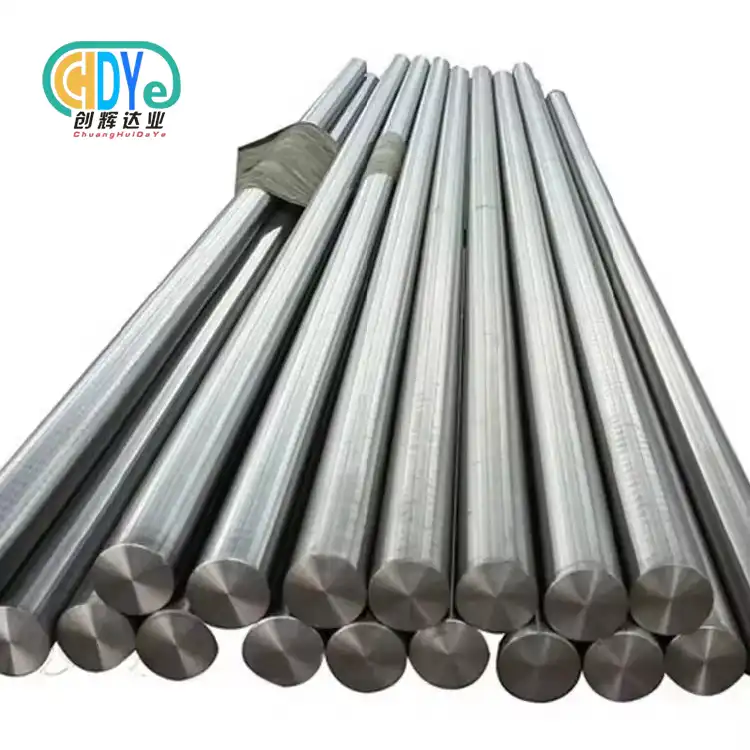
Understanding ASTM Standards for Titanium Rods
It is the job of ASTM International to make technical specs so that all businesses around the world can use materials that meet high standards. When buying managers are looking for titanium rods or bar stock that is commercially pure, ASTM compliance lets them know that the product meets documented performance standards. This way, they don't have to trust what the seller says.
What ASTM B348 Covers
ASTM B348 lays out the rules for bars and billets made of titanium and combinations of titanium. What the standard says about the amounts of oxygen, iron, nitrogen, and hydrogen in a material was written. Because of this, these limits change how the material works physically and how it rusts. Matter is hard and strong based on how much oxygen it has. For things not to break, hydrogen levels must stay below 0.015%. It also shows the lowest tensile strength, yield strength, elongation rates, and hardness ranges for each grade, from Grade 1 (commercially pure) to Grade 5 (Ti-6Al-4V), which is a high-strength alloy.
Why ASTM Certification Matters for Your Projects
If you buy ASTM-certified goods, you are much less likely to find something like that. The sizes are checked for accuracy within a certain range by certification. This cuts down on waste while cutting and speeds up the process. Paperwork can be used to keep track of everything, from the heat numbers of the raw materials to the records of the final inspection. This helps make sure the quality is good and that rules are followed in areas that are managed. People who make parts for spacecraft need to make sure that key parts meet the requirements of AMS 4928. The people who make medical equipment need to make sure that implants that are safe meet the requirements set by ASTM F136. ASTM B348 is what these two rules are based on.
The Manufacturing Process of Titanium Rods to ASTM Standards
To make titanium rods for sale that meet ASTM standards, you need high-tech tools and skilled metallurgists who know how different processing factors affect the finished qualities. Our factory in Baoji, China's Titanium Capital, uses more than 30 years of experience with rare metals to keep all output variables under control.
Raw Material Selection and Verification
The production process for the titanium rod for sale starts with certified titanium sponge or scrap that has been carefully chosen based on the grade standard. Grade 2 materials need less oxygen than Grade 5 materials, and medical-grade ELI (Extra Low Interstitial) materials need even stricter purity rules. We use spectroscopic analysis to check the chemical makeup of the material before melting it to make sure it meets our standard requirements. This first screening stops problems with contamination that could affect whole production batches.
Vacuum Arc Remelting for Purity and Homogeneity
Vacuum arc remelting is the main method used to make high-integrity titanium bar stock. The process melts the raw materials in a controlled vacuum, which stops them from oxidising, gets rid of any remaining impurities, and makes the chemical makeup of the whole ingot the same. VAR creates a smooth architecture with even grain distribution, getting rid of segregation flaws that could lead to weak spots. For smaller group production, our electron beam furnace adds to this ability by providing exact temperature control and clean melting conditions.
Hot Forging and Rolling Operations
During controlled forging and rolling at high temperatures between 850°C and 950°C, hot working turns the cast ingot into a worked bar. This range of temperatures makes sure that the material flows smoothly without causing problems with recrystallisation. Our forging equipment uses small decreases to shape the material gradually while improving its mechanical qualities and fine-tuning its grain structure. The process breaks up the microstructure that was formed when the metal was cast, making a fine-grained alpha or alpha-beta phase structure that is more flexible and resistant to fatigue.
Heat Treatment for Optimized Properties
During heat treatment cycles, the final mechanical properties are changed to fit the needs of the application. After hot working, annealing treatments remove any remaining stresses and keep the microstructure stable. Our annealing kiln keeps the temperature exactly the same, so there are no random heatings that could cause changes in the rod's properties along its length. Solution treating and ageing (STA) can make Grade 5 metal stronger, up to about 950 MPa tensile strength, which is good for aircraft structural parts that are under a lot of stress.
Surface Finishing and Dimensional Control
Both corrosion protection and wear efficiency are affected by the state of the surface. ASTM standards say what kinds of surface flaws, levels of roughness, and amounts of oxidation are acceptable. Our facility has a number of finishing options that can be used for different purposes. Pickled surfaces get rid of the metal layer that forms when hot working, revealing new titanium that is very resistant to rust. When tight specs are needed, machined finishes give you precise control over the dimensions, while polished surfaces are best for medical implants where a smooth surface keeps biological reactions to a minimum.
Comprehensive Testing and Quality Documentation
According to ASTM standards, each output lot goes through a long list of tests. Tensile strength, yield strength, elongation, and hardness are all measured mechanically using equipment that is calibrated and can be traced back to national standards. We machine test samples from different points along the length of the rod to make sure that the properties are the same all the way through the product.
Titanium Rod Properties and Benefits Under ASTM Standards
Titanium rods for sale that are approved by ASTM offer performance benefits that make them a good choice for demanding uses. Learning about these benefits helps procurement teams choose materials that meet the needs of the project and don't go over budget.
Superior Corrosion Resistance in Harsh Environments
Titanium surfaces naturally form a stable oxide film that makes them very resistant to saltwater, acids, alkalis, and chloride solutions. Unlike stainless steel, which pits and corrodes in saltwater, titanium stays structurally sound in saltwater for a very long time without any protective coats. Chemical processing equipment made from Grade 2 material works reliably in sulphuric acid, nitric acid, and organic solvents that would destroy regular metals in just a few months.
This resistance to rust gets rid of the costs of protective coatings, cathodic protection systems, and replacing parts too soon. Compared to other materials, petrochemical plants that use titanium heat exchangers and reactor vessels have much less downtime, and their equipment lasts decades longer.
Exceptional Strength-to-Weight Ratio
Titanium metals are about 45% lighter than high-strength steel but have the same amount of strength. The tensile strength of Grade 5 material is close to 950 MPa, but its density is only 4.43 g/cm³. This means that parts can be made much lighter without losing their structural strength. Aerospace companies use this benefit to make planes lighter, which saves fuel and increases the amount of cargo they can carry. Instead of steel fasteners and structural parts, a 10 mm titanium bar can be used instead. This saves a lot of weight while still meeting the load-bearing requirements.
In the same way, companies that make medical devices benefit by making implantable hardware like intramedullary nails and spinal fusion cages that make healing easier for patients while still giving them enough mechanical support. The lower modulus of elasticity (114 GPa vs. 200 GPa for steel) lowers the stress shielding effects, which helps the bone grow around implants.
Excellent Biocompatibility for Medical Applications
Commercially pure titanium rod for sale and Ti-6Al-4V ELI alloy are better at being compatible with living things. They don't break down easily and help bones fuse. The inert oxide layer stops the metal ions from getting into the nearby tissue, which stops the harmful processes that can happen with nickel-containing alloys. Medical-grade materials that meet ASTM F136 and ISO 5832-2 standards go through extra purity checks that limit interstitial elements that could cause inflammatory responses.
Surgical tools, dental implants, and orthopaedic devices made from approved titanium bar stock have been shown to last a long time in the human body. Because the material isn't magnetic, it can be used with an MRI without creating artefacts that would make it hard to see medical information.
Comparing ASTM Titanium Rods with Other Metal Rods for Informed Procurement
When choosing titanium rods for sale, you have to balance the need for performance with the cost. When you compare titanium to popular alternatives, it becomes clear when the higher original investment leads to better long-term value.
Titanium Versus Stainless Steel
Stainless steel has lower prices for the raw materials it is made of and is very resistant to corrosion in most settings. Stainless steel type 316 works well in many chemical processing tasks and is strong enough for most uses. It costs about half as much as titanium. But chloride-induced pitting corrosion shortens the useful life of stainless steel in coastal settings and acidic conditions, where titanium does better.
Stainless steel's extra weight becomes a big problem in aerospace and automotive applications where reducing mass directly boosts performance and efficiency. Even though stainless steel bars may be cheaper at first, titanium is usually better for important uses when you look at the total cost of ownership, which includes repairs, replacements, and how well they work.
Titanium Versus Aluminum Alloys
Aluminium alloys are even lighter than titanium because they have densities around 2.7 g/cm³ instead of 4.43 g/cm³. It also costs a lot less per kilogram than steel. But aluminium isn't very strong and doesn't work well at high temperatures, so it can't be used in places with a lot of stress or heat. To get the same level of strength, aluminium parts need bigger cross-sections, which often cancels out the density benefit.
Corrosion protection is also very different. Anodised aluminium works fine when exposed to air, but it breaks down quickly in acidic or alkaline solutions, where titanium stays strong. Titanium is often used in aerospace for aircraft parts that are subject to both high loads and harsh conditions, while aluminium is sufficient for structures that don't need to be as strong.
Grade 2 Versus Grade 5 Selection Criteria
It depends on the needs of the product whether to use widely pure Grade 2 or Ti-6Al-4V Grade 5 alloy. Grade 2 is the most resistant to rust and can be shaped well in cold weather. Its tensile strength is about 345 MPa. For better corrosion resistance and lower cost compared to alloyed grades, Grade 2 is often used in chemical processing equipment, naval hardware, and building uses.
At 895 MPa minimum tensile strength, Grade 5 is almost three times as strong as Grade 2. This makes it perfect for aerospace structural parts, high-performance fasteners, and medical implants that need the highest strength-to-weight ratios. The metal stays strong at high temperatures up to 400°C, making it a good choice for exhaust systems and parts of jet engines. Grade 5, on the other hand, is slightly less resistant to corrosion in some reducing acids and needs more complex machining methods because it is harder.
How to Choose and Purchase ASTM-Standard Titanium Rods for Your Business
To do a good job of buying titanium rods for sale, you need to look at more than just the basic material specs. Working with qualified suppliers guarantees consistent shipping, high quality, and expert help for the whole lifecycle of the product.
Verifying Supplier Credentials and Certifications
Real ASTM compliance depends on how well the provider manages quality and how well they can test. ISO 9001:2015 certification means that quality standards have been set up for the purchase of raw materials, the production process, and the final inspection steps. Aerospace suppliers should also have AS9100 certification, which shows they meet the requirements of the aviation industry.
Ask for proof that the testing equipment has been properly calibrated, that the lab is accredited, and that there are third-party audit reports that prove the quality system works. Suppliers with a good reputation will gladly give you full material test reports that include heat numbers, chemical analyses, mechanical test results, and inspection records. Be wary of suppliers who won't give you detailed documentation or who say their standards are "equivalent" but don't have specific ASTM grade designations.
Matching Grade Selection to Application Requirements
Different kinds of titanium are better for different types of applications and performance needs. Grade 2 has the best rust protection for chemical processing equipment that works in highly oxidising environments. Grade 5's high strength is needed for structural aircraft parts that are subject to high dynamic loads. Medical devices need ELI versions with controlled interstitial content that keeps biological reactions to a minimum.
Talk to metallurgists with a lot of experience who know how changes in composition can affect performance in the real world. When customers ask for help choosing the best grades, our technical team helps them figure out what those grades should be based on operating temperatures, corrosive exposures, mechanical loads, and the rules that apply to their industry. This consultation stops over-specification, which raises costs needlessly, and makes sure that the material's abilities match its actual service conditions.
Evaluating Production Flexibility and Custom Capabilities
Standard stock sizes for titanium rod for sale work well for many uses, but custom sizes can often cut down on the cost of cutting and the amount of waste material. Suppliers who are creative in how they make their products can give you non-standard diameters, specific lengths, and surface styles that work with the way you make your products. Our factory can make diameters from 6 mm to 300 mm and lengths up to 6000 mm, so it can handle both small quantities for testing and large numbers for production.
Small-batch production is useful for research centers and businesses that are making new goods that need custom material specs. Support for rapid prototyping shortens the time it takes to build a product, so that the idea can be tested before going into mass production. When evaluating suppliers, talk about the minimum order quantities, lead times, and pricing structures for both standard and custom configurations.
Assessing Global Logistics and Delivery Reliability
Having reliable delivery schedules keeps production from stopping and keeps the cost of carrying inventory low. Check out the supplier's shipping choices, transport network, and history of delivering on time. We keep in touch with foreign freight forwarders who know how to handle speciality metals. This way, we can make sure that all of your packages are properly packaged, have the right paperwork, and get through customs.
Knowing the lead times lets you plan production accurately. Standard grades in common sizes usually ship in two weeks. Custom specifications or large orders may take four to six weeks, depending on how busy the factory is. Set up clear ways for people to talk about the state of their orders, possible delays, and faster shipping choices for those who need them right away.
Conclusion
Making titanium rods for sale that meet ASTM standards requires a lot of advanced metalworking knowledge, high-tech tools, and strict quality checks at every stage of the production process. Each step, from checking the raw materials to vacuum arc remelting, precision casting, controlled heat treatment, and thorough testing, helps make sure that the products are reliable and meet strict industry standards. Knowing how these things are made helps procurement managers make smart choices, like picking the right types and sources that will make sure the materials work well, follow the rules, and hold their value over time. ASTM-certified titanium bar stock is the best material for critical applications in aerospace, medicine, chemical processing, and industry where failure is not an option. It has excellent corrosion resistance, a high strength-to-weight ratio, and is known to be biocompatible.
FAQ
Q: What does ASTM certification guarantee when purchasing titanium rods?
A: When a product is certified by ASTM, it means that its makeup, mechanical features, dimensional limits, and surface quality all meet the technical standards set by ASTM International. Certification comes with full traceability paperwork like heat numbers, chemical analysis results, mechanical test data, and inspection records. This way, you can be sure that the product always does what it's supposed to do instead of just believing what the supplier says.
Q: How can I verify the authenticity of ASTM certificates?
A: Real material test records have exact heat numbers, thorough information on the chemicals used, mechanical test results from approved labs, and the signatures and dates of inspectors. Check the heat number on the product's tag against the information on the certificate. To confirm results, ask for inspection reports from a third party or call the testing lab directly. Suppliers with a good reputation will gladly be checked out and will provide clear proof of compliance.
Q: What testing methods ensure ASTM compliance during manufacturing?
A: Multiple testing methods are used for compliance verification, such as optical emission spectroscopy to find out the chemical composition, tensile testing to find out the mechanical properties, ultrasonic inspection following AMS 2631 to find internal flaws, eddy current testing to find surface cracks, and dimensional inspection using calibrated measuring tools. Samples and tests are done on each output lot at set times, and the results are written down in material test records that are sent with shipments.
Partner with Chuanghui Daye for Reliable ASTM-Certified Titanium Rod Supply
Premium titanium rod for sale that meets ASTM B348, AMS 4928, and ISO 5832-2 standards is made by Shaanxi Chuanghui Daye Metal Material Co., Ltd., a company with over 30 years of experience in rare metals and ISO 9001:2015-certified quality management systems. We have modern vacuum arc remelting, precision forging, and full testing facilities in Baoji, which is known as the Titanium Capital. We can make unique sizes from 6 mm to 300 mm and lengths up to 6000 mm. Our global delivery network makes sure that companies that make aerospace parts, chemicals, medical devices, and research institutions that need consistent quality and full traceability documentation can always get what they need. You can email our technical team at info@chdymetal.com to talk about your specific needs, ask for material certifications, or get personalised advice from an experienced titanium rod for sale provider that puts quality first and customer happiness first.
References
1. ASTM International. (2021). ASTM B348-21: Standard Specification for Titanium and Titanium Alloy Bars and Billets. West Conshohocken, PA: ASTM International.
2. Donachie, M. J. (2000). Titanium: A Technical Guide, 2nd Edition. Materials Park, OH: ASM International.
3. Lütjering, G., & Williams, J. C. (2007). Titanium: Engineering Materials and Processes. Berlin: Springer-Verlag.
4. Boyer, R., Welsch, G., & Collings, E. W. (1994). Materials Properties Handbook: Titanium Alloys. Materials Park, OH: ASM International.
5. Peters, M., Kumpfert, J., Ward, C. H., & Leyens, C. (2003). "Titanium Alloys for Aerospace Applications." Advanced Engineering Materials, 5(6), 419-427.
6. Schutz, R. W., & Watkins, H. B. (1998). "Recent Developments in Titanium Alloy Application in the Energy Industry." Materials Science and Engineering: A, 243(1-2), 305-315.
Learn about our latest products and discounts through SMS or email