- English
- French
- German
- Portuguese
- Spanish
- Russian
- Japanese
- Korean
- Arabic
- Greek
- German
- Turkish
- Italian
- Danish
- Romanian
- Indonesian
- Czech
- Afrikaans
- Swedish
- Polish
- Basque
- Catalan
- Esperanto
- Hindi
- Lao
- Albanian
- Amharic
- Armenian
- Azerbaijani
- Belarusian
- Bengali
- Bosnian
- Bulgarian
- Cebuano
- Chichewa
- Corsican
- Croatian
- Dutch
- Estonian
- Filipino
- Finnish
- Frisian
- Galician
- Georgian
- Gujarati
- Haitian
- Hausa
- Hawaiian
- Hebrew
- Hmong
- Hungarian
- Icelandic
- Igbo
- Javanese
- Kannada
- Kazakh
- Khmer
- Kurdish
- Kyrgyz
- Latin
- Latvian
- Lithuanian
- Luxembou..
- Macedonian
- Malagasy
- Malay
- Malayalam
- Maltese
- Maori
- Marathi
- Mongolian
- Burmese
- Nepali
- Norwegian
- Pashto
- Persian
- Punjabi
- Serbian
- Sesotho
- Sinhala
- Slovak
- Slovenian
- Somali
- Samoan
- Scots Gaelic
- Shona
- Sindhi
- Sundanese
- Swahili
- Tajik
- Tamil
- Telugu
- Thai
- Ukrainian
- Urdu
- Uzbek
- Vietnamese
- Welsh
- Xhosa
- Yiddish
- Yoruba
- Zulu
Why is the tantalum alloy plate used in Acid Processing Equipment?
Tantalum alloy plates are now required in acidic settings because they are very resistant to corrosive attack, even when they are exposed to hydrochloric acid, boiling sulphuric acid that is boiling, and other harsh chemicals. Normal stainless steels and even high-end superalloys eventually break down due to pitting and crevice corrosion. But tantalum alloys, especially grades like Ta-2.5W and Ta-10W, stay strong and chemically inert in situations that would destroy other materials in months. For chemical processors working with very acidic media, this one-of-a-kind ability immediately means fewer equipment breakdowns, lower maintenance costs, and safer operations.
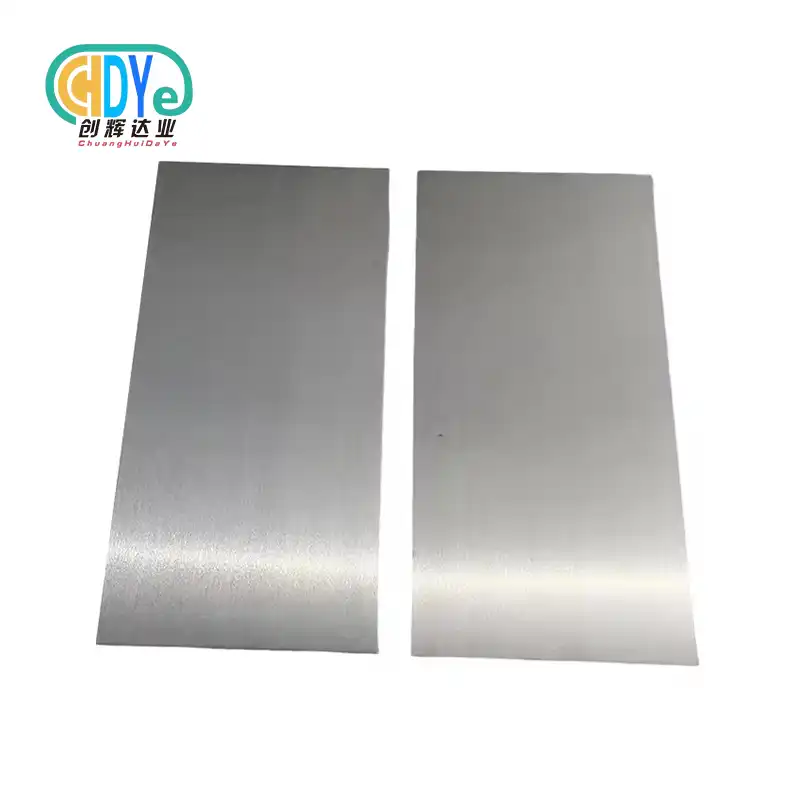
Understanding Tantalum Alloy Plates in Acid Processing
Tantalum alloy plates are made by mixing pure tantalum with tungsten and other important alloying elements. They are engineered refractory metals. This makes a substance that keeps tantalum's famous ability not to rust, but it's also stronger and less likely to creep when it gets hot. A big problem for people who make chemical equipment is how to make parts that can withstand acid attack without affecting how well the structure works. This mix fixes that problem.
What Makes Tantalum Alloys Different
The metals that make them up are what make them different. Add 2.5% to 10% tungsten to pure tantalum to make it much stronger. This doesn't change how chemically resistant the parent metal is. Now that this is better, engineers can make parts that are smaller and lighter while still meeting strict standards for pressure and temperature. When you add tungsten to the metal, it stays more stable at high temperatures. It doesn't melt above 300°C as pure tantalum does.
Why Material Selection Matters
How safe acid-handling tools are to use and how much they cost to own depend on the materials they are made of. When corrosion hurts equipment, it breaks down without notice. It can be very expensive to fix quickly, be bad for the environment, and lead to lost production. Tantalum metals get rid of these risks by creating a wall that is rarely broken down by chemicals. The original investment in high-quality materials pays off over many years of solid service with little care needed.
Standards and Specifications
The plates that Shaanxi Chuanghui Daye Metal Material Co., Ltd. makes meet the standards set by ASTM B708. They come in R05200, R05240, R05252, and R05255 sizes. It is because of these standards that the quality, accuracy of measurements, and performance traits stay the same. We can make things with thicknesses from 0.5 mm to 20 mm, widths up to 1200 mm, and lengths up to 2500 mm. We can now meet a lot of different wants in the chemical processing business.
Corrosion Resistance: The Core Advantage of Tantalum Alloy Plates
The main reason chemistry companies choose tantalum alloy plates is that they don't rust. This property comes from a solid oxide layer forming on top of the metal that heals itself and keeps chemicals from attacking the metal below. Tantalum's oxide stays whole over a wide range of temperatures and pH levels, while passive films on stainless steels break down when they get acidic.
Performance Against Specific Acids
Titanium and hastelloy metals break down very quickly in concentrated sulphuric acid at temperatures above 200°C. Tantalum alloys, on the other hand, stay very stable in these conditions. Also, the material can't be broken down by hydrochloric acid at any concentration or temperature below the boiling point. This means that it can be used in places where HCl is present where other metals would fail very badly. Also, nitric acid, phosphoric acid, and organic acids don't hurt parts made of tantalum metal that were done right.
Comparative Analysis with Alternative Materials
Tantalum metal plates should be more resistant to reducing acids and chloride-containing environments than titanium plates. While titanium is oxidised, it is at its best. However, it quickly breaks down in pure hydrochloric acid. Even though niobium and tantalum are chemically similar, niobium does not rust as well and is not as strong when mixed with tungsten. Hastelloy and other nickel-based superalloys might be able to work in slightly acidic places, but tantalum alloy is better at doing its job in very acidic places.
Real-World Performance Data
Applications that use tantalum alloy heat exchanger plates in sulphuric acid service have been shown to last more than 25 years without showing any signs of corrosion. Chemical companies that replaced failed titanium parts with tantalum alloy replacements say they no longer have to deal with acid-related maintenance problems and have a lot less unexpected downtime. There is a clear return on investment because the service gaps are longer and there is higher process safety, which is shown by these records of performance.
Mechanical and Physical Properties Supporting Acid Processing Use
Not only are tantalum alloys resistant to chemicals, but they also have important mechanical qualities that make it possible to make equipment that works well. These traits make sure that parts keep their shape and size for as long as they are useful.
Thermal Stability and Heat Treatment
Tin alloys are strong enough to be useful even when temperatures make most metals soft. It gets warmer for recrystallisation when tungsten is added. This keeps the parts from getting soft or deforming slowly when they are in hot, acidic circumstances. When we make things here, annealing treatments make plates more flexible and lower the stresses inside them. This makes plates with a consistent microstructure and characteristics that can be predicted for how they will form. For manufactured acid handling equipment to have the right mix of qualities, they need to go through this thermal processing.
Fabrication and Machining Practices
To work with tantalum metals, you need special tools and knowledge. Because the material's melting point is higher than 3000°C, it needs to be melted using vacuum electron beam ways that make sure the makeup is pure and uniform. The width slowly gets smaller during cold rolling, but the quality of the finish on the outside stays the same. When cutting tantalum, it's important to use sharp tools, go at the right speeds, and make sure there is enough flow of cool air. We use high-tech machines like precision lathes, shearing machines, and controlled atmosphere furnaces at our plant in Baoji, China's Titanium Capital, to make sure that the parts we send to customers are exactly what they want.
Maintenance and Lifespan Optimization
The maintenance for tantalum alloy parts isn't as high as for other types of parts. Regular visual inspections are carried out to check the state of the surface and look for damage to the machinery that could have been caused by process upsets. To clean, people usually use mild alkaline products and rinse with deionised water. It is best to stay away from rough methods that could hurt the protective oxide layer. Tantalum alloy plates can last for decades without needing to be fixed if they are used correctly and in the right way, as directed by the manufacturer. This makes them a great deal, even though they cost more to buy at first.
Application Scenarios: Why Tantalum Alloy Plates Are Preferred in Acid Equipment
Tantalum alloys have special qualities that make them the best choice for difficult uses where the safety and cost of production are directly linked to how well the equipment works.
Chemical Reactor Systems
Stirred reactors are used for chlorination reactions, acid-catalyzed processes, and making pharmaceutical intermediates. Tantalum alloy plates are a key part of these reactors. The plates work as vessel liners, baffle sections, and heating coil supports to keep the heat efficient and protect against corrosion. Tantalum is liked by drug companies because it is chemically neutral. This means that metals don't get into the processes used to make drugs, which is important. The smooth surface of the material makes it easier to clean and test between runs of production. This helps businesses follow the rules set by regulators.
Heat Exchanger Applications
Tantalum metal tube sheets and baffles in shell-and-tube heat exchangers make it safe to move heat between services that use hot hydrochloric acid, boiling sulphuric acid, and mixed acid streams. Tungsten-alloyed types can have thinner sections because they are stronger than pure tantalum. This makes it easier for heat to move and lowers the thermal resistance. Because of this benefit, tools can be made smaller, and it costs less to set up new systems. For a long time, tantalum alloy exchangers have been used because they work well at high temperatures and don't get clogged or break down quickly as some other materials do.
Storage and Transportation Infrastructure
Tanks, pipes, and valve parts lined with tantalum keep concentrated acids safe until they are processed or shipped. The substance does not allow hydrogen to pass through, so it does not lead to the corrosion issues that happen in steel tanks used in acidic places. Tantalum is very easy to shape, so it can be used to make complicated shapes like inspection holes, flanged connections, and expansion joints. These methods work well when there is a chance that a control failure could let a lot of pollution out or hurt people.
Cost-Benefit Analysis
Tantalum alloy plates cost more than plates made of other materials, but when working in difficult conditions, total cost analysis always says to use them. In the chemical processing industry, case studies show that tantalum alloy equipment pays for itself in less than three years, compared to other choices that need to be fixed or replaced more often. Cutting down on repair work, production breaks, and contamination events all have real economic benefits that are much greater than the extra costs of materials.
Procurement Insights: How to Source the Best Tantalum Alloy Plates
To buy tantalum alloy plates successfully, you need to know the technical requirements, quality standards, and supplier capabilities. Making well-informed choices makes sure that materials meet the needs of the application while also maximising cost and delivery performance.
Grade Selection Criteria
There are different grades of tantalum alloy that have different balances of properties. Grade R05200 is pure tantalum that is very resistant to corrosion and easy to shape. For uses that need strong structures at high temperatures, grades R05252 (Ta-2.5W) and R05255 (Ta-10W) offer increasing levels of strength. To find the best grade, procurement teams should look at working factors like acid concentration, temperature, pressure, and mechanical loads. Our technical team can help you match the properties of a material to the needs of a particular application.
Quality Certifications and Testing
Reputable suppliers give full material certifications that show the chemical makeup, mechanical properties, and size compliance. Look for companies that have ISO 9001:2015 certification, which shows that they manage quality in a planned way throughout the whole production process. For important uses, extra tests might be needed, like a GDMS chemical analysis to check the levels of impurities between the grains, an ultrasonic inspection to find problems inside the material, and a metallographic examination to make sure the grains are arranged correctly. These steps of validation give you peace of mind that the materials you're sending will work as expected in tough service conditions.
Supply Chain Considerations
Tantalum is still a speciality material that can only be made in small amounts around the world. When planning how to buy things, you should know that standard production orders have wait times of 15 working days, while stock sizes may ship within 1 to 3 days. Building relationships with dependable suppliers like Chuanghui Daye helps make sure that materials are available when project deadlines require quick action. By buying in bulk, you can get better prices and build up your inventory for ongoing projects like maintenance and expansion. Sample purchase choices let design teams check the properties of the material and how it can be made before committing to full production numbers.
Working with Experienced Suppliers
Because of the skill needed to make high-quality tantalum alloy plates, the choice of seller has a big effect on how the project turns out. Look for companies that have been handling refractory metals for a long time, have modern production facilities, and have a history of meeting the needs of demanding businesses. Shaanxi Chuanghui Daye Metal Material Co., Ltd. has been in the rare metal business for more than 30 years and knows a lot about it. Our position in Baoji gives us access to China's most developed supply chain for rare metals and a pool of technical ability, which helps us make things quickly and at low costs.
Conclusion
Tantalum alloy plates are the best material option for acid processing equipment where corrosion resistance, mechanical dependability, and long-term performance are essential. Because they are chemically stable, stronger thanks to tungsten alloying, and have been shown to last a long time, these materials are essential in chemical processing, pharmaceutical production, and other related fields. When you buy tantalum alloys, you get measurable value in the form of lower maintenance costs, no downtime, and better safety performance. As the world's chemical output keeps growing, tantalum alloys will continue to be necessary for safe and effective acid treatment.
FAQ
Q: What are typical lead times for tantalum alloy plate orders?
A: Lead times depend on the information you give us and how many items you buy. Standard production orders usually take about 15 working days to ship from the time the order is confirmed. Stock sizes in standard sizes can ship within one to three days, which is quick for replacing things that need to be done right away. Lead times may be longer if you need custom sizes, special surface finishes, or a lot of items. This depends on when the production is scheduled. Getting in touch with sellers early on lets buying teams plan when materials will be available so that they don't clash with project deadlines.
Q: How does tantalum alloy compare to pure tantalum for chemical resistance?
A: Tantalum alloys with 2.5% to 10% tungsten have almost the same corrosion protection as pure tantalum in most acid manufacturing situations. The addition of tungsten mostly improves the material's mechanical strength and ability to work at high temperatures without changing its chemical inertness. Pure tantalum may have a few small benefits in very harsh situations involving certain chemical combinations at high temperatures. However, the structural benefits of alloyed grades usually outweigh these small differences. This is why Ta-2.5W and Ta-10W grades are the best choices for most machine uses.
Q: Can tantalum alloy plates be supplied in custom sizes?
A: Yes, manufacturers can make tantalum alloy plates in any size that fits the needs of a specific piece of equipment. Standard production powers allow thicknesses from 0.5 mm to 20 mm, widths up to 1200 mm, and lengths up to 2500 mm. Through special production methods, it may be possible to make parts that are bigger or thicker. Custom sizing makes the best use of materials and makes fabrication easier by sending plates that are the same size as the final part. Talking about dimensional needs early on in the buying process makes sure that providers can meet those needs within the limits of their production capabilities and delivery times.
Source Premium Tantalum Alloy Plates from Chuanghui Daye
The Shaanxi Chuanghui Daye Metal Material Co., Ltd. can help you with your acid processing equipment needs by making high-purity tantalum alloy plates that meet ASTM B708 standards. Our production methods, which are ISO 9001:2015 approved, give types R05200, R05240, R05252, and R05255 the same high quality. Our experienced team can help you with technical questions and quick service, whether you need stock sizes for quick deployment or custom dimensions for unique uses. Email us at info@chdymetal.com to talk about your needs, get material certifications, or get reasonable quotes from a reliable tantalum alloy plate maker with 30 years of experience working with rare metals.
References
1. Davis, J.R. (Editor). ASM Specialty Handbook: Heat-Resistant Materials. ASM International, Materials Park, OH, 1997.
2. Schweitzer, P.A. Metallic Materials: Physical, Mechanical, and Corrosion Properties. Marcel Dekker, New York, 2003.
3. Boyer, R., Welsch, G., and Collings, E.W. Materials Properties Handbook: Refractory Metals and Alloys. ASM International, Materials Park, OH, 1994.
4. Mineta, K. and Hayashi, M. "Corrosion Behavior of Tantalum and Its Alloys in Various Acid Solutions." Journal of Materials Science & Technology, Vol. 28, No. 4, 2012, pp. 315-323.
5. Black, J.R. and Hastings, G.W. Handbook of Biomaterial Properties. Chapman & Hall, London, 1998.
6. Gupta, C.K. Extractive Metallurgy of Niobium and Tantalum. CRC Press, Boca Raton, FL, 2003.
Learn about our latest products and discounts through SMS or email