- English
- French
- German
- Portuguese
- Spanish
- Russian
- Japanese
- Korean
- Arabic
- Greek
- German
- Turkish
- Italian
- Danish
- Romanian
- Indonesian
- Czech
- Afrikaans
- Swedish
- Polish
- Basque
- Catalan
- Esperanto
- Hindi
- Lao
- Albanian
- Amharic
- Armenian
- Azerbaijani
- Belarusian
- Bengali
- Bosnian
- Bulgarian
- Cebuano
- Chichewa
- Corsican
- Croatian
- Dutch
- Estonian
- Filipino
- Finnish
- Frisian
- Galician
- Georgian
- Gujarati
- Haitian
- Hausa
- Hawaiian
- Hebrew
- Hmong
- Hungarian
- Icelandic
- Igbo
- Javanese
- Kannada
- Kazakh
- Khmer
- Kurdish
- Kyrgyz
- Latin
- Latvian
- Lithuanian
- Luxembou..
- Macedonian
- Malagasy
- Malay
- Malayalam
- Maltese
- Maori
- Marathi
- Mongolian
- Burmese
- Nepali
- Norwegian
- Pashto
- Persian
- Punjabi
- Serbian
- Sesotho
- Sinhala
- Slovak
- Slovenian
- Somali
- Samoan
- Scots Gaelic
- Shona
- Sindhi
- Sundanese
- Swahili
- Tajik
- Tamil
- Telugu
- Thai
- Ukrainian
- Urdu
- Uzbek
- Vietnamese
- Welsh
- Xhosa
- Yiddish
- Yoruba
- Zulu
How to Choose the Best Polishing Tantalum Rod Supplier
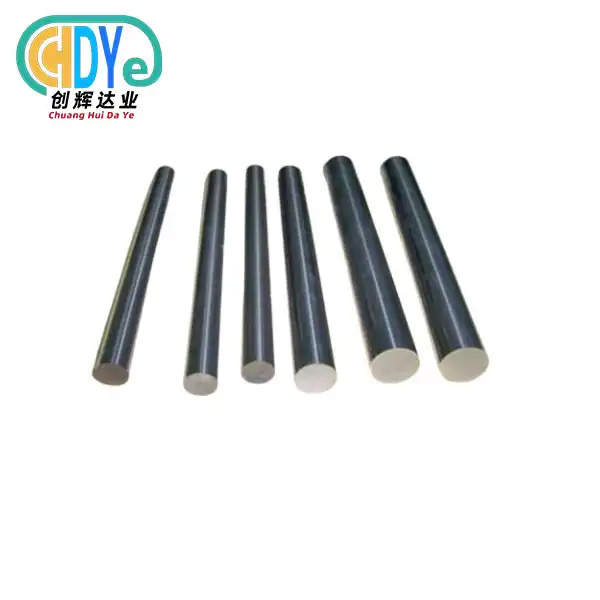
Buying tantalum is rarely a simple purchase. The metal is expensive, the applications challenging, and a minor imperfection in purity or surface finish can mean contamination, premature failure, or a rejected batch. That is why knowing how to select the best polishing tantalum rod supplier is as important as knowing the material itself. A good supplier does more than ship metal: it controls purity, delivers a consistent surface, meets your dimensions, and stands behind every order with clear documentation and responsive service. In this guide, we walk through the specifications to check, the manufacturing and quality signals to look for, and the practical questions to ask, so you can compare suppliers with confidence and avoid costly surprises.
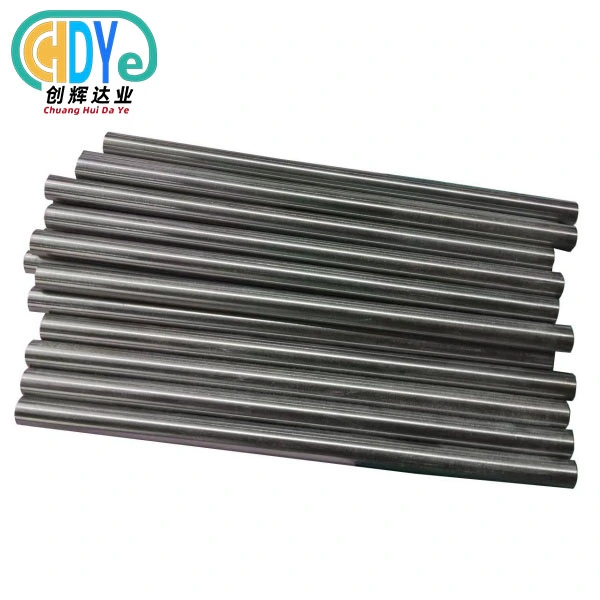
Why Supplier Selection Matters for Polishing Tantalum Rod Quality
The Role of Purity in Corrosion Resistance and Performance
The first thing to realize about a polishing tantalum rod is that the performance is highly dependent on purity. Tantalum's excellent chemical inertness is due to a stable, self-healing oxide coating, and impurities may degrade that film and produce weak places where corrosion starts. A rod of 99.95%+ purity delivers the corrosion resistance and thermal stability chemical and laboratory users require. If a supplier is not able to provide verified purity data for each batch, you are gambling with a risk that may only be discovered after the part is already in use in a reactor or test system.
Why Surface Finish Is More Than Appearance
A polished surface is not only for appearances. A smooth and even finish of a polishing tantalum rod reduces the locations where deposits, residues, or impurities might accumulate. This is important in chemical processing and in laboratory work where cleanliness is crucial. Also, it makes it easy to check the rod, since scratches, pits, and seams are much more evident on a properly polished surface. Suppliers who regulate the process from drawing to finishing produce rods that look beautiful and operate well, while those that approach polishing as a last cosmetic phase typically leave behind concealed faults. Always ask to view final samples or images of the surface before making a major purchase.
Hidden Costs of Choosing on Price Alone
With tantalum, it’s always tempting to just go with the lowest quote, but the cheapest may sometimes become the most costly. A polishing tantalum rod that has an uneven diameter, poor straightness, or unclear purity may lead to machining waste, assembly failures, and unscheduled shutdowns that cost significantly more than the intended savings. Rework, delayed projects, and returned shipments can cost time and goodwill. A more effective way is to do a comparison of the whole value: material quality, paperwork, delivery dependability, and technical assistance. The supplier who is open about his method and honest about his limitations will often save you money throughout the lifetime of the project, even if the unit price is somewhat higher.
Key Specifications to Check Before You Buy
Composition, Diameter and Length
Start by getting the essential specs down in writing. We provide polished tantalum rods produced from tantalum of 99.95% purity and higher, in diameters from 1 mm to 50 mm, cut to your requested lengths. That adaptability is helpful since lab crucible supports, tiny fasteners, and massive process components all require various sizes. Ask the provider to verify what it can hold consistently. Be sure to describe your desired diameter tolerance, length, and straightness accurately when asking for a price. If you get vague responses at this point, it frequently means poor process control later; thus, a precise, thorough answer is a positive indicator.
| Parameter | Specification |
|---|---|
| Material | Tantalum, Ta > 99.95% |
| Diameter | 1–50 mm |
| Length | As requested |
| Surface | Polished |
| Applications | Chemical processing, laboratory use |
Density and Mechanical Properties
You may use physical and mechanical data to verify that the material is what the provider states. The density of a genuine high-purity polishing tantalum rod is around 16.65 g/cm 3, and the tensile strength is 200 to 300 MPa. These values are a result of the soft, ductile quality of pure tantalum, which may be easily formed and machined, although it should not be mistaken for stronger alloyed grades. If a provider cites values considerably outside this range for a rod advertised as pure tantalum, request an explanation and test results. Good manufacturers will be happy to provide you with this information, as it helps their own reputation.
Standards, Certificates and Documentation
Documentation is turning a promise into proof. For polished tantalum rods, you should get a material certificate detailing chemical composition for each order, dimensional inspection records, and traceability to the manufacturing batch. In formulating purchase requirements, many buyers also look to established standards such as ASTM B365 for tantalum and tantalum alloy rod and wire. Good paperwork protects both parties. Your customers or auditors can see that you comply, and the supplier can confirm that the item meets the specifications agreed upon. If a corporation refuses to provide credentials, think of it as a big red flag.
How to Evaluate a Supplier's Manufacturing and Quality Control
Production Process from Ingot to Finished Rod
How a supplier creates its rods tells you a lot about what you will get. Polishing Tantalum Rods: We start with high-grade Tantalum ingots, which are cold-worked through a series of procedures including forging, rolling, and drawing. Each rod is then carefully machined and polished to achieve the desired surface finish and is subject to a final examination for dimensional correctness and surface quality. Typically, suppliers that explain every step fully and manage the whole process in their own facilities are more dependable than trading companies that outsource much of the labor and don’t know where the item originated.
Equipment and Technical Capability
The equipment on the manufacturing floor demonstrates whether a provider is genuinely able to deliver. We are Shaanxi Chuanghui Daye Metal Material Co., Ltd. We have annealing furnaces, an electron beam furnace, smelting equipment, a rolling machine, a lathe, a sawing machine, and a shearing machine, so we can do melting, forging, rolling, and machining all in one place. For the customer of polishing tantalum rod, this incorporation is important since it decreases lead times, cuts handling damage, and maintains low process variation. When visiting a supplier or looking at its profile, ask which processes are done in-house and which are subcontracted. If you can’t visit in person, ask for images or a video tour.
ISO 9001:2015 and Inspection at Every Stage
A recognized quality system offers you the assurance that successful outcomes can be repeated. We are certified to ISO 9001:2015 Quality Management System for the processes of Raw material inspection, melting and forging, Machining and forming, Final inspection, and packing. This implies that for every polished tantalum rod we sell, faults are solved at the source and not after delivery. For any supplier, ask to see a copy of the certificate, confirm that it is current, and inquire how the findings of inspections are documented. Below is a table that highlights what to look for at each step.
| Stage | What to Verify |
|---|---|
| Raw material inspection | Purity and origin of tantalum ingots |
| Melting and forging | Uniform structure and composition |
| Machining and forming | Diameter, straightness, and polished surface |
| Final inspection and packaging | Dimensional accuracy, surface quality, protective packing |
Practical Buying Considerations for Chemical and Laboratory Users
Matching the Rod to Your Application
Different businesses utilize a polishing tantalum rod differently; thus, it is important to clarify your use to the provider. In chemical processing, the rod may act as a stirrer shaft, thermowell, fastener, or electrode support in hot, corrosive fluids. It may be used in labs for sample containers, probes, and pieces of equipment where purity and cleanliness are important. Our rods have good corrosion resistance, thermal stability, and structural integrity under harsh environments, but the optimum size, finish, and length will still rely on your design. An experienced provider will ask you about temperature, medium, and tolerances and offer the best standard.
Customization, Lead Time and Packaging
Standard stock doesn’t always suit an actual project, so inquire how adaptable the supplier is. A reputable partner can cut a polishing tantalum rod to your precise length, provide several diameters in the same order, and change the surface quality if your process requires anything unique. Also, clarify the normal lead time, minimum order quantity, and packing strategy, since tantalum surfaces must be protected from scratches and contamination during delivery. Reliable packing, clear labeling, and precise delivery estimates all represent a company that cares for client demands. Our site is located in the Baoji High-tech Development Zone with strong transport connections; we can ship effectively to consumers all over the globe.
Communication, Experience and After-Sales Support
Finally, evaluate the human element of the interaction. A provider with decades of expertise in rare metals will not only know how to create a polished tantalum rod, but also how to fix difficulties when they occur. Founded by an industry specialist with more than 30 years of experience, Chuanghui Daye believes in quality first and customer first. You want fast, direct answers to your inquiries, a readiness to share test results, and a helpful attitude if anything goes wrong after delivery. Fantastic communication at the quote stage is sometimes a fantastic sample of the assistance you will get for the remainder of the partnership.
Conclusion
There are generally 5 key points when choosing a provider of polishing tantalum rods: purity, surface quality, process control, documentation, and support. Shaanxi Chuanghui Daye Metal Material Co., Ltd based in Baoji, is the “Titanium Capital” of China. We have more than 30 years of expertise with rare metals and have modern melting and machining equipment, certified to ISO 9001:2015. We provide dependable and cost-effective tantalum products. So before your next purchase, check vendors on the topics discussed here, ask for samples and credentials, and choose a partner you can trust. Call our experts now and let us help you locate the correct rod for your job.
FAQ
Q1. What purity does your polishing tantalum rod have?
A: Our rods are made from tantalum with a purity above 99.95%, which provides excellent corrosion resistance and chemical inertness for demanding applications.
Q2. What diameters and lengths can I order?
A: Diameters range from 1 to 50 mm, and the length is cut according to your request, so you can order the size that suits your equipment.
Q3. Which industries use polished tantalum rods?
A: They are mainly used in chemical processing and laboratory settings, and also in high-temperature environments where corrosion resistance and cleanliness are important.
Q4. How do I know the quality is consistent?
A: Our production is controlled under an ISO 9001:2015 certified system, with inspection at raw material, melting and forging, machining and forming, and final packaging stages.
Q5. Can I get a customized rod?
A: Yes. We can supply specific diameters and lengths, and we are happy to discuss your surface finish and application needs before production begins.
Contact Us Today for Your Polishing Tantalum Rod Needs
Looking for a dependable partner for high-purity tantalum? Shaanxi Chuanghui Daye Metal Material Co., Ltd. supplies premium polishing tantalum rods, together with titanium, niobium, tungsten, and molybdenum products, to customers around the world. Tell us your required diameter, length, quantity, and application, and our experienced team will prepare a fast, tailored quotation along with the documents you need. Whether you want a small laboratory order or regular bulk supply, we are ready to help with expert advice and reliable delivery. Email us now at info@chdymetal.com and take the first step toward a stronger, more dependable supply chain.
References
1. Cardonne, S. M., Kumar, P., Michaluk, C. A., & Schwartz, H. D. (1995). Tantalum and its alloys. International Journal of Refractory Metals and Hard Materials, 13(4), 187–194.
2. Robin, A., & Rosa, J. L. (2000). Corrosion behavior of niobium, tantalum and their alloys in hot hydrochloric and phosphoric acid solutions. International Journal of Refractory Metals and Hard Materials, 18(1), 13–21.
3. Cardarelli, F. (2018). Materials Handbook: A Concise Desktop Reference (3rd ed.). Springer.
4. ASTM International. (2016). ASTM B365: Standard Specification for Tantalum and Tantalum Alloy Rod and Wire. ASTM International.
5. International Organization for Standardization. (2015). ISO 9001:2015 Quality Management Systems – Requirements. ISO.
6. Black, J. (1994). Biological performance of tantalum. Clinical Materials, 16(3), 167–173.
Learn about our latest products and discounts through SMS or email