- English
- French
- German
- Portuguese
- Spanish
- Russian
- Japanese
- Korean
- Arabic
- Greek
- German
- Turkish
- Italian
- Danish
- Romanian
- Indonesian
- Czech
- Afrikaans
- Swedish
- Polish
- Basque
- Catalan
- Esperanto
- Hindi
- Lao
- Albanian
- Amharic
- Armenian
- Azerbaijani
- Belarusian
- Bengali
- Bosnian
- Bulgarian
- Cebuano
- Chichewa
- Corsican
- Croatian
- Dutch
- Estonian
- Filipino
- Finnish
- Frisian
- Galician
- Georgian
- Gujarati
- Haitian
- Hausa
- Hawaiian
- Hebrew
- Hmong
- Hungarian
- Icelandic
- Igbo
- Javanese
- Kannada
- Kazakh
- Khmer
- Kurdish
- Kyrgyz
- Latin
- Latvian
- Lithuanian
- Luxembou..
- Macedonian
- Malagasy
- Malay
- Malayalam
- Maltese
- Maori
- Marathi
- Mongolian
- Burmese
- Nepali
- Norwegian
- Pashto
- Persian
- Punjabi
- Serbian
- Sesotho
- Sinhala
- Slovak
- Slovenian
- Somali
- Samoan
- Scots Gaelic
- Shona
- Sindhi
- Sundanese
- Swahili
- Tajik
- Tamil
- Telugu
- Thai
- Ukrainian
- Urdu
- Uzbek
- Vietnamese
- Welsh
- Xhosa
- Yiddish
- Yoruba
- Zulu
How to Find a Reliable titanium rod for sale Supplier?
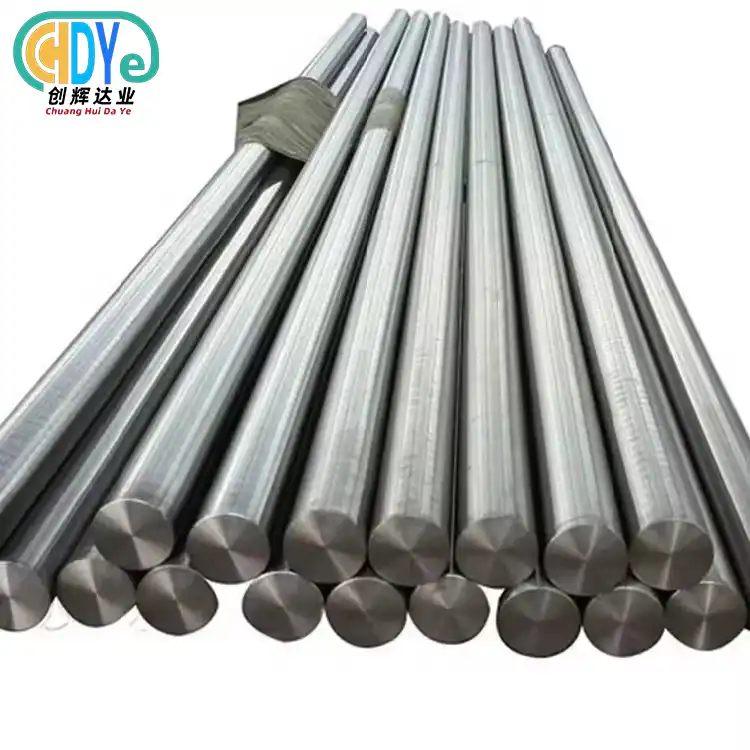
To find a reliable source for titanium rod for sale materials, you need a plan that takes into account quality checks, industry certifications, and the possibility of a long-term relationship. When buying titanium rod, procurement professionals should give more weight to suppliers who can show they are ISO 9001:2015 certified, have full documentation of their material testing, and have a history of exporting. Reliable sellers give clear information about the chemicals they use, keep track of materials from raw materials to finished goods, and offer technical support during the whole buying process. This makes sure that your investment works the same way in aerospace, medicine, chemical processing, or industrial settings.
Understanding the Titanium Rod Market and Buyer Needs
Why Titanium Rods Dominate High-Performance Industries
Things made of titanium are 45% lighter than steel, but they are just as strong. They don't rust in saltwater and are safe to touch human skin, which is why they are so popular in areas where failure isn't a choice. Engineers use Ti-6Al-4V bars to make landing gear parts that have to work hard under a lot of stress. For heat exchanger tubes that are in acids that break down metals, chemical plants ask for types that have more tantalum. Types of Grade 5 ELI are used by medical engineers for orthopaedic implants that need to be strong mechanically and also work well with bone.
Balancing Quality Certifications with Budget Constraints
Buyers are always torn when they try to keep their costs down and meet strict approval standards. Most aerospace clients want full batch tracking documents and proof that they follow AMS 4928. When research institutions buy small amounts, on the other hand, they care more about how pure the material is than how much paperwork they have. A smart way to buy takes these differences into account by telling you which rights you need for your application and which ones you can skip without hurting speed or safety.
The Customization Imperative
Standard amounts of stock for titanium rod for sale don't always work perfectly with the needs of a project. The ability of the provider to meet your needs determines whether the project can be finished. This is true whether you need precision-ground rods with a 10 mm diameter for CNC machining or 4 mm wire for custom fasteners. When manufacturers offer different diameter standards (h8 or h9 precise classes), lengths up to 6000 mm, and surface finishes (polished, pickled, or machined), they can cut down on expensive extra steps in the production process and make things go faster.
Defining the Criteria for a Reliable Titanium Rod Supplier
Grade Certifications and Material Standards
Honest suppliers can easily show that their goods meet international standards such as ASTM B348 for industry uses, AMS 4928 for aircraft needs, and ISO 5832-2 for medical-grade materials. These certifications are more than just pieces of paper; they show that the manufacturing process was managed in a way that kept an eye on the amount of oxygen (which affects ductility), the levels of interstitial elements (which affect weldability), and the uniformity of the grain structure (which determines fatigue resistance). What you should ask for are Material Test Reports (MTRs) that show the tensile strength ranges (345 MPa to 950 MPa depending on grade), the chemical makeup breaks that show how much aluminium and vanadium are in Ti-6Al-4V alloys, and the results of non-destructive tests that show the alloys are stable.
Manufacturing Capabilities and Technical Infrastructure
The tools list shows how far along the business is. The vacuum arc remelting (VAR) furnaces get rid of the impurities that make things not work as well. It is possible to make unstable metal mixtures that can't be made any other way with electron beam melting tools. The mechanical properties are better because modern forging tools make grain structures that are regular. When looking at possible partners, find out about their melting furnaces, rolling mills, and how well they can make things. For example, providers who have centerless grinding tools can give you the smaller circle limits you need for high-precision tasks.
Here are some of the main benefits of modern facilities:
- Melting Technologies: VAR and electron beam furnaces make ultra-pure titanium with a controlled oxygen content below 0.18% for Grade 1 material. This has a direct effect on how easily it can be shaped and how well it resists rusting in harsh chemical environments.
- Processing Flexibility: Integrated forging, rolling, and machining operations get rid of the need to hand off materials to different subcontractors. This lowers the risk of contamination and keeps track of materials throughout production cycles. Custom diameter specifications from 6mm to 300mm can also be met.
- Quality Control Systems: ISO 9001:2015-certified factories follow strict inspection protocols at every step of the production process. These include checking the dimensions of raw materials, testing ultrasonics according to AMS 2631 standards, and checking the final surface quality. This makes sure that the performance of each batch meets the strict requirements of the aerospace and medical industries.
These production skills directly affect how reliable the result is. If a supplier doesn't have the right melting technology, they might get bad raw materials. Similarly, if a supplier doesn't have the right precision machining equipment, they can't promise that parts like intramedullary surgical rods or semiconductor processing fixtures will be made properly.
Reputation Verification and Industry Presence
Third-party approval is very important in titanium markets where new materials could be used instead. When suppliers set up shop in well-known manufacturing hubs like Baoji, China's "Titanium Capital," they benefit from having close-by infrastructure and access to specialised knowledge that has been built up over many years. Check to see what licenses your business has, including any export licenses you have and any trade associations you belong to. You can read customer reviews from companies in the same line of work as you to get a good idea of how reliable delivery is, how fast technical help reacts, and how problems are fixed when you need to change the specs.
Comparing Titanium Rod Suppliers: Key Indicators and Market Insights
Performance Advantages Over Alternative Materials
It's easy for aerospace engineers to see how much titanium weighs compared to stainless steel alternatives. A 45% weight loss has a direct effect on how much fuel an aeroplane uses over its entire life. Alloys made of aluminium are also very light, but they don't do well in hot weather. Titanium stays strong at 400°C, but aluminium gets too soft and could break. If you compare how strong carbon fibre composites are to how light they are, they can cause galvanic corrosion in hybrid structures and aren't flexible enough for shaping that is hard to do.
Understanding Pricing Structures and Value Propositions
Titanium rod for sale is more expensive than most metals, but the numbers are different when you look at the whole picture. A Grade 2 pure titanium rod is three to five times more expensive per kilogram than 316 stainless steel. However, it doesn't need to be polished for naval use, so it costs a lot less to keep up over time. A lot of the time, buying in bulk will save you 15 to 20 percent. To get a diameter that fits your needs, you might have to pay 10 to 25 percent more. By buying directly from the manufacturer, you can save a lot of money because you don't have to pay the markups that middlemen add on. This is especially true for long-term production needs instead of one-time purchases for tests.
Real-World Application Example: Aerospace-Grade Ti-6Al-4V Rods
To make landing gear nuts that meet the standards of AMS 4928, a company that makes aeroplane parts needed 25 mm diameter Ti-6Al-4V bars. More than 895 MPa of tensile strength was needed for the material, and metallographic analysis had to prove the grain structure. There also had to be full tracking records that linked records of how the original ingot was melted to records of finished rods. Suppliers who couldn't show proof of approval for vacuum arc remelting were ruled out right away. In addition to having the right credentials for the material, the chosen partner had also worked with aerospace-specific packaging needs before, such as protective end caps and moisture-barrier wrapping, and knew how to meet tight lead times that were tied to the production schedules of the planes. This case shows that a supplier's skills need to match both the needs of the products and the way things are usually done in the business.
How to Vet and Verify Supplier Authenticity and Titanium Rod Purity
Material Testing Documentation Requirements
Legitimate suppliers give detailed Material Test Reports that include the chemical makeup, which is checked by spectroscopic analysis. These reports confirm the percentages of titanium purity, the amount of aluminium in Ti-6Al-4V alloys (5.5–6.75%), the amount of vanadium (3.5–4.5%), and most importantly, the interstitial elements like oxygen, nitrogen, and hydrogen that have a big impact on how the material behaves. The certificates for mechanical properties should list the tensile strength, yield strength, stretch rates, and hardness numbers (for Grade 5 material, these are usually HRC 30-36). Non-destructive testing certificates that follow the ASTM B348 or AMS 2631 guidelines prove that the material is sound on the inside, finding holes, inclusions, or laminations that can't be seen on the surface.
Factory Audits and Certification Verification
It's not always easy to do online testing. Important buyers go to the plant in person or hire a third-party auditing service to be sure that the production promises are real. Getting ISO 9001:2015 certification is a good sign of systematic quality management, but reading the audit reports shows how well the system was put in place, not just that it was followed. Watch how the raw materials are kept (making sure they are properly labelled and separated to avoid cross-contamination), be present for checks while the work is being done, and look at the records of how the testing equipment was calibrated. If a supplier doesn't mind being open and honest, they probably run a legal business. If a supplier doesn't want to be checked, they might be hiding bad habits.
Customer Feedback and Industry References
Talk to current clients in similar areas to find out how well a business is doing without bias. Ask specific questions, like how the supplier dealt with deviations from the specifications that were found during the receiving inspection? How quick were they to respond when fast delivery was needed? Did the material work the way it was supposed to when it was actually being machined or welded? Most of the time, forums and expert networks in a field offer honest views that aren't on official reference lists.
Best Practices for Procuring Titanium Rods: From Inquiry to Purchase
Communicating Technical Requirements Effectively
Clear sharing of requirements is the first step to a successful purchase. In addition to saying "Ti-6Al-4V rod," you should also say the exact diameter with error class (for example, 25mm +0/-0.05mm), the length needed, the surface finish expected (Ra < 0.8μm for polished versus as-rolled state), and the standards that apply (ASTM B348 for commercial use versus ASTM F136 for surgical implants). Include the end-use application context. Suppliers who know your industry will be able to guess unstated requirements and suggest changes to the specifications that will make them easier to manufacture without affecting performance.
Negotiation and Agreement Structuring
You should talk about more than just unit costs when you talk about prices for titanium rod for sale. Make sure you understand the minimum order numbers, volume discount thresholds, payment terms (like letter of credit or wire transfer plans), and Incoterms that spell out who is responsible for shipping and where the risk shifts. For international purchases, make sure that export licenses are valid and that customs paperwork is available. Set standards for quality acceptance and processes for inspections. For example, will you use your own tools for the receiving check, require third-party approval, or accept test reports from the supplier? Write down these agreements in a formal way to avoid disagreements while the order is being filled.
Customization Options and After-Sales Support
In competitive markets, suppliers who give services that add value stand out. Custom cutting to exact lengths gets rid of waste and extra work. Receiving inspection failures are less likely when special packaging is used, like vacuum-sealed bags with desiccants for moisture-sensitive grades and protective caps that keep the surface from getting damaged during shipping. When processing problems arise, after-sales technical support is very important. A supplier that offers metallurgical advice when a weld cracks or suggests changes to the heat treatment to reach the target hardness becomes a strategic partner instead of a transactional vendor.
Having long-term ties with dependable providers gives you an edge over your competitors. As a preferred customer, you may get priority booking when capacity is limited, the ability to handle rush orders, and the desire to hold extra inventory to support just-in-time shipping needs. Most of the time, these indirect benefits are worth more than small price differences between sellers.
Conclusion
Identifying reliable suppliers for titanium rod materials demands systematic evaluation across multiple dimensions: verifiable certifications demonstrating compliance with ASTM B348 and AMS 4928 standards, manufacturing capabilities including vacuum arc remelting and precision machining equipment, transparent material testing documentation, and proven export experience serving international markets. Success requires moving beyond price-focused procurement toward comprehensive assessment of technical competency, quality systems, and partnership potential. Suppliers who readily provide Material Test Reports, welcome facility inspections, and offer application-specific technical support distinguish themselves from vendors offering generic products. By applying these evaluation frameworks, procurement professionals secure material sources that deliver consistent quality, support demanding production schedules, and contribute to long-term competitive advantage in aerospace, medical, chemical processing, and industrial manufacturing sectors.
FAQ
Q: How can I verify a titanium rod supplier's authenticity?
A: Request ISO 9001:2015 certification documents and verify registration through issuing bodies. Ask for Material Test Reports from recent production batches and cross-reference chemical compositions against published standards. Conduct background checks through trade registries and industry associations. If feasible, arrange facility tours to observe manufacturing equipment and quality control processes directly, or engage third-party inspection services for independent verification.
Q: What certifications should I demand from titanium rod suppliers?
A: Essential certifications include ASTM B348 for general industrial applications, AMS 4928 for aerospace components, and ISO 5832-2 or ASTM F136 for medical-grade materials. Depending on your industry, AS9100 aerospace quality management certification or FDA registration for medical applications may be mandatory. Always request Material Test Reports documenting chemical composition and mechanical properties for each batch.
Q: Are custom-cut titanium rods more expensive, and are they readily available?
A: Custom dimensions typically add 10-25% to standard pricing depending on specification complexity and order volume. Suppliers with integrated machining capabilities offer faster turnaround than those outsourcing secondary operations. Lead times for custom diameters range from 2-6 weeks based on current production schedules. Ordering larger quantities often reduces per-unit premiums while ensuring material availability for ongoing production requirements.
Partner with Chuanghui Daye for Your Titanium Rod Procurement Needs
Shaanxi Chuanghui Daye delivers precision-engineered titanium rod for sale materials backed by three decades of rare metal industry expertise and ISO 9001:2015 certification. As a specialized titanium rod supplier located in Baoji's "Titanium Capital," we manufacture products meeting ASTM B348, AMS 4928, and ISO 5832-2 standards with diameters ranging from 6mm to 300mm. Our vacuum arc remelting facilities and integrated machining capabilities support custom specifications, small-batch prototyping, and large-volume production with complete traceability documentation. Contact our technical team at info@chdymetal.com to discuss your specific requirements—whether aerospace-grade Ti-6Al-4V rods, medical-grade ELI materials, or commercially pure titanium for corrosive environments. We provide competitive factory-direct pricing, global shipping solutions, and engineering support, ensuring your material selections optimize both performance and cost-effectiveness.
References
1. Boyer, R., Welsch, G., & Collings, E.W. (1994). Materials Properties Handbook: Titanium Alloys. ASM International.
2. Donachie, M.J. (2000). Titanium: A Technical Guide (2nd Edition). ASM International.
3. Lütjering, G., & Williams, J.C. (2007). Titanium (2nd Edition). Springer-Verlag Berlin Heidelberg.
4. American Society for Testing and Materials. (2021). ASTM B348-13: Standard Specification for Titanium and Titanium Alloy Bars and Billets. ASTM International.
5. SAE International. (2019). AMS 4928: Titanium Alloy Bars, Wire, Forgings, Rings, and Drawn Shapes 6Al-4V Annealed. SAE Aerospace Material Specification.
6. Peters, M., Kumpfert, J., Ward, C.H., & Leyens, C. (2003). "Titanium Alloys for Aerospace Applications." Advanced Engineering Materials, 5(6), 419-427.
Learn about our latest products and discounts through SMS or email