- English
- French
- German
- Portuguese
- Spanish
- Russian
- Japanese
- Korean
- Arabic
- Greek
- German
- Turkish
- Italian
- Danish
- Romanian
- Indonesian
- Czech
- Afrikaans
- Swedish
- Polish
- Basque
- Catalan
- Esperanto
- Hindi
- Lao
- Albanian
- Amharic
- Armenian
- Azerbaijani
- Belarusian
- Bengali
- Bosnian
- Bulgarian
- Cebuano
- Chichewa
- Corsican
- Croatian
- Dutch
- Estonian
- Filipino
- Finnish
- Frisian
- Galician
- Georgian
- Gujarati
- Haitian
- Hausa
- Hawaiian
- Hebrew
- Hmong
- Hungarian
- Icelandic
- Igbo
- Javanese
- Kannada
- Kazakh
- Khmer
- Kurdish
- Kyrgyz
- Latin
- Latvian
- Lithuanian
- Luxembou..
- Macedonian
- Malagasy
- Malay
- Malayalam
- Maltese
- Maori
- Marathi
- Mongolian
- Burmese
- Nepali
- Norwegian
- Pashto
- Persian
- Punjabi
- Serbian
- Sesotho
- Sinhala
- Slovak
- Slovenian
- Somali
- Samoan
- Scots Gaelic
- Shona
- Sindhi
- Sundanese
- Swahili
- Tajik
- Tamil
- Telugu
- Thai
- Ukrainian
- Urdu
- Uzbek
- Vietnamese
- Welsh
- Xhosa
- Yiddish
- Yoruba
- Zulu
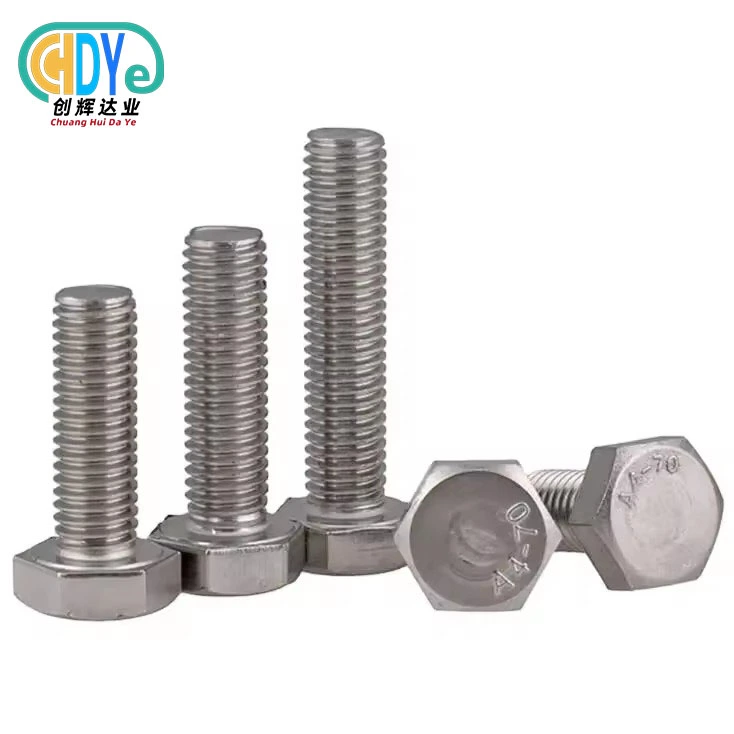
Hexagonal titanium screws are available in Multiple Grades and Sizes
Hexagonal titanium screws are an important way to fasten things in industries that need to work perfectly in harsh conditions. There are different types and sizes of these precision-engineered parts, and they are stronger, lighter, less likely to rust, and better for living things than regular screws. Purchasing managers, engineers, and original equipment manufacturers (OEMs) who do global procurement are under more and more pressure to find lightweight screws without losing strength, that don't break down in tough settings, and that meet strict regulatory standards. This guide makes it clear what technical requirements, selection criteria, and buying methods you need to get hex head titanium screws quickly. Find out what the different types of titanium are and how to tell if the seller is good at what they do. This will make your project go better, cost less, and work better. This is always true whether you're making rockets, medical tools, or equipment for processing chemicals.
Understanding Hexagonal Titanium Screws: Grades, Sizes, and Specifications
Core Material Grades and Their Properties
The alloys that are used to make hexagonal titanium screws are very well chosen. Ti2O3 grade 2 doesn't rust and is thought to be clean enough for business use. It's also very easy to make. Besides that, it can hold its shape under a lot of stress (345 MPa), which makes it perfect for tanks that hold chemicals and marine gear that is always being hit by rough things. The other name for it is Ti-6Al-4V. It has 6% aluminium and 4% vanadium. It takes about 895 MPa of force to pull them apart now, which is twice as much. Lots of times, it will not break; it will still be very strong. Because they are strong for their weight, these are mostly used to connect things to aeroplanes. This is because of a connection between the weight and the fuel used. Grade 23 is an extra-low interstitial form of Grade 5 that is more flexible and harder to break. Because of this, doctors use it for inserted screws in the mouth and bones. The ASTM B348 standards are used to make bar stock, and the ASTM F468 standards are used to make fasteners fit together properly. There are only a few places where you can buy something.
Standard Size Ranges and Thread Configurations
Hexagonal titanium screws are manufactured in metric dimensions ranging from M3 to M20 and imperial sizes from #4-40 through 1/2"-13, accommodating diverse assembly requirements across industries. Thread pitch options follow ISO metric coarse and fine standards, with 6g tolerance class threads being most common for general applications, while tighter 4h tolerances serve precision instrumentation and semiconductor equipment. The hexagonal head configuration permits efficient torque application using standard wrenches or sockets, with head dimensions conforming to DIN 933 or ISO 4017 specifications. At Chuanghui Daye, we keep a lot of well-known sizes in stock, like M4, M6, M8, and M10 forms in both Grade 2 and Grade 5 materials. This lets us make samples and production runs fast. There is a range of lead times, from three to five weeks, but it depends on how many orders there are. Drawings from the customer can be used to make thread lengths, head styles, and other unique configurations.
Certification Standards and Traceability Documentation
A company with ISO 9001:2015 says it will use quality control systems to check the raw ingredients, the method of making the product, and the final product. The metal amount is checked by this test, which is known as X-ray fluorescence spectrometry. It helps tell the difference between real Grade 5 material and cheaper copies. The ASTM E8 mechanical test checks the tensile strength, yield strength, and extension rates. A destructive proof load test is done on the material to make sure it doesn't break.
Advantages of Hexagonal Titanium Screws Over Other Materials
Superior Strength-to-Weight Performance
Nickel nails in the shape of hexagons are very strong for their size. The same amount of weight can be held by them even though they aren't as heavy as smooth steel. In aircraft, every kilogram saved on screws lets the plane take more goods or fly farther, which is directly related to better fuel economy. When automakers put titanium screws in the cases of electric car batteries, the batteries stay strong and last longer because they are lighter. When racing teams use titanium screws in their brake callipers and suspension parts, their cars handle better and go faster because they are lighter and have less weight that isn't supported by the springs.
A Grade 5 M8x40 hex screw weighs 17.2 grams, but steel bolts of the same size and shape only weigh 6.8 grams. 200 screws hold something together, but it weighs 2.08 kg less. The joint is still strong, though. That helps you follow the tighter rules about smoking and saves you a lot of money on shipping and handling.
Unmatched Corrosion Resistance
Tin is protected by an oxide layer that grows back right away after it is touched. In places with a lot of chloride, high temperatures, and acidic conditions, this makes it less likely to rust than stainless steel. These hexagonal titanium screws are used in chemical plants to put together reactor vessels, heat exchangers, and pipe systems that work with hydrochloric acid, sulphuric acid, and sodium hypochlorite solutions. Stainless steel would get damaged by rust and attack in cracks and pits. Certain metals can rust when they come into contact with seawater, but titanium screws don't. This is why they are used on petroleum sites and in military gear. Since titanium isn't magnetic, it doesn't cause electromagnetic interference in MRI machines, high-precision science instruments, or defence systems that protect against mines. These methods would not be as useful if ferromagnetic nuts were used.
Lifecycle Cost Effectiveness and Reduced Maintenance
In the long run, hexagonal titanium screws are cheaper because they last longer and don't need to be replaced as often. Marine uses, on the other hand, can last 20 to 30 years without rusting out, but every 3 to 5 years, stainless steel screws need to be replaced in the same circumstances. This means that maintenance teams don't have to deal with costly unplanned downtime to change fasteners. This is very important in places where stopping production costs a lot of money every hour, like power plants, chemical plants, and platforms that are far away. Systems that process food and make drugs don't need special coatings that wear off over time because titanium is safe and won't hurt anyone.
How to Choose the Right Hexagonal Titanium Screws for Your Project
Matching Grade Selection to Application Requirements
You should think about the project's rules, the environment, and the mechanical loads when picking the right titanium grade. Grade 2 titanium is one of the strongest and least expensive kinds. It doesn't rust either. Spacecraft structures that need to be able to handle a lot of stress and bending loads need grade 5 titanium. It's worth the extra money because it's stronger and lasts longer against wear and tear. Grade 23 titanium must be used for internal parts in medical products to meet ASTM F136 standards and FDA biocompatibility rules. It's just that this grade costs the most.
Temperature is another important thing to think about when picking a grade. Grade 2 titanium keeps its mechanical properties up to 315°C, which makes it good for most chemical processing tasks. Grade 5 titanium works reliably up to 400°C in aerospace turbine assemblies and car exhaust systems. At cryogenic temperatures, titanium doesn't change from being ductile to brittle, but carbon steel can break in very bad ways below -40°C.
Determining Optimal Sizes and Thread Specifications
When engineers do their maths, they should remember that titanium has a lower elastic modulus than steel (about 114 GPa vs. 200 GPa), which changes the joint stiffness and bolt preload. Metric M6 and M8 sizes are good for most general machinery applications because they provide enough thread engagement in aluminium, composite, and titanium structural members. Larger M10 and M12 sizes are used for heavy-duty connections in aerospace landing gear and automotive suspension mounting points.
Evaluating Suppliers and Quality Assurance Programs
To be good at procurement, you need to find suppliers with strong quality systems and technical know-how. They should have at least ISO 9001:2015 certification, but aerospace suppliers should show AS9100 compliance, medical device manufacturers need ISO 13485 registration, and defence contractors need ITAR registration for controlled materials. For each production lot, ask for material test reports that show the chemical composition, mechanical properties, and dimensional conformance. Also, look at the supplier's custom manufacturing options, such as CNC machining, heat treatment facilities, and surface finishing options like anodising or passivation. Lead times, minimum order quantities, and inventory stocking programs all have a direct impact on project schedules and the amount of working capital that is needed.
Market Comparison and Procurement Guide for Hexagonal Titanium Screws
Pricing Analysis and Value Assessment
According to lifecycle value calculations, hexagonal titanium screws are three to five times more expensive per piece than stainless steel fasteners of the same type. This is because Grade 2 M8x25 hex screws cost between $1.20 and $2.80 per unit in 1,000-piece quantities, while Grade 5 equivalents cost between $2.50 and $4.50 due to higher raw material costs and processing complexity. However, over ten years of service, the total cost of ownership is often 30–40% lower. Ordering in bulk saves a lot of money per unit; 5,000-piece orders save 15–25% compared to smaller quantities. Annual blanket purchase agreements with scheduled releases keep prices stable while lowering the cost of keeping inventory.
Supplier Evaluation and Partnership Development
Leading titanium fastener suppliers make sure that deliveries don't get held up when demand is high. To do this, they need to be able to increase production without lowering quality. To do this, they need to integrate manufacturing, from melting the raw materials to final machining and inspection. Technical support teams help with material selection, joint design optimisation, and best practices for installation, which is especially helpful when switching from steel to titanium fasteners. Full certification documentation and traceability systems make it easier for customers to do audits and send paperwork to regulators. Global logistics networks with regional warehousing cut lead times for international customers while managing customs clearance efficiently.
Since its founding 30 years ago in Baoji, China's "Titanium Capital," Chuanghui Daye has been making trustworthy hexagonal titanium screws in all major grades and sizes. The company is ISO 9001:2015 certified, and its production facility includes electron beam melting, precision forging, CNC machining, and strict quality inspection. This makes sure that the material properties and dimensions are always the same, and we keep a large inventory of standard configurations to support rapid prototyping. Our engineering team also works together on custom designs to meet the needs of each application.
Streamlining the Procurement Process
To order efficiently, you should be able to clearly describe the grade, size, thread pitch, length under the head, quantity needed, delivery date, and any tolerances or special testing or certification needs. You should also get formal quotes that include unit pricing, tooling costs for custom items, lead times, payment terms, and shipping methods. Make sure that the pricing includes inspection documentation and that there is a high level of traceability for each shipment. Before production starts, set clear quality acceptance criteria and sampling plans to avoid problems during receiving inspection. Having long-term relationships with suppliers through regular ordering habits and open communication is good for everyone because it makes planning production more efficient and helps everyone when capacity is limited.
Future Trends and Innovations in Hexagonal Titanium Screw Technology
Hexagonal titanium screws can now be made using direct metal laser sintering and electron beam melting. These fasteners can have locking features, variable thread pitches, and cooling passages inside them for different uses. New titanium alloys are being made with beta-phase compositions that make them better for cold formability for thread rolling operations while still having the corrosion resistance of traditional alpha-beta alloys. Diamond-like carbon layers and physical vapour deposition coatings make them last longer and be less likely to gall when they are being installed.
A lot more small-diameter precision hexagonal titanium screws with biocompatible surface treatments are needed for robotic surgical systems and implants made just for one patient. This is because titanium fasteners keep things from rusting and make them lighter, which lowers costs. More titanium screws are also needed for putting together modules in electric vehicle batteries because they meet fire safety standards and work with electromagnetic fields.
Conclusion
Aviation, chemical processing, medical devices, and advanced manufacturing all use hexagonal titanium screws because they work the best. Procurement professionals can make smart decisions by comparing initial costs to lifecycle value. They can do this by learning about the differences between material grades, how to properly size components, and how to evaluate suppliers.
FAQ
Q: Which industries benefit most from hexagonal titanium screws?
A: People who work in aerospace and defence put these fasteners in harsh environments with acids and chlorides to make engine parts and airframe assemblies lighter, which directly improves performance. They are also used in harsh environments with electronics because they are not magnetic. Medical device companies ask for them for surgical instruments and biocompatible hardware that needs to be implanted, and people who work in marine and offshore energy put them in saltwater.
Q: How does corrosion resistance compare between titanium and stainless steel fasteners?
A: When exposed to chloride, acid, and high temperatures that oxidise, hexagonal titanium screws don't get pitting and crevice corrosion as stainless steel does. This means that they last longer. 316 stainless steel breaks down after five years, but titanium stays strong for decades. Stainless steel, on the other hand, works well in mild environments and costs a lot less.
Q: What factors influence lead times and minimum order quantities for custom orders?
A: Lead times are usually three to eight weeks, but they can be longer if you need custom thread lengths or head styles. If you do, you may have to pay extra for special tools that can add two weeks to the lead time. For standard sizes, the minimum order quantity is 500 to 1,000 pieces. For custom configurations, it's 2,000 to 5,000 pieces to cover the cost of setting up the machine and buying the materials.
Partner with a Trusted Hexagonal Titanium Screws Manufacturer
Shaanxi Chuanghui Daye stands ready to support your titanium fastener requirements with comprehensive inventory spanning Grade 2, Grade 5, and Grade 23 materials in standard metric and imperial dimensions. Our Baoji facility combines advanced melting, forging, and precision machining equipment with rigorous ISO 9001:2015 quality systems, ensuring consistent material properties and dimensional accuracy. We welcome inquiries for stock items requiring rapid delivery as well as custom manufacturing projects demanding specialized configurations or unique material certifications. Our engineering team provides technical consultation on material selection, joint design optimization, and installation best practices, helping you maximize performance while managing costs. Contact us directly at info@chdymetal.com to discuss your project specifications, request detailed quotations, or arrange material samples for evaluation. Whether you need prototype quantities for new product development or production volumes for ongoing assembly operations, Chuanghui Daye delivers the quality, reliability, and responsive service that global procurement professionals depend on.
References
1. American Society for Testing and Materials (ASTM). "ASTM F468: Standard Specification for Nonferrous Bolts, Hex Cap Screws, and Studs for General Use." Annual Book of ASTM Standards, Vol. 01.08, 2021.
2. Boyer, R., Welsch, G., and Collings, E.W. "Materials Properties Handbook: Titanium Alloys." ASM International, Materials Park, Ohio, 1994.
3. Donachie, Matthew J. "Titanium: A Technical Guide, 2nd Edition." ASM International, 2000.
4. Lutjering, Gerd and Williams, James C. "Engineering Materials and Processes: Titanium, 2nd Edition." Springer-Verlag Berlin Heidelberg, 2007.
5. Schutz, R.W. and Watkins, H.B. "Recent Developments in Titanium Alloy Application in the Energy Industry." Materials Science and Engineering: A, Vol. 243, Issues 1-2, 1998.
6. Veiga, C., Davim, J.P., and Loureiro, A.J.R. "Properties and Applications of Titanium Alloys: A Brief Review." Reviews on Advanced Materials Science, Vol. 32, 2012.
Learn about our latest products and discounts through SMS or email