- English
- French
- German
- Portuguese
- Spanish
- Russian
- Japanese
- Korean
- Arabic
- Greek
- German
- Turkish
- Italian
- Danish
- Romanian
- Indonesian
- Czech
- Afrikaans
- Swedish
- Polish
- Basque
- Catalan
- Esperanto
- Hindi
- Lao
- Albanian
- Amharic
- Armenian
- Azerbaijani
- Belarusian
- Bengali
- Bosnian
- Bulgarian
- Cebuano
- Chichewa
- Corsican
- Croatian
- Dutch
- Estonian
- Filipino
- Finnish
- Frisian
- Galician
- Georgian
- Gujarati
- Haitian
- Hausa
- Hawaiian
- Hebrew
- Hmong
- Hungarian
- Icelandic
- Igbo
- Javanese
- Kannada
- Kazakh
- Khmer
- Kurdish
- Kyrgyz
- Latin
- Latvian
- Lithuanian
- Luxembou..
- Macedonian
- Malagasy
- Malay
- Malayalam
- Maltese
- Maori
- Marathi
- Mongolian
- Burmese
- Nepali
- Norwegian
- Pashto
- Persian
- Punjabi
- Serbian
- Sesotho
- Sinhala
- Slovak
- Slovenian
- Somali
- Samoan
- Scots Gaelic
- Shona
- Sindhi
- Sundanese
- Swahili
- Tajik
- Tamil
- Telugu
- Thai
- Ukrainian
- Urdu
- Uzbek
- Vietnamese
- Welsh
- Xhosa
- Yiddish
- Yoruba
- Zulu
How to select the right titanium alloy tube grade?
If you want to choose the right titanium alloy tube grade, you need to know exactly what your application needs, including how strong it needs to be, how it will be used, and any legal requirements. For procurement professionals, the choice comes down to weighing performance factors like resistance to corrosion, weight reduction goals, and temperature stability against financial limits and the dependability of the provider. Different grades, such as Gr2, Gr7, Gr9, and Gr12, have different chemical makeups that are best for hydraulic systems in spacecraft, heat exchanges in chemical processing, or naval infrastructure. Choosing the right tube type for your operations will protect your assets for a long time and lower your total cost of ownership. Choosing the right grade also lowers the risks of failure too soon, costly downtime, and not meeting industry standards such as ASTM B338 or ASTM B861.
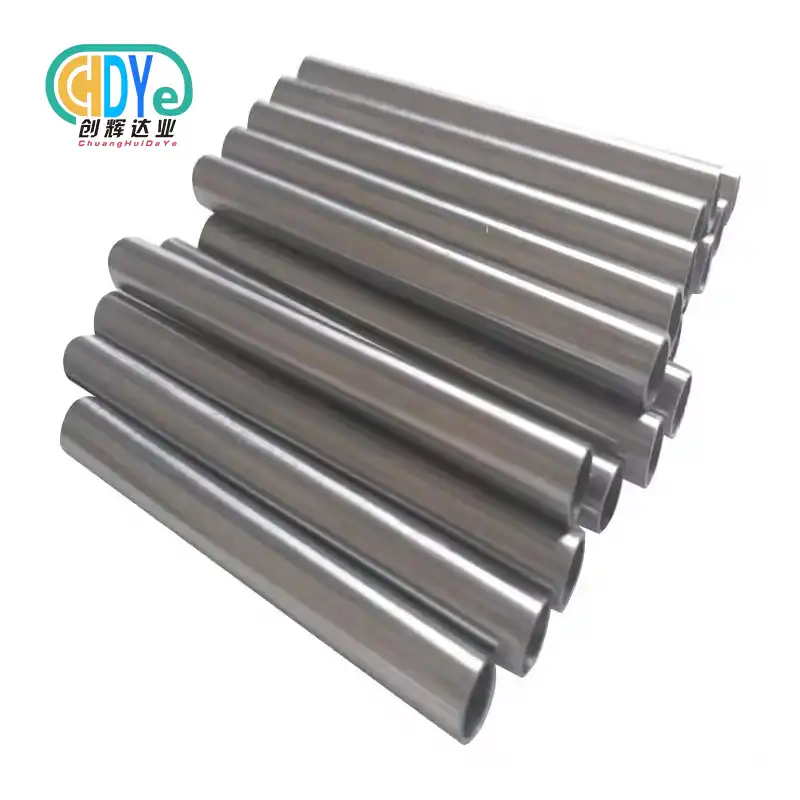
Understanding Titanium Alloy Tubes and Their Grades
Titanium alloy tubes are a high-tech solution for businesses that need to perform well in harsh circumstances to solve their technical problems. These tubes take titanium's naturally low density and add alloying elements that improve certain qualities. This makes materials that can withstand pressures above 5,000 PSI and keep their shape at temperatures ranging from -50°C to 600°C.
What Defines a Titanium Alloy Tube?
A titanium alloy tube is a high-performance tube that is made by carefully heating, extruding, and cold-working the metal. In contrast to pure titanium that is sold in stores, these alloys contain aluminum, vanadium, or molybdenum to improve their tensile strength and resistance to wear. Electron beam furnaces and controlled annealing methods are used in factories like Shaanxi Chuanghui Daye Metal Material Co., Ltd. to make sure that the grain structure is regular and that there are no internal flaws. As a result, seamless or soldered tubing is made that can be as long as 18,000mm and has a diameter of 10 to 300mm. The wall thickness can be anywhere from 0.5 to 10 mm. This flexibility lets it be tailored to a wide range of uses, from small medical devices to big industrial heat exchanges.
Common Grades and Their Chemical Compositions
Knowing the features that are unique to each grade helps buying teams match the materials they choose with the needs of the project. Grade 2 (Gr2) titanium is commercially pure titanium that is easy to shape and doesn't rust. This makes it a good choice for chemical handling equipment that needs mild strength. Palladium is added to Grade 7 (Gr7) to make it more resistant to reducing acids, which is important for industrial settings. Grade 9 (Gr9), which is made up of Ti-3Al-2.5V, is the standard for hydraulic lines in the aircraft business because it is stronger while still being able to be welded. Grade 12 (Gr12) has molybdenum and nickel in it, which makes it very resistant to crevice rust in places with a lot of chloride, like ocean platforms. Each grade follows strict ASTM guidelines, such as B338 for heat exchangers, B337 for seamless pipes, B861 for seamless tubes, and B862 for welded versions. This makes sure that quality and tracking are maintained throughout the supply chain.
Manufacturing Standards That Matter
By following well-known worldwide standards, sellers can keep buyers safe from major flaws and poor performance. ASTM standards spell out exact limits for chemical makeup, mechanical properties, and testing procedures that all reputable makers must meet. Having ISO 9001:2015 approval is another way to show that a provider is serious about quality control. This includes checking the raw materials all the way through to packaging the finished product. People who work in procurement should make sure that sellers keep a lot of paperwork, like mill test certificates, heat treatment records, and results from non-destructive testing. Having this paperwork is very important for checks and fixing problems in the field, as it gives full material tracking that regulators and end users are asking for more and more.
Core Factors to Consider When Choosing a Titanium Alloy Tube Grade
For material selection to go well, a lot of factors that affect working efficiency and project costs must be carefully considered and weighed against each other. When dealing with technical requirements, procurement teams also have to think about practical issues like cash and lead time limits.
Matching Application Requirements with Material Properties
Different industries have different performance requirements that make the selection of titanium alloy tube grades harder. Weight reduction and vibration protection are important to aerospace makers. This is why Gr9 tubes are perfect for fuel lines and hydraulic systems for landing gears, where every gram counts. Chemical processing companies have harsh environments that are corrosive, with sulfuric acid or chlorine chemicals present. In these conditions, Gr7 or Gr12 grades are the best way to protect against limited rust. For implantable parts, medical device makers need biocompatible materials with a uniform surface finish. They usually choose commercially pure types that meet strict cleaning standards. If you know what these application-specific needs are, you can avoid making expensive specification mistakes that could put safety at risk or require expensive redesigns during production.
Mechanical Performance Criteria
To judge mechanical features, you need to look at the tensile strength, yield strength, elongation rates, and wear limits when the material is loaded and unloaded many times. When tubes are going to be used in high-pressure situations, they need to have enough burst strength with enough safety gaps. This is usually checked by hydrostatic testing at 1.5 times the working pressure. When tubes need to be bent or expanded during installation, ductility is very important because not having enough extension capacity can cause cracks. When things are moving, like when an exhaust system in a car or machinery that shakes, fatigue resistance is important because repeated stress cycles can cause cracks to spread. It's important for procurement requirements to clearly state the mechanical minimums that need to be met based on standard test methods. This way, providers can provide certified material that meets performance goals.
Environmental Resistance and Longevity
Different grades of titanium have very different levels of corrosion protection depending on the alloying added and the surface state. Pure titanium grades work best in oxidizing environments like nitric acid, while palladium-enhanced Gr7 works best in reducing environments. Chloride-containing solutions are popular in naval and desalination uses. When choosing a grade, be careful because even titanium can experience crevice corrosion when it sits still at high temperatures for a long time. Temperature cycling changes the stability of materials. When heated and cooled over and over, some types keep their traits better than others. When figuring out how long something will last, its service life should take these external factors into account. For example, choosing the right grade can make tools last decades longer than using stainless steel, which isn't good for harsh chemical service.
Regulatory Compliance and Certification Needs
Many fields have strict rules about what types and sources are allowed when it comes to material certification. For aerospace uses, AMS standards with lots of traceability information and tests for each lot are usually required. Medical gadgets have to follow strict rules set by the FDA and biocompatibility standards that are proven through thorough testing. Codes for pressure vessels, like ASME Section VIII, list the materials that are allowed and say that they need to be tested for impact at low temperatures. Early on in the specification process, procurement teams should find out what rules apply. They should then make sure that the grades they choose have the right approvals and that their providers keep the right licenses. This extra work keeps the project from being held up by materials that don't meet standards that are found during the final review or customer reports.
Comparing Titanium Alloy Tube Grades with Alternative Materials
When choosing a material, people often compare titanium alloy tubes to other metals to show that the higher price is worth it through lifetime value analysis. Knowing about these trade-offs helps people make smart decisions based on the total cost of ownership instead of just the purchase price.
Titanium Versus Stainless Steel Performance
Grades of stainless steel like 316L are easier to find and cost less, which makes them a good choice for projects that need to stay within a budget. Titanium tubes, on the other hand, are about 45% lighter than steel tubes, which means they save a lot of weight and money on shipping costs in aerospace uses. Corrosion protection is also very different. Titanium stays strong for decades, while stainless steel pits and cracks in slightly corrosive conditions. The strength-to-weight advantage is very important in situations like offshore drilling platforms, where titanium's better performance supports a higher original investment by allowing longer service intervals and lower upkeep costs. The thermal expansion factors of titanium also make it a good choice for uses where the temperature changes a lot, because they keep stress from building up at joints and links.
Alternative Metals and Their Limitations
When it comes to lowering weight, aluminum alloys are great, but they aren't strong enough for high-pressure uses, and they don't hold up well against rust in acidic or alkaline environments. While copper and copper-nickel metals are great at moving heat, they get biofouling in naval service and aren't as strong as titanium. In some chemical conditions, exotic nickel metals are almost as resistant to corrosion as titanium. However, they cost as much or more than titanium and are much heavier. Carbon steel is still the most common material for non-corrosive uses because it is cheaper, but it needs to be coated with protective materials and replaced often in tough environments, while titanium doesn't need any upkeep. Because of these problems with the material, buying teams are choosing titanium tubes more and more, even though they cost more up front. They know that the material's lifecycle economics usually favor it.
When Titanium Grades Justify Premium Investment
Titanium tubes are more cost-effective when they are hard to get to for upkeep, need to last a long time, or are used in situations where weight is important. This is shown by subsea oil and gas infrastructure: the costs of retrieving broken parts are much higher than the material savings from cheaper options. Similarly, titanium's dependability is good for aircraft hydraulic systems that have to deal with a lot of vibration and changes in temperature, where failure could lead to catastrophic safety issues. Chemical plants that work with streams that are acidic find that titanium heat exchangers last for decades without having to repair the tubes as often as stainless steel units do. To figure out how much these benefits are worth, you need to do a total cost modeling that takes into account the cost of installation, the regularity of replacements, the cost of downtime, and the upkeep schedule over the asset's expected lifetime.
How to Evaluate and Verify Titanium Alloy Tube Suppliers for Procurement
Choosing the right supplier is just as important as choosing the right titanium alloy tube grade, because the quality of the making directly affects how well the material works and how well the project turns out. Setting strict evaluation standards saves procurement teams from getting low-quality materials or deliveries that aren't on time.
Quality Management Systems and Certifications
ISO 9001:2015 certification is a basic way to make sure that providers keep quality standards in place for the production process, inspections, and corrective actions. Advanced suppliers use standards that are specific to their business to track materials, like AS9100 for aircraft or ISO 13485 for medical devices. When you visit a factory, you can check out the possibilities of equipment like electron beam melting ovens, ultrasonic testing stations, and climate-controlled inspection areas. Patterns can be seen in audit records and customer complaint files that show whether quality systems work well or are just words on paper. Setting up lists of approved suppliers based on their proven ability lowers the risks of buying while building relationships with companies that are committed to improving all the time.
Material Testing and Inspection Protocols
To start the full testing process, inductively coupled plasma optical emission spectrometry (ICP-OES) is used to check the alloy's makeup against the limits set by the specifications. Ultrasonic and eddy current checking are non-destructive methods that can find flaws, cracks, or laminations inside something that can't be seen with the naked eye. The tensile qualities are checked by mechanical testing, and the flare and flattening tests make sure the flexibility is good enough for installation. Each tube is tested for leak-proof stability under working conditions using either hydrostatic or pneumatic pressure. By looking at the microstructure through metallography, you can be sure that the heat treatment and grain size distribution are correct. By requiring these inspection methods and certified test results, you can be sure that the materials conform to the specifications. This keeps you from having to deal with premature failures caused by manufacturing flaws.
Supply Chain Reliability and Lead Time Management
Suppliers who consistently meet delivery deadlines are easy to tell apart from those who cause production delays and higher costs. Looking at on-time shipping data from past customers can help you figure out how reliable your schedule is. By learning about how suppliers store their goods, you can tell if popular grades are kept in stock so they can be shipped quickly or if they need longer wait times for production. Location affects both the time it takes to ship and the difficulty of the logistics involved. For example, local suppliers may be able to respond faster than foreign sources, even if the prices are the same. Setting up backup sources for important products lowers the risks that come with relying on a single source. For odd-shaped parts or special heat treatments, custom manufacturing is needed. This means that suppliers need to have flexible production tools and technical know-how to meet non-standard needs.
Pricing Structures and Value Optimization
The price of a material depends on a number of things, such as the type of alloy it is, the size limits, the order amount, and the state of the market for raw titanium sponge. Volume deals encourage buyers to make bigger purchases, but they have to weigh the costs of keeping goods against price drops per unit. By buying directly from makers like Chuanghui Daye, you can avoid the markups that distributors add on top of the price and have detailed conversations with production staff who know what the material can do. Blanket purchase orders with planned drops keep prices stable while still letting you adapt to how people actually use goods. When you know what causes costs to go up or down, you can negotiate in a way that maximizes the total value of the purchase instead of just lowering the price per kilogram.
Case Studies and Best Practices for Choosing Titanium Alloy Tube Grades
Real-life examples show how systematic titanium alloy tube grade selection solves certain engineering problems and shows how to make decisions that can be used in any industry. These examples show what happens when you don't follow the right material specifications and make choices that cause problems with how the system works.
Aerospace Hydraulic System Success with Grade 9
A big airplane maker had problems with stability because stainless steel hydraulic lines broke down after being put through a lot of vibrations during flight tests. When the system switched to Gr9 (Ti-3Al-2.5V) seamless tubes, splitting stopped and the weight was cut by 38%. The aluminum-vanadium alloy had enough tensile strength to work at 5,000 PSI while still being flexible enough to be routed around complex aircraft structures. Gr9 tubes passed strict tests that showed they could withstand 10 million pressure cycles without cracking, which is what is needed for business aviation approval. This grade choice met several goals at once: lowering weight to meet fuel economy goals, providing mechanical strength for safety-critical systems, and demonstrating dependability through decades of experience in the aerospace industry. The project showed that spending money up front on high-quality materials can save a lot of money in redesign processes and approval delays.
Chemical Processing Plant Corrosion Prevention
A petrochemical plant had heat exchanger tubes fail 18 months after they were installed because of crevice rust in brackish cooling water that had 3,500 ppm chlorides in it. Putting in Gr12 titanium (Ti-0.3Mo-0.8Ni) tubes instead of the original 316L stainless steel tubes made the service life last longer than 15 years without any breaks caused by rust. The molybdenum-nickel alloying gave it great resistance to targeted attack in still water, where the lack of air makes the electrochemical environment very hostile. Even though the cost of materials went up by 300%, not having to replace tube bundles every two years and the time that was needed for that caused over $400,000 in net savings over a decade. This case shows how total cost analysis can be used to support using titanium in harsh chemical environments where cheaper options need to be maintained more often.
Conclusion
When choosing the right titanium alloy tube grade, you have to think about scientific needs, the surroundings, following the rules, and the cost. When purchasing, workers know about the different qualities of grades like Gr2, Gr7, Gr9, and Gr12, they can match materials to the needs of a wide range of applications, from chemical processing equipment to aircraft hydraulic systems. Material quality is guaranteed by strict source evaluation, which includes ISO certification, thorough testing, and proven shipping performance. Lifecycle cost analysis often shows that titanium's higher price is justified by its longer service life, lower upkeep needs, and higher dependability compared to other materials. To get the best performance and value, procurement professionals use both technical know-how and smart partnerships with suppliers.
FAQ
Q: What distinguishes Grade 9 from Grade 2 titanium tubes?
A: Grade 2 titanium is economically pure. It is easy to shape and doesn't rust, but it's not very strong. It's good for chemical processing where high mechanical loads aren't needed. Grade 9 has 3% aluminum and 2.5% vanadium, which greatly improves its tensile strength and wear resistance. This is why it is the standard in the aircraft industry for hydraulic lines and structural parts that need to be light and last for a long time under dynamic loads.
Q: How does corrosion resistance vary across titanium grades?
A: How well corrosion works relies on the alloying additions and the chemistry of the surroundings. Grade 2 is great at resisting oxidizing acids but not so good at reducing ones. Palladium is added to Grade 7 to make it more resistant to reducing acids like sulfuric acid. Grade 12 with molybdenum and nickel added protects very well against crevice rust in chloride-containing solutions. This makes it perfect for use in saltwater and brackish water, where other grades might experience localized attack in titanium alloy tubes.
Q: What factors affect titanium tube lead times?
A: Lead times depend on the grade that is available, the size needed, the number of items that are ordered, and the supplier's production plans. In normal sizes, common grades like Gr2 and Gr9 can be shipped within a few weeks. However, unique sizes or specialty grades like Gr12 take 4 to 5 weeks to manufacture. Non-destructive testing, preparing certification documents, and sending goods across foreign borders all take extra time that buyers should plan for in their projects.
Partner with Chuanghui Daye for Reliable Titanium Alloy Tube Supply
Shaanxi Chuanghui Daye has been making things out of rare metals for more than 30 years. Our factory is in Baoji, China, which is known as the Titanium Capital. Our production methods, which are ISO 9001:2015 approved, make sure that every titanium alloy tube, from Gr2 to Gr12, meets strict ASTM standards like B338, B337, B861, and B862 requirements. We keep a large stock of both seamless and welded versions in sizes ranging from OD10mm to 300mm so that we can meet the needs of both fast prototyping and large-scale production. As a direct manufacturer and seller of titanium alloy tubes, we don't have to pay markups to distributors. We also offer expert support to help engineers and procurement teams choose the best grades for their needs. Our high-tech electron beam furnaces and precise testing tools give our customers around the world the tracking and quality paperwork they need. Get in touch with our team at info@chdymetal.com to talk about your project needs and get reasonable quotes backed by factory-direct prices and reliable delivery schedules.
References
1. American Society for Testing and Materials. Standard Specification for Seamless and Welded Titanium and Titanium Alloy Tubes for Condensers and Heat Exchangers. ASTM B338-21, 2021.
2. Donachie, Matthew J. Titanium: A Technical Guide, 2nd Edition. ASM International, 2000.
3. Lütjering, Gerd, and James C. Williams. Titanium: Engineering Materials and Processes. Springer-Verlag Berlin Heidelberg, 2007.
4. Schutz, Russell W., and David E. Thomas. "Corrosion of Titanium and Titanium Alloys." ASM Handbook, Volume 13B: Corrosion: Materials. ASM International, 2005.
5. Boyer, Rodney, Gerhard Welsch, and E.W. MyCollings. Materials Properties Handbook: Titanium Alloys. ASM International, 1994.
6. Peters, Manfred und Christoph Leyens. Titanium and Titanium Alloys: Fundamentals and Applications. Wiley-VCH, 2003.
Learn about our latest products and discounts through SMS or email