- English
- French
- German
- Portuguese
- Spanish
- Russian
- Japanese
- Korean
- Arabic
- Greek
- German
- Turkish
- Italian
- Danish
- Romanian
- Indonesian
- Czech
- Afrikaans
- Swedish
- Polish
- Basque
- Catalan
- Esperanto
- Hindi
- Lao
- Albanian
- Amharic
- Armenian
- Azerbaijani
- Belarusian
- Bengali
- Bosnian
- Bulgarian
- Cebuano
- Chichewa
- Corsican
- Croatian
- Dutch
- Estonian
- Filipino
- Finnish
- Frisian
- Galician
- Georgian
- Gujarati
- Haitian
- Hausa
- Hawaiian
- Hebrew
- Hmong
- Hungarian
- Icelandic
- Igbo
- Javanese
- Kannada
- Kazakh
- Khmer
- Kurdish
- Kyrgyz
- Latin
- Latvian
- Lithuanian
- Luxembou..
- Macedonian
- Malagasy
- Malay
- Malayalam
- Maltese
- Maori
- Marathi
- Mongolian
- Burmese
- Nepali
- Norwegian
- Pashto
- Persian
- Punjabi
- Serbian
- Sesotho
- Sinhala
- Slovak
- Slovenian
- Somali
- Samoan
- Scots Gaelic
- Shona
- Sindhi
- Sundanese
- Swahili
- Tajik
- Tamil
- Telugu
- Thai
- Ukrainian
- Urdu
- Uzbek
- Vietnamese
- Welsh
- Xhosa
- Yiddish
- Yoruba
- Zulu
Is pure niobium bar better than titanium for special applications?
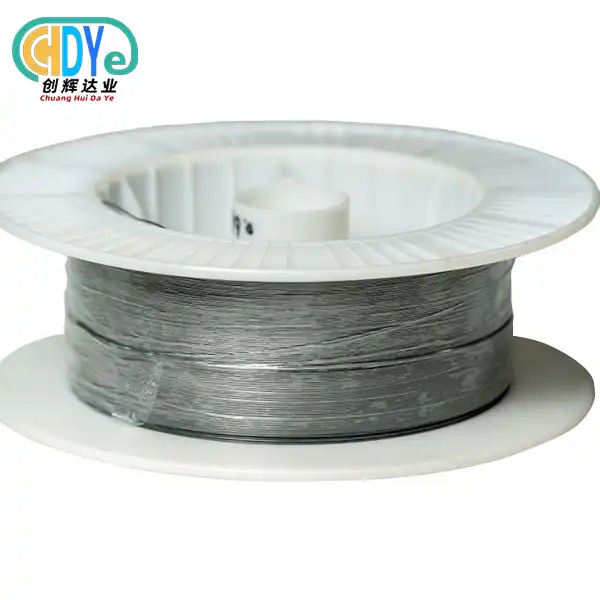
Which one you choose—a pure niobium bar or a titanium bar—depends on the needs of your industry. When it comes to strong corrosion conditions, like mineral acids and liquid metals, a pure niobium bar does very well. It also stays very flexible at freezing temperatures. Titanium has better strength-to-weight ratios and is easier to find. Neither metal is always better than the other; they each have their own specific uses in aircraft, chemical processing, and superconductivity, where their unique properties solve important operating problems.
Introduction
Niobium bars and titanium bars are both very important in a wide range of industries, including aircraft, medicine, and chemical processing. When your purchasing team looks at materials for high-performance parts, it's important to know the little changes between these hard metals. Titanium is known as the main metal when it comes to biocompatibility and resistance to rust, but a pure niobium bar has benefits that many engineers don't see.
For B2B buyers who want to improve performance, cut costs, and stay in line with regulations, choosing the right material is very important. At Chuanghui Daye, we've been helping producers make these kinds of choices for 30 years, and we've seen how picking the wrong material can ruin whole production processes. This comparison will help you make better buying choices by giving you useful information that is specific to tough engineering and factory settings. It will also help you match the properties of materials to your real operational needs.
Understanding Pure Niobium Bar and Titanium Bar
Chemical Composition and Purity Standards
Electron Beam Melting is used to get rid of any impurities, and a pure niobium bar usually has a purity level above 99.9% (Nb >99.9%). Commercially pure titanium bars (Grades 1-4) and alloyed bars (the most common is Grade 5/Ti-6Al-4V) are the different types of titanium bars. The difference in purity is important because minor elements have a big effect on how rust works and how strong something is. Our niobium goods meet ASTM B392 standards for grades R04200 and R04210, which guarantee stable quality for important uses.
Physical Properties and Density
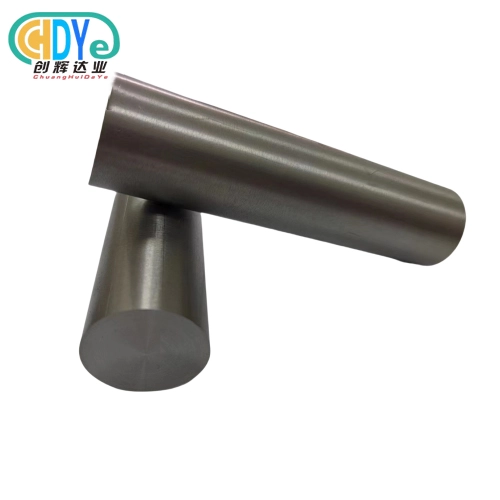
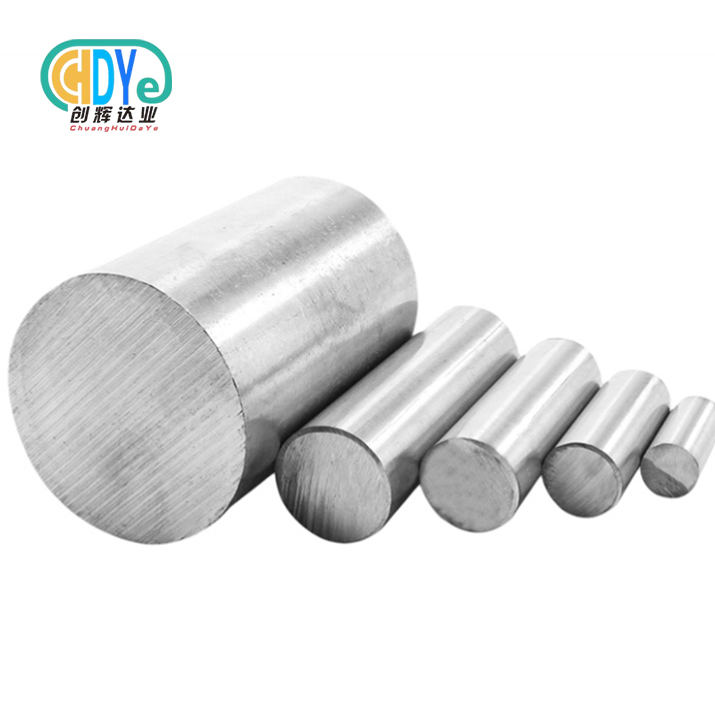
Niobium has a density of 8.57 g/cm³, which is a lot more than titanium's density of 4.51 g/cm³. This difference in weight affects how parts are designed, especially in aircraft, where every gram is important. Niobium is more stable at high temperatures than titanium, which melts at 1,668°C. Its melting point is 2,477°C. We can make niobium bars in either a rectangular or a round shape, with a width of 5 to 350 mm, and we can cut them to any length you need. Because of this, engineers can get exact limits on dimensions while wasting as little material as possible.
Manufacturing Processes
The first step in our production method is vacuum melting high-quality niobium bars, which keeps the purity of the material throughout the whole process. Temperature-controlled rolling and precise cutting make sure that the dimensions are exact, and clean rooms keep things from getting dirty. Titanium is made similarly, but it needs different heat treatment processes because it changes allotropically at 882°C. Both metals need special tools and knowledge to work, which is what sets trusted providers apart from commodity sellers in the rare metals market.
Key Properties Comparison: Pure Niobium Bar vs Titanium Bar
Corrosion Resistance Profiles
Pure niobium bar is very resistant to natural acids like nitric acid, hydrochloric acid, and sulfuric acid in a wide range of concentrations. This metal doesn't react with liquid metals like sodium and lithium. This solves the "corrosion-ductility paradox" that chemical processing equipment has a problem with. Titanium works very well in oxidizing settings and chloride solutions, which makes it perfect for use in the sea environment and in chlor-alkali processes. Titanium, on the other hand, is more likely to break in settings with reducing acids and hydrogen, while niobium stays strong.
In real life, this means that niobium works much better than titanium when it comes to equipment that handles hot, concentrated sulfuric acid or liquid alkali metals. On the other hand, titanium is more cost-effective in seawater and many hydrocarbon conversion processes.
Mechanical Properties and Ductility
Niobium is soft and malleable, so it can be formed into complex shapes without having to be heated first. This lowers the cost of making complex parts. Even at cryogenic temperatures, the metal is still very easy to shape, which is important for superconducting applications. In its softened state, pure niobium bar has a tensile strength of about 200 MPa, while Grade 5 titanium alloy has a tensile strength of 895 MPa. Because it is stronger, titanium is better for structural aerospace parts where load-bearing capacity determines what needs to be designed.
You need to think about these trade-offs when you design your components. Titanium is best for uses that need high specific strength, while niobium is best when shapeability and ductility are more important than raw strength.
Thermal and Electrical Conductivity
Niobium is useful for electronic and vacuum applications because it has a high thermal conductivity (53.7 W/m·K) and a high electrical conductivity. The metal is needed for superconducting radio frequency holes in particle accelerators because it has a high Residual Resistance Ratio (RRR). Titanium has a lower thermal conductivity (21.9 W/m·K), which can be useful for some heat exchanger designs that want to control the rate at which heat moves. In equipment used to make semiconductors and vacuum deposition systems, the difference in electrical resistivity is very important.
Typical Industrial and Special Applications
Aerospace and Defense Applications
Niobium's ability to resist heat makes it useful for jet engine parts in turbine areas where temperatures are higher than what titanium can handle. Niobium is used in rocket propulsion systems for nozzle parts and thruster hardware that are exposed to rapid changes in temperature. Gas turbine uses increasingly require niobium alloys for combustion zone components. Meanwhile, titanium rules airframe structures, landing gear, and compressor blades, where its strength-to-weight ratio provides unmatched performance. Your material selection should match the unique thermal and mechanical conditions each component faces during operation.
Chemical Processing Equipment
Equipment handling acidic chemicals needs careful material matching to process conditions. Reactor vessels handling hydrofluoric acid, hot concentrated sulfuric acid, or liquid sodium benefit from niobium's inert qualities, extending service life greatly beyond stainless steel or even tantalum options. Niobium's ability to conduct heat and protect against rust makes it useful for heat exchangers that are used in toxic environments. Valve stems, thermowells, and agitator shafts machined from pure niobium bar provide consistent performance in conditions that quickly degrade conventional materials. Titanium works better than niobium in reacting acidic conditions and chloride-containing processes, and it costs less.
Superconducting and Cryogenic Systems
MRI systems, NMR spectrometers, and particle accelerator chambers all use pure niobium bar, which is the best material for superconducting uses. The material keeps zero electrical resistance near absolute zero temperatures while giving structural support in cryomodule structures. Niobium rods serve as raw material for drawing multifilamentary superconducting lines used in high-energy physics studies. Titanium doesn't play a big role in these uses because it isn't very good at superconducting.
Medical Device Manufacturing
Both metals are biocompatible, but they are used for very different things. Titanium leads the hip implant market because it is good at osseointegration and strong enough for load-bearing devices. As a result of its non-reactive surfaces and ability to be autoclaved, titanium is often used to make surgical tools. Niobium is used in hypoallergenic jewelry and some radiation therapy tools because it has nuclear qualities that make it useful. Both metals are being used more and more in dental applications, based on the individual clinical needs.
Procurement Considerations for B2B Buyers
Cost Analysis and Value Assessment
Niobium is usually three to five times more expensive than titanium. This is because less of it is produced and there are fewer rock sources. But when you figure out the total cost of ownership, you have to think about things like service life, upkeep times, and the chance of a catastrophic failure. In places where corrosion is common, niobium parts often have better term value, even though they cost more at first. In your purchase research, you should compare the cost of materials to how long parts are expected to last, how often they need to be replaced, and the costs of downtime caused by parts breaking down too soon.
We offer factory-direct prices that don't include markups for distributors. This helps you stick to your budget without sacrificing quality. Small-batch production lets you try prototypes before committing to full production runs.
Supplier Reliability and Certification
Material tracking paperwork is very important when parts are being inspected by regulators or used in situations where safety is very important. With ISO 9001:2015 approval, there is tight control over the inspection of raw materials, the melting and forging process, the machining and shaping process, and the final inspection and packing process. Our quality control system lets you track everything from the ingot to the finished part, which helps you meet your compliance needs. Reliable suppliers keep consistent stock levels so that deliveries happen on time. This is especially important when you have tight dates for your production plans.
Customization and Technical Support
Professional providers are different from commodity vendors because they can give you accurate measurements, purity levels, and surface finishes. We can make unique alloy mixtures based on your needs, using our metallurgical knowledge gained over 30 years of working with rare metals. Technical advice can help you figure out which types of material are best for your needs, which could lower prices or boost performance. Fast prototyping services let you test your idea before you buy the whole thing, which lowers the risk of making a new product.
Making the Right Choice: Pure Niobium Bar or Titanium Bar?
Decision Framework Based on Operating Conditions
When choosing materials, you should put the most demanding part of your application setting at the top of your list. Pure niobium bar provides unrivaled toughness when extreme rust from mineral acids or liquid metals is the problem. Titanium metals are best for uses that need the highest strength-to-weight ratios. The special electrical qualities of niobium are needed in cryogenic or superconducting devices. When temperatures rise above 900°C, niobium's higher melting point is needed. Titanium, on the other hand, is more cost-effective for structural uses at lower temperatures.
Regulatory and Environmental Considerations
In some fields, strict material approval processes affect the choice that is made. Medical device makers have to deal with biocompatibility testing rules that say both metals work well but have different paperwork needs. Specifications for aerospace materials often list specific types by name, which limits the options. Environmental effect studies look more closely at how easily materials can be recycled and how much energy they use during production. Titanium's larger recycling infrastructure helps with these areas.
Future Trends and Emerging Applications
More ultra-high-purity niobium parts are needed because superconducting quantum computing is getting better. The creation of hypersonic vehicles' power pushes the temperature limits of materials, which is where niobium alloys show promise. Niobium and other materials that don't rust are becoming more popular in the chemical business as processes become harsher. At the same time, titanium is being used more and more in architecture and cars thanks to better processing methods that lower costs. To keep the supply chain stable in the long run, your procurement plan should take these trends into account.
Conclusion
Neither pure niobium bar nor titanium always works better than the other. Each metal excels in certain areas where its unique qualities produce the best results. Niobium is better than titanium in high-temperature uses, superconducting systems, and places with a lot of corrosion. Titanium has better strength-to-weight ratios and is more cost-effective in a wider range of industry settings. Instead of using generic material ranks to make your purchase choice, you should look at real-world working conditions, lifecycle costs, and regulatory requirements. Work with providers who have been in the business for a while and know these little details. They can also give you expert advice that is specific to your manufacturing problems.
FAQ
Q: What purity levels are available for niobium bars?
A: Niobium bars made for business use usually have a purity level of 99.9% (3N), which makes them good for most chemical processing and aircraft uses. For superconducting and semiconductor uses that need very few impurities, higher pure grades are available that reach 99.99% (4N). We can give you different amounts of purity to meet your needs, along with full material approval that shows what it is made of.
Q: How does the cost compare between niobium and titanium?
A: Niobium is three to five times more expensive than titanium as a raw material because it is harder to get and is only made in small amounts. Lifecycle cost analysis, on the other hand, often chooses niobium over titanium in harsh settings where titanium parts need to be replaced often. For certain tasks, volume discounts and factory-direct prices can make niobium much more cost-effective.
Q: Can both metals handle cryogenic temperatures?
A: Pure niobium bar stays very flexible and strong at very low temperatures, which makes it perfect for superconducting uses close to absolute zero. Titanium becomes more fragile below -196°C, which limits its use in very cold settings. The temperature range of your product should help you choose the right material.
Partner with Chuanghui Daye for Your Pure Niobium Bar Supplier Needs
When it comes to your toughest material problems, Shaanxi Chuanghui Daye can help. He has been handling rare metals for more than 30 years. Our ISO 9001:2015-certified facilities are in Baoji, China, which is known as the "Titanium Capital." They make our pure niobium bars, which come in rectangular or round shapes and thicknesses ranging from 5 to 350 mm. We offer full technical help, flexible small-batch production, and reliable shipping around the world with full paperwork for tracking. Email our engineering team at info@chdymetal.com to talk about your particular needs, ask for samples of the material, or get full technical specs. Our knowledge of metals and their properties can help you choose the best material for your superconducting, chemical processing, or aircraft needs.
References
1. Davis, J.R. (Ed.). "Metals Handbook: Properties and Selection of Nonferrous Alloys and Special-Purpose Materials." ASM International, 10th Edition, Volume 2, 1990.
2. Gorynin, I.V. "Titanium Alloys for Marine Application." Materials Science and Engineering: A, Volume 263, Issue 2, 1999.
3. Schulze, K. "Superconducting Niobium Cavities: Fundamentals and Applications in Particle Accelerators." Springer Series on Atomic, Optical, and Plasma Physics, Volume 78, 2014.
4. Pourbaix, M. "Atlas of Electrochemical Equilibria in Aqueous Solutions." National Association of Corrosion Engineers, 2nd English Edition, 1974.
5. Boyer, R., Welsch, G., and Collings, E.W. "Materials Properties Handbook: Titanium Alloys." ASM International, 1994.
6. Kardokus, J.K. and Balachandran, U. "Niobium: Processing, Properties, and Applications." The Minerals, Metals & Materials Society, TMS Annual Meeting Proceedings, 2004.
Learn about our latest products and discounts through SMS or email