- English
- French
- German
- Portuguese
- Spanish
- Russian
- Japanese
- Korean
- Arabic
- Greek
- German
- Turkish
- Italian
- Danish
- Romanian
- Indonesian
- Czech
- Afrikaans
- Swedish
- Polish
- Basque
- Catalan
- Esperanto
- Hindi
- Lao
- Albanian
- Amharic
- Armenian
- Azerbaijani
- Belarusian
- Bengali
- Bosnian
- Bulgarian
- Cebuano
- Chichewa
- Corsican
- Croatian
- Dutch
- Estonian
- Filipino
- Finnish
- Frisian
- Galician
- Georgian
- Gujarati
- Haitian
- Hausa
- Hawaiian
- Hebrew
- Hmong
- Hungarian
- Icelandic
- Igbo
- Javanese
- Kannada
- Kazakh
- Khmer
- Kurdish
- Kyrgyz
- Latin
- Latvian
- Lithuanian
- Luxembou..
- Macedonian
- Malagasy
- Malay
- Malayalam
- Maltese
- Maori
- Marathi
- Mongolian
- Burmese
- Nepali
- Norwegian
- Pashto
- Persian
- Punjabi
- Serbian
- Sesotho
- Sinhala
- Slovak
- Slovenian
- Somali
- Samoan
- Scots Gaelic
- Shona
- Sindhi
- Sundanese
- Swahili
- Tajik
- Tamil
- Telugu
- Thai
- Ukrainian
- Urdu
- Uzbek
- Vietnamese
- Welsh
- Xhosa
- Yiddish
- Yoruba
- Zulu
Is GR2 Titanium Sheet Plate Easy to Weld and Fabricate?
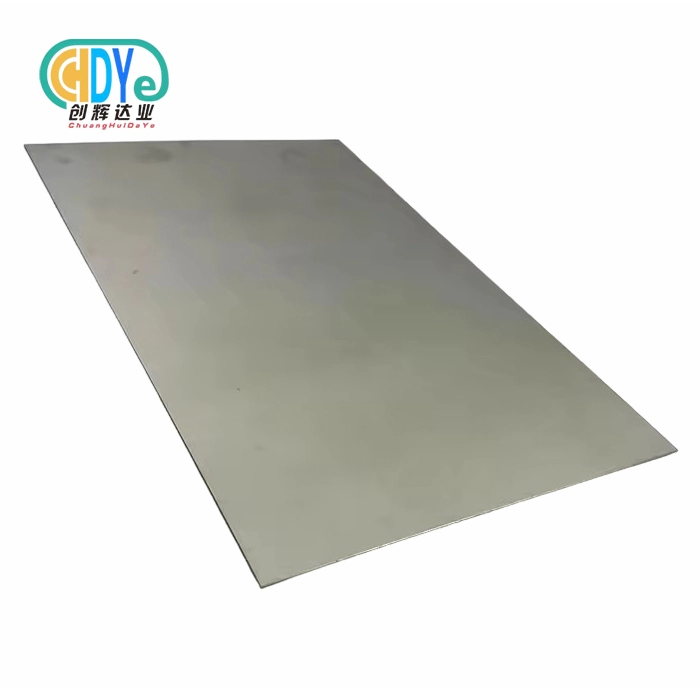
Due to its excellent weldability and fabrication properties, GR2 titanium sheet plate is one of the most useful economically pure titanium types on the market today. The best titanium grade is this alpha-phase titanium grade, which is marked by UNS R50400. It is strong, can be shaped, and doesn't rust. If you work in a safe area and have the right tools, this metal is easy to shape and join. It stays in good shape through different steps of the process, so manufacturers can count on it to work well in a lot of tough industrial settings.
Understanding GR2 Titanium Sheet Plate
GR2 titanium sheet plate is the commercially pure titanium type that is most often used in production. This material is made from commercially pure titanium Grade 2. It has the perfect mix of resistance to rust, mechanical strength, and shapeability to meet the strict engineering needs of many industries.
Chemical Composition and Grade Standards
Grade 2 titanium doesn't have many alloying elements. Its iron content is limited to 0.30% at most, and its oxygen content is limited to 0.25% at most. This mix makes sure that the flexibility is just right while keeping the strength levels just right. The material meets the requirements of ASTM B265 and ASME SB265, which gives buying workers accurate details for quality control and proof of traceability.
Mechanical Properties and Performance Characteristics
Grade 2 titanium has a minimum yield strength of 275 MPa (40 ksi) and can stretch a lot, which makes it easier to shape in complicated ways. It's possible to use the material in normal or high temperatures because it doesn't change much in terms of its mechanical properties. These things have a direct effect on how construction and welding work. Because the material is flexible, it doesn't crack during thermal cycles, and its shape stays the same during the manufacturing process.
Weldability of GR2 Titanium Sheet Plate
To get the best results when welding Grade 2 titanium, you need to use special methods and keep the surroundings under control. The material is very easy to solder because its makeup is commercially pure, which gets rid of the problems that come with alloy segregation and intermetallic formation.
Recommended Welding Methods
TIG (tungsten inert gas) welding is the best way to put titanium sheets together because it lets you control the heat precisely and makes the welds look better. It's also possible to use Gas Metal Arc Welding (GMAW), which works well for bigger pieces or industrial welding. Laser welding has benefits for precise tasks that need very few areas touched by heat and a good aesthetic look.
Critical Process Parameters
Choosing the right shielding gas is very important for titanium welding. Argon is the best choice for both the weld pool and the sides. For better entry in thicker areas, helium can be used. Keeping the atmosphere neutral stops rust and contamination that could weaken the weld's strength and resistance to corrosion.
Contamination Prevention Strategies
To properly prepare a surface, it needs to be cleaned thoroughly with the right chemicals and mechanical methods to get rid of any biological contamination or oxide layers. A longer protective covering is needed in the heat-affected zone to keep the air clean while it cools. By taking these steps, you can be sure that welded parts will always be as resistant to rust as the base material.
Fabrication Characteristics of GR2 Titanium Sheet Plate
For making things out of Grade 2 titanium, different shaping, cutting, and finishing steps are used that make the most of the material's natural ability to bend and harden under stress.
Forming and Bending Operations
Cold pressing can be done successfully on the GR2 titanium sheet plate using standard tools that have been modified in the right way. At room temperature, the material is very easy to shape, but spring-back issues need to be taken into account when designing tools. With the right lubricant and controlled forming speeds, it is possible to do brake forming, roll forming, and deep drawing.
Machining Considerations
To avoid work hardening and tool wear when milling titanium, you need to use sharp cutting tools, make sure the workpiece is well-cooled, and keep the feed rate steady. Cutting is best with carbide tools that have positive rake angles, and using flood cooling to keep the dimensions and surface finish quality high. Because the material doesn't carry heat well, it's important to be careful with heat during cutting.
Surface Treatment Options
Different surface processes improve the performance of parts that have been manufactured. Pickling gets rid of surface oxides and dirt, and passivation processes make things less likely to rust in some places. Different types of mechanical finishes, from bright annealed to sanded, can be used in a wide range of situations to meet different artistic and functional needs.
Comparison with Other Materials in Welding and Fabrication
Procurement professionals can make better choices based on application needs and performance standards when they know how Grade 2 titanium stacks up against other materials.
Performance Against Stainless Steel Alternatives
316L stainless steel is cheaper to buy at first, but GR2 titanium sheet plate is better at resisting corrosion in salt settings and keeping its shape in situations that would normally cause austenitic stainless steels to crack from stress corrosion. Titanium is 45% lighter than steel, which makes it better for performance in uses that care about weight.
Advantages Over Aluminum Alloys
Titanium has a much higher strength-to-weight ratio than aluminum, and it can handle much higher temperatures and rust better. The material keeps its mechanical qualities at high temperatures, while aluminum starts to lose strength at those temperatures. This makes it perfect for uses that will be exposed to thermal cycling or high temps.
Cost-Benefit Analysis
Initial material costs are higher than those of other metals, but titanium parts often have a lower total cost of ownership because they last longer and need less upkeep. In places that are corrosive, getting rid of the need for coatings and replacement plans saves a lot of money.
Best Practices for Selecting and Procuring GR2 Titanium Sheet Plate for Welding and Fabrication
To be good at buying, you need to know about quality standards, what suppliers can do, and the value-added services that help projects run smoothly.
Supplier Qualification Criteria
ISO 9001:2015 approval makes sure that quality control is maintained at all stages of production, from checking the raw materials to packing them up at the end. If a supplier wants to be considered, they should show full mill test records and traceability paperwork that show the chemical makeup and mechanical traits meet the requirements.
Quality Verification Methods
Visual inspection can find flaws on the surface and make sure that the dimensions are correct, while non-destructive testing methods like ultrasound examination can find breaks inside the material. Chemical analysis verification makes sure that the makeup of the material meets the requirements of the specification and helps with the recording of tracking for important uses.
Custom Processing Services
Custom cutting, surface treatment, and packaging choices are all value-added services that shorten project timelines and reduce the amount of work that needs to be done. Suppliers that offer thickness ranges from 0.5 mm to 50 mm and width choices up to 3000 mm can meet the needs of a wide range of projects without having to do extra processing.
Conclusion
GR2 titanium sheet plate is very easy to weld and shape, which makes it a great choice for tough industrial uses. The economically pure makeup of the material gets rid of many of the problems that come with welding alloys while still having better mechanical and corrosion resistance. The project will be good if the right welding skills, fabrication methods, and suppliers are chosen. Grade 2 titanium is a cost-effective choice for uses that need solid performance in tough environments because it is easy to work with, performs well, and lasts a long time.
FAQ
Q: Is it possible to use GR2 titanium sheets with automatic welding?
A: When set up correctly with the right amount of shielding gas covering and parameter control, automated welding systems work really well with Grade 2 titanium. Because the material's makeup stays the same and its welding behavior can be predicted, it can be used for robotic welding in industrial settings.
Q: What kinds of problems usually happen when welding titanium?
A: The most common welding flaws are pores and contamination, which are usually caused by not enough shielding gas covering or contamination on the surface. These problems can be avoided with proper cleaning methods and increased gas protection, which also guarantees high-quality welds.
Q: When used in structural uses, does post-weld heat treatment become necessary?
A: Post-weld heat treatment is usually not needed for GR2 titanium sheet plate uses because the material is commercially pure and very flexible, so it can handle the stresses of welding without the need for stress release operations. This feature makes the manufacturing process easier and lowers the cost of handling.
Partner with Chuanghui Daye for Superior GR2 Titanium Solutions
Shaanxi Chuanghui Daye Metal Material is the Titanium Capital of China and offers high-quality GR2 titanium sheet plate. They have more than 30 years of experience working with rare metals like these. Our ISO 9001:2015-certified facility makes sure that global projects get uniform quality and dependable supply. We offer full titanium solutions, from the original conversation to the final delivery. This includes custom processing services, wide thickness ranges, and expert technical support. Get in touch with our knowledgeable staff at info@chdymetal.com to talk about your specific welding and manufacturing needs and find out why top makers trust Chuanghui Daye as their reliable provider of Gr2 titanium sheet plate.
References
1. American Society for Testing and Materials. "Standard Specification for Titanium and Titanium Alloy Strip, Sheet, and Plate." ASTM B265-20a, West Conshohocken, PA, 2020.
2. Boyer, Rodney R. "An Overview on the Use of Titanium in the Aerospace Industry." Materials Science and Engineering A, vol. 213, no. 1-2, 1996, pp. 103-114.
3. Donachie, Matthew J. "Titanium: A Technical Guide, Second Edition." ASM International, Materials Park, OH, 2000.
4. Lutjering, Gerd and James C. Williams. "Titanium: Engineering Materials and Processes." Springer-Verlag, Berlin, Germany, 2007.
5. Welding Handbook Committee. "Welding Handbook Volume 4: Materials and Applications, Part 2." American Welding Society, Miami, FL, 1998.
6. Zhang, L.C. and L.Y. Chen. "A Review on Biomedical Titanium Alloys: Recent Progress and Prospect." Advanced Engineering Materials, vol. 21, no. 4, 2019, article 1801215.
Learn about our latest products and discounts through SMS or email