- English
- French
- German
- Portuguese
- Spanish
- Russian
- Japanese
- Korean
- Arabic
- Greek
- German
- Turkish
- Italian
- Danish
- Romanian
- Indonesian
- Czech
- Afrikaans
- Swedish
- Polish
- Basque
- Catalan
- Esperanto
- Hindi
- Lao
- Albanian
- Amharic
- Armenian
- Azerbaijani
- Belarusian
- Bengali
- Bosnian
- Bulgarian
- Cebuano
- Chichewa
- Corsican
- Croatian
- Dutch
- Estonian
- Filipino
- Finnish
- Frisian
- Galician
- Georgian
- Gujarati
- Haitian
- Hausa
- Hawaiian
- Hebrew
- Hmong
- Hungarian
- Icelandic
- Igbo
- Javanese
- Kannada
- Kazakh
- Khmer
- Kurdish
- Kyrgyz
- Latin
- Latvian
- Lithuanian
- Luxembou..
- Macedonian
- Malagasy
- Malay
- Malayalam
- Maltese
- Maori
- Marathi
- Mongolian
- Burmese
- Nepali
- Norwegian
- Pashto
- Persian
- Punjabi
- Serbian
- Sesotho
- Sinhala
- Slovak
- Slovenian
- Somali
- Samoan
- Scots Gaelic
- Shona
- Sindhi
- Sundanese
- Swahili
- Tajik
- Tamil
- Telugu
- Thai
- Ukrainian
- Urdu
- Uzbek
- Vietnamese
- Welsh
- Xhosa
- Yiddish
- Yoruba
- Zulu
What Is the Best Grade of Titanium Alloy Sheet for Your Industry?
Choosing the best titanium alloy sheet grade relies on the strength, corrosion resistance, and temperature performance needs of your business. Grade 2 titanium is great for chemical processing because it doesn't rust, and Grade 5 (Ti-6Al-4V) titanium is the best for aircraft uses because it is stronger than it is light. Most of the time, medical device makers pick Grades 1 or 2 for biocompatibility. On the other hand, Grade 7 is better at protecting against chloride in marine settings. Because these grades are different, you can pick the titanium material that will work best for you and cost the least.
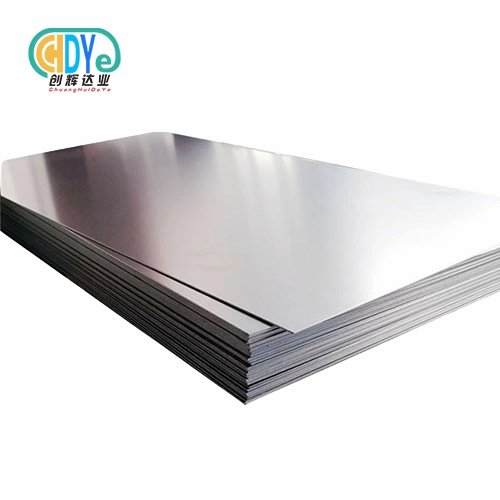
Understanding Titanium Alloy Sheets: Composition and Properties
Because they combine the best parts of titanium with carefully chosen alloying elements, titanium alloy sheets are a big step forward in the way metals are worked with. Some of the exact steps used to make these sheets are vacuum melting, forging, and cold rolling. This is done to make sure that all of them are the same thickness and have good mechanical properties.
Manufacturing Excellence and Composition Control
The first step in making good sheets is vacuum arc remelting. Metal alloys are made by mixing titanium with iron, aluminum, vanadium, and molybdenum in this way. This step fixes any mistakes and makes sure the texture is the same all over the piece. Once the billets are ready, they are cold rolled to make sheets that are the right size and have a smoother outside. In modern factories, electron beam furnaces and annealing methods are used to make the grain structure better and reduce stress. This careful control of heat is very important for making sure that sheets of different widths have the same mechanical properties. The things that are made are about 43% lighter than steel while still being strong. Their density is about 4.5g/cm³.
Superior Performance Characteristics
Extremely resistant to rust, titanium alloy sheets can be used in harsh conditions like the ocean, chloride solutions, and acidic conditions. This protection comes from a stable layer of titanium dioxide that fixes itself when it gets broken. Because the material is biocompatible, it can't be used in medical settings where long-term insertion needs qualities that aren't toxic or reactive. One more important benefit is temperature performance. A lot of them stay together at high temperatures, where steel and aluminum would break. Shape-making processes like deep drawing, stamping, and hydroforming can be used on it without changing its properties because it is so easy to shape.
How to Choose the Best Titanium Alloy Sheet Grade for Your Industry
Using an organized selection method makes sure that the best material is chosen for each business use. Using the F-1 Criteria Screening method, you can compare different types of titanium based on performance needs, cost, and factors related to the supply chain.
Grade 1: Pure Titanium for Maximum Corrosion Resistance
Grade 1 titanium is the best titanium that can be bought. It is very flexible and doesn't rust. This grade has the least amount of iron, which makes it perfect for chemical handling equipment and medical devices that need to be very biocompatible. Weldability and formability are very good, which makes up for its lower strength compared to alloyed types. Grade 1 is resistant to organic acids and chlorine substances, which makes it useful for chemical processes. The material stays structurally sound in places where stainless steel would break down quickly. This means that it will work reliably for a long time and cost less to keep.
Grade 2: Balanced Performance for General Applications
Grade 2 titanium is the most common industrial grade because it has the best mix of strength, ductility, and resistance to corrosion. It is slightly stronger than Grade 1 because it has a slightly higher iron percentage. It still has great properties for production. This type is the workhorse of the titanium business and can be used for many different things. Industrial uses in marine settings, power production, and petrochemical processes depend on Grade 2's track record of performance. Because the material can be welded and comes in different sheet thicknesses, it can be used in a wide range of businesses for unique fabrication needs.
Grade 5 (Ti-6Al-4V): High-Strength Aerospace Applications
The Ti-6Al-4V alpha-beta metal has a great strength-to-weight ratio, which is why it is the best choice for high-performance and aircraft uses. Adding vanadium and aluminum makes the mechanical properties much better while keeping the ductility and fracture toughness at a good level. For this grade to be at its best, it needs to be heated. Grade 5 is used to make structural parts, engine parts, and landing gear. All of these need to be lighter because it has a direct effect on how much fuel an airplane uses and how much it can carry. The material is resistant to fatigue and stable at high and low temperatures, so it will work reliably in the rough conditions that are common in flight.
Applications and Industry Use Cases of Titanium Alloy Sheet
Different industries leverage specific titanium grades based on their unique operational requirements and performance priorities. Understanding these sector-specific applications helps procurement professionals make informed decisions aligned with proven industry standards and best practices.
Aerospace and Defense Applications
The aircraft business needs materials that can handle big changes in temperature, a lot of stress, and air that is acidic. Grade 5 titanium is mostly used for structural uses in places like aircraft panels, wing parts, and engine housings, where lowering weight has a direct effect on how well they work. Titanium's special properties are being used more and more in advanced airplane designs to meet speed goals and strict safety standards. It can be used for more than just business flights. It can be used to make missile parts, armor plates, and military ships. The non-magnetic and radar-transparent qualities of the material give it extra tactical benefits in specific defense uses where stealth is very important.
Medical Device Manufacturing Excellence
Materials used in medicine need to be biocompatible and stable in living settings for a long time. Titanium grades 1 and 2 work very well in hip joints, oral implants, and heart devices that are used as implants. The modulus of flexibility of the material is very close to that of human bone. This means that it doesn't protect against stress as much as other implant materials do. Surgical instrument manufacturing benefits from titanium's corrosion resistance and ability to maintain sharp edges through repeated sterilization cycles. The non-reactive surface stops proteins from sticking and germs from growing, which helps surgeries go better and lowers the risk of illness.
Chemical and Petrochemical Processing
Aggressive chemical environments pose significant challenges for conventional materials, making titanium alloy sheet an essential solution for process equipment longevity. Titanium is resistant to chlorides, acids, and high-temperature corrosion, which makes it useful for heat exchanges, reaction tanks, and pipe systems. The material works well in these situations, which usually makes up for its higher original cost by lasting longer and needing less upkeep. Offshore oil and gas platforms utilize titanium components in seawater cooling systems and drilling equipment where conventional materials would require frequent replacement. The mix of strength and resistance to corrosion ensures reliable operation in harsh marine environments while minimizing operational disruptions.
Navigating the Procurement Process: Where and How to Buy Titanium Alloy Sheets
To do good buying, you need to know about the skills of suppliers, quality certifications, and logistical issues that affect project prices and timelines. Building ties with reputable makers guarantees access to approved materials that meet government and industry standards.
Supplier Qualification and Certification Requirements
Quality certifications play a crucial role in material selection, particularly for industries with stringent regulatory oversight. ISO 9001:2015 certification shows that quality management is carried out in a planned way throughout the entire production process. Certifications specific to the industry, like AS9100 for aerospace uses, give even more proof of capability and compliance. Material traceability is important for important uses where the past of each part must be recorded all the way through the supply chain. Qualified providers keep thorough records of where the raw materials come from, how they are processed, and the results of any tests that are done. This makes it possible to fully track the product from the ingot to the finished product.
Pricing Factors and Volume Considerations
Titanium pricing reflects raw material costs, processing complexity, and market demand fluctuations. Volume commitments often enable preferential pricing and priority allocation during periods of high demand. Understanding these market dynamics helps procurement professionals time purchases and negotiate favorable terms with suppliers. Custom processing services, such as precise cuts, surface treatments, and making, add value and may even lower the need for internal processing. The total cost of ownership, which includes costs for handling, inventory, and quality, is a more true way to compare things than just the price of the materials.
Comparing Titanium Alloy Sheet to Other Metals: Making an Informed Decision
When choosing a material, it's important to think about how it will work, how much it will cost, and how it will be used in the long run. Knowing how titanium stacks up against other materials helps you make smart choices based on the needs and limitations of your application.
Performance Comparison Matrix
Instead of steel, aluminum, or stainless steel, the titanium alloy sheet demonstrates a superior strength-to-weight ratio and corrosion resistance. Steel is cheaper to buy at first, but it needs to be coated to protect it and maintained often in places where it will rust. Aluminum has a good strength-to-weight ratio, but it can't handle high temperatures and won't fight corrosion in harsh settings. While stainless steel is easy to find and doesn't rust very well, it is much heavier and doesn't work as well in salt conditions. To properly compare material choices, the total cost of ownership calculation must take into account the effects on operating efficiency, maintenance, and how often the item needs to be replaced.
Long-Term Value Proposition
Titanium's speed and durability often make up for its higher original costs through longer service life and less need for upkeep. In industries like aircraft and transportation, where reducing weight improves working efficiency, it adds value through fuel savings and better performance that builds over the equipment's operational life. The fact that the material can be recycled and keeps its qualities after being processed more than once helps with environmental goals and gives money to communities through material recovery programs.
Conclusion
Selecting the optimal titanium alloy sheet grade requires careful consideration of application requirements, performance priorities, and cost constraints. For chemical and marine uses, Grade 2 works very well for general-purpose tasks, while Grade 5 is stronger and better for high-performance and aerospace tasks. Because Grade 1 doesn't rust and is biocompatible, it can be used in medicine. It is important to know the differences between grades and how to choose a supplier who meets quality standards. This will help you get the materials you need to reach your short- and long-term work goals. Buying high-quality titanium materials will usually pay off in the long run because they last longer, need less maintenance, and work better in a wider range of business settings.
FAQ
Q: What factors determine the best titanium grade for my application?
A: The best grade to use depends on the application's needs, such as strength, protection against rust, temperature exposure, and compliance with regulations. For chemical processing, Grade 2 is best because it doesn't rust, but Grade 5 is usually needed for aircraft uses because it is stronger. Grades like Grade 1 or Grade 2 that are safe and have the right certifications are needed for medical products.
Q: How does titanium sheet pricing compare to other metals?
A: Titanium is more expensive than steel and aluminum because it is harder to work with and costs more to get the raw materials. Total cost of ownership estimates, on the other hand, often prefer titanium because it needs less maintenance, lasts longer, and performs better. For large-scale uses, volume agreements and standard specs help keep prices low.
Q: What quality certifications should I require from suppliers?
A: ISO 9001:2015 is a basic standard for quality management. For extra compliance, industry-specific certifications like AS9100 for aircraft or ISO 13485 for medical uses are available. For important uses, materials must have certificates that show their chemical makeup, mechanical qualities, and proof of traceability.
Partner with Chuanghui Daye for Premium Titanium Solutions
You can trust Chuanghui Daye to make high-quality titanium alloy sheet products. We have over 30 years of experience working with rare metals and state-of-the-art production facilities in China's famous "Titanium Capital." Our ISO 9001:2015-certified factory makes Grade 1, Grade 2, and Grade 5 sheets and offers custom processing services. This is true whether you need precise parts for spacecraft, medical implants, or tools for processing chemicals. Our expert team will help you find the best grades for your needs. Get in touch with our specialists at info@chdymetal.com to discuss your titanium procurement needs and discover competitive factory-direct pricing with reliable global delivery. Experience the quality advantage that makes Chuanghui Daye the preferred titanium alloy sheet supplier for demanding industrial applications worldwide.
References
1. Boyer, R.R., "An Overview on the Use of Titanium in the Aerospace Industry," Materials Science and Engineering A, Vol. 213, 1996.
2. Donachie, Matthew J., "Titanium: A Technical Guide, Second Edition," ASM International, 2000.
3. Peters, M., et al., "Titanium Alloys for Aerospace Applications," Advanced Engineering Materials, Vol. 5, No. 6, 2003.
4. Lutjering, G. and Williams, J.C., "Titanium Engineering Properties and Applications," Springer-Verlag Berlin Heidelberg, 2007.
5. American Society for Testing and Materials, "Standard Specification for Titanium and Titanium Alloy Strip, Sheet, and Plate," ASTM B265-15, 2015.
6. Rack, H.J. and Qazi, J.I., "Titanium Alloys for Biomedical Applications," Materials Science and Engineering C, Vol. 26, No. 8, 2006.
Learn about our latest products and discounts through SMS or email