- English
- French
- German
- Portuguese
- Spanish
- Russian
- Japanese
- Korean
- Arabic
- Greek
- German
- Turkish
- Italian
- Danish
- Romanian
- Indonesian
- Czech
- Afrikaans
- Swedish
- Polish
- Basque
- Catalan
- Esperanto
- Hindi
- Lao
- Albanian
- Amharic
- Armenian
- Azerbaijani
- Belarusian
- Bengali
- Bosnian
- Bulgarian
- Cebuano
- Chichewa
- Corsican
- Croatian
- Dutch
- Estonian
- Filipino
- Finnish
- Frisian
- Galician
- Georgian
- Gujarati
- Haitian
- Hausa
- Hawaiian
- Hebrew
- Hmong
- Hungarian
- Icelandic
- Igbo
- Javanese
- Kannada
- Kazakh
- Khmer
- Kurdish
- Kyrgyz
- Latin
- Latvian
- Lithuanian
- Luxembou..
- Macedonian
- Malagasy
- Malay
- Malayalam
- Maltese
- Maori
- Marathi
- Mongolian
- Burmese
- Nepali
- Norwegian
- Pashto
- Persian
- Punjabi
- Serbian
- Sesotho
- Sinhala
- Slovak
- Slovenian
- Somali
- Samoan
- Scots Gaelic
- Shona
- Sindhi
- Sundanese
- Swahili
- Tajik
- Tamil
- Telugu
- Thai
- Ukrainian
- Urdu
- Uzbek
- Vietnamese
- Welsh
- Xhosa
- Yiddish
- Yoruba
- Zulu
Is GR2 Titanium Sheet Plate Suitable for Pressure Vessels?
GR2 titanium sheet plate works great for pressure tank uses because it has the best mix of corrosion resistance, mechanical strength, and formability for available pure Grade 2 titanium. With a tensile strength of 345 to 450 MPa and better resistance to harsh chemicals, gr2 titanium sheet plate works well in harsh pressure tank settings where other materials, like stainless steel, might fail because of stress corrosion cracking or pitting.
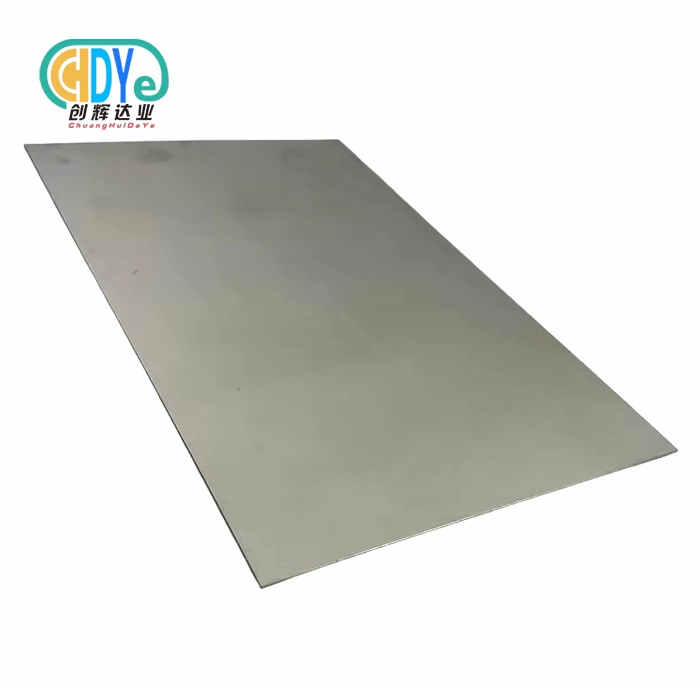
Understanding GR2 Titanium Sheet Plate Specifications and Properties
Sheets of Grade 2 titanium are the standard for commercially pure titanium uses because of their basic qualities. This alpha-phase metal has a carefully controlled chemical makeup, with no more than 0.25% oxygen and no more than 0.30% iron. This makes it the right balance between strength and flexibility.
Chemical Composition and Purity Standards
GR2 titanium sheet plate made according to ASTM B265 standards keeps tight control over the intermediate elements to keep them from breaking. The nitrogen level stays below 0.03%, the carbon level stays below 0.08%, and the hydrogen level stays below 0.015 %. These controlled factors make sure that the material works the same way in all pressure vessel uses, especially in places where chemical stability is important.
The material's density of 4.51 g/cm³ is about 56% of steel's weight, which makes it very useful in situations where weight is important without affecting the structure's strength. With a freezing point of 1660°C and a thermal conductivity of 16.4 W/m·K, this product works well even when the temperature changes.
Mechanical Properties and Performance Metrics
The technical specs say that Grade 2 can be used to build pressure vessels. The minimum tensile strength is 345 MPa (50 ksi), and the minimum yield strength is 275 MPa (40 ksi). The material can also stretch more than 20%. These features show that the material is very flexible, which is important for cold forming and pressing processes that are needed to make pressure vessels.
Under normal working conditions, the temperature range goes up to 425°C (800°F). Above that, too much oxidation and the formation of alpha cases may damage the material's features. This temperature range is good for most industrial pressure tank uses, such as chemical processing and marine settings.
Available Dimensions and Surface Treatments
With thicknesses from 0.5mm to 50mm and lengths from 1000mm to 3000mm, our titanium plates can meet a wide range of industrial needs. Different surface processes, such as buffing, pickling, sandblasting, and bright finish, give you choices for different uses. To get the mechanical qualities and precise measurements that are wanted, the processing methods include both cold rolling and hot rolling.
Evaluating GR2 Titanium Sheet Plate for Pressure Vessel Applications
Evaluation of performance in real pressure vessels shows that gr2 titanium sheet plate is very good at working in tough industrial settings. The material is better than regular stainless steel at resisting stress corrosion cracking, especially in chloride-rich settings like those found in chemical processing plants.
Mechanical Strength Under Pressure and Stress Cycles
Materials used in pressure vessels are put through repeated loading conditions that test their ability to withstand wear and last for a long time. The structure of the Gr2 titanium plate stays strong even when it is stressed over and over again, and it doesn't crack as other materials do. The alpha lattice is naturally tough, which stops catastrophic failure modes.
In chlor-alkali plants, real-world uses show that electrolysis cells and reaction tanks can work well for a long time. Wet chlorine gas and high-temperature brine solutions are constantly present in these sites, which break down normal materials very quickly.
Comparative Analysis with Alternative Materials
Compared to 316L stainless steel, Grade 2 titanium is almost impervious to pitting and crevice rust in ocean and chlorine-filled air. The inactive titanium dioxide layer appears right away when oxygen hits it. It protects and repairs itself, even after damage to the surface.
Alternatives to aluminum don't have the stability at high temperatures or resistance to corrosion needed in harsh chemical conditions. Even though aluminum is cheaper at first, titanium is the better choice for important pressure vessel uses because it is safer and costs less to maintain over time.
Grade Comparison Within the Titanium Family
Knowing the differences between the different types of titanium can help you choose the best material. Grade 1 can be shaped better but isn't as strong, while Grade 5 (Ti-6Al-4V) is stronger but not as resistant to rust. Gr2 titanium sheet plate is the best choice for pressure tanks that need to be moderately strong and have the best rust protection.
Adding palladium to Grade 7 makes it more resistant to hydrogen, but it also makes it much more expensive. The molybdenum percentage in Grade 12 makes it more resistant to crevice rust, but makes it harder to weld. Because of these pros and cons, Grade 2 is the best choice for most pressure tank uses.
Procurement Considerations for GR2 Titanium Sheet Plates
To successfully buy high-quality titanium sheets, such as a gr2 titanium sheet plate, you need to know what the seller can do, what certifications are needed, and how to get the sheets to you. Good titanium providers keep their ISO 9001:2015 certification up to date and give full traceability paperwork for every lot of material they sell.
Supplier Qualification and Quality Assurance
To find suitable suppliers, you have to look at their manufacturing skills, quality control methods, and certifications in the field. Suppliers you can trust give you material certificates that explain the chemical makeup, mechanical qualities, and compliance with standards such as ASTM B265, ASME SB265, and other foreign requirements.
Quality assurance includes more than just simple licenses. It also includes tests, process controls, and customer service. Suppliers with full testing facilities can check the qualities of materials and do special testing to meet the needs of a particular project.
Pricing Factors and Cost Optimization
Pricing structures take into account many factors, such as the purity of the metal, the size requirements, the number of items ordered, and the shipping requirements. Cost savings are usually seen when you buy in bulk, but special sizes or surface treatments may attract extra costs. Understanding these things is important for planning costs and making the most of your spending.
Due to limited world production capacity and raw material availability, market factors affect the price of titanium. Long-term supply deals can keep prices stable and make sure that materials are always available for projects that are already underway.
Logistics and International Trade Considerations
Customs procedures, shipping rules, and quality control methods are all part of international buying. Damage during shipping can be avoided by using the right packing materials that don't absorb water and extra padding. Express shipping, plane freight, and ocean transfer are all options that give you choices based on project deadlines and budgets.
Material permits, export licenses, and customs reports are some of the documents that are needed. Suppliers with a lot of experience run these processes quickly and correctly to avoid delays and follow the rules for foreign trade.
How Chuanghui Daye GR2 Titanium Sheets Meet Pressure Vessel Standards
Chuanghui Daye Metal Material Co., Ltd. has been in business for more than 30 years and can make gr2 titanium sheet plate and other titanium goods that are better than what is needed for pressure vessels. Because we are in Baoji High-tech Development Zone, which is known as China's "Titanium Capital," we have access to well-established facilities and a lot of technical know-how about how to process rare metals.
Quality Control and Manufacturing Excellence
Our quality management system, which is ISO 9001:2015 approved, makes sure that the quality of our products is always the same by controlling every step of the process. Modern production tools like electron beam furnaces, precision rolling mills, and specialized annealing facilities make it possible to precisely control the qualities and dimensions of materials.
Quality control methods include checking the raw materials, keeping an eye on the work as it's being done, and checking the finished product. Chemical analysis proves that the makeup is correct, and mechanical testing proves that the material is strong, flexible, and has other important qualities. Each package comes with thorough certificates that list all the test results and information on how to track them.
Customization Capabilities and Technical Support
Engineering support services help customers choose the best materials and process factors for their pressure tank needs. Our expert team can help you choose the best welding processes, forming methods, and surface treatment choices to get the best performance and dependability.
Customization options include precision cutting, shaping, and surface preparation to meet the exact needs of the job. Whether a project needs a few prototypes or a lot of finished goods, our flexible manufacturing method can meet all of its needs while still keeping high-quality standards.
Supply Chain Reliability and Global Reach
Having established connections with foreign logistics providers guarantees dependable shipping to places around the world. Our detailed packing rules keep materials safe during shipping and keep the purity of the product. Having more than one shipping choice gives you the freedom to meet tight project deadlines or get the best deal on shipping costs.
Inventory management systems make sure that there are enough standard-sized items in stock and can support custom production plans for unique needs. This method cuts down on wait times and makes sure that customers can get materials when they need them most.
Conclusion
GR2 titanium sheet plate is the best choice for pressure tank uses that need high resistance to corrosion, reliable mechanical qualities, and long-term longevity. Because it can be shaped and welded so easily and has been shown to work well in harsh chemical conditions, this material is the best choice for important industry uses. If you buy Grade 2 titanium from reputable companies that have the right certifications and quality controls in place, it will give you the best value because it will last longer, cost less to maintain, and have higher safety limits. Investing in high-quality titanium materials pays off by making the equipment more reliable and lowering the total cost of ownership over its entire life.
FAQ
Q: What makes GR2 titanium superior to stainless steel for pressure vessels?
A: Gr2 titanium sheet plate doesn't pit or crack from stress rust in chloride conditions, where 316L stainless steel often fails. The passive titanium dioxide layer provides self-healing protection that keeps the structure intact even after surface harm. Titanium's weight decrease of about 45% compared to steel also provides structural benefits.
Q: Can Grade 2 titanium withstand high-pressure applications?
A: Titanium grade 2 has a minimum yield strength of 275 MPa and a tensile strength of 345 MPa. It also has great wear resistance, which means it can be used in mild to high-pressure situations. The material keeps its structural integrity under repeated stress conditions and stops cracks from spreading, which happens with other materials.
Q: What certifications are required for pressure vessel applications?
A: Standards like ASTM B265 and ASME SB265 must usually be followed when using pressure vessels. Other standards like ASTM F67 and ISO-5832-2 may also be needed based on the business. To make sure that regulations are followed, material papers must list the chemicals used, their mechanical qualities, and the conditions under which they were heated.
Q: How does Grade 2 compare to other titanium grades for pressure vessels?
A: For most pressure tank uses, Grade 2 is the best choice because it has the best mix of resistance to corrosion and mechanical strength. Even though Grade 1 is easier to shape, it is not strong enough for pressure uses. Grade 5 is stronger, but it doesn't fight corrosion as well as Grade 2. For most pressure tank needs, Grade 2 is better.
Q: What are the welding considerations for titanium pressure vessels?
A: To keep pollution and oxidation from happening during titanium welding, an inert gas cover is needed. Unlike higher-strength metals, Grade 2 alloys usually don't need to be heated after they are welded. When you bond something the right way, the joint will be as strong as or stronger than the base material, and it will also be resistant to rust.
Partner with Chuanghui Daye for Premium GR2 Titanium Sheet Plate Solutions
Shaanxi Chuanghui Daye is ready to help you with your pressure tank projects by making high-quality Gr2 titanium sheet plate that meets the strictest standards in the business. With thirty years of experience processing rare metals, ISO 9001:2015 approval, and advanced production skills, we can guarantee consistent quality and on-time delivery for your most important uses. As a reliable Gr2 titanium sheet plate supplier, we offer full technical support, low factory-direct prices, and a range of customization choices to meet your exact engineering needs. Contact our knowledgeable staff at info@chdymetal.com to talk about the materials you need for your pressure vessels and find out how our high-quality titanium solutions can help your project run better and cost less overall.
References
1. American Society of Mechanical Engineers. "ASME Boiler and Pressure Vessel Code Section II: Materials Specifications for Titanium and Titanium Alloys." ASME Press, 2021.
2. Boyer, R.R., Welsch, G., and Collings, E.W. "Materials Properties Handbook: Titanium Alloys for Pressure Vessel Applications." ASM International, 2020.
3. Lutjering, G. and Williams, J.C. "Titanium: Engineering Materials and Processes for Pressure Vessel Design." Springer-Verlag, 2019.
4. Peters, M. and Leyens, C. "Corrosion Performance of Commercially Pure Titanium in Chemical Processing Equipment." Wiley-VCH, 2021.
5. Schutz, R.W. and Thomas, D.E. "Corrosion of Titanium and Titanium Alloys in Industrial Pressure Vessel Applications." Materials Performance Journal, 2020.
6. Zhang, L. and Chen, Y. "Mechanical Behavior and Failure Analysis of Grade 2 Titanium in High-Pressure Industrial Applications." International Journal of Pressure Vessels and Piping, 2021.
Learn about our latest products and discounts through SMS or email