- English
- French
- German
- Portuguese
- Spanish
- Russian
- Japanese
- Korean
- Arabic
- Greek
- German
- Turkish
- Italian
- Danish
- Romanian
- Indonesian
- Czech
- Afrikaans
- Swedish
- Polish
- Basque
- Catalan
- Esperanto
- Hindi
- Lao
- Albanian
- Amharic
- Armenian
- Azerbaijani
- Belarusian
- Bengali
- Bosnian
- Bulgarian
- Cebuano
- Chichewa
- Corsican
- Croatian
- Dutch
- Estonian
- Filipino
- Finnish
- Frisian
- Galician
- Georgian
- Gujarati
- Haitian
- Hausa
- Hawaiian
- Hebrew
- Hmong
- Hungarian
- Icelandic
- Igbo
- Javanese
- Kannada
- Kazakh
- Khmer
- Kurdish
- Kyrgyz
- Latin
- Latvian
- Lithuanian
- Luxembou..
- Macedonian
- Malagasy
- Malay
- Malayalam
- Maltese
- Maori
- Marathi
- Mongolian
- Burmese
- Nepali
- Norwegian
- Pashto
- Persian
- Punjabi
- Serbian
- Sesotho
- Sinhala
- Slovak
- Slovenian
- Somali
- Samoan
- Scots Gaelic
- Shona
- Sindhi
- Sundanese
- Swahili
- Tajik
- Tamil
- Telugu
- Thai
- Ukrainian
- Urdu
- Uzbek
- Vietnamese
- Welsh
- Xhosa
- Yiddish
- Yoruba
- Zulu
What makes titanium sheets ideal for medical implants?
A big problem for companies that make medical devices is always coming up with materials that can stay inside the body for decades without breaking down and still work with living things. Titanium sheets have become the best option for this difficult task because they are compatible with living things and work very well mechanically. These flat-rolled titanium sheets, which are usually between 0.5mm and 4.75mm thick, are turned into implants that save lives and help millions of people around the world. They naturally form a solid oxide layer that makes a surface that the body can use without any negative reactions. This makes them essential for everything from teeth implants to hip replacements.
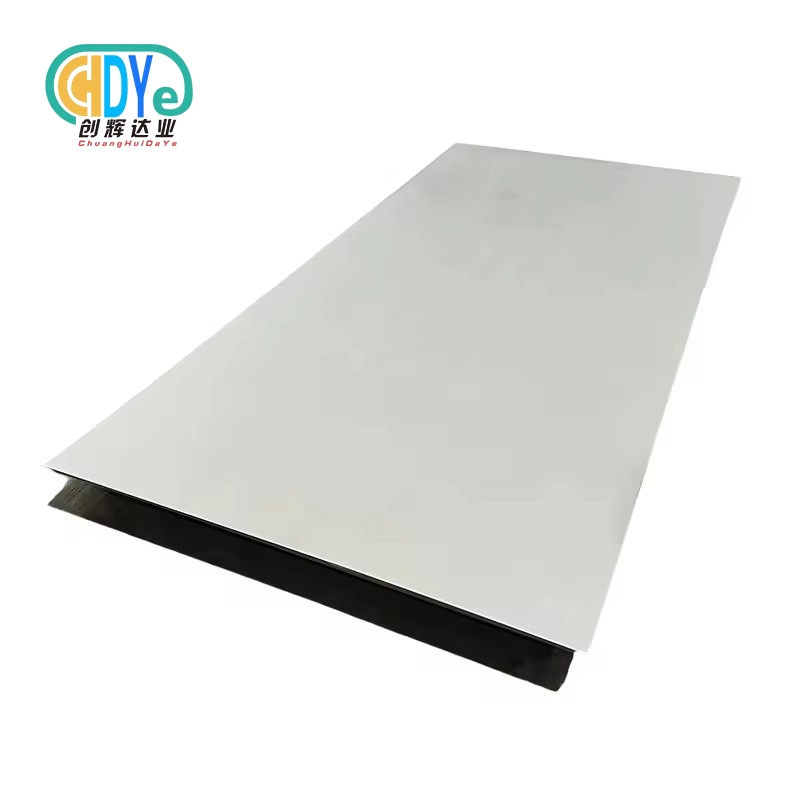
Understanding the Unique Properties of Titanium Sheets for Medical Implants
Titanium has become very popular in medical uses because it has unique physical and chemical properties that set it apart from all other metals. Knowing about these qualities helps people who work in procurement choose the right materials for important healthcare uses.
Biocompatibility: The Foundation of Implant Safety
The immune system of a human being fights foreign things very strongly, but titanium is very well able to survive in biological settings. Whenever the metal comes into contact with body fluids, it instantly forms a thin, stick-on layer of titanium dioxide (TiO₂). This dormant film stays steady in the body's chloride-rich, corrosive environment. It stops the release of ions that could cause allergies or inflammatory reactions. Over forty years of clinical studies show that titanium implants that are properly made keep this protected barrier in place forever, with failure rates due to mechanical stress rather than material breakdown.
Strength-to-Weight Ratio: Structural Performance Without Burden
Titanium has a tensile strength about the same as that of many steel metals, but it is only 4.51 g/cm³ dense, which is about 60% less dense than stainless steel. This great ratio of strength to weight is very important for load-bearing uses like spine fusion bars or femoral stems for hip replacements. Patients benefit from implants that are lighter because they put less stress on the bone tissue around them, and doctors benefit because they are easier to handle during complicated treatments. The material keeps its shape under repeated loading, and it can handle millions of stress cycles over the course of a patient's lifetime without wearing out.
Corrosion Resistance: Durability in Harsh Environments
Titanium is not affected by most body fluids and tissues, while ferrous metals are. Ferrous metals crack when they are stressed by salt. If the solid oxide layer is scratched, it instantly heals itself, protecting against pitting, crevice rust, and galvanic reactions. This natural resistance gets rid of worries about material breakdown that comes with other metals. This means that implants will keep working as they should for 20 to 30 years or longer without needing to be replaced.
Medical-Grade Titanium Alloys: Selecting the Right Material
There are two main types used to make medical implants, and each has its own benefits for different uses:
Commercially Pure Titanium (Grade 2): This pure titanium doesn't have any other metals added to it, so it can be shaped easily and doesn't rust. It has a yield strength of about 345 MPa. Manufacturers of medical devices, such as Grade 2, for tasks that need deep drawing, cold forming, or complicated shapes, like making head plates or tooth abutments. Its great ductility lets it be shaped into complicated forms without breaking, and its purity makes sure that biological responses are predictable. For medical implants, Grade 2 sheets usually meet the requirements of ASTM B265 and ISO 5832-2.
Ti-6Al-4V metal (Grade 5): Adding 6% aluminum and 4% vanadium makes the metal stronger, with yield strengths above 828 MPa, which is almost 2.4 times those of Grade 2. Grade 5 is the best choice for load-bearing orthopedic implants like hip stems, knee components, and bone fixation plates because it has better mechanical performance. Even though it's harder to shape at room temperature, its higher hardness and better resistance to stress make it necessary for structural uses. Grade 5 meets the standards set by ASTM F136 and ISO 5832-3, which were made especially for medical implants.
Thickness Precision: Engineering for Specific Applications
Controlling the sheet thickness with micron-level accuracy decides how the final device will work mechanically and how it can be used in surgery. In many situations, a 2mm titanium sheet is the best mix between being rigid enough for structural parts and being thin enough for minimally invasive surgery methods. Cold rolling is used by manufacturers to get exact thickness specs across widths from 500mm to 2000mm and lengths from 1000mm to 3000mm. This makes sure that the material qualities are the same throughout each sheet. This control over dimensions is very important when making parts that need to fit perfectly with bone structures or nearby tissues.
Comparing Titanium Sheets with Alternative Materials for Medical Use
The choice of material has a huge effect on how well implants work, how well patients do, and how many of them will last. A close look at the two shows why titanium has replaced other materials in important medical uses.
Titanium vs. Stainless Steel: The Evolution Beyond 316L
Due to its low cost and ease of processing, austenitic stainless steel (316L) was the standard material for many years. However, clinical practice showed important limits. Through rusting, stainless steel gives off nickel and chromium ions, which cause allergic reactions in about 10 to 15 percent of patients. Its higher elastic stiffness (200 GPa vs. 110 GPa for titanium sheets) protects against stress when the implant is under too much load, which would otherwise cause nearby bone to shrink from not getting enough mechanical stimulation. Titanium's stiffness is more like that of cortical bone (10–30 GPa), which helps bones grow and change healthily. Also, some types of stainless steel are not compatible with MRIs because they are ferromagnetic. Titanium, on the other hand, is not magnetic, so it can be used for diagnostic imaging without any problems or safety issues.
Titanium vs. Cobalt-Chromium Alloys: Trading Hardness for Biocompatibility
Cobalt-chromium metals are very good at keeping moving surfaces in joint replacements from wearing down. Because they are harder, they make less plastic waste in total hip and knee systems. Even with these benefits, cobalt-chromium poses major health risks. New studies show that some implant designs are linked to higher amounts of cobalt in the blood, which raises worries about systemic toxicity and the growth of fake tumors. The bulk of the material (8.3–9.2 g/cm³) makes the implants heavier, but they are more expensive and hard to machine, which makes the process more difficult. Titanium solves these issues, but its softer bearing surfaces mean that different connection materials are needed.
Cost-Performance Analysis: Justifying Premium Investment
Titanium is three to five times more expensive than stainless steel as a raw material, and it is harder to work with, which makes the cost of production higher. These higher starting costs worry buying teams that are trying to stick to tight budgets. A lifetime study, on the other hand, shows strong economic reasons for it. Due to its better biocompatibility, titanium lowers the number of surgeries that need to be redone because of problems with the material or rust. As a result, it makes implants last longer, which means that expensive repairs are put off. Lower rates of complications mean lower total healthcare costs, better quality of life for patients, and less risk of liability for device makers. When looking at the value of an implant over its entire useful life instead of just its original cost, titanium is clearly the best material for important medical uses.
Manufacturing and Processing Titanium Sheets for Medical Implants
It takes specialized manufacturing skills and strict quality control to turn flat titanium sheets into precise medical implants. Knowing about these steps helps buyers judge the skills of suppliers and make sure that the quality of the products they receive stays uniform.
Advanced Fabrication Techniques
Medical device makers use several cutting-edge techniques to shape titanium sheets without changing their functional or safe surface. Laser cutting lets you get very precise details with almost no heat damage, which is very important for complicated dental implant parts or porous bone integration surfaces. Cutting with a water jet completely removes thermal effects, keeping the qualities of the material in uses that can't handle heat. With carbide tools, CNC machining centers can achieve very tight size limits (±0.05mm), which are necessary for parts to fit correctly within body structures. To keep the surface clean, stop the work from getting too hard, and keep it that way, each method needs its own set of parameters that need to be optimized in a certain way.
Welding and Joining Considerations
Putting together implants with more than one part is hard because regular welding changes the material and increases the risk of contamination. TIG (tungsten inert gas) welding in high-purity argon atmospheres stops oxidation and makes parts that are safe. Electron beam welding in vacuum tanks completely removes any pollution from the air, making strong bonds that can be used for load-bearing tasks. Some makers use laser welding to apply exact, localized heat that keeps thin-walled structures from warping too much. Another option is to use titanium screws or nails for mechanical fastening, but designers need to think about the possibility of crevice rust at metal surfaces that are not the same. Titanium and steel frames can't be fused directly because a brittle intermetallic compound forms. Instead, mechanical fasteners or special explosion-bonded transition joints are needed to make the connections.
Quality Assurance and Regulatory Compliance
Manufacturing medical-grade titanium is governed by strict quality control systems that go far beyond those used in commercial production. ISO 13485 approval is specific to making medical devices and sets up full controls from receiving the raw materials to packaging them at the end. The chemical makeup of each output lot is checked using optical emission spectroscopy to make sure it meets the requirements of ASTM B265, ASTM F136, or ISO 5832. The basic standards for yield strength, ultimate tensile strength, and elongation qualities have been met by mechanical tests. Using coordinate measuring machines (CMM) for dimensional checking confirms that the thickness is regular, the surface is flat, and the finish meets the requirements.
Each sheet comes with traceability paperwork that lists the melt number, the history of production, test results, and how to handle the sheet. This full chain of custody makes it easy to return products quickly if there are quality problems. It also shows that the product is in line with regulations during FDA 510(k) submissions or CE marking evaluations. Suppliers who follow these strict standards set themselves apart by providing provable proof rather than just making marketing claims.
Practical Applications of Titanium Sheets in Medical Implants
Titanium sheets can be used in almost every area of medicine, making it possible for life-changing procedures that improve movement, relieve pain, and increase patient longevity.
Orthopedic Implants: Restoring Mobility and Function
The biggest use of medical-grade titanium sheets is in orthopedic surgery. For acetabular cups that hold fake holes in place in the pelvis, hip replacement systems use stamped or machined sheet parts. Custom-made spinal fusion plates made from titanium sheets support the spine and allow bone to grow through carefully designed holes. Trauma stabilization plates made from sheets that are bent and shaped to fit broken long bones support them so that they can be moved quickly, which speeds up the healing process. The material is less radioactive than steel, which makes it easier to see healed bone on X-rays. Its non-magnetic qualities also make it possible to do full MRI follow-up imaging.
Dental and Maxillofacial Applications
The field of dental implants has grown very quickly thanks to titanium's osseointegration qualities, which allow living bone to directly join with the implant surface without any soft tissue getting in the way. Endosseous implants made from titanium sheets stock restore tooth roots that have been lost and give artificial crowns a stable base. Craniomaxillofacial reconstruction uses custom-bent titanium mesh and plates to fix birth defects or injuries that happened during birth, making the face look and work better again. Because the material works with computer-aided design and 3D printing, it makes it possible to make solutions that are specific to each patient that were not possible with standard materials.
Cardiovascular and Soft Tissue Devices
Titanium sheets are sometimes used in cardiovascular applications, but not as often as they are in orthopedic applications. Thin pieces of titanium are used to make the housings for pacemakers and implantable cardioverter-defibrillators. These protect the sensitive electronics inside while still being MRI compatible. Heart valve frames use carefully made titanium sheet parts that keep the structure strong even after billions of cycles of loading. Surgical tools made from titanium sheets are better for your body because they are lighter and can be used for longer treatments.
Emerging Technologies: 3D Printing and Customization
Additive manufacturing has changed the way implants are made by making it possible to make shapes that would not be possible with standard sheet forming. Laser powder bed fusion uses titanium powder to build custom implants for each patient, one layer at a time. The implants have the right amount of pores to help bone grow and reduce stress protection. Powder-based methods are not the same as traditional titanium sheet manufacturing, but they work well with traditional production to meet the needs of niche uses that need to be very customized. Hybrid methods use the best features of both technologies by combining made sheet parts with additively produced parts.
Procurement Guide for B2B Buyers: How to Source High-Quality Titanium Sheets for Medical Implants
One of the most important choices medical device makers have to make is which titanium sheet provider to trust. Poor material quality puts patient safety at risk, leads to regulatory violations, and hurts the image of the brand.
Evaluating Supplier Credentials and Capabilities
Qualified sellers show a wide range of skills that go beyond just distributing metal. ISO 9001:2015 certification proves basic quality management skills, and ISO 13485 certification proves unique involvement in the medical device supply chain. Check to see if the seller has the right testing tools, such as spectrometry, mechanical testing, and dimensional checking equipment. Ask for sample material certificates that show that the material can be fully traced back to its original melt source. Check their manufacturing ties and make sure they have direct relationships with main producers instead of complex distribution networks that make it hard to tell where the goods came from.
Understanding Lead Times and Pricing Structures
Medical-grade titanium sheets are very expensive because they have to go through strict quality controls, extensive testing, and full paperwork. The price changes depending on the world supply of titanium sponge, the demand cycle in aircraft, and the cost of alloying elements. By building relationships with makers that offer factory-direct prices, you can avoid the markups that come with marketing and talk directly with the manufacturer about specs and delivery times. Lead times for certified medical-grade sheets are usually between 8 and 12 weeks, but sellers who keep a strategic stockpile can meet pressing needs. A lot of the time, promises to buy in bulk lead to better prices and earlier schedules for production.
Customization and Technical Support
Leading sellers offer services that add value and speed up product development while making manufacturing simpler. Cutting to exact measurements cuts down on waste and speeds up the process. There are different ways to treat the surface, such as pickling, bright annealing, or polished ends, depending on the needs of the product. Technical advice on choosing the right grade, forming suggestions, and welding methods shows knowledge and helps buyers with less experience. When suppliers know a lot about a certain business, they stop being transactional sellers and start working with others.
Global Supply Chain Considerations
The Baoji area in China has become a major center for making titanium, thanks to decades of experience in metalworking and well-connected supply lines. This is shown by Shaanxi Chuanghui Daye Metal Material Co., Ltd., which is in Baoji's High-tech Development Zone and has been in business for over 30 years, and has advanced processing tools like electron beam ovens and precision machining centers, as well as ISO 9001:2015 certification. Western suppliers, such as American manufacturers, have good names, but purchasing teams are becoming more aware that where a seller is located is less important than showing that they have good quality systems, testing capabilities, and paperwork that shows they follow the rules.
Conclusion
Titanium sheets have changed the way medical implants are made because they offer the best biocompatibility, rust resistance, and functional performance of any material. Their special qualities help with important problems that other materials can't, which makes the extra money spent worth it because they improve patient results and extend the life of the product. To do good procurement, you need to know about the different types of materials, how they are made, and what the seller can do. When medical device companies work with qualified suppliers, they can get certified materials, professional help, and reliable shipping, which speeds up product creation and makes sure they follow all the rules. Even though implant technologies are getting better with additive production and customizing them for each patient, titanium will still be the best material for life-saving medical uses.
FAQ
Q: Which titanium grade should I specify for surgical implants?
A: Grade 2 commercially pure titanium is best for things that need to be very easy to shape and very resistant to rust, like cranial plates, tooth abutments, and structures with thin walls. Grade 5 (Ti-6Al-4V) has more strength, which is needed for load-bearing orthopedic parts like hip stems, spine bars, and fracture fixation plates. Both grades meet ASTM and ISO medical standards, but Grade 5 is better because it has better mechanical qualities and is better for structural performance when formability is not as important.
Q: How does titanium's corrosion resistance benefit long-term implant performance?
A: When a solid layer of titanium dioxide forms on its own, it stops ions from leaking into nearby tissues. This stops the inflammatory reactions that are caused by corrosion products. This passive film heals itself right away if it gets broken, giving the implant safety for its whole life. Unlike cobalt-chromium, which releases possibly toxic ions, or stainless steel, which cracks when chloride is present, titanium stays chemically stable in body fluids forever, meaning it can be used for 20 to 30 years without breaking down.
Q: Can I source custom-cut, certified titanium sheets for prototype development?
A: Reliable providers offer custom cutting services that include full material approval. This makes it easy to make prototypes and small batches. Different design needs can be met by specifications that include a 2mm thickness across widths of 500–2000mm and lengths of 1000–3000mm. Certified sellers keep records that link each piece to the original melt source. This makes sure that all regulations are followed, even for small amounts used for testing. For prototype development, we ensure that every batch of titanium sheets meets stringent medical traceability standards.
Partner with Chuanghui Daye for Certified Medical-Grade Titanium Sheets
Medical device makers looking for a reliable provider of titanium sheets can use shaanxi Chuanghui Daye's 30 years of experience with rare metals and a wide range of manufacturing skills. Our factory in Baoji, China's famous Titanium Capital, is ISO 9001:2015 approved and makes ASTM B265-compliant Grade 2 and Grade 5 sheets with full tracking paperwork to support FDA and CE regulatory submissions. We keep precision inventory that includes sheets with a thickness of 2 mm that come in standard widths and lengths. This lets us respond quickly to both trial and production needs. Our expert team helps you choose the right grade, makes suggestions for making, and offers welding advice that speeds up your development timeline. Contact our engineering experts at info@chdymetal.com to talk about your particular needs and get full quotes with reasonable factory-direct prices from a well-known titanium sheet maker.
References
1. Long, M., & Rack, H.J. (1998). Titanium alloys in total joint replacement—a materials science perspective. Biomaterials, 19(18), 1621-1639.
2. Niinomi, M. (2008). Mechanical biocompatibilities of titanium alloys for biomedical applications. Journal of the Mechanical Behavior of Biomedical Materials, 1(1), 30-42.
3. Geetha, M., Singh, A.K., Asokamani, R., & Gogia, A.K. (2009). Ti-based biomaterials, the ultimate choice for orthopaedic implants – A review. Progress in Materials Science, 54(3), 397-425.
4. Disegi, J.A., & Eschbach, L. (2000). Stainless steel in bone surgery. Injury, 31(Supplement 4), D2-D6.
5. Brunette, D.M., Tengvall, P., Textor, M., & Thomsen, P. (2001). Titanium in Medicine: Material Science, Surface Science, Engineering, Biological Responses and Medical Applications. Springer-Verlag Berlin Heidelberg.
6. ASTM International. (2020). ASTM F136-13: Standard Specification for Wrought Titanium-6Aluminum-4Vanadium ELI (Extra Low Interstitial) Alloy for Surgical Implant Applications. ASTM Book of Standards Volume 13.01.
Learn about our latest products and discounts through SMS or email