- English
- French
- German
- Portuguese
- Spanish
- Russian
- Japanese
- Korean
- Arabic
- Greek
- German
- Turkish
- Italian
- Danish
- Romanian
- Indonesian
- Czech
- Afrikaans
- Swedish
- Polish
- Basque
- Catalan
- Esperanto
- Hindi
- Lao
- Albanian
- Amharic
- Armenian
- Azerbaijani
- Belarusian
- Bengali
- Bosnian
- Bulgarian
- Cebuano
- Chichewa
- Corsican
- Croatian
- Dutch
- Estonian
- Filipino
- Finnish
- Frisian
- Galician
- Georgian
- Gujarati
- Haitian
- Hausa
- Hawaiian
- Hebrew
- Hmong
- Hungarian
- Icelandic
- Igbo
- Javanese
- Kannada
- Kazakh
- Khmer
- Kurdish
- Kyrgyz
- Latin
- Latvian
- Lithuanian
- Luxembou..
- Macedonian
- Malagasy
- Malay
- Malayalam
- Maltese
- Maori
- Marathi
- Mongolian
- Burmese
- Nepali
- Norwegian
- Pashto
- Persian
- Punjabi
- Serbian
- Sesotho
- Sinhala
- Slovak
- Slovenian
- Somali
- Samoan
- Scots Gaelic
- Shona
- Sindhi
- Sundanese
- Swahili
- Tajik
- Tamil
- Telugu
- Thai
- Ukrainian
- Urdu
- Uzbek
- Vietnamese
- Welsh
- Xhosa
- Yiddish
- Yoruba
- Zulu
Is pure niobium bar Right for Chemical Processing?
If you’re in chemical processing and are looking at material possibilities for corrosion resistant equipment, pure niobium bar should be high on your list. Niobium is a refractory metal of >99.9% purity and on the surface develops a self-healing niobium pentoxide (Nb2O5) passivation layer which is resistant to assault by most organic and mineral acids. This material has a melting temperature of 2,468°C and a density of 8.57 g/cm3 providing thermal stability and mechanical endurance that many ordinary metals just cannot match in harsh chemical conditions. The quick answer is yes, it works really well for the correct applications.
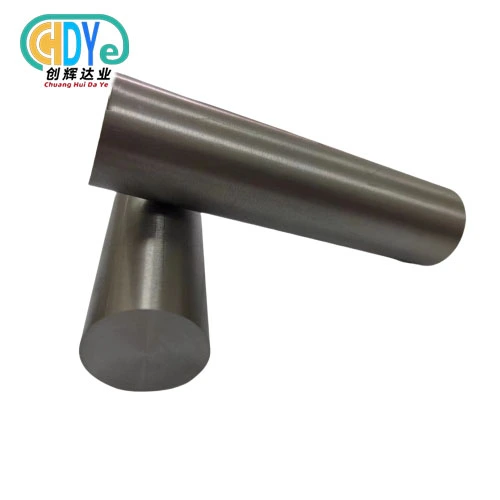
Understanding Pure Niobium Bars in Chemical Processing
Before you go to the procurement table, it’s good to understand what separates niobium from other structural metals and how the bar shape is especially significant for chemical plant applications.
What Makes Niobium Bar Unique?
A niobium bar has the same fundamental material features as niobium sheet or round bar, namely a body centered cubic (BCC) crystal structure, good ductility and superior corrosion resistance, but its form provides specific production benefits. The flat parallel surfaces provide for easier machining, weld fixturing, and structural integration into reactor frames, agitator components, and vessel internals. Grades are standard as per ASTM B392, with the two main categories being R04200 (Reactor Grade) and R04210 (Commercial Grade). R04210 is the most cost effective and technically sound choice for the majority of chemical processing applications.
Key Physical and Chemical Properties
The self-passivating oxide film on niobium gives resistance to hydrochloric acid, dilute sulfuric acid, nitric acid, and most organic solvents at temperatures below 100°C. It has a coefficient of thermal expansion of 7.3 µm/m·K. Its superconducting transition temperature is 9.25 K. This is a specification for cryogenic and electronics applications. Its ability to resist pitting, crevice corrosion and stress corrosion cracking in acid environments makes it attractive for chemical processing. Rigorous quality control, including interstitial impurity tests for oxygen, nitrogen, hydrogen and carbon, ensures high-grade pure niobium bar fulfill performance objectives across the complete service lifespan.
Advantages of Pure Niobium Bars Over Alternative Materials
When procurement teams are comparing niobium versus titanium, stainless steel, or tantalum for corrosion-resistant applications, the material landscape is more complicated than it first looks.Here are the main performance benefits to consider carefully:
- Excellent acid resistance in certain situations Niobium is superior than titanium grade 2 in hydrochloric acid conditions, especially at moderate concentrations and temperatures. Niobium outperforms stainless steels like 316L in acid environments and is immune to chloride stress corrosion cracking – a failure pattern that affects stainless grades.
- Longer longevity and reduced overall cost of ownership: Stainless steel components typically have a life expectancy of just two to five years in harsh chemical conditions before they must be replaced. While more costly in the beginning, niobium parts have a far longer service life, resulting in less planned downtime and lower maintenance costs.
- Tantalum has high corrosion resistance, but is quite dense at 16.6 g/cm³, almost twice the density of niobium at 8.57 g/cm³, giving a weight advantage. The weight differential directly influences the production cost and difficulty of installation for big structural components.
- Cold working and machining. Niobium has room temperature machinability and cold working characteristics which tungsten or molybdenum do not have without breaking. Machining does need care however. Niobium is soft and may gall tools. Sharp high speed steel tools, water soluble coolants and regulated cutting speeds can easily produce quality components.
“These performance qualities provide a strong argument for niobium in situations when titanium is insufficient and tantalum is too expensive. This content is always of importance to procurement engineers who are focused on entire lifetime cost and not just unit pricing. For applications requiring consistent dimensions and reliable material performance, pure niobium bar can serve as a practical solution where long-term durability and cost efficiency are key considerations.”
Selecting and Specifying Pure Niobium Bars for Your Needs
There is more to picking the correct niobium bar product than just choosing a grade. Some of the procurement factors that should be evaluated thoroughly before placing an order are:
Purity, Grade, and Mechanical Specs
The standard baseline for chemical processing is R04210 Commercial Grade niobium with purity of ≥99.9%. The key mechanical qualities to check via ASTM E8 testing are tensile strength, yield strength, and elongation percentages. Grain size analysis ASTM E112 (usually ASTM No. 6 or finer for uniformity of forming and machining). Oxygen level should be less than 200 parts per million for normal chemical grades to avoid embrittlement over time.
Customization, MOQ, and Lead Times
Reliable niobium suppliers provide unique cross-section specifications, cut-to-length services and surface treatment choices. Minimum order numbers vary by supplier and application. Some manufacturers can support small-batch R&D orders and high-volume manufacturing runs. Lead times are often 2-6 weeks depending on the intricacy and volume of the order. In B2B procurement, it is common for chemical and aerospace applications to need comprehensive material traceability paperwork including mill certifications and chemical analysis reports.
Case Studies and Real-World Applications in the Chemical Industry
The best proof of a material’s appropriateness for a difficult environment comes from actual deployments.
Chemical Plant Heat Exchanger Components
A petrochemical plant processing hydrochloric acid substituted stainless steel structural bars with pure niobium bar counterparts in a heat exchanger assembly at 80°C. The stainless components have to be replaced every 18 months because to chloride pitting. They moved to niobium and now have maintenance intervals of more than five years without any noticeable corrosion damage. This demonstrated the economics of the lifetime, wherein the overall cost over a ten year span was less despite the material cost being greater initially.
Reactor Vessel Internals
The specialized chemical business used niobium bars as structural supports within a nitric acid reactor at extreme temperatures. The material’s thermal stability and acid immunity avoided the localized corrosion failures which had been seen with titanium components at weld zones. Vacuum or inert gas welding, necessary at temperatures over 200°C for niobium, was properly incorporated into the manufacturing process. The assembly has successfully run through many yearly inspection cycles with no problem.These instances illustrate that niobium, used under the correct application circumstances, produces significant, repeatable performance increases.
Conclusion
Pure niobium bar isn’t a one-size-fits-all answer but in chemical processing settings with strong acids, high temperatures and challenging corrosion conditions it makes a good choice as a premium material. Its combination of acid immunity, thermal stability, workability and extended service life make it a technically good option for heat exchangers, reactor internals and corrosion resistant structural components. If procured from a recognized, experienced producer with stringent quality controls and comprehensive traceability documentation, niobium will always live up to its performance promise, even over extensive operating cycles.
FAQ
Q: What chemical environments are best suited to niobium bars?
A: Niobium performs excellently in hydrochloric acid, dilute sulfuric acid, nitric acid, and most organic acids below 100°C. It is not recommended for environments involving hydrofluoric acid or strong alkalis at elevated temperatures.
Q: How does niobium compare to titanium for acid resistance?
A: Titanium performs well in oxidizing acid environments, but niobium holds a clear advantage in reducing acid conditions, particularly hydrochloric acid at moderate concentrations. Each material has its optimal application window.
Q: What are typical lead times and MOQ requirements?
A: Lead times generally range from two to six weeks depending on dimensions and order complexity. Many certified suppliers accommodate both small prototype batches and large-volume production orders with flexible MOQ policies.
Can niobium bars be welded in open air?
No. Niobium absorbs oxygen and nitrogen aggressively above 200°C, causing embrittlement. All welding must be performed under vacuum or within a high-purity argon atmosphere with controlled chamber conditions.
What certifications should a niobium supplier hold?
ISO 9001:2015 certification is the baseline standard. Suppliers should also provide ASTM-compliant material certifications, full chemical analysis reports, and mechanical test documentation for each production lot.
Partner With Chuanghui Daye for Your Pure Niobium Bar Supply
Shaanxi Chuanghui Daye is a trusted pure niobium bar manufacturer based in Baoji, China's recognized rare metal hub, with over 30 years of industry expertise and ISO 9001:2015 certification. We supply custom-dimensioned niobium bars with full traceability documentation, competitive factory-direct pricing, and flexible order quantities for both prototyping and production. Reach our technical team directly at info@chdymetal.com or visit www.chdymetal.com to request a quote today.
References
1. ASTM International. ASTM B392: Standard Specification for Niobium and Niobium Alloy Bar, Rod, and Wire. ASTM International, 2022.
2. Müller, W. & Wittig, H. Corrosion Resistance of Refractory Metals in Chemical Environments. Journal of Corrosion Science and Engineering, 2019.
3. Donachie, M.J. Refractory Metals and Their Industrial Applications. ASM International, 2018.
4. ASM Handbook Committee. ASM Handbook, Volume 13B: Corrosion: Materials. ASM International, 2005.
5. Savitzky, B.H. et al. Physical Metallurgy of Niobium and Its Alloys. Materials Science and Engineering Reports, 2020.
6. Sherritt, R.G. & Mukhopadhyay, A. Advanced Materials for Chemical Process Equipment: Selection and Performance. Chemical Engineering Progress, 2021.

Learn about our latest products and discounts through SMS or email