- English
- French
- German
- Portuguese
- Spanish
- Russian
- Japanese
- Korean
- Arabic
- Greek
- German
- Turkish
- Italian
- Danish
- Romanian
- Indonesian
- Czech
- Afrikaans
- Swedish
- Polish
- Basque
- Catalan
- Esperanto
- Hindi
- Lao
- Albanian
- Amharic
- Armenian
- Azerbaijani
- Belarusian
- Bengali
- Bosnian
- Bulgarian
- Cebuano
- Chichewa
- Corsican
- Croatian
- Dutch
- Estonian
- Filipino
- Finnish
- Frisian
- Galician
- Georgian
- Gujarati
- Haitian
- Hausa
- Hawaiian
- Hebrew
- Hmong
- Hungarian
- Icelandic
- Igbo
- Javanese
- Kannada
- Kazakh
- Khmer
- Kurdish
- Kyrgyz
- Latin
- Latvian
- Lithuanian
- Luxembou..
- Macedonian
- Malagasy
- Malay
- Malayalam
- Maltese
- Maori
- Marathi
- Mongolian
- Burmese
- Nepali
- Norwegian
- Pashto
- Persian
- Punjabi
- Serbian
- Sesotho
- Sinhala
- Slovak
- Slovenian
- Somali
- Samoan
- Scots Gaelic
- Shona
- Sindhi
- Sundanese
- Swahili
- Tajik
- Tamil
- Telugu
- Thai
- Ukrainian
- Urdu
- Uzbek
- Vietnamese
- Welsh
- Xhosa
- Yiddish
- Yoruba
- Zulu
Is Titanium Welding Rod Suitable for High-Temperature Applications?
When the temperature is high, titanium welding rod does work very well. It is critical to choose the right filler metal when working with hot tools so that the joint stays strong and works well for a long time. You can use titanium welding rods that meet AWS A5.16 standards, like ERTi-2 and ERTi-5. These rods stay stable at high temperatures, don't rust, and keep their mechanical properties even after heating for a long time. Since these things are true, titanium filler materials are great for tough environments in the power generation, chemical processing, and aerospace industries.
Introduction
If you don't choose the right welding materials, your high-temperature tools may not last as long or as safely as they should. Choose filler metals that can handle heat stress, reactive conditions, and acidic environments without breaking down. This information is very important for buying managers, engineers, and OEM clients. This article answers whether you can use titanium welding rods at high temperatures. It also tells you how to choose the right material, how it works, and where to buy it. We look at how titanium filler metals are used to resolve common issues in tough work environments. That way, you can protect your capital and obey the rules set by the government.
Understanding Titanium Welding Rods and High-Temperature Needs
Types and Classifications of Titanium Filler Metals
There are different kinds of titanium welding rods designed for various types of welding and compatible with different base metals. When it comes to price, ERTi-2 is pure titanium that doesn't rust and is easy to shape. This means it can be used for a wide range of tasks where a moderate level of strength is sufficient. The best material for structural parts in aeroplanes and the military is ERTi-5 metal, which is the same as Ti-6Al-4V. It is stronger and still works well at high temperatures. It's up to the makers to choose the best method for each job based on the project's needs and the amount of metal to be made.
Industrial Sectors with High-Temperature Requirements
When manufacturers make aircraft parts, they need materials that can keep their strength-to-weight ratios even when the temperature changes in the air. Plants that process chemicals need parts that won't rust and can stand up to rough materials and high temperatures without breaking. Equipment used to make electricity, like steam engines and heat exchangers, is always working under high-temperature stress. This means that if the materials fail, there is a very high chance that something terrible will happen. In these fields, we set high standards for heat resistance, mechanical performance, and stability over time. This makes picking the right materials more of an engineering task than a simple buying job.
Challenges in High-Temperature Welding Environments
Using titanium at high temps can be dangerous, so you need to know how to protect yourself and have the right skills. Titanium mixes with air gases above 400°C, which means that while it is being welded and cooled, it could become weak and dirty. When you make an alpha case, a thin layer of oxygen-rich material, it can weaken joints if you don't keep up the right amount of inert gas protection during the whole cooling cycle. When buying teams know about these metal-related factors, they can choose the right welding tools. This also helps manufacturing teams make sure they follow the right steps to get excellent results.
Performance of Titanium Welding Rods in High-Temperature Environments
Thermal Stability and Oxidation Resistance
Titanium welding rods maintain the stability of buildings across a wide range of temperatures. They usually work well up to 600°C when used in constant service. The material forms an oxide layer that is safe and fixes itself if it breaks. Even when the temperature changes, this stops the metal from rusting. When metals are oxidizing, this dormant film stays steady. This coating keeps the metals from breaking down too fast. Most of the time, Grade 2 commercially pure titanium works fine at low temperatures. However, Grade 5 metal stays stronger when it comes to parts that are working at temperatures close to 550°C.
Corrosion Performance Under Heat Exposure
It's even more important to choose the right material for parts that work in dangerous places at high temps. The joints made with titanium welding rods don't break from chloride stress corrosion, which is how stainless steel breaks down when it's used in chemical processes. If you fit the filler metal correctly and weld it properly, the weld metal will stay as resistant to rust as the base material. The welding gap doesn't turn into a rust hotspot because these chemicals don't react badly with each other. This keeps the part's structure strong for as long as it works.
Practical Welding Techniques for High-Temperature Service
For the best weld quality, it's important to pay attention to how the shielding gas is covered, how the temperature is controlled between passes, and how the metal is handled after the join. When DCEN voltage is combined with argon gas as a protective gas, the spark is solid, and there is less chance of infection. The cooled weld bead doesn't touch air until the temperature drops below the critical oxidation level, which is stopped by moving covers behind it. You can see right away from the colour of the weld bead how well the shielding is doing its job. Silver or light straw means the shielding is doing its job well, while blue, purple, or gray areas mean the part is dirty and needs to be cleaned up before it can be used.
Comparing Titanium Welding Rods to Other Welding Rods for High-Temperature Use
Different filler metals work in different ways at high temperatures, so it's important to carefully match the material's properties to the need. Titanium welding rods are stronger and lighter than stainless steel ones, but they don't protect against rust as well. Although metals made from nickel are effective at high temperatures, they are significantly more expensive than those made from titanium. Filing metals made of aluminum are good at moving heat, but they lose their power quickly above 200°C. This drawback means they can't be used in high-temperature situations for a long time.
When these qualities affect how well the whole system works, titanium welding rods are the best choice because they don't rust, are strong, and are light. It is about 60% as dense as steel, which means that buildings that are properly built are lighter without losing strength. When used in aeroplanes, this trait is very useful because every kilogram of weight loss saves fuel over the life of the part.
Certifications show that the material is of high quality and meets standards for the industry. These standards say what chemicals should be used, how it should be made, and what its mechanical properties are. Through the AWS A5.16 grade, filler metals are checked to make sure they meet certain performance standards for titanium welding. There are rules about what titanium wire used in welding must meet in ASTM B863, and there are rules about what rules should apply to materials that are used in space. You should make sure that the sources you buy from give you all the paperwork you need to track the materials back to their source. This includes things like heat analysis papers and mechanical test results.
Procurement Considerations for Titanium Welding Rods in High-Temperature Applications
Supplier Qualification and Quality Assurance
To get titanium welding rods from a reliable company, you should look at their production skills, quality control methods, and credentials in the field. If a company has ISO 9001:2015 approval, it shows that they are committed to quality control at all stages of production. People have made titanium for a long time in places like Baoji in China's Shaanxi Province. These places have linked supply chains and specialized technical knowledge that they have built up over decades of making rare metals. Before buying a lot of a material, engineering teams can make sure it works by asking for samples that come with all the paperwork they need to approve them.
Product Specifications and Customization Options
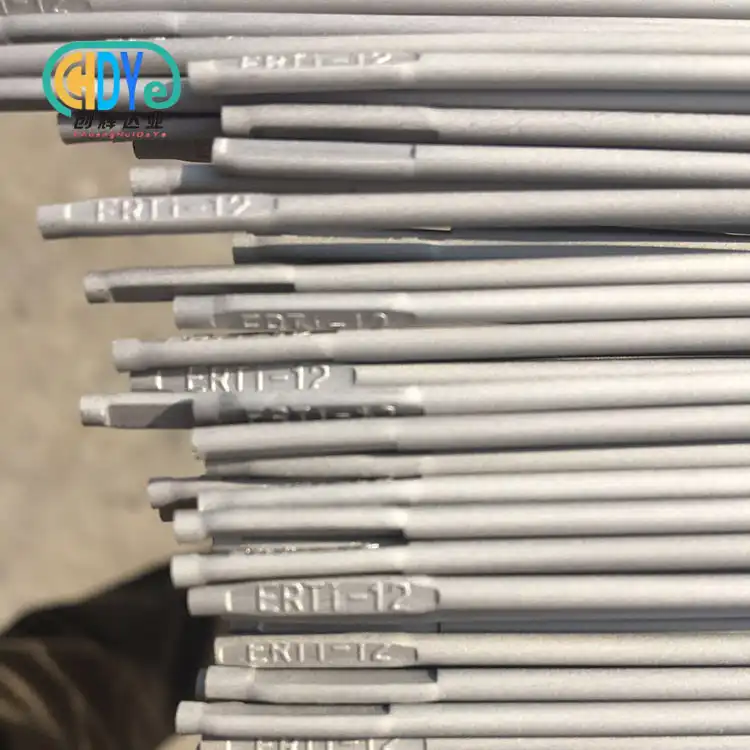
Shaanxi Chuanghui Daye Metal Material Co., Ltd. makes pure titanium welding rods that are between 1.0 mm and 3.2 mm in diameter. Their standard length is 1000 mm, and they can be used for many types of welding and robotic filling machinery. The things we sell don't rust easily and are easy to use. They also keep the sparks clean during TIG and MIG welding, so there isn't much splatter. Each stick goes through a strict quality check before it is packed to make sure it meets the requirements for length, chemical make-up, and surface finish. This attention to detail ensures the materials work the same in all welding situations and joint shapes.
Pricing Structures and Volume Considerations
Knowing how prices change over time helps teams that buy things get better deals and make sure they always have enough. The cost of titanium welding rod varies depending on the cost of the raw materials, how difficult it is to process, and changes in market demand. Buying in bulk typically saves you money. People who care about quality get a better deal when they buy directly from the factory. This is because there are no markups for middlemen. When comparing bids, you shouldn't just look at the prices per unit. You should also think about the total cost of ownership, which includes the amount of material used, the rate of rework, and how well the workers do their jobs.
International Logistics and Delivery Reliability
Managing foreign supply lines means monitoring shipping times, understanding customs procedures, and planning inventory to ensure work continues without interruption. You will get the right export paperwork, the right shipping packaging, and on-time orders if you work with service providers who have done business with other countries before. Setting clear standards for work and clear ways to speak ahead of time helps keep people from getting confused, which could slow down important projects. You might want to keep a certain number of important items on hand in case shipping delays or demand increases without notice.
Practical Case Studies and Best Practices for Using Titanium Welding Rods at High Temperatures
Aerospace Component Fabrication Success
A company that makes engine parts for aeroplanes had issues with stainless steel welds breaking in places where there was a lot of heat from exhaust. Switching to ERTi-5 titanium welding rods cut the number of cracks in the steel units by 85% and the weight of the parts by 40%. The engineering team put strict rules about protection in place. To keep everyone safe while the torch cooled, a gas cap went 15 centimetres past it. The part could be used for 12,000 hours before it needed to be repaired again, following this change to the process and the correct choice of filler metal.
Chemical Processing Equipment Longevity
The seawater cooling system of a chemical processing plant had chloride stress corrosion cracks that caused heat exchanger tube-to-tubesheet welds to fail before they should have. A scientific study found that the titanium base metal and the stainless steel filler metal worked together to make a galvanic cell. This combination made some places rust faster. Titanium filler metals were used instead of stainless steel for welding, which got rid of the galvanic incompatibility and gave the same amount of protection against rust as the stainless steel. The heat exchanger lasted longer, from 18 months to over 8 years, thanks to the new way of welding it. There was a lot less downtime and fix costs because of these changes.
Safety and Handling Best Practices
Titanium welding rods should be kept and used in the right way to keep them from getting dirty, which makes the weld less effective. Materials should be kept in packaging that keeps wetness out until they are used. This way, dust doesn't build up, or the surface oxidizes. The reason people who handle things need to wear lint-free gloves is that natural skin oils bring in dirt and other things that can damage finished welds. They need to be cleaned with a chemical and then rubbed against something hard to get rid of any oxide layers or other stuff that doesn't belong on the surface. Setting these steps up and ensuring they are always done will keep the weld quality consistent in every output batch.
Conclusion
Titanium welding rods work well in high-temperature environments where strength, resistance to rust, and light weight are important for the success of the part. They are the best choice for businesses like fuel cells, power plants, and aeroplanes because they don't break down at high temperatures and keep their mechanical properties. When you choose the right material, ensure it has the same properties as the base metal. Furthermore, make sure you use the right welding and finishing techniques to make sure the joints last. Working with experienced sellers who offer approved materials and expert help is the best way for procurement teams to get consumables that they can trust, protect their investments, and meet project needs.
FAQ
Q: What is the maximum operating temperature for joints made with titanium welding rods?
A: To what degree of heat can titanium welding rod joints be put to use? Most of the time, titanium weld joints can handle constant use up to 600°C without breaking. But the exact temperature limits depend on the grade and the setting for service. ERTi-2 which is very pure, is strong enough for use at mild temperatures, but ERTi-5 metal works better when it is close to 550°C. Some high-temperature titanium alloys may be needed if the temperature goes above these values. This will depend on the load and the length of time the metal is exposed.
Q: How does the trailing shield affect weld quality in high-temperature applications?
A: Because the metal is still combining with air fumes above 400°C, it can't be welded without following shields. If you have the right-sized trailing screen, which goes 150–200 mm past the joint torch, air and nitrogen can't get into the cooling metal and weaken it. If it's silver or light straw-colored, the security is good. If it's blue or purple, there is contamination in the weld that needs to be cleaned up.
Q: Can I use Grade 2 welding rod for Grade 5 base material?
A: When you put a filling metal with less strength on top of a base metal with more strength, the weld is naturally weaker. The filler metal must be as strong as the base material or just a little stronger to work correctly in engineering. Sometimes Grade 9 filler metal is a good choice for soldering instead of Grade 5 filler metal because it is a little more flexible but still strong enough for some tasks.
Partner with Chuanghui Daye for Certified Titanium Welding Rod Solutions
As the Titanium Capital of China, Shaanxi Chuanghui Daye Metal Material Co., Ltd. makes titanium welding rods that are ISO 9001:2015 certified and can help you with your high-temperature welding projects. We have been in the rare metals business for 30 years, so you can be sure that the materials you receive will meet AWS A5.16 standards and come with all the information you need to keep track of them. Our factory-direct prices on ERTi-2 and ERTi-5 grades with sizes from 1.0 mm to 3.2 mm are excellent, so we can meet the needs of both small-scale production and study on prototypes. Please email our team at info@chdymetal.com to discuss your needs, get approved samples, or find out how much it costs to buy in bulk. We are a qualified company that sells titanium welding rods and want your project to go well.
References
1. American Welding Society (2019). AWS A5.16/A5.16M: Specification for Titanium and Titanium-Alloy Welding Electrodes and Rods. Miami: American Welding Society.
2. Boyer, R., Welsch, G., & Collings, E.W. (2020). Materials Properties Handbook: Titanium Alloys. Materials Park: ASM International.
3. Donachie, M.J. (2018). Titanium: A Technical Guide, 3rd Edition. Materials Park: ASM International.
4. Liu, S. & Olson, D.L. (2017). Welding Metallurgy of Titanium Alloys: Process, Microstructure, and Properties. Welding Research Council Bulletin Series.
5. Peters, M., Kumpfert, J., Word, C.H., & Leyens, C. (2019). Titanium and Titanium Alloys: Fundamentals and Applications. Weinheim: Wiley-VCH.
6. Schutz, R.W. & Watkins, H.B. (2021). Recent Developments in Titanium Alloy Applications for Industrial High-Temperature Service. Journal of Materials Engineering and Performance, Volume 30, Issue 7.
Learn about our latest products and discounts through SMS or email