- English
- French
- German
- Portuguese
- Spanish
- Russian
- Japanese
- Korean
- Arabic
- Greek
- German
- Turkish
- Italian
- Danish
- Romanian
- Indonesian
- Czech
- Afrikaans
- Swedish
- Polish
- Basque
- Catalan
- Esperanto
- Hindi
- Lao
- Albanian
- Amharic
- Armenian
- Azerbaijani
- Belarusian
- Bengali
- Bosnian
- Bulgarian
- Cebuano
- Chichewa
- Corsican
- Croatian
- Dutch
- Estonian
- Filipino
- Finnish
- Frisian
- Galician
- Georgian
- Gujarati
- Haitian
- Hausa
- Hawaiian
- Hebrew
- Hmong
- Hungarian
- Icelandic
- Igbo
- Javanese
- Kannada
- Kazakh
- Khmer
- Kurdish
- Kyrgyz
- Latin
- Latvian
- Lithuanian
- Luxembou..
- Macedonian
- Malagasy
- Malay
- Malayalam
- Maltese
- Maori
- Marathi
- Mongolian
- Burmese
- Nepali
- Norwegian
- Pashto
- Persian
- Punjabi
- Serbian
- Sesotho
- Sinhala
- Slovak
- Slovenian
- Somali
- Samoan
- Scots Gaelic
- Shona
- Sindhi
- Sundanese
- Swahili
- Tajik
- Tamil
- Telugu
- Thai
- Ukrainian
- Urdu
- Uzbek
- Vietnamese
- Welsh
- Xhosa
- Yiddish
- Yoruba
- Zulu
What Is the Best Method for Polishing Tantalum Rod?
Chemical-mechanical finishing followed by polishing the tantalum rod with mechanical polishing gives better results for most industrial uses. However, the best way to polish a tantalum rod varies depending on the intended use. This mixed method gets rid of surface flaws and tiny cracks, leaving behind a finish that looks like a mirror. This finish is necessary for using the material in chip manufacturing, chemical processing equipment, and lab equipment. Using increasingly finer abrasives for mechanical polishing makes the surface smooth, and then a chemical-mechanical treatment polishes it to keep it clean and increase its resistance to corrosion. At Shaanxi Chuanghui Daye Metal Material Co., Ltd., we use precise centerless grinding and multiple polishing steps to make tantalum rods that are >99.95% pure and have diameters ranging from 1 to 50 mm. Their surfaces are of the highest quality, meeting the strict requirements of manufacturers of aerospace, electronics, and medical devices.
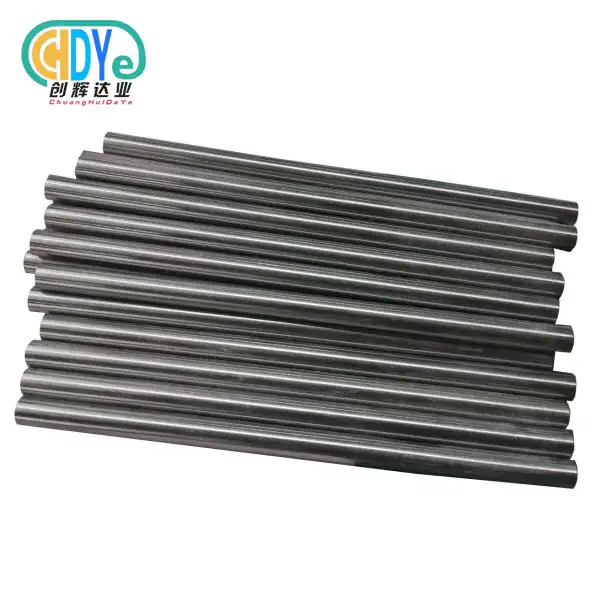
Understanding Polished Tantalum Rods and Their Importance
Tantalum has earned its reputation as one of the most valuable refractory metals in modern manufacturing. When we process raw tantalum into polished rods, we're not simply improving aesthetics—we're fundamentally transforming the material's functional properties to meet exacting industrial specifications.
What Makes Polished Tantalum Rods Different
When you polish tantalum bars, the surface changes in a big way. In most cases, the raw material has a black oxide layer and tiny surface flaws that can hold contaminants or start corrosion when conditions are harsh. We get rid of these weaknesses by controlled polishing, leaving a surface without any flaws that makes it more chemically neutral and mechanically strong. The smooth surface keeps tiny particles from shedding, which is very important in vacuums and cleanrooms where even the tiniest bit of contamination can ruin the quality of the product.
Critical Specifications That Matter
When looking for tantalum rods, people who work in procurement should look at a few important factors. For most uses, the quality of the surface finish, which is measured in microinches Ra (roughness average), is between 8 and 32 microinches. For very precise needs, finishes below 4 microinches Ra may be needed. Dimensional tolerances are very important. Differences in width of more than ±0.05 mm can make it hard to put together precision equipment. Chemical purity is another important factor. Our tantalum bars are more than 99.95% pure, with very little iron, molybdenum, and tungsten contamination. This means they will behave consistently in corrosive environments.
The Polishing Process Explained: How to Achieve High-Quality Polished Tantalum Rods
Achieving an exceptional surface finish on tantalum requires expertise, precision equipment, polishing the tantalum rod and rigorous process control. Multiple polishing methodologies exist, each offering distinct advantages depending on the final application requirements and production volume.
Mechanical Polishing: The Foundation Approach
Most of the work that is done to finish tantalum rods starts with mechanical cleaning. Starting with coarse silicon carbide or aluminium oxide compounds rated 120–220 grit, this method uses increasingly finer abrasive materials. It then moves on to 400, 600, and 1000 grit stages. The rod moves back and forth over polishing wheels or belts, and coolant keeps the metal from getting too hot and changing the structure of its grains. Centerless grinding is very good at making things round and controlling the diameter, which is especially helpful when making bars with a diameter between 5 and 50 mm. This method is great for quickly and cheaply getting rid of large amounts of surface material. We can get rid of deep scratches, fix problems with the surface's dimensions, and get it ready for the next steps in the finishing process. Mechanical methods have some problems. They can create directional grain patterns and may insert rough particles into the soft tantalum matrix if the operators don't use the right technique.
Chemical Polishing: Precision Without Contact
Chemical polishing works by using strong acid mixes to break down surface material in a controlled way. The tantalum rod is submerged in special fluids that have the right amounts of hydrofluoric acid, nitric acid, and sulphuric acid. The chemical reaction only hits microscopic high points on the surface, eventually levelling out bumps to make the surface smooth all over. This method gets rid of mechanical stress and keeps alien particles from getting stuck. Controlling the temperature is very important when using chemicals for polishing. The best temperatures for the solutions are between 50°C and 80°C, which keeps the material loss from going too far. Immersion time is usually between 5 and 30 minutes, but it depends on the finish you want and how the surface was to begin with. The method works great for complicated shapes and inside areas that are hard to reach with a machine, but it needs careful waste management and safety rules.
Polished vs. Raw Tantalum Rods: Which Should You Choose?
Understanding the performance differences between surface finishes helps procurement teams make informed material selections that optimise both technical performance and project budgets.
Performance Characteristics Compared
When compared to raw or pickled surfaces, polished tantalum rods have much better corrosion protection. The polishing process gets rid of the layer of work-hardened metal on the surface as well as any tiny flaws that could allow pitting rust to start. According to tests done in the lab, surfaces that have been polished last 30 to 40 per cent longer when exposed to strong sulphuric acid at high temperatures. Also, electrical conductivity gets better because surface oxides and other impurities that raise contact resistance are removed. This makes polished rods better for electrical and computer uses. Surface roughness has a direct effect on how fluids move through chemical processing equipment. Polished insides of tantalum pipes and tanks lower the pressure drop and keep fouling to a minimum, which makes the process more efficient and cuts down on how often it needs to be cleaned. The smooth surface also keeps germs from sticking to it, which is very helpful in pharmaceutical and biotechnology settings where product contamination has to be avoided.
Cost Considerations and Value Analysis
Because they need more steps, special tools, and more time to make, polished tantalum rods usually cost 15–25% more than their raw or black-surface counterparts. The difference in price should be weighed against the total cost of ownership. Longer service lives mean fewer replacements and lower costs for downtime. When you make a process more efficient, you can save money on running costs. A lower chance of contamination saves valuable goods and stops expensive batch failures. Unit prices are affected by buying in large amounts. Our facility has pricing that goes up as the order size goes up and rewards long-term supply agreements and bigger orders. Lead times for polished rods are 3–6 weeks, based on the diameter, specifications, and number of rods ordered. Lead times for standard surface finishes are 2–4 weeks. By planning procurement cycles around these dates, you can be sure that the supply of polishing tantalum rod materials will match up with project schedules without having to pay extra for faster delivery.
Choosing the Right Polished Tantalum Rod Supplier for Your Business
Supplier selection represents one of the most consequential decisions in tantalum procurement. The right manufacturing partner ensures consistent quality, reliable delivery, and technical support that extends beyond the initial purchase order.
Essential Certifications and Quality Standards
If a seller has ISO 9001:2015 certification, you can be sure that they have documented quality management systems and consistent process control. We at Shaanxi Chuanghui Daye Metal Material Co., Ltd. have kept this certification by strictly following quality rules that include inspecting raw materials, keeping an eye on production, and checking the finished product. Look for suppliers who can fully link finished rods to specific lots of tantalum ingots. This will allow you to figure out what went wrong if there are quality problems. The standard guideline for tantalum and tantalum alloy rods is ASTM B365. It sets requirements for the rods' chemical makeup, mechanical properties, and size variations. Suppliers with a good reputation give certified test records that show they meet these standards. RoHS and REACH compliance is becoming more important as safety and environmental rules get tighter around the world. Checking these certificates keeps your business safe from regulatory problems and shows that you are a responsible shopper.
Manufacturing Capabilities That Matter
The supplier's production capabilities have a direct effect on their ability to meet your unique needs. Check out their tools for melting and refining. Electron beam melting makes the purest tantalum with the least amount of contamination. The forging and rolling capacity tells them what size ranges and delivery numbers they can depend on. CNC lathes and centerless grinders are examples of advanced machining tools that can make tight tolerances on dimensions, which is important for precision uses. The ability to provide technical help is what sets exceptional suppliers apart from average ones. Could their metallurgists give them advice on how to choose materials for tough jobs? Do they keep testing facilities to make sure the chemical purity, surface finish, and mechanical qualities are correct? Do they have the tools to make custom solutions when their standard goods don't meet all of your needs? When projects run into unexpected technology problems, these skills become very useful.
Optimising Your Procurement Strategy: Buying Polished Tantalum Rods Smartly
Strategic procurement practices reduce costs, improve material availability, and strengthen supplier relationships. Sophisticated buyers approach tantalum acquisition as a managed process rather than a transactional purchase.
Customisation and Order Optimisation
Standard catalogue dimensions may not perfectly match your design requirements. Reputable suppliers offer customisation services including specific diameter tolerances, length cutting, end finishing, and surface roughness specifications. Clearly communicating your exact requirements upfront prevents costly rework and delays. Providing technical drawings with dimensional callouts, surface finish specifications, polishing tantalum rod and material certifications required ensures the supplier fully understands your expectations. Minimum order quantities vary by supplier and product specification. Standard diameters in high demand may have lower MOQs—sometimes as low as 5–10 pieces—while specialised sizes might require minimum orders of 50–100 pieces to justify setup costs. Consolidating requirements across multiple projects into larger orders reduces per-unit costs and strengthens negotiating leverage. Annual volume commitments enable suppliers to reserve production capacity and secure advantageous raw material pricing, savings they can share through reduced pricing.
Understanding Pricing Drivers and Cost Management
Tantalum pricing fluctuates based on global supply and demand dynamics. The raw material represents 60–70% of finished rod cost, making tantalum powder and scrap market conditions a primary pricing driver. Polishing complexity adds processing costs that vary with surface finish specifications—achieving ultra-fine finishes below 4 microinches Ra requires additional processing steps and time. Order volume significantly impacts unit pricing through economies of scale in material purchasing, setup amortisation, and processing efficiency. Multi-year supply agreements lock in pricing stability, protecting against market volatility while guaranteeing supplier commitment to your requirements. Building strategic partnerships with suppliers creates mutual benefit—they gain revenue predictability while you secure priority production capacity and preferential pricing. Comparing quotes from multiple suppliers ensures competitive pricing, but evaluate total value rather than simply selecting the lowest price. Consider material certifications, lead time reliability, technical support, and the supplier's track record.
Quality Assurance and Post-Purchase Support
Incoming inspection protocols protect against substandard material reaching production. Verify dimensional accuracy using precision measuring instruments, assess surface finish through visual inspection and profilometry, and confirm material certifications match specifications. Establish clear acceptance criteria and rejection protocols with suppliers before orders ship to streamline the resolution of nonconforming material. Warranty policies and technical support availability provide insurance against quality issues. Understand the supplier's policy on returns, replacements, and expedited shipments when defects occur. Access to metallurgical expertise helps troubleshoot application challenges—can the supplier recommend process adjustments if tantalum components underperform expectations? Building a collaborative relationship where suppliers view themselves as partners in your success creates substantial long-term value beyond the material itself.
Conclusion
For tantalum rods, choosing the best polishing method means combining technical needs, application needs, and cost concerns. For general use, mechanical polishing is a cheap way to make the surface better. Chemical and electro-polishing, on the other hand, give surfaces the best finishes for important tasks in semiconductors, medicines, and high-purity chemical processing. Combining these two methods into a hybrid method gives great results in most commercial settings, producing high-quality surfaces while keeping costs low. Choosing a qualified supplier with proven quality systems, technical skills, and reliable shipping performance is an important part of a successful procurement process. Companies that take the time to evaluate suppliers, build strategic relationships, and use disciplined procurement practices gain competitive advantages through better material performance, lower costs, and a more reliable supply chain.
FAQ
1. Which polishing technique works best for semiconductor applications?
Electro-polishing delivers optimal results for semiconductor tantalum components. This method achieves ultra-smooth surface finishes below 2 microinches Ra while eliminating embedded contaminants that could compromise thin-film deposition processes. The technique removes the mechanically disturbed surface layer, exposing the true crystalline structure and maximising surface purity. Chemical polishing serves as an acceptable alternative for less critical semiconductor applications where mirror finishes aren't mandatory.
2. How does polishing improve corrosion resistance?
Surface polishing enhances corrosion resistance by eliminating micro-cracks, crevices, and surface defects where pitting corrosion initiates. The smooth surface reduces surface area available for chemical attack and promotes the formation of uniform passive oxide films. Polished tantalum demonstrates 30–40% longer service life in aggressive acid environments compared to raw surfaces, directly translating to reduced replacement costs and extended equipment life.
3. What certifications should reliable suppliers hold?
Trustworthy, polished tantalum rod suppliers must maintain ISO 9001:2015 quality management certification, demonstrating systematic process control. They should provide ASTM B365 compliance documentation verifying material specifications. RoHS and REACH certifications confirm environmental compliance and the absence of restricted substances. Complete traceability documentation linking finished products to raw material lots enables quality verification and supports regulatory requirements in pharmaceutical and medical device manufacturing.
Partner with Chuanghui Daye for Premium Polished Tantalum Rod Solutions
Shaanxi Chuanghui Daye Metal Material Co., Ltd. combines three polishing tantalum rod decades of rare metal expertise with ISO 9001:2015-certified manufacturing excellence to deliver polished tantalum rods that exceed the demanding standards of global industrial leaders. Our facility in Baoji's "Titanium Capital" provides access to concentrated industry knowledge and established supply networks, ensuring material consistency and competitive pricing. We offer tantalum rods with Ta >99.95% purity in diameters from 1–50 mm, custom lengths, and precision-polished surfaces engineered for chemical processing, laboratory, semiconductor, and medical applications. As a direct polishing tantalum rod manufacturer, we eliminate intermediary markups while maintaining complete quality control from ingot melting through final inspection. Contact our technical team at info@chdymetal.com to discuss your specific requirements, request detailed specifications, or obtain volume pricing for your next project.
References
1. Davis, J.R. (Ed.). (2000). Nickel, Cobalt, and Their Alloys. ASM International Handbook Committee.
2. Stwertka, A. (1998). Guide to the Elements (Revised Edition). Oxford University Press.
3. Shackelford, J.F., & Alexander, W. (2000). CRC Materials Science and Engineering Handbook (3rd Edition). CRC Press.
4. Lide, D.R. (Ed.). (2004). CRC Handbook of Chemistry and Physics (85th Edition). CRC Press.
5. American Society for Testing and Materials. (2019). ASTM B365-12: Standard Specification for Tantalum and Tantalum Alloy Rod and Wire. ASTM International.
6. Cardarelli, F. (2008). Materials Handbook: A Concise Desktop Reference (2nd Edition). Springer-Verlag London Limited.

Learn about our latest products and discounts through SMS or email