- English
- French
- German
- Portuguese
- Spanish
- Russian
- Japanese
- Korean
- Arabic
- Greek
- German
- Turkish
- Italian
- Danish
- Romanian
- Indonesian
- Czech
- Afrikaans
- Swedish
- Polish
- Basque
- Catalan
- Esperanto
- Hindi
- Lao
- Albanian
- Amharic
- Armenian
- Azerbaijani
- Belarusian
- Bengali
- Bosnian
- Bulgarian
- Cebuano
- Chichewa
- Corsican
- Croatian
- Dutch
- Estonian
- Filipino
- Finnish
- Frisian
- Galician
- Georgian
- Gujarati
- Haitian
- Hausa
- Hawaiian
- Hebrew
- Hmong
- Hungarian
- Icelandic
- Igbo
- Javanese
- Kannada
- Kazakh
- Khmer
- Kurdish
- Kyrgyz
- Latin
- Latvian
- Lithuanian
- Luxembou..
- Macedonian
- Malagasy
- Malay
- Malayalam
- Maltese
- Maori
- Marathi
- Mongolian
- Burmese
- Nepali
- Norwegian
- Pashto
- Persian
- Punjabi
- Serbian
- Sesotho
- Sinhala
- Slovak
- Slovenian
- Somali
- Samoan
- Scots Gaelic
- Shona
- Sindhi
- Sundanese
- Swahili
- Tajik
- Tamil
- Telugu
- Thai
- Ukrainian
- Urdu
- Uzbek
- Vietnamese
- Welsh
- Xhosa
- Yiddish
- Yoruba
- Zulu
Top 5 Benefits of Pure Niobium Bar for Corrosion Control
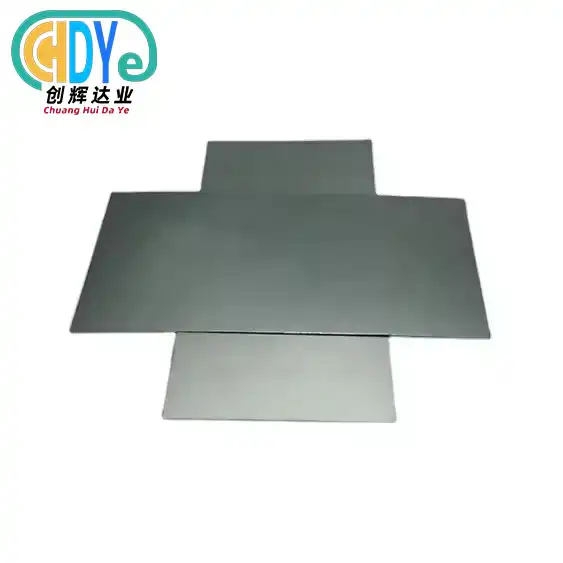
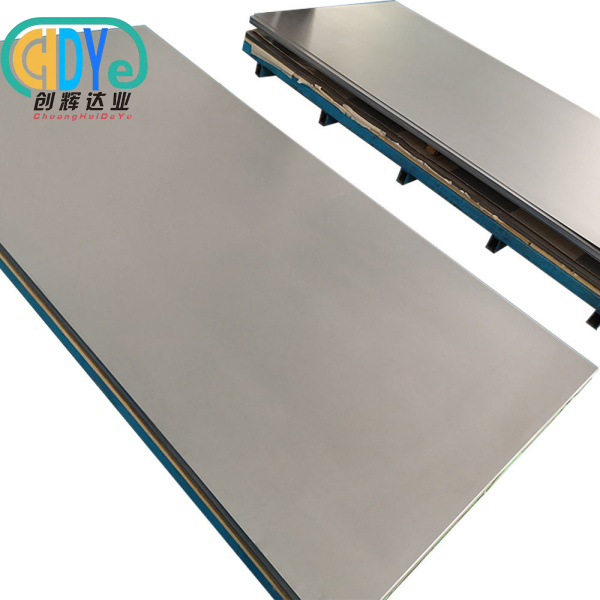
In harsh industrial conditions, the choice of material may make or break a project in terms of corrosion management. A pure niobium bar – produced with a purity of ≥99.9 % and a density of 8.57 g/cm3 – is characterized by a combination of chemical inertness, mechanical resiliency, and thermal stability that few metals can equal. Available in rectangular or circular profiles, from 5 to 350 mm thick and bespoke lengths, this material plays key roles in aeronautical structures, chemical processing equipment and sophisticated electronics. Here are 5 of the most important key advantages for procurement experts.
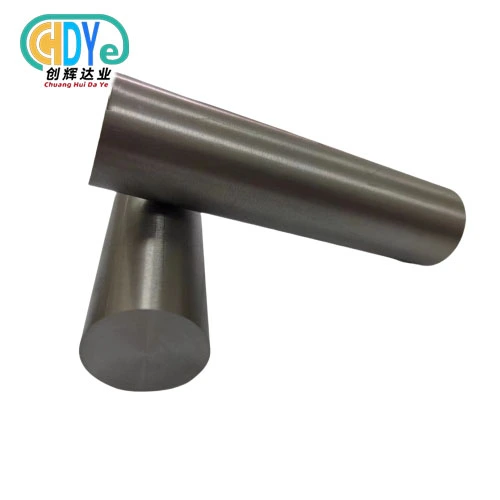
Superior Corrosion Resistance That Protects High-Value Assets
The main characteristic of niobium is the self-repairing passive oxide layer -- niobium pentoxide (Nb₂O₅) -- spontaneously formed on its surface, providing an inert chemical barrier. This layer is resistant to attack by most organic and mineral acids, oxidizing atmospheres, and hostile process media at temperatures up to 100 °C. In chemical processing facilities, reactor vessels and heat exchangers manufactured from or coated with niobium-based materials typically outperform stainless steel competitors by a large margin.
Why the Passive Layer Matters in Corrosive Environments
This is different from coatings that flake off or break down due to mechanical stress. The Nb2O5 layer is part of the metal itself. If scraped or abraded, it regenerates in the presence of trace oxygen. This self-repair process is especially advantageous in closed-loop chemical systems, where inspection times are lengthy and replacement prices are considerable.
Performance in Aerospace and Chemical Applications
The conditions of jet engines, in the presence of the combustion products of the fuels, impose on aerospace components heat and chemical stresses that must be withstood concurrently, therefore requiring suitable materials. Niobium’s melting point is 2,468°C. It keeps its protective characteristics at temperatures that would degrade titanium and normal alloy steels, making it a reliable material for components next to turbines and the internals of chemical reactors.
Enhanced Durability and Longevity That Reduce Lifecycle Costs
Material cost is seldom the only factor in procurement choices. The true financial equation is based on total cost of ownership, including how often you need to replace equipment, maintenance labor, and unscheduled downtime. Pure niobium bar products achieve this via a combination of mechanical ductility and fatigue resistance that extends the life of components beyond that of many competitive materials. The main durability properties that directly influence the procurement value are:
- Exceptional ductility at room temperature, Niobium is more ductile than tungsten or molybdenum and may be deformed without breaking during cold-working procedures, decreasing scrap rates during fabrication and allowing complicated geometries without material loss.
- Resistance to fatigue under cyclic loading conditions: Chemical processing equipment and aircraft assembly are subjected to repeated mechanical stresses. Niobium has a body-centred cubic (BCC) crystal structure, which is favorable for fracture propagation under these circumstances.
- Resistance to embrittlement: Ductility is retained even after extensive service exposure with interstitial contaminants like oxygen and nitrogen under tight control (as they are in ≥99.9% purity grades).
These features immediately translate into fewer part replacements, reduced maintenance budgets, and more predictable supply chain planning for procurement managers responsible for critical infrastructure.
Versatility and Customization Aligned With Real Industrial Demands
Procurement teams are always faced with the issue of acquiring materials that meet non-standard project needs, without paying a premium for bespoke work and without extended lead times. This is achieved via niobium bars with a high degree of dimensional flexibility and purity grade choices that provide for a wide variety of application situations.
Dimensional and Grade Options for Diverse Projects
We provide our niobium bars in rectangular and circular cross sections from 5 to 350 mm thick and cut to length to your requirements. Commercial Grade (like RO4210) is suitable for most chemical processes and general industrial applications. Higher purity grades are available for electronics, vacuum systems, and superconducting applications requiring stricter impurity controls. Each batch is accompanied by complete certificates of analysis, material traceability paperwork, and compliance records, in accordance with ISO 9001:2015.
Custom Machining and Fabrication Support
Procurement customers generally want near-net-shape components rather than raw stock, other than raw bar supply. Thanks to Chuanghui Daye’s in-house machining capabilities – lathes, rolling machines and precision sawing – we can provide pure niobium bar turned components, flanged sections and custom-cut profiles with rapid turnaround times. This removes the friction of having to coordinate between a raw material source and a separate machining provider.
Seamless Compatibility With Advanced Manufacturing Processes
The performance of a material in service is just half of the story. It is contingent upon how it behaves during fabrication whether it is seamlessly incorporated into existing OEM processes or causes expensive process issues. For this purpose, pure niobium is very useful.
Machining, Forming, and Welding Characteristics
The soft, gummy texture of niobium necessitates special machining protocols, such as sharp-angled high-speed steel tooling and water-soluble coolants, which are most effective in preventing galling, but it responds well to deep drawing, stamping, and bending at room temperature without the preheating requirements of refractory alloys. Welding must be done in a high-vacuum electron beam chamber or in an argon environment glove box to avoid oxygen and nitrogen absorption beyond 200°C, which would induce embrittlement.
Surface Treatment Compatibility
Niobium anodizes, sputters, and chemically passivates without unfavorable reactions, allowing it to be tailored to applications needing exact surface qualities. This is especially critical in electronics and semiconductor fabrication because the surface condition has a direct impact on the performance of the component.
Environmental and Regulatory Advantages for Compliant Procurement
Procurement teams working in North American and European markets are no longer flying blind in terms of regulatory compliance. Material traceability, limits on dangerous substances, and sustainability-reporting requirements influence supplier selection much beyond the scope of price discussion. Here, niobium has a plus like no other. It does not include any RoHS or REACH banned compounds, thus it may be easily used in goods sold into regulated markets. Residual value exists in end-of-life components because they are fully recyclable and can be returned to the material supply chain with minimal processing loss – a major factor for firms with sustainability goals built into their procurement policies. Suppliers with the ISO 9001:2015 certification, like Chuanghui Daye, have documented quality control trails from raw ingot procurement to final inspection and shipping. This level of traceability meets the audit requirements that aerospace, military, and medical device manufacturers often confront from their own customers and regulatory agencies.
Conclusion
Across five key measures of performance – corrosion resistance, durability, customizability, manufacturing process compatibility and regulatory conformity – pure niobium bar continually proves its worth as a premium material for demanding industrial applications. They have a self-healing oxide layer and are very ductile and dimensionally flexible, making them very useful in aircraft components, chemical processing equipment, and high-precision electronics. When procurement choices are made based on overall lifetime value, rather than unit price, niobium’s performance profile makes a strong argument for adoption across a wide variety of essential projects.
FAQ
Q: What purity level does a standard niobium bar carry?
A: Our standard niobium bars carry a minimum purity of Nb ≥99.9%, with higher grades available for specialized applications such as superconducting systems or vacuum electronics.
Q: How does niobium compare to tantalum for corrosion control?
A: Tantalum offers slightly broader acid resistance, particularly against hydrofluoric acid. However, niobium provides comparable performance in most chemical processing environments at a lower material cost, making it a practical alternative when budget constraints apply.
Q: Can niobium bars be welded using standard TIG equipment?
A: Standard TIG welding in open air is not suitable. Niobium absorbs oxygen and nitrogen above 200°C, which causes embrittlement. Electron beam welding or argon-atmosphere glove box welding is required to maintain material integrity.
Q: What customization options are available for orders?
A: We supply rectangular and round profiles with thicknesses from 5 to 350 mm and custom lengths. Machined components, turned parts, and near-net-shape fabrications are also available based on project drawings.
Q: Do your niobium bars come with traceability documentation?
A: Yes. Every order ships with a certificate of analysis, material test report, and full production traceability documentation aligned with ISO 9001:2015 requirements.
Partner With Chuanghui Daye — Your Trusted Pure Niobium Bar Supplier
Shaanxi Chuanghui Daye, based in Baoji — China's recognized rare metal hub — has served global industrial clients for over 30 years with precision-manufactured refractory and rare metal materials. Our pure niobium bar product line combines ≥99.9% purity, ISO 9001:2015-certified quality management, and flexible custom processing to meet your most exacting project specifications. Reach our technical team directly at info@chdymetal.com or visit www.chdymetal.com to request a quote or sample today.
References
1. Cardarelli, F. Materials Handbook: A Concise Desktop Reference. Springer, 2008.
2. ASM International. ASM Handbook, Volume 13A: Corrosion: Fundamentals, Testing, and Protection. ASM International, 2003.
3. ASTM International. ASTM B392: Standard Specification for Niobium and Niobium Alloy Bar, Rod, and Wire. ASTM International, 2019.
4. Savitskii, E. M., & Burkhanov, G. S. Physical Metallurgy of Refractory Metals and Alloys. Consultants Bureau, 1970.
5. Cotterill, P. "Niobium and Its Alloys." International Metallurgical Reviews, 1961.
6. European Commission, Joint Research Centre. Critical Raw Materials for the EU: Report of the Ad Hoc Working Group on Defining Critical Raw Materials. Publications Office of the European Union, 2020.
Learn about our latest products and discounts through SMS or email