- English
- French
- German
- Portuguese
- Spanish
- Russian
- Japanese
- Korean
- Arabic
- Greek
- German
- Turkish
- Italian
- Danish
- Romanian
- Indonesian
- Czech
- Afrikaans
- Swedish
- Polish
- Basque
- Catalan
- Esperanto
- Hindi
- Lao
- Albanian
- Amharic
- Armenian
- Azerbaijani
- Belarusian
- Bengali
- Bosnian
- Bulgarian
- Cebuano
- Chichewa
- Corsican
- Croatian
- Dutch
- Estonian
- Filipino
- Finnish
- Frisian
- Galician
- Georgian
- Gujarati
- Haitian
- Hausa
- Hawaiian
- Hebrew
- Hmong
- Hungarian
- Icelandic
- Igbo
- Javanese
- Kannada
- Kazakh
- Khmer
- Kurdish
- Kyrgyz
- Latin
- Latvian
- Lithuanian
- Luxembou..
- Macedonian
- Malagasy
- Malay
- Malayalam
- Maltese
- Maori
- Marathi
- Mongolian
- Burmese
- Nepali
- Norwegian
- Pashto
- Persian
- Punjabi
- Serbian
- Sesotho
- Sinhala
- Slovak
- Slovenian
- Somali
- Samoan
- Scots Gaelic
- Shona
- Sindhi
- Sundanese
- Swahili
- Tajik
- Tamil
- Telugu
- Thai
- Ukrainian
- Urdu
- Uzbek
- Vietnamese
- Welsh
- Xhosa
- Yiddish
- Yoruba
- Zulu
Pure Niobium Bar Uses in Chemical Processing and Aerospace
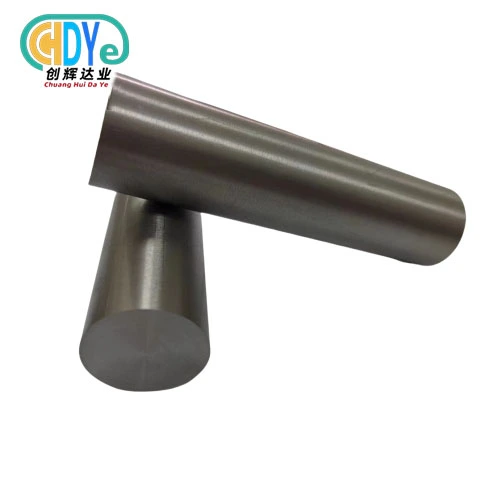
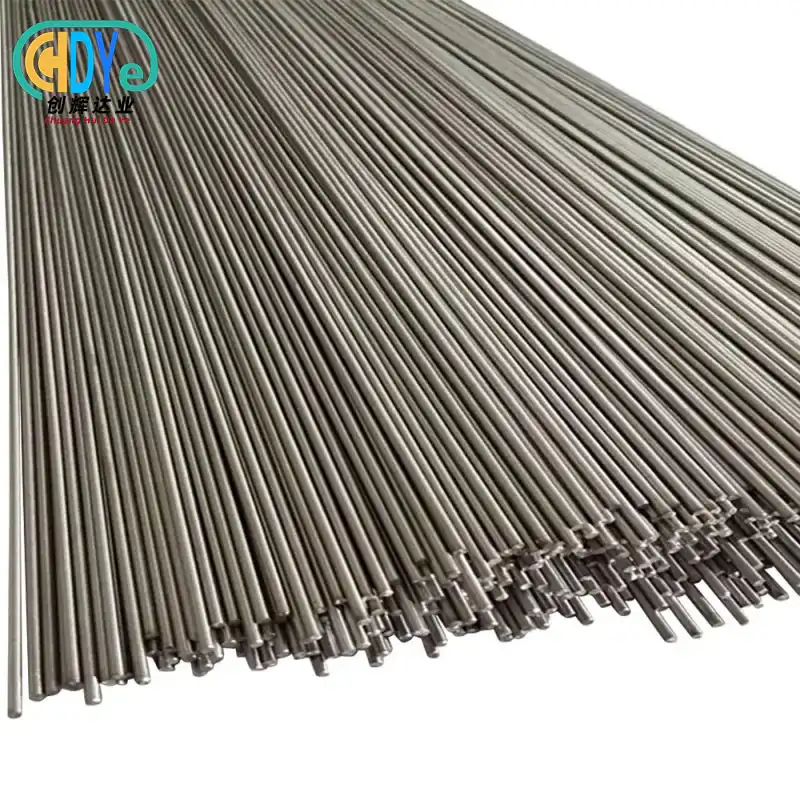
Pure niobium bars are always high up on the list of materials for engineers and procurement managers when they are looking for materials that will operate dependably under demanding circumstances. This refractory metal rod offers the corrosion resistance, thermal stability, and mechanical integrity that chemical processing facilities and aerospace manufacturers cannot afford to compromise. With a purity level of Nb >99.9%, a density of 8.57 g/cm3, and a melting temperature above 2,468°C, this refractory metal rod is a. If you require rectangular or circular configurations with thicknesses of 5 to 350 mm, being aware of what makes niobium rods so essential can help you make better purchase selections.
Understanding Pure Niobium Bars: Properties and Composition
What Makes Niobium Rods Unique
Niobium belongs to the refractory metal family along with tantalum, tungsten, and molybdenum. This is because it has a body-centered cubic (BCC) crystal structure that makes it very ductile at ambient temperature (unlike tungsten and molybdenum). A thick, self-healing niobium pentoxide (Nb2O5) passivation layer spontaneously develops on the surface, making the material resistant to most organic and mineral acids below 100°C. Niobium is useful for applications much beyond typical structural metals. It has a low magnetic permeability and a superconducting transition temperature of 9.25 K.
The analytical techniques for quality authentication include X-ray fluorescence (XRF) and inductively coupled plasma (ICP) spectrometry. Interstitial contaminants such as oxygen, nitrogen, hydrogen, and carbon must be strictly regulated. Oxygen in excess of 150 ppm significantly lowers ductility and affects the performance of the material in forming processes.
Standard Specifications at a Glance
- Alloy: Nb >99.9% purity
- Form: Rectangular or round bar
- Thickness: 5–350 mm; length customized to project requirements
- Density: 8.57 g/cm³
- Melting point: ~2,468°C
- Applicable standards: ASTM B392 / ASTM B393 (commercial and reactor grades)
These specifications cover the range demanded by chemical equipment producers, aerospace fabricators, and research institutions alike.
Applications of Pure Niobium Bars in Chemical Processing and Aerospace
Niobium's value becomes tangible when you place it inside a real operating environment. The metal's inertness toward hydrochloric, sulfuric, and nitric acids makes it a natural choice wherever aggressive media attack conventional stainless steel within months.
Chemical Processing Equipment
Niobium rods are used to make reactor vessels, heat exchangers, and pipe liners that withstand the rapid corrosion that cuts down the service life of cheaper alternatives. The Nb 2O5 passivation layer reforms at high process temperatures following mechanical abrasion to provide continuing protection without operator involvement. Chemical factories handling strong acids commonly report service life extensions of many years above titanium-lined containers, confirming the cost-per-cycle economics of investing in higher-purity pure niobium bar components.
Aerospace and Defense Components
Weight reduction in aircraft immediately translates into cargo capacity and fuel economy. Niobium’s attractive strength-to-weight ratio and thermal stability at temperatures above 1,000°C make it an attractive choice for jet engine hardware, rocket nozzle inserts, and gas turbine structural components. High-temperature Nb alloys, such as C-103 (Nb-10Hf-1Ti), have been employed in both NASA and commercial launch vehicle projects. The high-quality Nb bar stock used as precursor material in these programs had tight limits on interstitial impurities. Aerospace-grade niobium parts have minimal thermal expansion, which lowers fatigue stress at thermal cycling surfaces.
Pure Niobium Bar vs. Alternatives: How to Choose the Best Material
Selecting the right refractory metal involves balancing performance against procurement budget. Here are the core trade-offs worth evaluating before finalizing your material specification:
- Niobium vs. Tantalum: Tantalum offers marginally superior acid resistance, particularly against hydrofluoric acid at elevated temperatures, but it carries a significantly higher price per kilogram. For applications where temperatures stay below 150°C and HF is absent, pure niobium bar delivers comparable protection at reduced cost.
- Niobium vs. Titanium: Titanium is lighter (density 4.51 g/cm³) and less expensive, making it preferred for structures where weight dominates the design brief. Niobium outperforms titanium in high-temperature oxidizing environments and maintains ductility at temperatures where titanium alloys begin to lose mechanical integrity.
- Niobium vs. Stainless Steel: Stainless steel costs far less, yet it corrodes rapidly in concentrated acids and halide-rich environments. Niobium's chemical inertness eliminates the frequent replacement cycles that inflate the lifetime cost of stainless steel equipment.
These comparisons clarify that niobium rods occupy a performance bracket between cost-effective titanium and premium tantalum—a position that suits the majority of demanding chemical and aerospace projects.
Practical Procurement Guide for Pure Niobium Bars
There are a number of interrelated aspects to consider while obtaining niobium bar stock. All shipments should be accompanied by material traceability documentation, including mill certifications, chemical composition reports, and mechanical test records, to meet the audit requirements of the aerospace and chemical industries.
Flexibility for customization is huge in project-based enterprises. You should be able to get rectangular and circular cross-sections, with thicknesses ranging from 5 mm to 350 mm, and cut-to-length dimensions from a reputable producer of niobium bars without having to meet exorbitant minimum order quantities. Lead times depend on bar size and order quantity; however, vendors that have their own vacuum melting, precision rolling, and machining tend to accelerate manufacturing cycles as compared to trading organizations that sub out processing.
Price volatility of niobium is determined by the availability of niobium ore globally (mostly from Brazil) and the grade of processing. Commercial grade (ASTM R04210) is less expensive than reactor grade (ASTM R04200) with stricter tantalum impurity limits. Procurement managers should check what the real grade required for their application is before going for higher-cost parameters.
Why Partner with Certified Pure Niobium Bar Suppliers?
Supplier credentials are the first step in ensuring that supply chain integrity is maintained. The ISO 9001:2015 certification offers an independently inspected framework to ensure quality management systems regulate each process, from raw material inspection to vacuum melting, shaping, final dimensional inspection, and packing. Without this guarantee, the procurement teams are at a greater risk of acquiring stuff that pass inbound inspection.
Shaanxi Chuanghui Daye Metal Material Co., Ltd. is based in Baoji, China's acknowledged center of titanium and rare metal manufacture, and has established a reputation for over 30 years of expertise in the processing of refractory metals. It is an ISO 9001:2015 certified firm and has state-of-the-art equipment such as electron beam furnaces, annealing furnaces, precision rolling mills, and CNC machining centers. All pure niobium bars leaving the factory are supplied with comprehensive material traceability paperwork to fulfill the audit and compliance needs of clients in North American, European, and Asian markets.
By working with a vertically integrated manufacturer rather than a distributor, we remove one step in between, which reduces lead times and helps keep prices affordable without losing quality supervision.
Conclusion
The chemistry and physics of the material really do lend themselves to such settings; therefore, pure niobium bars have found a home in demanding chemical processing and aerospace applications. It has high melting points, spontaneously passivating oxides, and desirable mechanical characteristics. It is a material that engineers may use to do things where others fail. Getting procurement right means matching the right purity grade to the application, locking in a supplier with verifiable certificates and traceability systems before making the purchase, and validating customisation possibilities. Working with an experienced ISO certified supplier helps to reduce the most frequent supply chain risks and guarantees your projects get consistent, auditable material on time.
FAQ
1. How do I verify the purity of a niobium bar before acceptance?
Request a mill certificate showing ICP or combustion analysis results for interstitial impurities (O, N, H, C) alongside XRF data for metallic impurities. Independent laboratory retesting using ASTM-compliant methods provides additional confirmation. Reputable suppliers supply full material traceability documentation proactively.
2. What distinguishes a pure niobium bar from a niobium alloy bar in aerospace use?
Pure niobium bar (Nb >99.9%) prioritizes chemical inertness and workability. Niobium alloys such as C-103 (Nb-10Hf-1Ti) sacrifice some corrosion resistance in exchange for higher elevated-temperature strength, making them preferable for structural aerospace components operating above 1,200°C. Specify pure niobium when corrosion resistance or superconducting properties matter most.
3. Can expedited custom orders be fulfilled?
Yes. Suppliers with integrated vacuum melting and machining capabilities can accommodate urgent custom dimensions. Confirm the supplier's in-house processing scope before committing, as facilities relying on third-party machining introduce scheduling variables outside their control.
4. What surface finish is standard on niobium bar stock?
Typical surface finishes are pickled and descaled after hot working. For vacuum or semiconductor applications requiring lower outgassing, surface roughness Ra <0.8 µm is achievable through additional machining or electropolishing.
Start Your Next Project with Chuanghui Daye's Certified Pure Niobium Bar
Shaanxi Chuanghui Daye delivers precision-engineered niobium bar stock—Nb >99.9% purity, rectangular or round, 5–350 mm thickness, custom lengths—backed by ISO 9001:2015 certification and over 30 years of refractory metal expertise. As a trusted pure niobium bar supplier, we provide full traceability documentation, competitive factory-direct pricing, and responsive technical support for chemical processing and aerospace projects. Send your specifications to info@chdymetal.com to request a quote today.
References
1. Savitzky, B. H., et al. — Niobium: Physical Metallurgy and Application — Journal of Metals, 2018.
2. American Society for Testing and Materials — ASTM B392: Standard Specification for Niobium and Niobium Alloy Bar, Rod, and Wire — ASTM International, 2022.
3. Shields, J. A. — Applications of Refractory Metals and Alloys — Metal Powder Industries Federation, 2019.
4. Hebda, J. — Niobium Alloys and High Temperature Applications — CBMM/TIC Symposium Proceedings, 2001.
5. Leyens, C., & Peters, M. (Eds.) — Titanium and Titanium Alloys: Fundamentals and Applications — Wiley-VCH, 2003.
6. Carlen, J. C., & Bryskin, B. D. — Tantalum and Niobium: Industrial Production and Applications — Journal of Metals, 1994.
Learn about our latest products and discounts through SMS or email