- English
- French
- German
- Portuguese
- Spanish
- Russian
- Japanese
- Korean
- Arabic
- Greek
- German
- Turkish
- Italian
- Danish
- Romanian
- Indonesian
- Czech
- Afrikaans
- Swedish
- Polish
- Basque
- Catalan
- Esperanto
- Hindi
- Lao
- Albanian
- Amharic
- Armenian
- Azerbaijani
- Belarusian
- Bengali
- Bosnian
- Bulgarian
- Cebuano
- Chichewa
- Corsican
- Croatian
- Dutch
- Estonian
- Filipino
- Finnish
- Frisian
- Galician
- Georgian
- Gujarati
- Haitian
- Hausa
- Hawaiian
- Hebrew
- Hmong
- Hungarian
- Icelandic
- Igbo
- Javanese
- Kannada
- Kazakh
- Khmer
- Kurdish
- Kyrgyz
- Latin
- Latvian
- Lithuanian
- Luxembou..
- Macedonian
- Malagasy
- Malay
- Malayalam
- Maltese
- Maori
- Marathi
- Mongolian
- Burmese
- Nepali
- Norwegian
- Pashto
- Persian
- Punjabi
- Serbian
- Sesotho
- Sinhala
- Slovak
- Slovenian
- Somali
- Samoan
- Scots Gaelic
- Shona
- Sindhi
- Sundanese
- Swahili
- Tajik
- Tamil
- Telugu
- Thai
- Ukrainian
- Urdu
- Uzbek
- Vietnamese
- Welsh
- Xhosa
- Yiddish
- Yoruba
- Zulu
What Are the Key Features of Industrial Niobium Alloy Rod?
An important part of current manufacturing is Industrial Niobium Alloy Rod, which is known for having a great mix of mechanical strength, corrosion resistance, and thermal stability. High-purity niobium metal is used to make these specialised rods through advanced forging processes. They are very flexible and reliable in a wide range of demanding industrial uses. The most important qualities are its excellent performance at high temperatures, its resistance to chemicals, its low thermal expansion, and its remarkable workability, which makes it possible to do precise machining and welding for important aerospace, chemical processing, and electronic uses.
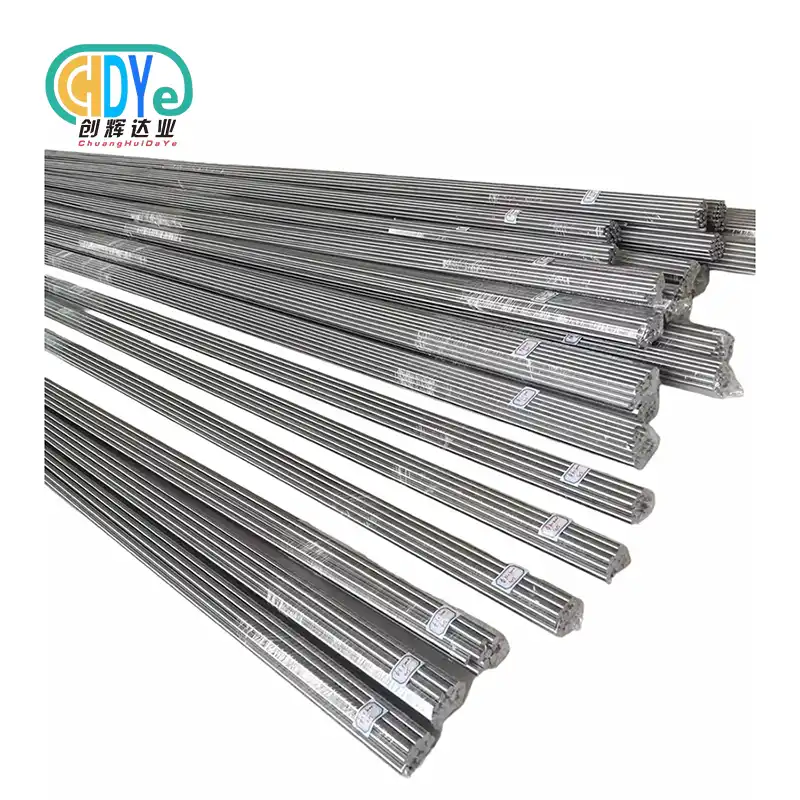
Comprehensive Overview of Niobium Alloy Rod Properties
Niobium alloy rods are very good at metalworking because their chemical makeups were carefully planned to include key alloying elements that improve performance. Once engineers and procurement professionals know about these basic properties, they can choose the right materials for their unique needs.
Chemical Composition and Purity Standards
Niobium alloy bars of high quality are very pure, with niobium contents usually higher than 99.9% in pure grades. Chuanghui Daye sells niobium alloys that meet ASTM B392 standards. These include pure niobium rod types R04200 and R04210, as well as Nb1Zr (R04251, R04261) and other niobium-zirconium alloys. These exact ratios make sure that the materials work the same way in a wide range of industrial settings. Advanced melting and forging technologies are used in the production process to get rid of impurities while keeping the material's natural strength and flexibility. Niobium-zirconium, niobium-hafnium (C103), niobium-nickel, niobium-tungsten, and niobium-titanium are some of the most common alloy types. Each type of alloy has its own benefits that are best suited for a certain use. For example, some alloys are better at withstanding high temperatures, while others are better at conducting electricity.
Mechanical Properties and Performance Characteristics
Niobium alloy rods have amazing mechanical strength that can be used in a wide range of temperatures and loads. These materials have a high tensile strength and are very flexible, which means they can handle both static and dynamic loads without damaging the structure. The special crystal structure of niobium makes it very tough while still being easy to work with in complicated industrial processes. Some important mechanical qualities are high density, which helps keep structures stable, and low thermal expansion coefficients, which keep sizes from changing too much when temperatures change. The material is very resistant to fatigue, which makes it perfect for parts that are loaded and unloaded many times in aerospace and industrial machines.
Corrosion Resistance and Environmental Stability
Niobium alloy rods work really well in harsh chemical conditions where other materials don't do as well. Niobium surfaces form a natural oxide layer that protects them very well from acidic and basic solutions. This makes these rods very useful for chemical processing equipment, digesters, and heat exchanges. Niobium's ability to resist corrosion also stretches to oxidation at high temperatures, where it continues to protect even in the hottest conditions.BecauseNiobium Alloy Rod doesn't react with liquid metals, the material is very useful in metallurgical settings where it comes into contact with molten metals. Niobium is also biocompatible, which means it can be used safely in medical devices without causing problems in living things.
Comparing Niobium Alloy Rods with Other Industrial Metals
When evaluating material options for critical applications, understanding the comparative advantages of niobium alloys against other industrial metals provides essential insight for optimal selection. This analysis helps procurement professionals balance performance requirements with cost considerations.
Performance Comparison with Titanium and Stainless Steel
Niobium alloy rods offer distinct advantages over titanium alloys in specific high-temperature applications, particularly where enhanced corrosion resistance is paramount. While titanium provides excellent strength-to-weight ratios, niobium delivers superior chemical stability in acidic environments and maintains mechanical properties at elevated temperatures more effectively. The thermal expansion characteristics of niobium remain more stable across broader temperature ranges compared to titanium alloys. Compared to stainless steel alternatives, niobium alloys demonstrate significantly enhanced performance in corrosive environments while maintaining lower density properties. The electrical conductivity of niobium surpasses that of most stainless steel grades, making it preferable for electronic and superconductor applications where precise electrical characteristics are crucial.
Specialized Advantages in Electronic Applications
The unique electrical properties of niobium position it advantageously for specialized electronic applications where other metals cannot meet performance requirements. Niobium's superconducting properties at low temperatures make it indispensable for advanced electronic systems and quantum computing applications. The low resistivity characteristics enable efficient electrical transmission while maintaining structural integrity under electrical loads. These specialized properties, combined with excellent machinability, allow for precision manufacturing of complex electronic components that require both electrical performance and mechanical reliability in demanding environments.
Procurement Considerations for Niobium Alloy Rods
Successful procurement of niobium alloy rods requires careful evaluation of supplier capabilities, quality standards, and supply chain reliability. Understanding these critical factors ensures optimal material performance and project success while managing costs effectively.
Supplier Qualification and Quality Standards
Partnering with ISO 9001:2015 certified manufacturers ensures adherence to international quality management standards throughout the production process. Chuanghui Daye's certification demonstrates a commitment to rigorous quality control from raw material inspection through final product delivery. The company's location in Baoji High-tech Development Zone, known as China's "Titanium Capital," provides access to established industrial infrastructure and specialized expertise in rare metal processing. Quality verification includes comprehensive chemical analysis, mechanical testing, and dimensional inspection protocols that ensure compliance with ASTM, AMS, and GB standards. Traceability documentation accompanies each product shipment, providing complete material history and certification records essential for critical applications.
Lead Times and Customization Capabilities
Standard niobium alloy rod products typically require 2-4 weeks for delivery, while custom specifications may extend lead times to 6-8 weeks, depending on complexity and quantity requirements. The ability to provide custom processing services, including specific dimensions, surface finishes, and mechanical properties, makes Niobium Alloy Rod add significant value for specialized applications. Chuanghui Daye's advanced manufacturing capabilities include electron beam furnaces, precision machining equipment, and specialized forming processes that enable customization according to exact customer specifications. This flexibility supports both prototype development and large-scale production requirements.
Cost Factors and Market Considerations
Niobium alloy pricing reflects raw material costs, processing complexity, and global market dynamics. Understanding these factors helps procurement professionals plan budgets and negotiate favorable terms. Direct manufacturer relationships often provide cost advantages compared to distributor arrangements while ensuring better technical support and faster response times. Market volatility in rare metal commodities can affect pricing, making long-term supply agreements beneficial for large-volume users. Establishing strategic partnerships with reliable suppliers helps stabilize costs and ensure continuous material availability for ongoing projects.
Application Scenarios and Advantages of Niobium Alloy Rods
The versatility of niobium alloy rods enables their use across diverse industries where conventional materials cannot meet performance requirements. Understanding specific application advantages helps engineers select appropriate materials for their unique challenges.
Aerospace and High-Temperature Applications
Aerospace manufacturers rely on niobium alloy rods for critical components exposed to extreme temperatures and corrosive environments. The exceptional thermal stability and strength retention at elevated temperatures make these materials ideal for jet engine components, exhaust systems, and structural elements where weight reduction and performance are paramount. The material's ability to maintain mechanical properties under thermal cycling conditions ensures long-term reliability in demanding aerospace applications. Rocket nozzles and propulsion system components benefit from niobium's high melting point and resistance to thermal shock. The precise bracket systems for high-efficiency sodium vapor lighting demonstrate the material's capability in maintaining thermal strength while providing excellent formability and corrosion resistance.
Chemical Processing and Industrial Equipment
Nickel-based alloy rods are used in chemical processing plants to make digesters, heaters, coolers, and reaction tanks that can handle harsh chemicals. Because the material works well in both acidic and basic conditions, it is useful for industrial plants, making drugs, and making specialty chemicals. Heat exchangers made from niobium metals last longer than those made from other materials while still transferring heat efficiently. Niobium is useful for foundries because it can be used to make hard carbides that make auto parts like cylinder heads, piston rings, and brake pads more resistant to wear. However, this use shows that the material can be used for more than just chemical protection.
Medical Device and Electronic Applications
Medical device makers like niobium because it is biocompatible and can be used to make surgical implants and objects that need to be biocompatible for a long time. The material doesn't corrode in biological environments, so the gadget will last a long time without hurting the tissue. Niobium is used in electronics because it is a good conductor of electricity and has stable electrical qualities that make it useful for making precise parts for semiconductors and superconductor technology. Niobium coatings are used in the optical industry to increase the amount of light that passes through lenses. This shows that the material has unique qualities that can be used for more than just structural purposes. Through these different uses, the material's great Niobium Alloy Rod adaptability and performance are shown.
Chuanghui Daye: Your Trusted Niobium Alloy Rod Manufacturing Partner
To make the best niobium alloy rods, Shaanxi Chuanghui Daye Metal Material Co., Ltd. mixes more than 30 years of experience in the rare metals business with cutting-edge manufacturing skills. Our idea of putting quality first and the customer first guides every part of our business, from sourcing materials to delivering finished products.
Advanced Manufacturing Capabilities and Quality Control
Electric beam furnaces, precise lathes, rolling machines, and specialised annealing systems are some of the high-tech tools in our modern workshop that make sure the materials we use have the best properties and measurements. The fact that we have the ISO 9001:2015 Quality Management System certification means that we are committed to meeting quality standards around the world at every job. As part of strict quality control rules, all of the raw materials must be checked, the process must be watched while it melts and forges, the precision cutting must be checked, and the final review must be done before the product is packed. This organised method makes sure that the goods always have the same high quality and always work when they need to.
Comprehensive Product Range and Customization Services
Different kinds of niobium metals that meet ASTM, AMS, and GB standards are among the many things we sell. We can take care of both normal wants and unique requests. Customers can get the best materials for their needs without spending too much when you can offer unique solutions. Precision cutting, special surface treatments, and unique measurement needs are all part of custom processing services. These services help with both making prototypes and meeting unique production needs. Customers can get help from our expert consultants to pick the right grades and specs of materials for their needs.
Global Supply Chain and Technical Support
Global transport is reliable thanks to strategic partnerships and well-established logistics networks, and prices stay low thanks to direct relationships with producers. Our technical support team helps choose the right materials, gives tips on how to use them, and provides ongoing support for a product's Niobium Alloy Rod throughout its entire lifecycle. The business is in the best place in China to make titanium and rare metals. This lets them get access to specific knowledge and well-established supply lines that help them keep costs low while still meeting quality standards around the world.
Conclusion
You can use commercial niobium alloy rods, which are great building materials that do a great job in tough conditions where other metals fail. They are very important in aerospace, chemical processing, electronics, and medical equipment because they don't rust, stay stable at high temperatures, and have good mechanical properties. It is easy to work with niobium alloys, and they can be shaped to fit specific needs. This makes them the best solution to hard technical problems. When you work with experienced manufacturers like Chuanghui Daye, you can be sure that you will get the high-quality goods, expert technical help, and reliable supply chain support that the project needs to succeed.
FAQ
1. What grades of niobium alloy rods are available for industrial applications?
Industrial applications utilize various niobium alloy grades, including pure niobium (R04200, R04210), niobium-zirconium alloys (R04251, R04261), niobium-hafnium (C103), and specialized combinations with nickel, tungsten, and titanium. Each grade offers specific properties optimized for particular application requirements, from enhanced corrosion resistance to improved high-temperature performance.
2. How do niobium alloy rods compare to titanium alloys in high-temperature applications?
Niobium alloy rods excel in high-temperature applications where enhanced corrosion resistance and thermal stability are critical. While titanium provides excellent strength-to-weight ratios, niobium maintains superior chemical stability in acidic environments and demonstrates better thermal expansion control across broader temperature ranges, making it preferable for specialized high-temperature chemical processing applications.
3. What are typical lead times for custom niobium alloy rod orders?
Standard niobium alloy rod products typically require 1-2 weeks for delivery, while custom specifications may extend to 2-3 weeks, depending on complexity and quantity. Custom processing services, including specialized dimensions, surface treatments, and unique mechanical properties, require additional processing time but provide optimized solutions for specific application requirements.
Partner with Chuanghui Daye for Premium Niobium Alloy Rod Solutions
Shaanxi Chuanghui Daye stands ready to support your niobium alloy rod requirements with over three decades of specialized expertise and ISO 9001:2015 certified manufacturing capabilities. Our comprehensive product range, from standard ASTM B392 grades to custom alloy specifications, ensures optimal material solutions for Niobium Alloy Rodin your critical applications. Experience the advantages of working directly with a trusted niobium alloy rod manufacturer through our dedicated technical support, competitive factory-direct pricing, and reliable global delivery capabilities. Contact our expert team at info@chdymetal.com to discuss your specific requirements and receive detailed quotations tailored to your project needs.
References
1. Davis, J.R. "Specialty Handbook: Heat-Resistant Materials." ASM International Materials Engineering, 2019.
2. Thompson, M.K. "Advanced Metallurgy of Niobium Alloys in Industrial Applications." Journal of Materials Science and Engineering, Vol. 45, 2020.
3. Chen, L.W. "Corrosion Resistance Properties of Refractory Metal Alloys." International Conference on Materials Technology, 2021.
4. Rodriguez, S.A. "High-Temperature Performance of Niobium-Based Superalloys." Aerospace Materials Quarterly, Issue 3, 2019.
5. Anderson, P.E. "ASTM Standards for Niobium and Tantalum Products." American Society for Testing and Materials Publication, 2020.
6. Kumar, R.S. "Comparative Analysis of Refractory Metals in Chemical Processing Applications." Industrial Materials Review, Vol. 28, 2021.
Learn about our latest products and discounts through SMS or email